Fact interpretation Worksheets for Kids
1 filtered results
Difficulty Level
Grade
Age
-
From - To
Subject
Activity
Standards
Fact interpretation worksheets are invaluable tools in developing critical thinking and analytical skills. These specialized worksheets are designed to engage learners in the process of analyzing factual information and drawing conclusions from it. By using these worksheets, individuals can sharpen their ability to interpret and understand various forms of data, such as graphs, tables, articles, and more.
Favorites
With answer key
Interactive
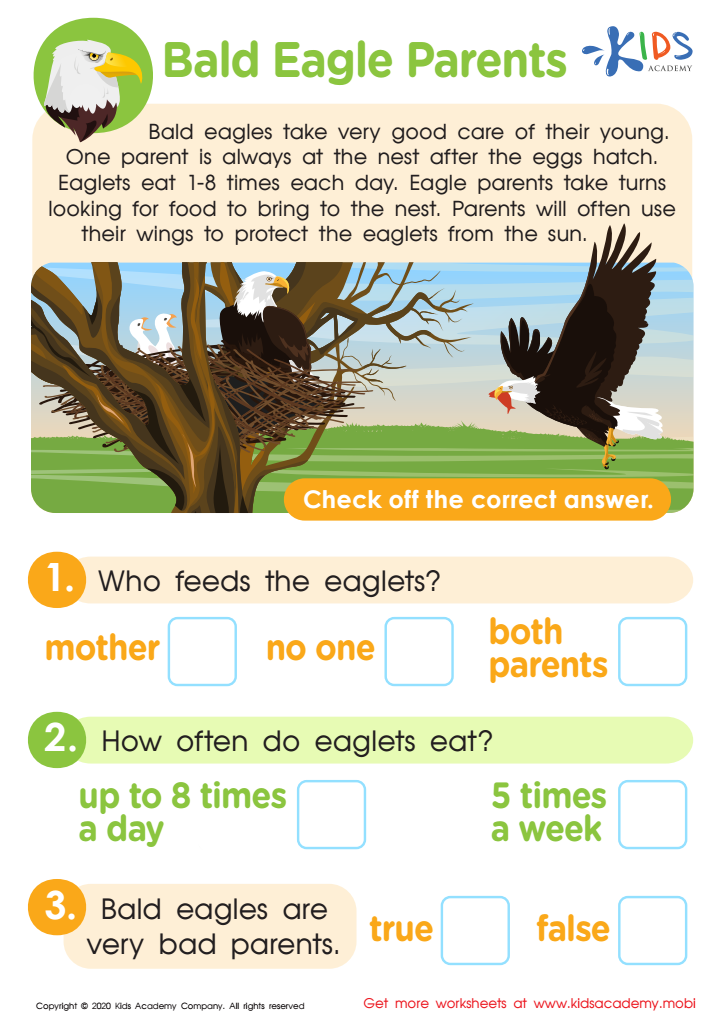
Bald Eagle Parents Worksheet
Teach your child about bald eagle parenting with this science worksheet! Read the passage and answer the questions to learn how these majestic birds protect their young from predators. Eaglets need protection, and the bald eagle parents are masters of providing it!
 Assign to My Students
Bald Eagle Parents Worksheet
Worksheet
Question/Answer

What does the Fact interpretation skill mean when it comes to Grade 1 Plants and Animals learning?
The Fact Interpretation skill in the context of Grade 1 Plants and Animals learning involves the ability to understand and explain basic information or data about plants and animals. This includes recognizing characteristics, behaviors, and habitats, as well as drawing simple conclusions from observations or facts about the natural world that surrounds them.
How to test a Grade 1 student’s Fact interpretation skills?
To test a Grade 1 student's fact interpretation skills, use simple, age-appropriate factual statements or stories, then ask the student to answer questions about them. These questions should require the student to recall specific details, explain the facts in their own words, or predict what happens next based on the information given.
What are some effective activities to train students’ Fact interpretation skill when teaching them about Plants and Animals?
Effective activities include creating comparison charts for different plants or animals to identify similarities and differences, engaging in group discussions to interpret facts from scientific texts or documentaries, conducting hands-on experiments such as observing plant growth or animal behavior, and organizing quiz games that require students to interpret facts to answer questions about the characteristics, habitats, and adaptations of plants and animals.#$%
Join Kids Academy for Free
Who is primarily going to use this learning content?


.jpg)