Practical problem solving Worksheets for Kids
1 filtered results
Difficulty Level
Grade
Age
-
From - To
Subject
Activity
Standards
Practical problem-solving worksheets are vital tools designed to boost your skills through hands-on exercises. They blend theory with practical tasks, fostering problem-solving strategies and critical thinking. With diverse challenging scenarios, they offer a step-by-step structured approach, including brainstorming and real-life examples. These worksheets enhance your capacity to tackle complex issues, promoting critical and adaptive thought. They encourage self-paced, independent learning, proving useful for test preparation, professional skill enhancement, or personal challenges, making them indispensable for your learning path.
Favorites
With answer key
Interactive
Question/Answer

How to test a Grade 2 student’s Practical problem solving skills?
To test a Grade 2 student's practical problem-solving skills, engage them in age-appropriate activities that require critical thinking, such as simple puzzles, building projects with blocks, or basic math word problems. Observe their approach to solving these tasks, noting their ability to understand the problem, think creatively, and apply logical steps to reach a solution.
What does the Practical problem solving skill mean when it comes to Grade 2 Adding up to 50 Without Regrouping learning?
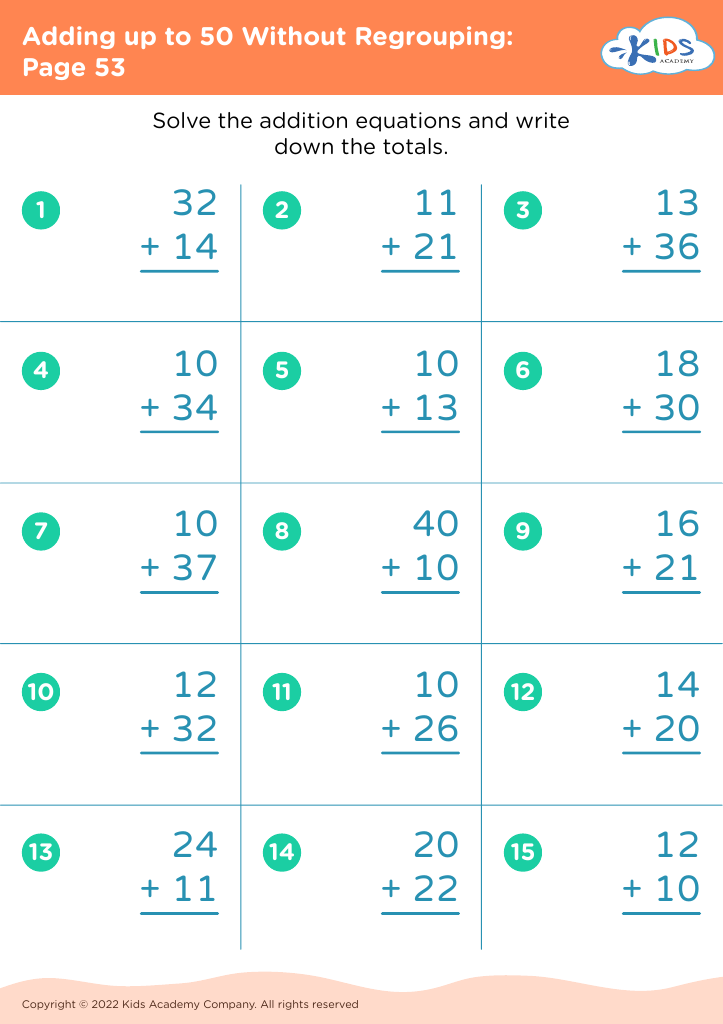
Practical problem-solving skill in the context of Grade 2 Adding up to 50 Without Regrouping means the ability to apply addition skills to solve real-world problems or scenarios that involve adding numbers up to 50.
Why is the Practical problem solving skill important for Grade 2 students?
Practical problem-solving skills are essential for Grade 2 students because they help children apply classroom knowledge to real-world scenarios, fostering critical thinking and decision-making abilities. These skills encourage independence, enhance creativity, and improve adaptability, laying a strong foundation for lifelong learning and success in various life situations.
Join Kids Academy for Free
Who is primarily going to use this learning content?