Recognizing predator-prey dynamics Worksheets for Kids
1 filtered results
-
From - To
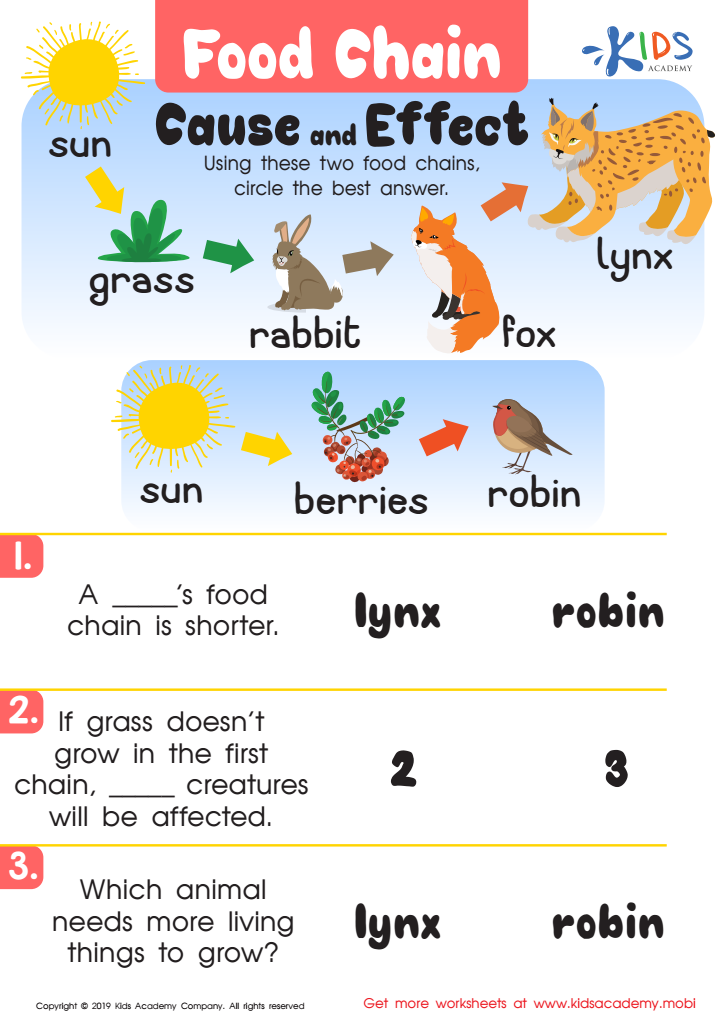
Food Chain Cause Worksheet
 Assign to My Students
Question/Answer

Why is the Recognizing predator-prey dynamics skill important for Grade 3 students?
The Recognizing predator-prey dynamics skill is important for Grade 3 students as it introduces them to basic ecological concepts, helping them understand the natural world's balance and interdependence. It lays the foundation for more complex scientific learning and fosters respect and responsibility towards biodiversity and ecosystems, crucial for developing informed, environmentally conscious future citizens.
How does the mastery of the Recognizing predator-prey dynamics skill affect a student's performance at an early age?
Mastery of Recognizing predator-prey dynamics at an early age enhances a student's understanding of ecological relationships and natural selection, improves analytical and critical thinking skills, and fosters curiosity about the natural world. It enables students to grasp complex interdependencies within ecosystems, promotes scientific literacy, and contributes to a foundational knowledge that supports advanced learning in biology and environmental science.
How to test a Grade 3 student’s Recognizing predator-prey dynamics skills?
To test a Grade 3 student's skills in recognizing predator-prey dynamics, present them with a series of images or short descriptions of various animals. Ask them to identify which animal is the predator and which is the prey, and explain the reason for their choice. This can assess their understanding of the roles and relationships within ecosystems.