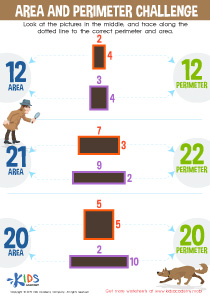
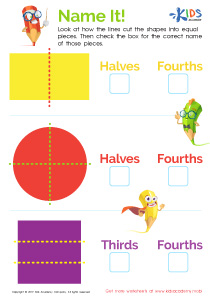
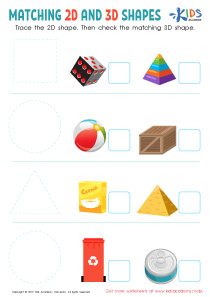
Matching skills 2D Shapes Worksheets
5 filtered results
Difficulty Level
Grade
Age
-
From - To
Subject
Activity
Standards
Discover our Matching Skills 2D Shapes Worksheets at Kids Academy! These engaging, printable worksheets are designed to enhance young learners' abilities to identify, differentiate, and match various 2D shapes. Ideal for preschool and early elementary students, each activity fosters critical thinking and visual discrimination, aiding in the development of foundational geometry skills. Combining fun illustrations with educational tasks, our worksheets make learning both effective and enjoyable. Boost your child’s confidence and proficiency in recognizing shapes with our expertly crafted exercises. Perfect for classroom use or at-home practice. Explore our collection today to start your child’s geometric journey!
Favorites
With answer key
Interactive
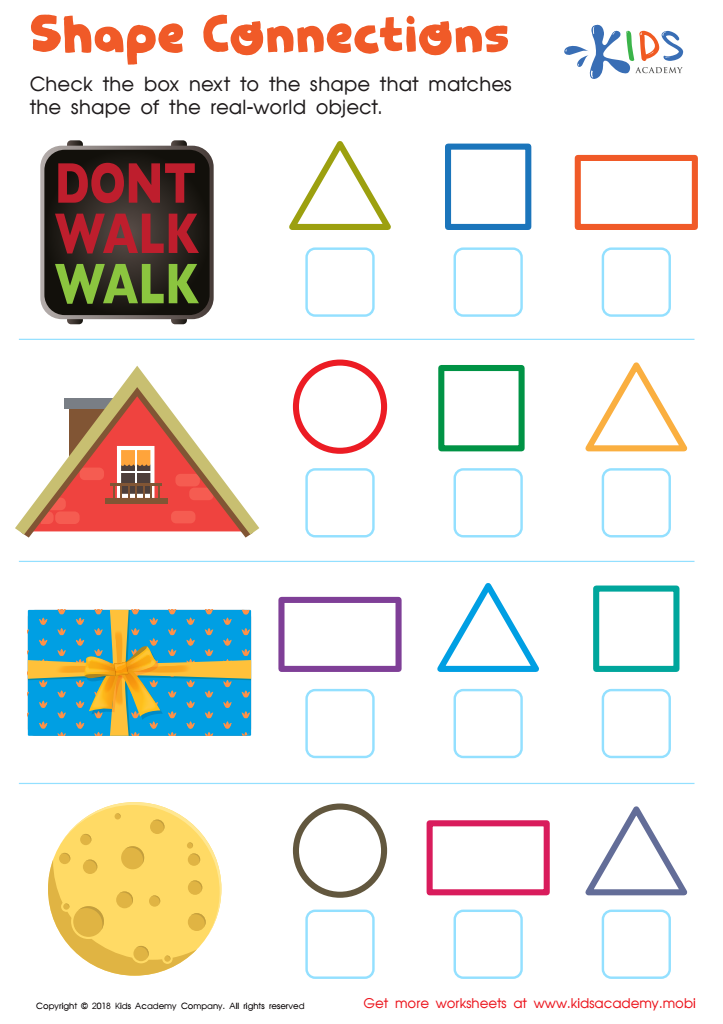
Shape Connections Worksheet
Geometric shapes are all around us and this fun worksheet brings it to life. Kids will match real-world pictures with the corresponding basic shapes, connecting how math is used in various aspects of daily life. A great way to reinforce these concepts!
 Assign to My Students
Shape Connections Worksheet
Worksheet


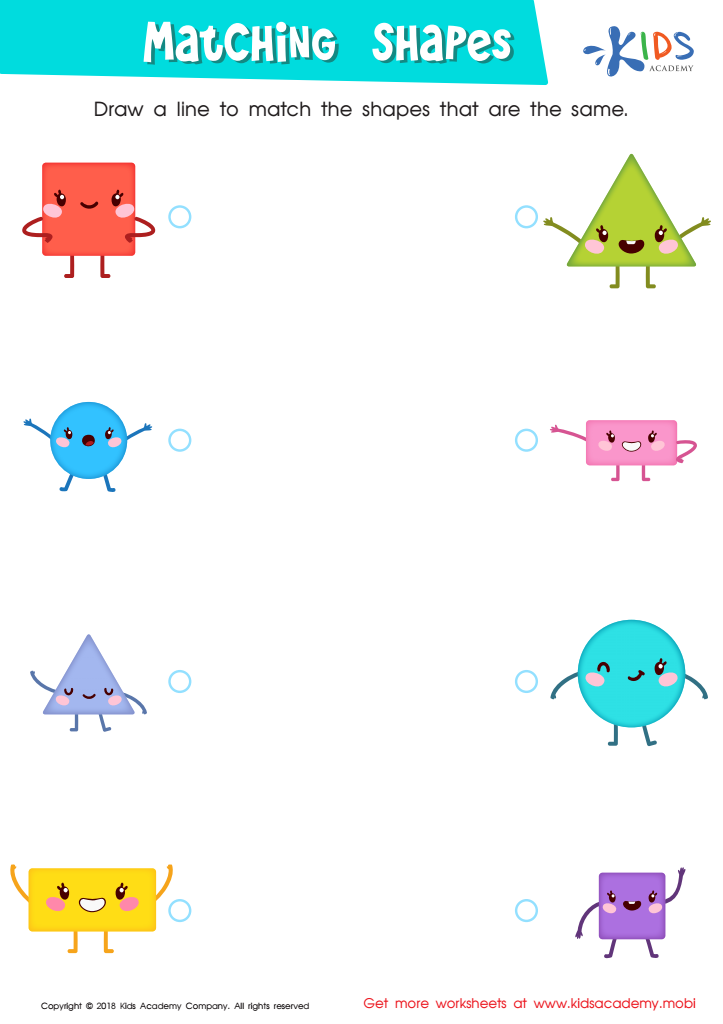
Matching Shapes Worksheet
Introduce your students to the 4 most common shapes: squares, triangles, rectangles and circles. When they progress, show them other shapes like rhombuses and parallelograms. Use this matching shapes worksheet to help them match two identical shapes. Print out the worksheet and instruct them to draw lines connecting them.
Matching Shapes Worksheet
Worksheet
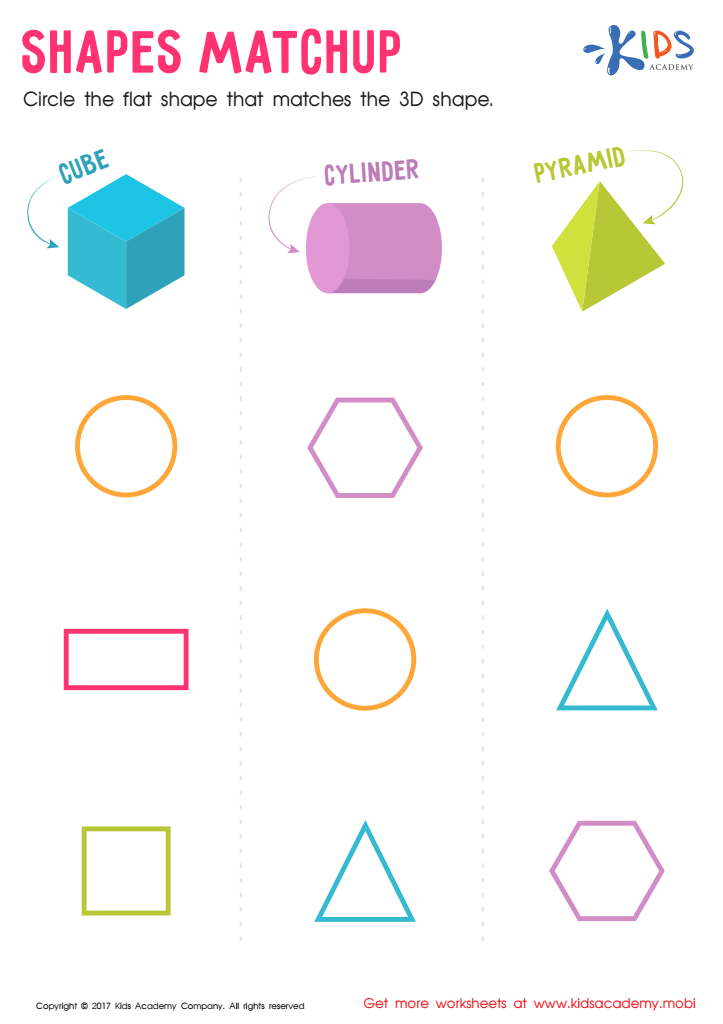
Shapes Matchup Worksheet
Explain to your kids that 3D shapes are the view from another angle, offering depth, height and width. This worksheet encourages them to match the 3D shapes to their 2D form. They can circle the flat shapes that match the 3D shapes in the printout.
Shapes Matchup Worksheet
Worksheet
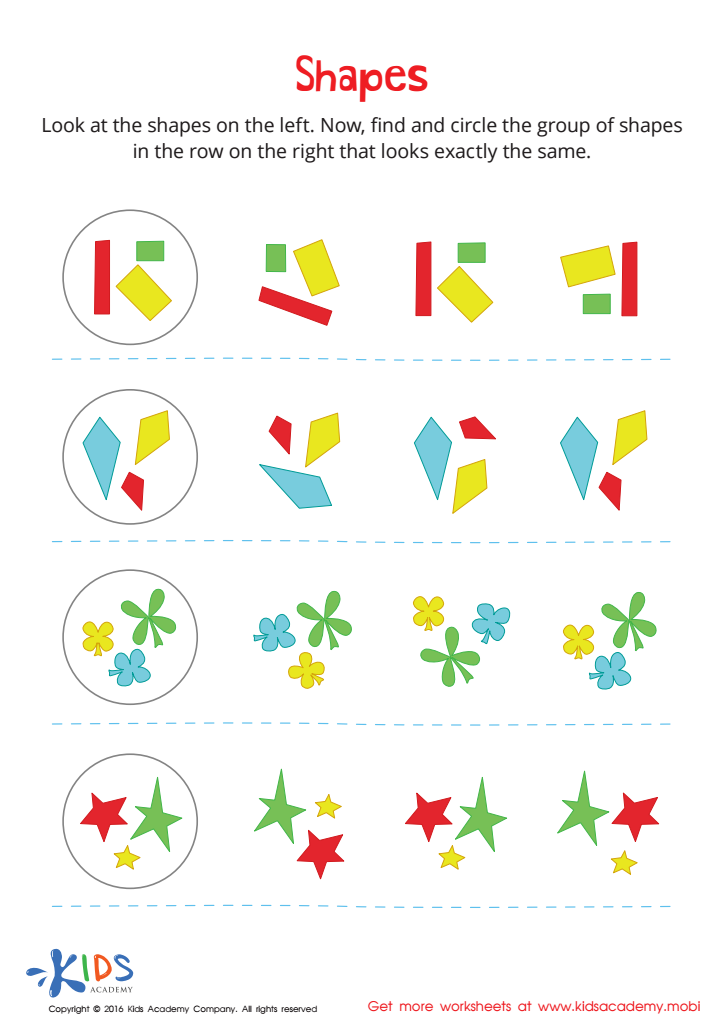
Shapes Worksheet
This fun worksheet will challenge your child to recognize tricky patterns, sort through similar ones, and create strategies to get the right answer. It'll also help them to strengthen problem-solving skills and build confidence. With more challenging tasks, your child will be ready to tackle higher level math and sequencing skills.
Shapes Worksheet
Worksheet
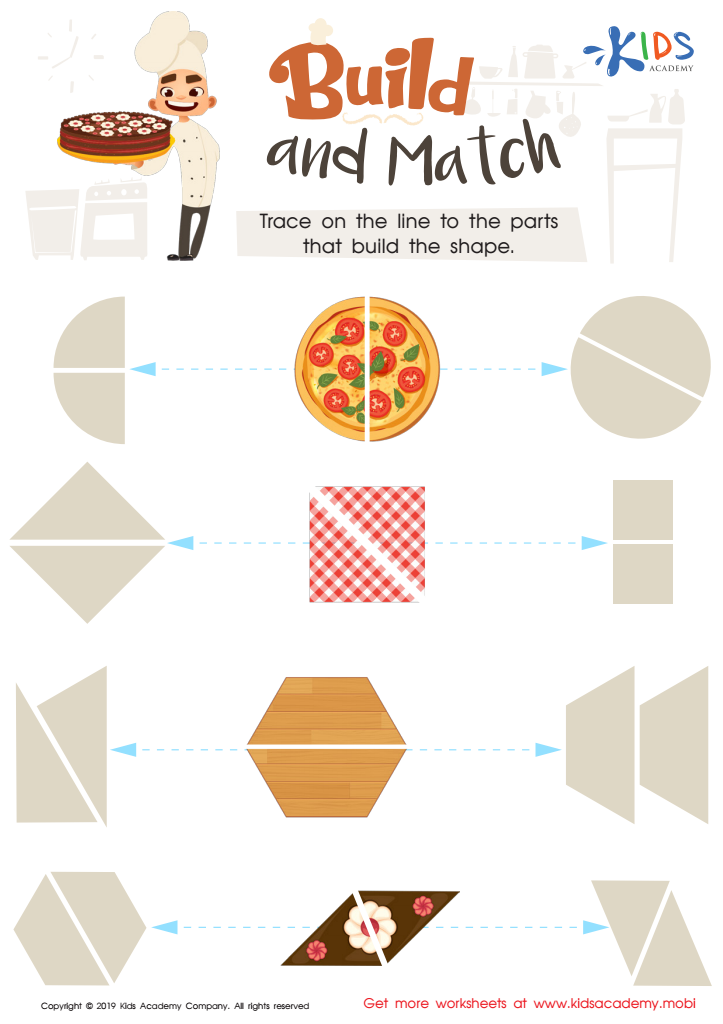
Build and Match Worksheet
This bright worksheet will get your kids excited to learn more! Use the colorful images and shapes to engage them and have them trace the parts to build the shape. This fun exercise will help them retain the lessons and make it an enjoyable experience.
Build and Match Worksheet
Worksheet
Join Kids Academy for Free
Who is primarily going to use this learning content?








Matching skills with 2D shapes plays a crucial role in early childhood education, and there are several reasons why parents and teachers should value these activities. First, recognizing and matching shapes help children develop essential cognitive skills such as visual discrimination, memory, and pattern recognition. These capabilities are foundational for understanding more complex concepts in both mathematics and literacy, as they relate to recognizing numbers, letters, and eventually forming words and sentences.
Secondly, engaging young students with 2D shapes enhances their spatial awareness, enabling them to grasp how different shapes fit together in a space. This is fundamental for problem-solving and logical thinking later on. A solid grasp of shapes is particularly beneficial when children progress to subjects that require spatial reasoning, like geometry, science, or even daily tasks such as navigating environments and understanding maps.
Additionally, shape matching activities can aid in the development of fine motor skills. Handling and manipulating shapes when cutting, drawing, or tracing helps children improve hand-eye coordination and precision—skills vital for writing and other tasks requiring manual dexterity.
Lastly, shape recognition fosters confidence and independently accomplishes tasks, providing a strong sense of achievement. This boosts self-esteem and encourages a positive attitude toward learning in general. Thus, introducing matching skills with 2D shapes offers comprehensive benefits that scaffold essential educational growth and personal development.