Pattern recognition 2D Shapes Worksheets
3 filtered results
-
From - To
Discover engaging Pattern Recognition 2D Shapes Worksheets designed to enhance young learners' cognitive skills. Our worksheets provide a fun and interactive way for children to identify, understand, and create patterns using various 2D shapes. From circles to triangles and squares, these engaging activities foster critical thinking and promote visual discrimination. Ideal for preschool and kindergarten students, our resources support early math education while encouraging creativity and problem-solving. With clear instructions and vibrant visuals, kids will enjoy mastering pattern recognition at their own pace. Explore our extensive collection of worksheets to cultivate a strong foundation in mathematics through engaging, hands-on learning experiences!
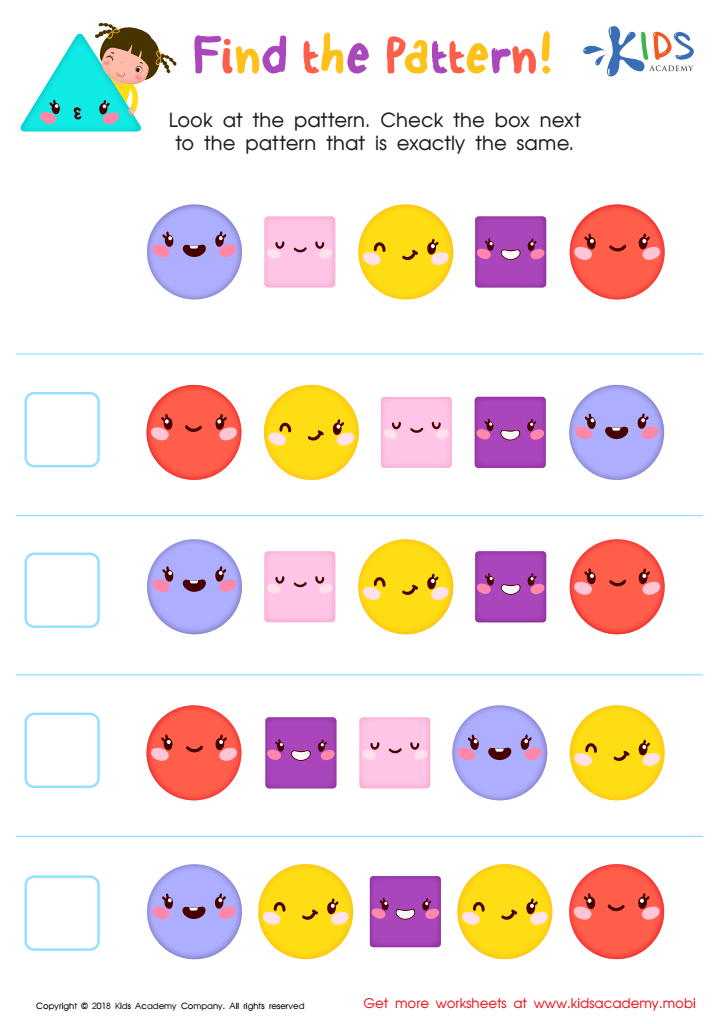
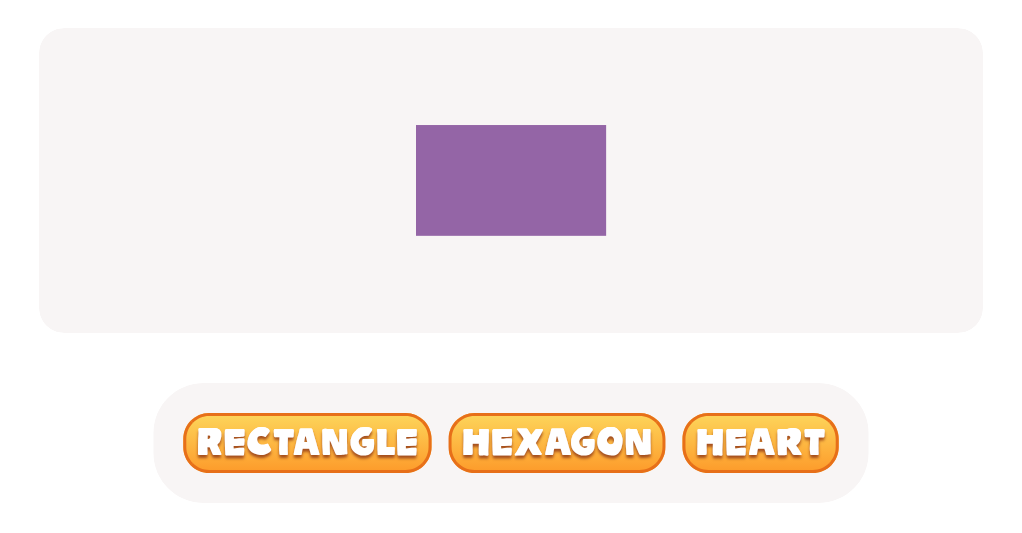
Find the Pattern Worksheet
 Assign to My Students








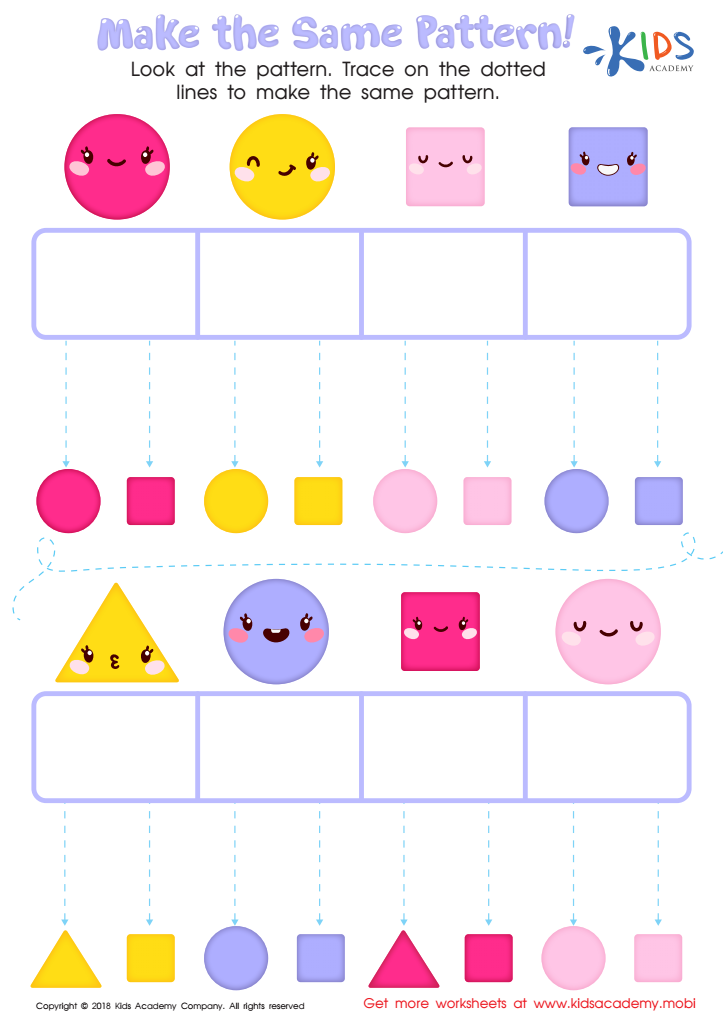
Make the Same Pattern Worksheet
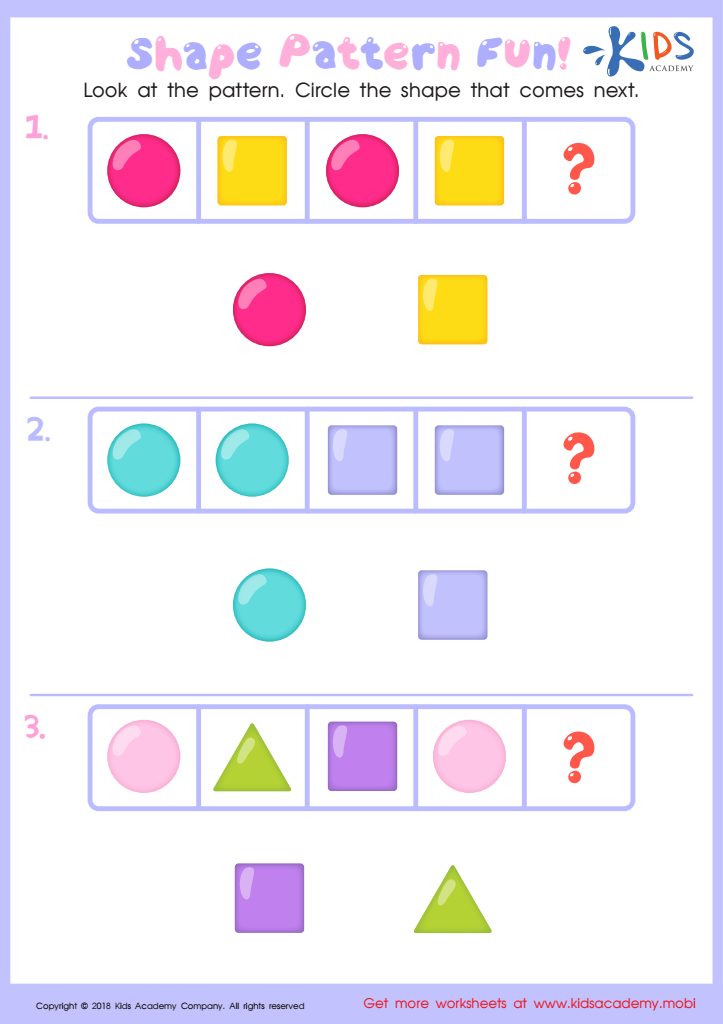
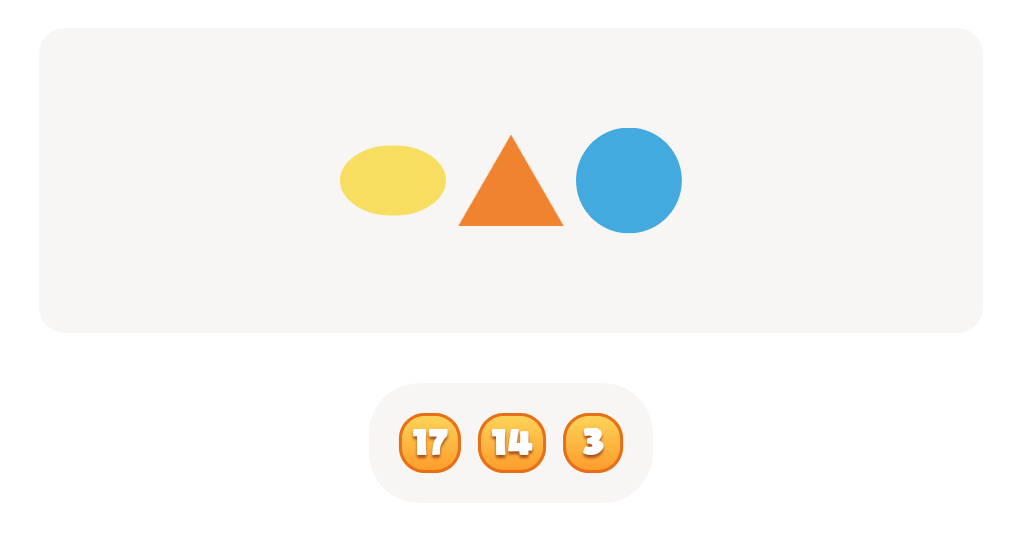
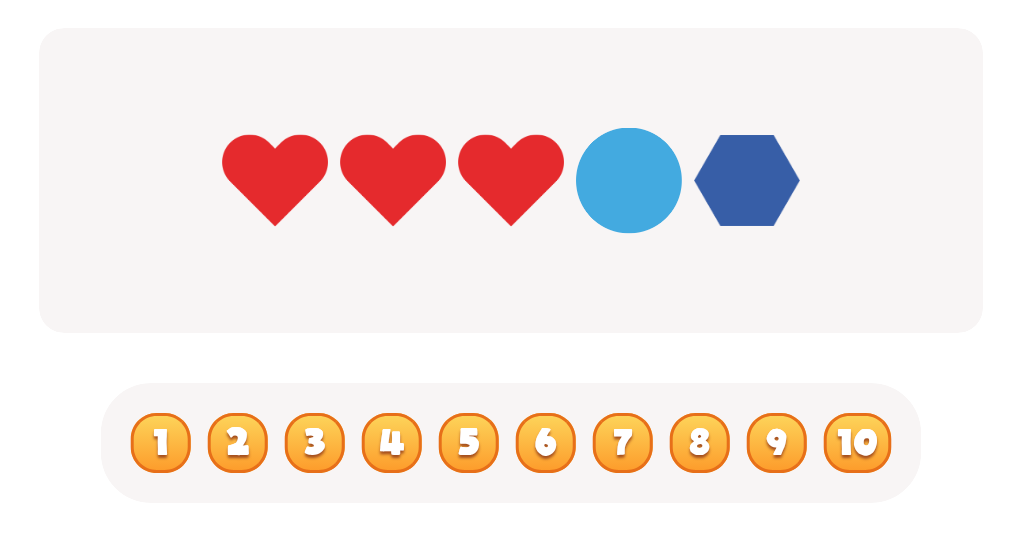
Shape Pattern Fun Worksheet








Pattern recognition, particularly in 2D shapes, is essential for early childhood development and learning. Parents and teachers should prioritize this skill because it lays the foundation for crucial mathematical concepts and cognitive abilities. Recognizing patterns helps children develop critical thinking skills, as they begin to identify relationships and sequences in their environments.
Moreover, mastering pattern recognition enhances children's spatial awareness and improves their ability to understand geometry. This skill is not only vital in math but also contributes to successes in subjects like science and art, fostering creativity and problem-solving abilities. Through hands-on activities involving 2D shapes—such as sorting, matching, and drawing—children learn to categorize and describe their surroundings, promoting effective communication skills.
Additionally, pattern recognition strengthens memory and attention span, skills that are pivotal for academic achievement. Engaging in activities that focus on 2D shapes also encourages collaborative play, building social skills and teamwork.
By emphasizing the importance of pattern recognition in 2D shapes, parents and teachers empower children with a versatile skill set that will support their lifelong learning journey and enhance their overall cognitive development. Ultimately, these abilities set the groundwork for future success in more complex subjects and real-world problem-solving scenarios.