
Develop fine motor skills Adding up to 100 Worksheets
5 filtered results
Difficulty Level
Grade
Age
-
From - To
Subject
Activity
Standards
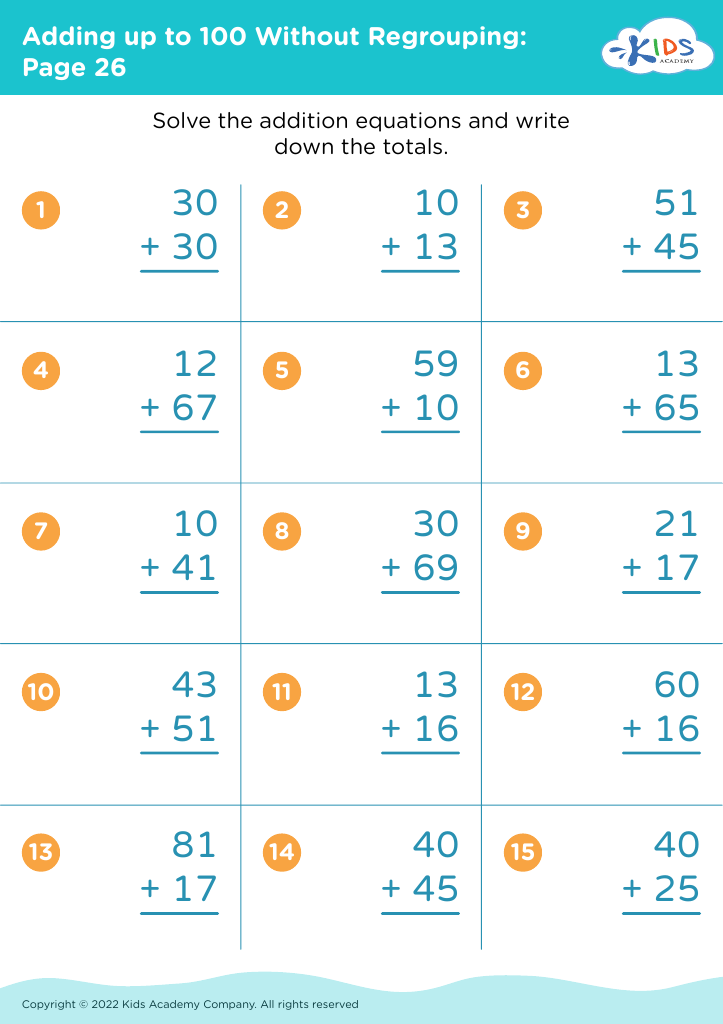
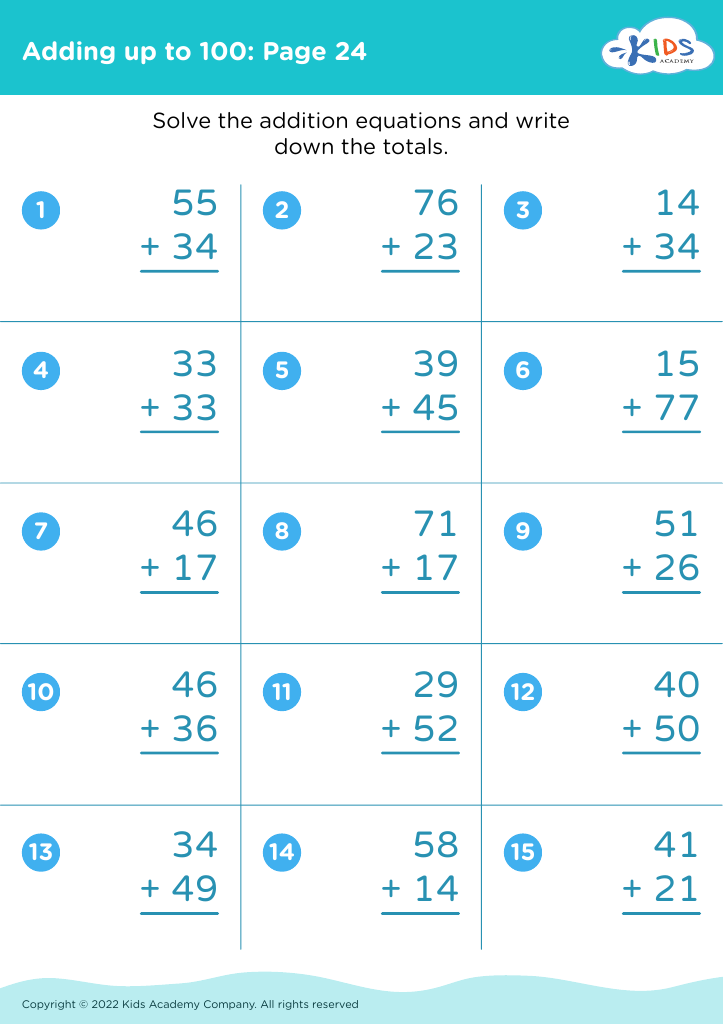
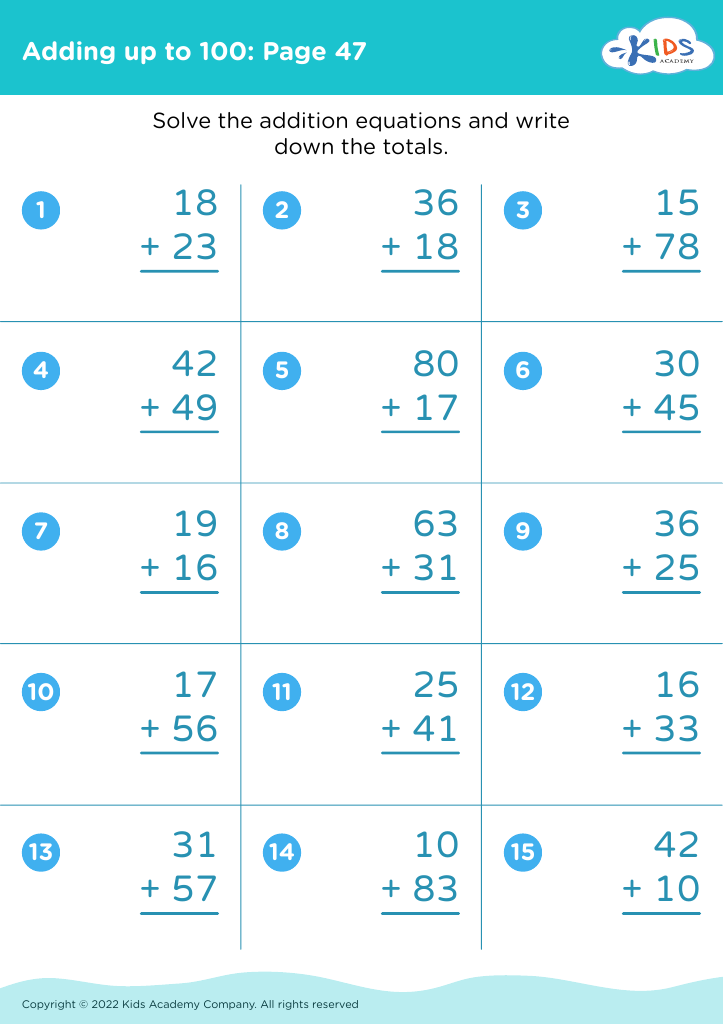
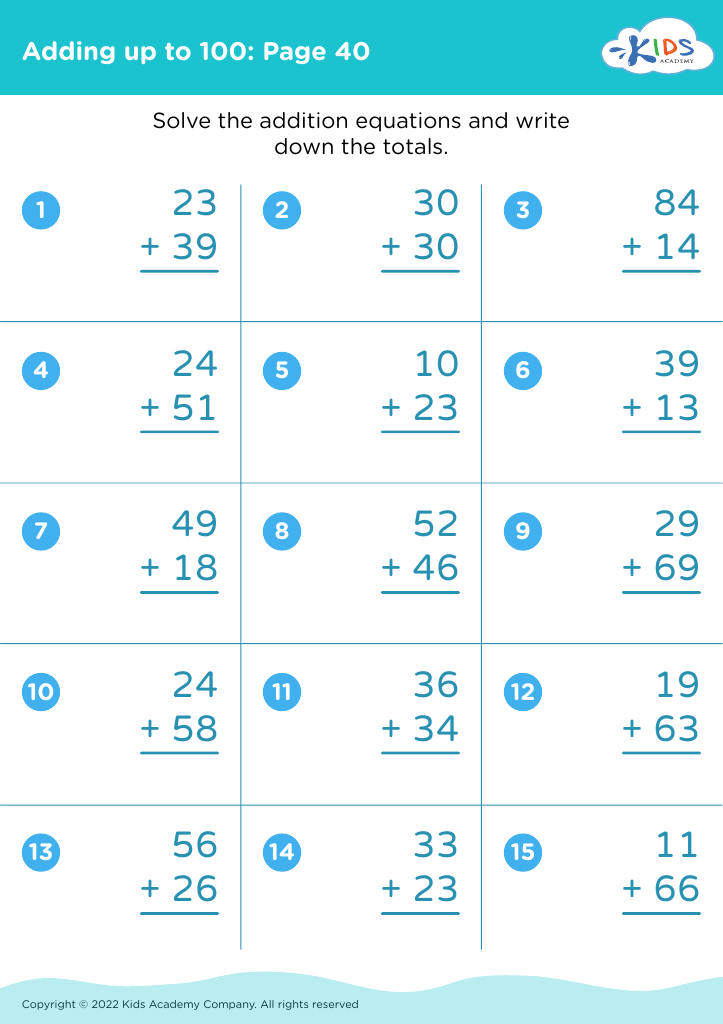
Enhance your child's learning experience with our "Develop Fine Motor Skills: Adding Up to 100 Worksheets." Designed for early grade learners, these engaging worksheets focus on developing essential fine motor skills while practicing addition up to 100. Activities include tracing numbers, coloring, and connecting dots, making learning both fun and interactive. Each worksheet helps children strengthen hand-eye coordination and dexterity, crucial for their overall development. With a variety of challenges, your child will not only master addition but also gain confidence in their writing and motor skills. Explore our resources today to foster a love for learning in your little one!
Favorites
With answer key
Interactive
Join Kids Academy for Free
Who is primarily going to use this learning content?



%20(1).jpg)



Developing fine motor skills is crucial for young children as these skills form the foundation for various everyday activities and academic tasks. Parents and teachers should prioritize fine motor development for several reasons.
Firstly, fine motor skills enhance a child's ability to perform essential tasks like writing, drawing, using scissors, and buttoning up clothes. These skills are crucial for school readiness and help boost a child's confidence in their abilities. As children engage in activities that fine-tune these skills, they also begin to improve their hand-eye coordination and overall dexterity, which translates into more effective learning experiences.
Secondly, strong fine motor skills support cognitive development. Activities that require manipulation, such as building with blocks or completing puzzles, stimulate problem-solving abilities and promote critical thinking. Moreover, these tasks often involve focus and concentration, skills that are essential for academic success.
Finally, fine motor skills play a significant role in social interaction. Many games and activities require collaboration, fostering social skills and teamwork. When children learn to share materials and cooperate on projects, they build relationships with peers, further enriching their learning environment.
In summary, nurturing fine motor skills equips children with necessary life skills, promotes cognitive development, and enhances social interactions, making it essential for parents and teachers to be invested in this area of growth.








