Enhance fine motor skills Adding up to 100 Worksheets
3 filtered results
-
From - To
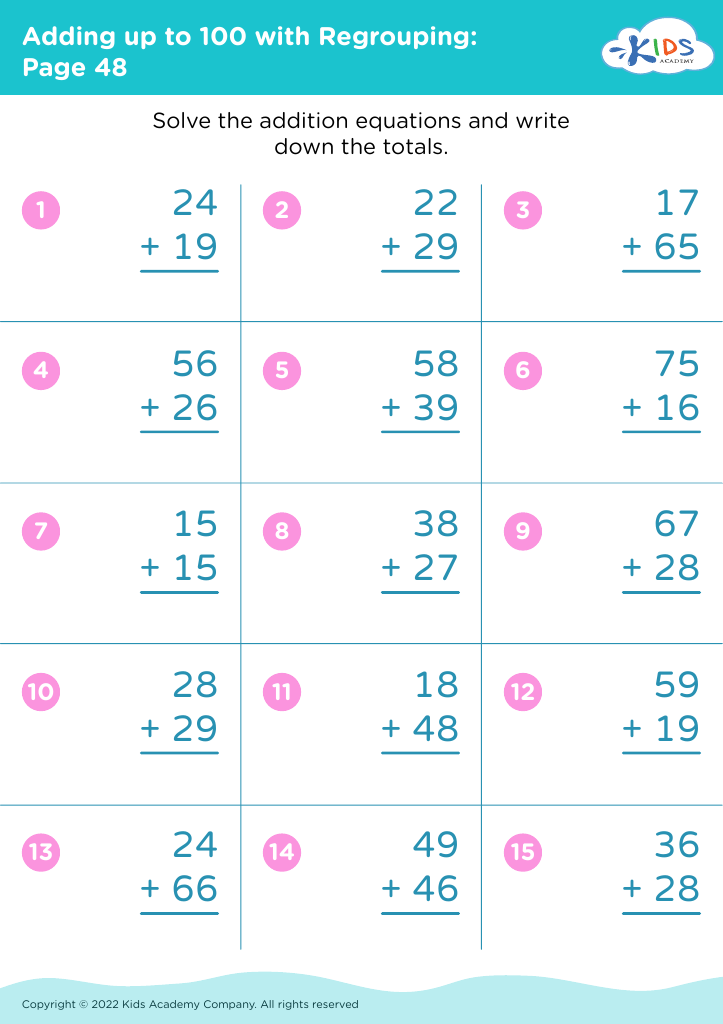
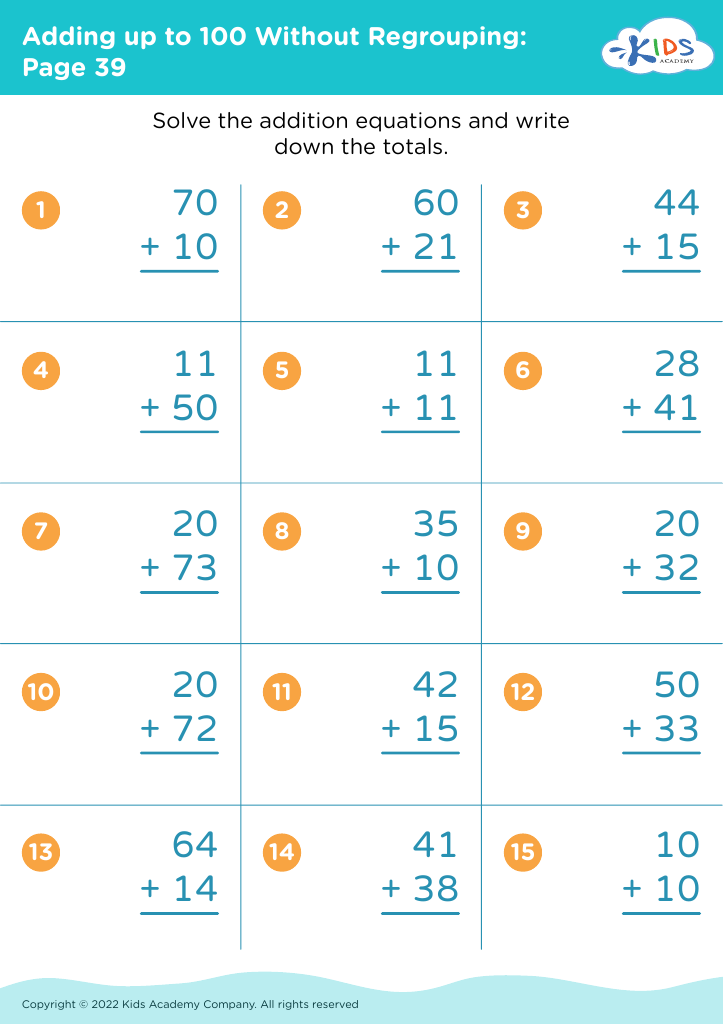
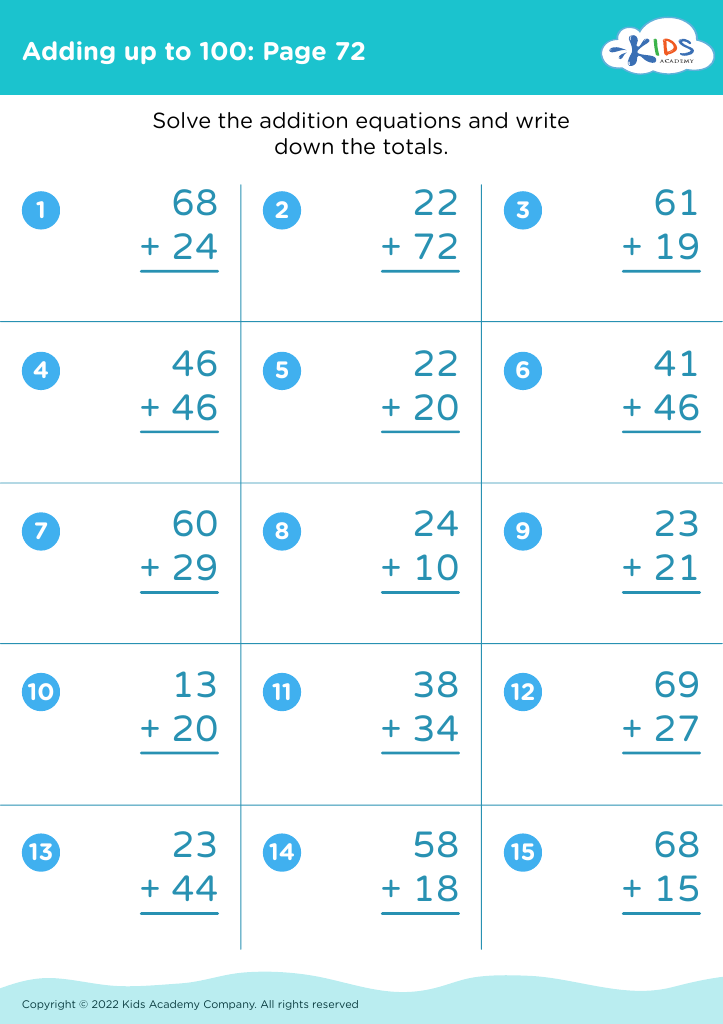
Improve your child's fine motor skills with our engaging "Adding up to 100 Worksheets." Tailored for young learners, these worksheets combine math practice with fun activities to reinforce hand-eye coordination and dexterity. Your kids will enjoy tracing numbers, drawing lines, and coloring as they work through addition problems, building essential skills in a playful environment. Each worksheet encourages active participation, enhancing focus and confidence in math. Perfect for classroom use or at-home learning, these printable resources provide a comprehensive approach to learning. Watch your child thrive as they develop crucial fine motor abilities while mastering addition up to a total of 100!




%20(1).jpg)


Enhancing fine motor skills is crucial for children's overall development, and both parents and teachers should prioritize this aspect of learning. Fine motor skills involve the coordination of small muscles, primarily in the hands and fingers, which are essential for tasks like writing, buttoning shirts, and using scissors. Developing these skills lays a solid foundation for academic success and independence as children progress through their educational journey.
Research shows that fine motor development influences a child’s ability to grasp pens and pencils effectively, which is essential for completing written assignments and performing well in school. Furthermore, improved fine motor skills boost confidence, enabling children to engage in classroom activities with enthusiasm and ease.
Beyond academics, these skills also play a role in daily life skills and self-care routines, contributing to a child's overall functionality and autonomy. Fine motor skills are intertwined with cognitive development; engaging in activities that promote these skills can enhance problem-solving abilities and creativity.
Parents and teachers should collaborate on activities that foster fine motor skills, such as arts and crafts, playing with building blocks, and engaging in simple cooking tasks. By nurturing these skills early on, we can equip children for future success and lifelong learning.








