Identify shapes Adding up to 100 Worksheets
4 filtered results
-
From - To
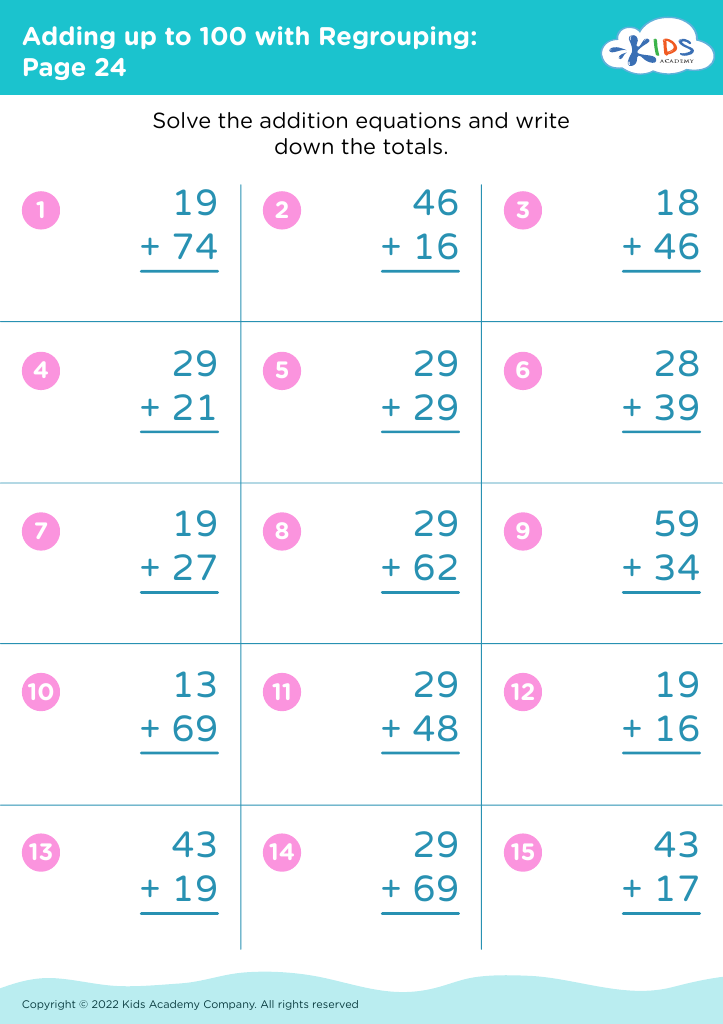
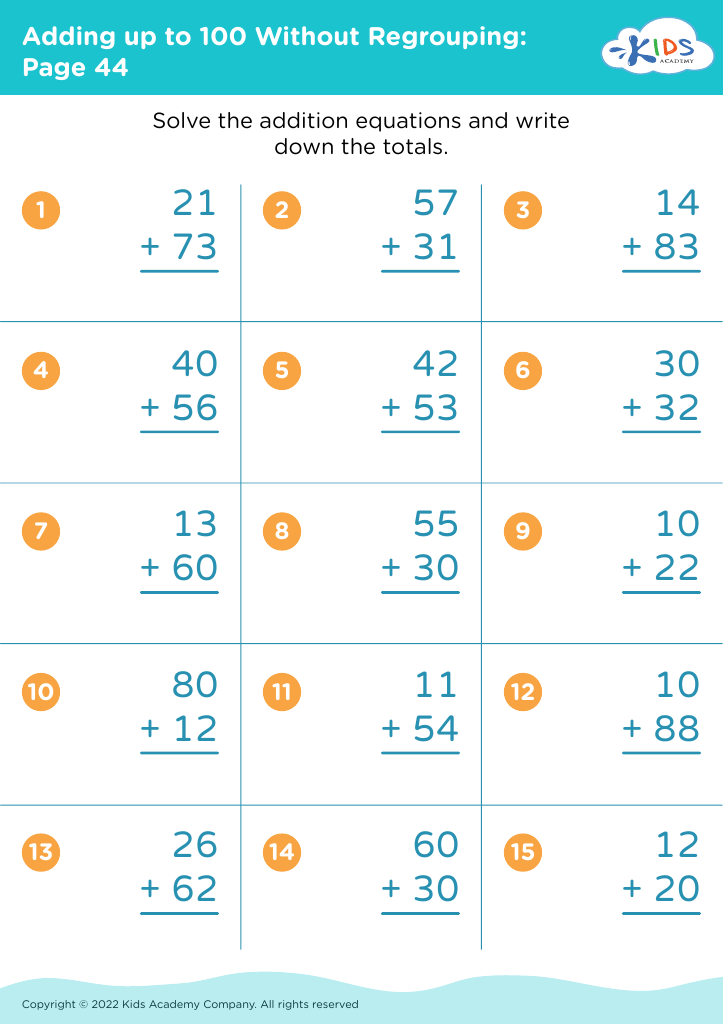
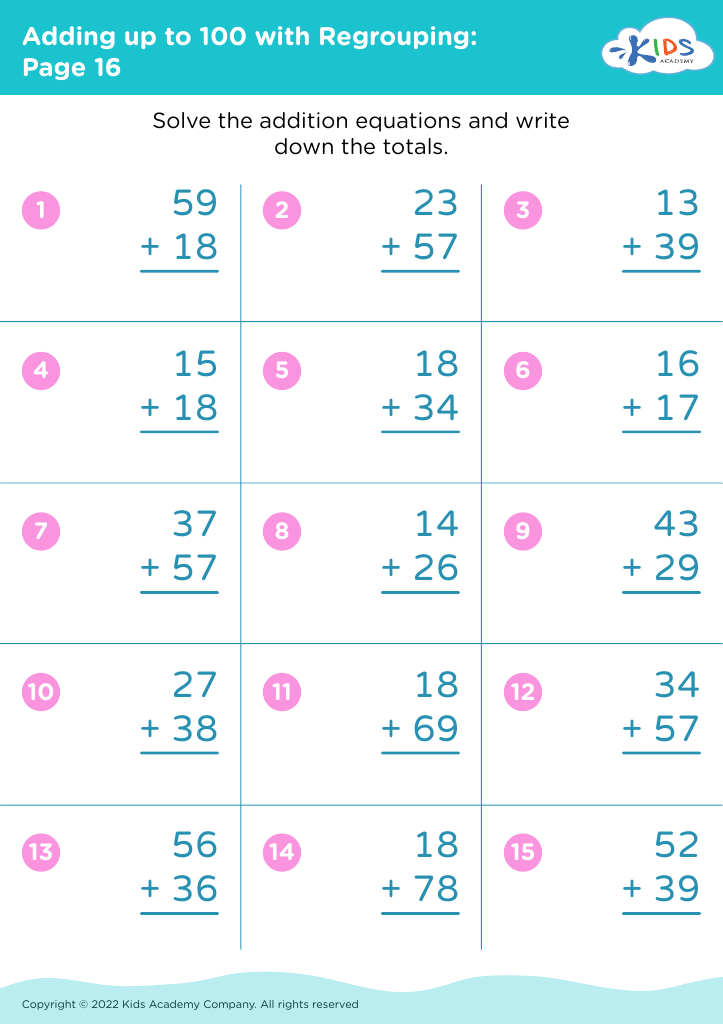
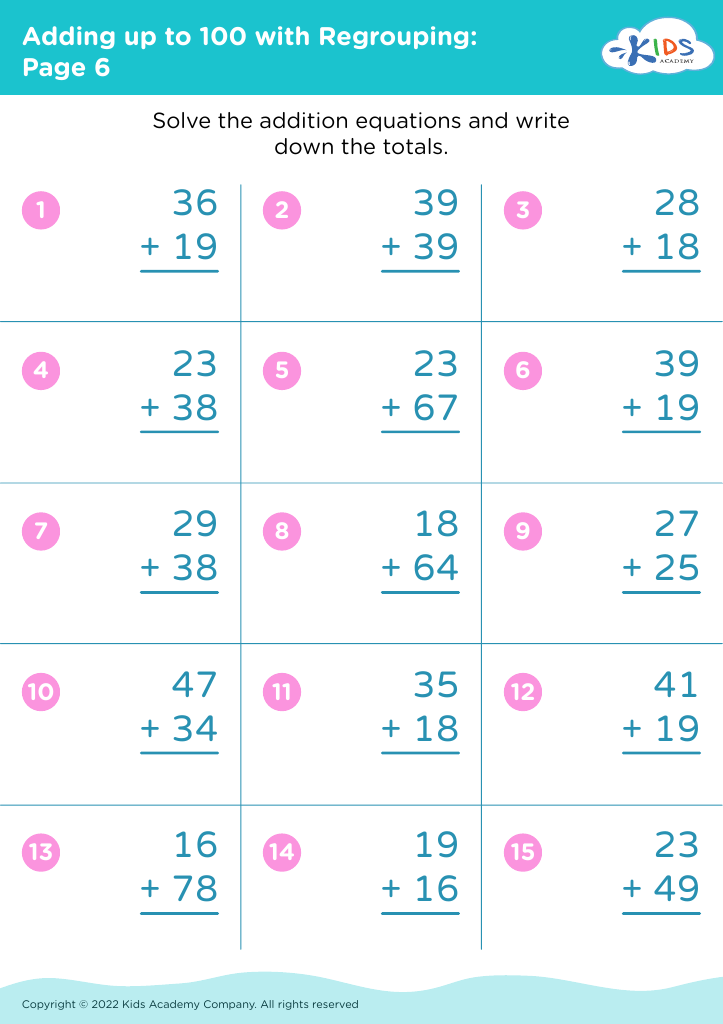
Discover the perfect blend of fun and learning with our "Identify Shapes Adding up to 100 Worksheets"! These engaging resources are designed to help young learners master shape recognition while simultaneously developing essential addition skills. Ideal for early grade students, the worksheets present a variety of colorfully illustrated shapes and numbers. Kids will enjoy identifying different shapes, then solving addition problems that add up to 100. These activities bolster both geometry and arithmetic knowledge, making math an enjoyable adventure. Download now and watch your child’s confidence and skills soar with each completed worksheet!




%20(1).jpg)


Parents and teachers should prioritize activities that involve identifying shapes and adding up to 100, as these key skills play a critical role in a child's cognitive and academic development. Identifying shapes helps children recognize and differentiate between various geometric forms, fostering visual-spatial awareness and supporting early math skills. It builds the foundation for more challenging mathematical concepts, such as geometry and measurement, which are integral to many real-life applications like architectural design and engineering.
Adding up to 100 ingrains essential arithmetic skills. It enhances number sense, promoting understanding of numerical relationships and patterns. Practicing addition up to 100 encourages mental math and quick calculations, which are crucial not only in academic settings but in everyday scenarios like shopping and time management.
Moreover, combining these concepts through dynamic exercises, such as finding shapes that sum up to 100, keeps learning engaging for young students, enhancing their attention and interest. These activities sharpen critical thinking, problem-solving abilities, and attention to detail, vital skills across all areas of learning and future careers. Establishing a strong foundation in these early math concepts is instrumental in fostering confidence and enthusiasm for the subject, paving the way for continued academic success.








