Recognize patterns Adding up to 100 Worksheets
4 filtered results
-
From - To
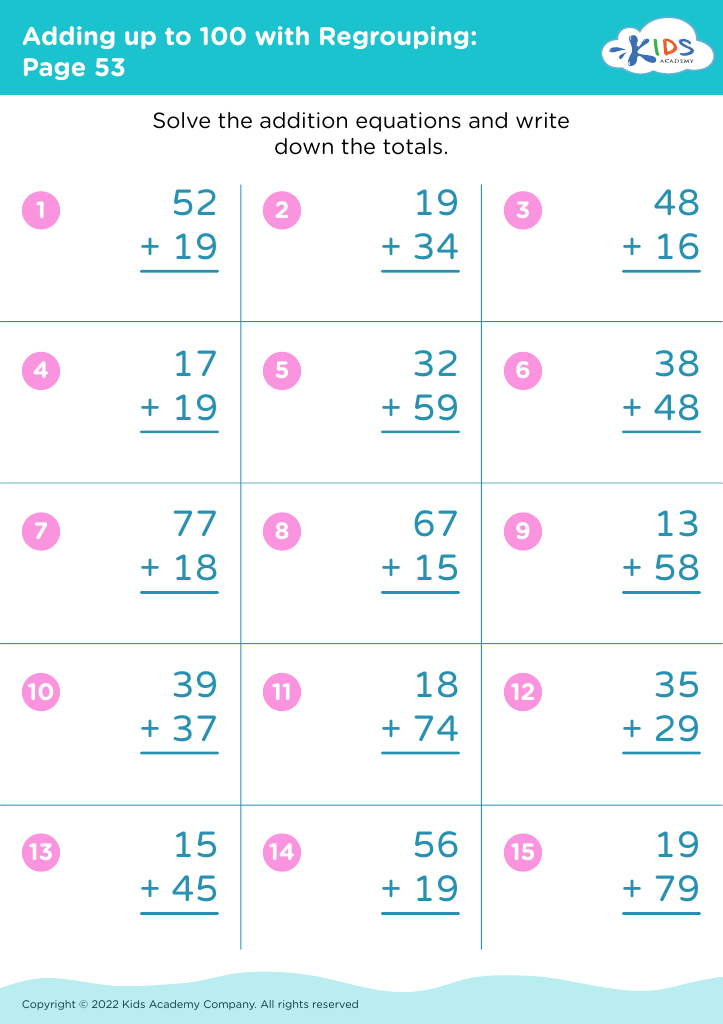
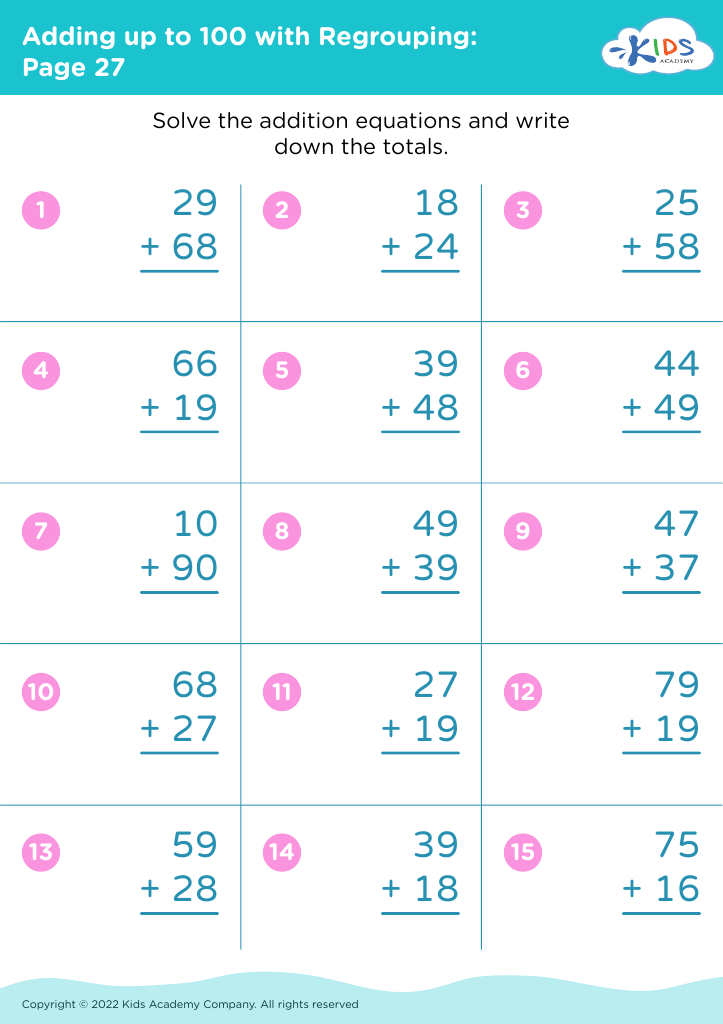
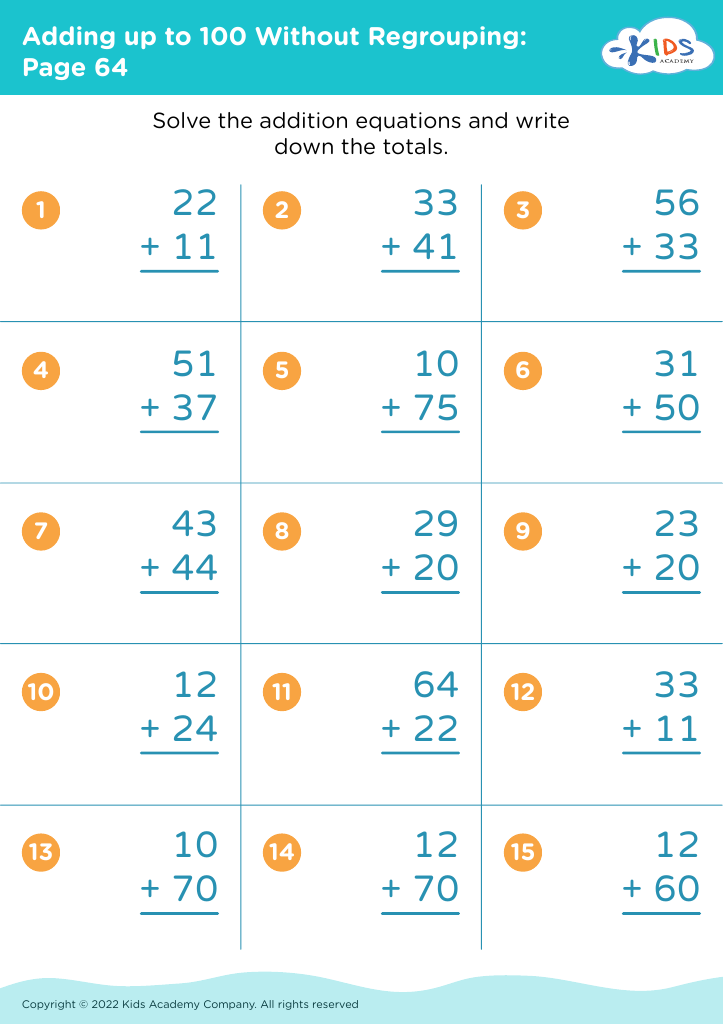
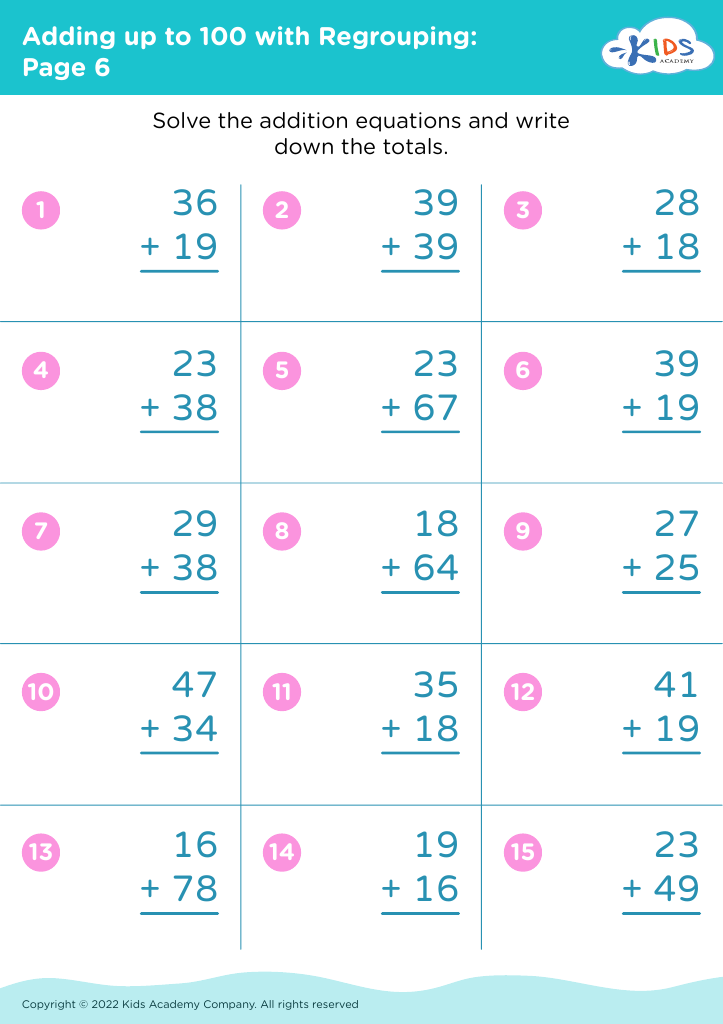
Unlock the magic of math with our "Recognize Patterns Adding up to 100 Worksheets"! Designed for young learners, these worksheets make mastering addition fun and engaging. Students will discover patterns to streamline their calculations, boosting both speed and accuracy. With a variety of colorful, thoughtfully crafted activities, kids will enjoy the challenge of identifying number sequences and developing strong mathematical foundations. Perfect for classroom or home use, these worksheets will help students gain confidence in their addition skills, preparing them for more complex math concepts. Download now and make learning math a delightful adventure for your child!




%20(1).jpg)


Understanding patterns and learning to recognize them help children make sense of numbers and cultivate strong math skills, which are crucial for their future academic success. When parents and teachers focus on teaching children how to identify patterns that add up to 100, they foster critical thinking, problem-solving skills, and numerical fluency.
Patterns serve as the foundation of more complex mathematical concepts. Grasping simple addition patterns, like combinations that sum to 100, encourages children to see relationships between numbers, enhancing their arithmetic and algebraic thinking. This also lays the groundwork for multiplication, division, and understanding number properties.
Moreover, recognizing patterns boosts cognitive development and helps children develop a structured approach to mathematical problems. It builds their ability to predict and extrapolate, skills important not only in math but in daily decision-making.
Parents and teachers who stress pattern recognition create a stimulating learning environment that nurtures curiosity and builds confidence. Positive reinforcement in discovering and understanding these patterns equips students with the persistence and preparation to handle more advanced math concepts with enthusiasm and resilience. Thus, emphasizing this skill is investing in a child's long-term educational journey and their capacity to tackle challenges creatively and logically.








