Simplifying Fractions Adding up to 100 Worksheets
3 filtered results
-
From - To
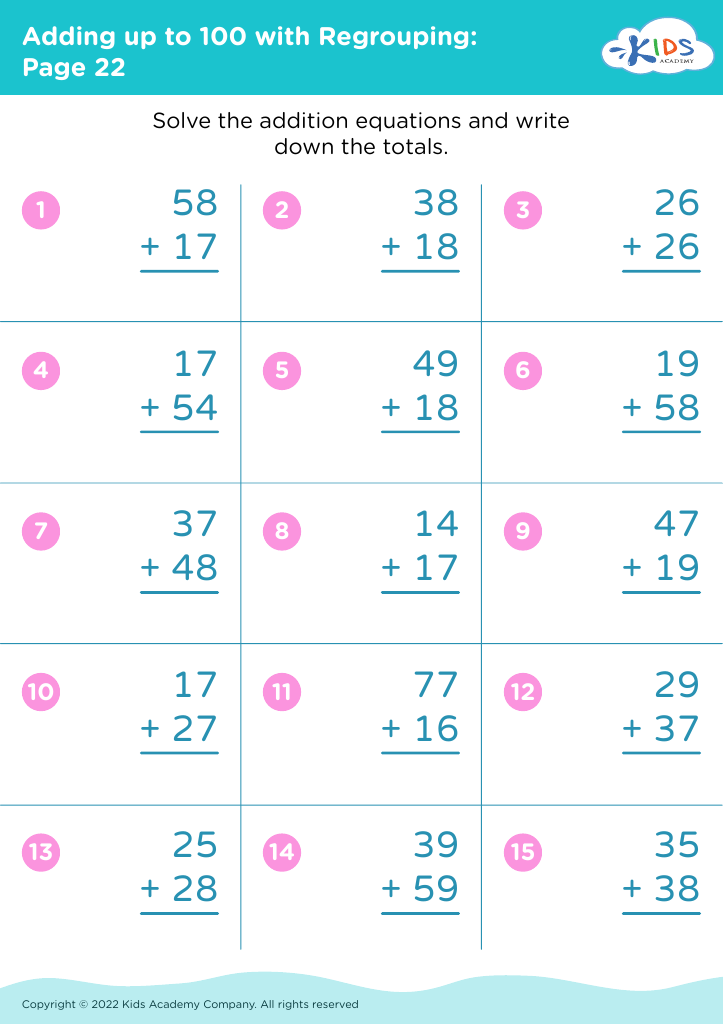
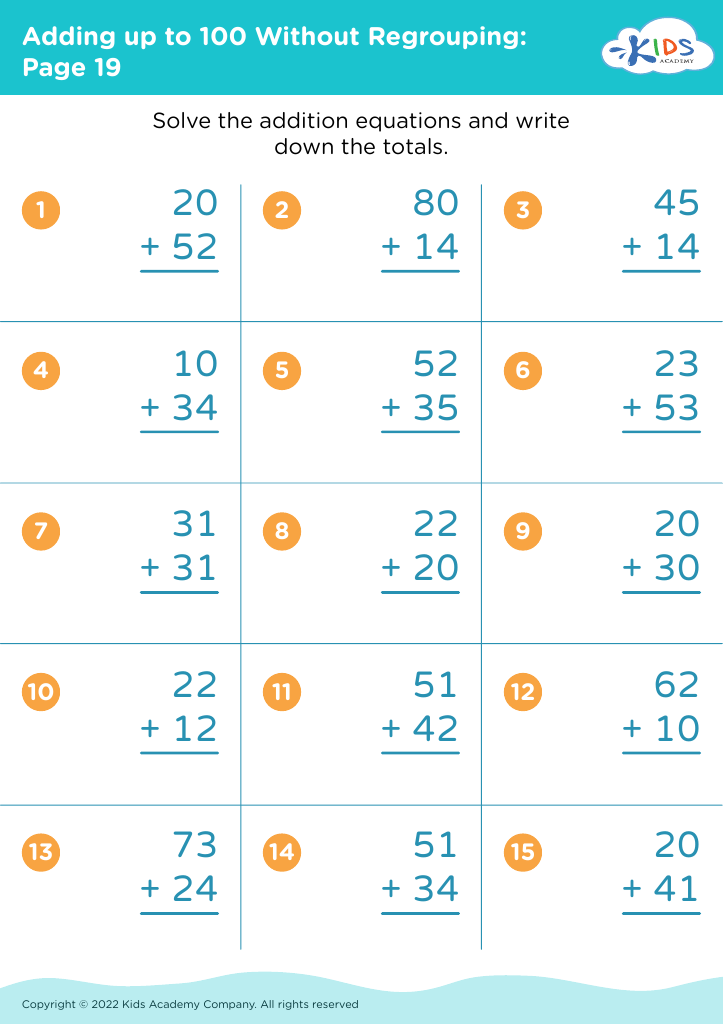
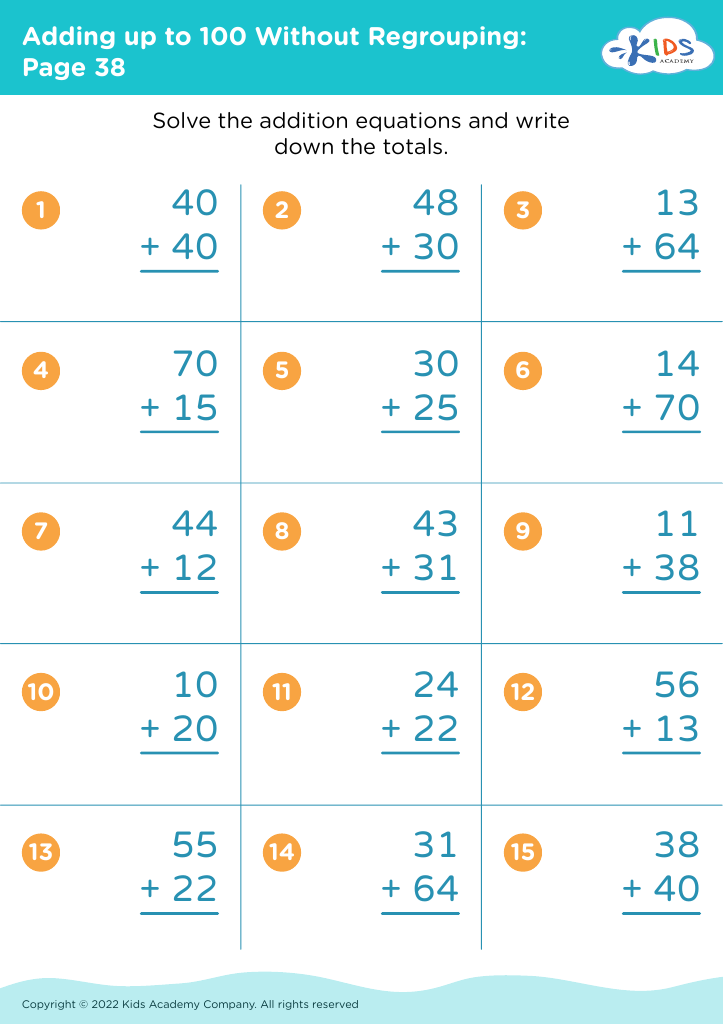
Explore our "Simplifying Fractions Adding Up to 100 Worksheets" designed for young learners to master these essential math skills! These engaging worksheets provide a fun and interactive way to help students understand how to simplify fractions, making complex concepts more accessible. Utilizing a variety of exercises, children will practice recognizing equivalent fractions and enhancing their problem-solving abilities. Perfect for classroom use or homework assignments, these printable resources cater to early-grade students, ensuring they gain confidence in their math skills. Download these worksheets today to help your students succeed in simplifying fractions while tackling the exciting challenge of adding up to 100!






%20(1).jpg)
Parents and teachers should prioritize the concept of simplifying fractions that add up to 100 because it fosters vital mathematical skills in children. Understanding this concept creates a strong foundation for more complex arithmetic, reinforcing an intuitive sense of numbers and proportions. When students learn to simplify fractions, they engage with the core principles of equivalency and division, which are fundamental mathematics skills.
Furthermore, mastering this concept enhances critical thinking, as students explore how different fractions combine to make a whole. This enrichment allows young learners to approach problems with confidence, encouraging persistence in tackling challenging scenarios.
Additionally, these skills feed into real-life applications, allowing children to better understand portions in cooking, sharing, or budgeting. Reinforcing fraction skills promotes mathematical fluency, which aligns with educational standards and prepares students for future academic success.
Finally, by instilling an understanding of fractions that total 100, educators and parents simultaneously nurture life skills regarding measurement and comparison, skills that extend beyond the classroom. Involving parents in discussions of fractions can solidify learning, making mathematics a collaborative venture. Ultimately, familiarity with these foundational concepts prepares children for greater mathematical challenges in the future.








