Understanding patterns Adding up to 100 Worksheets
11 filtered results
-
From - To
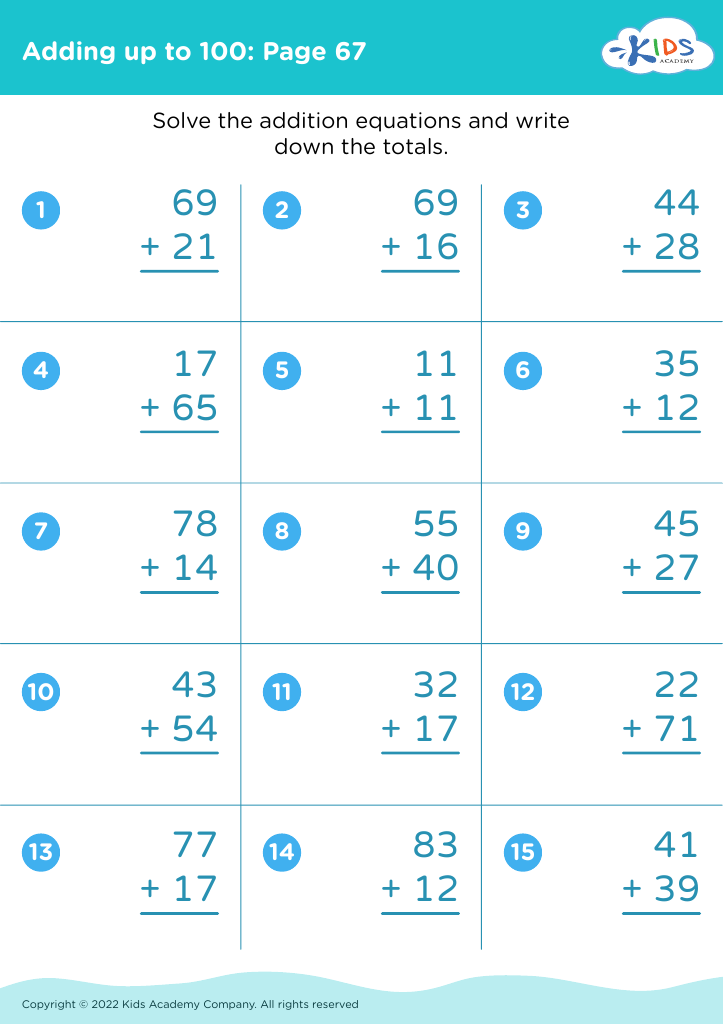
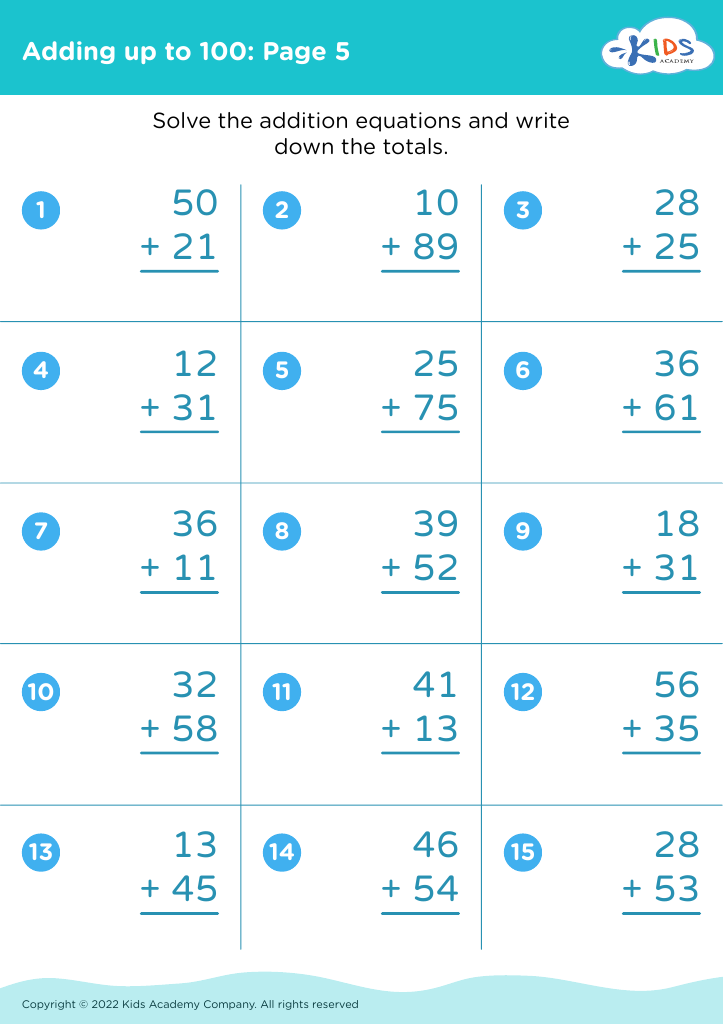
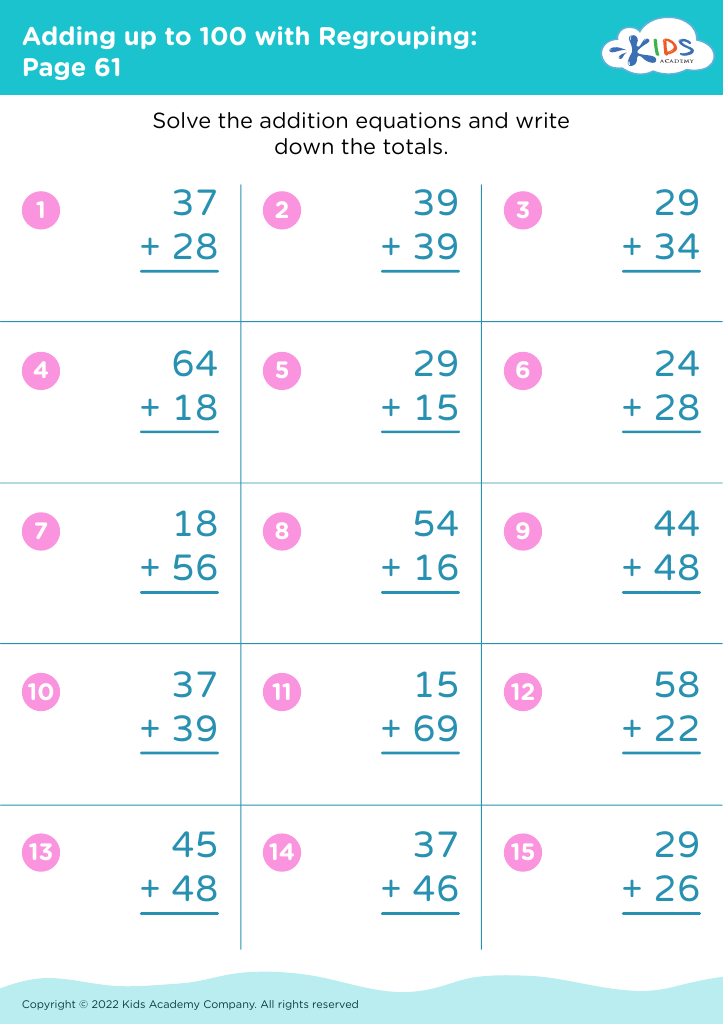
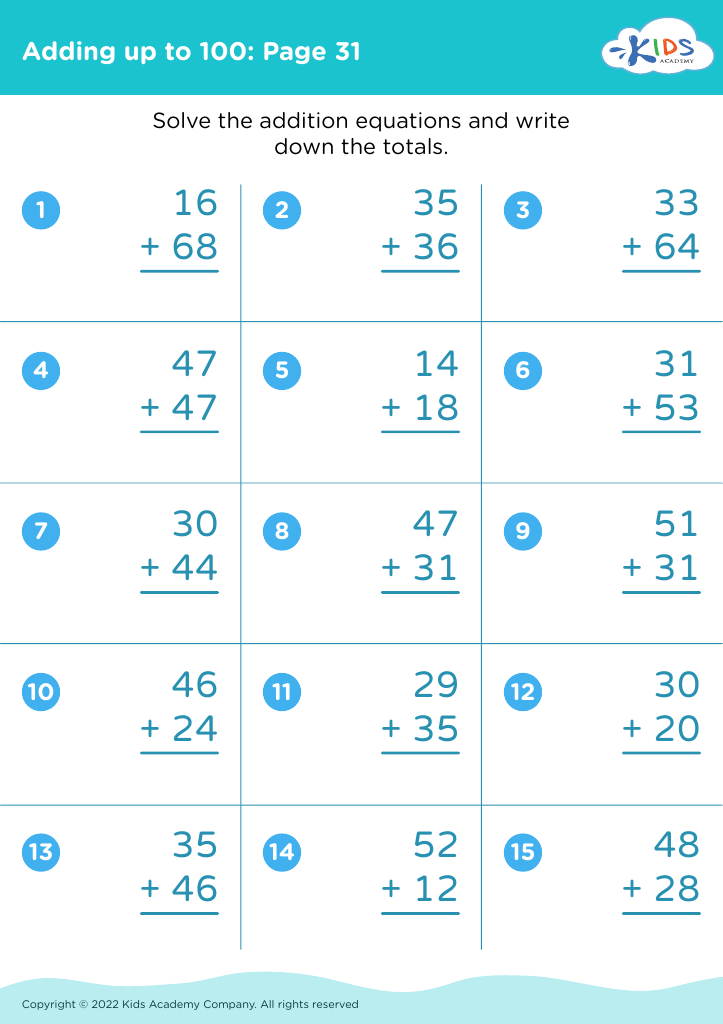
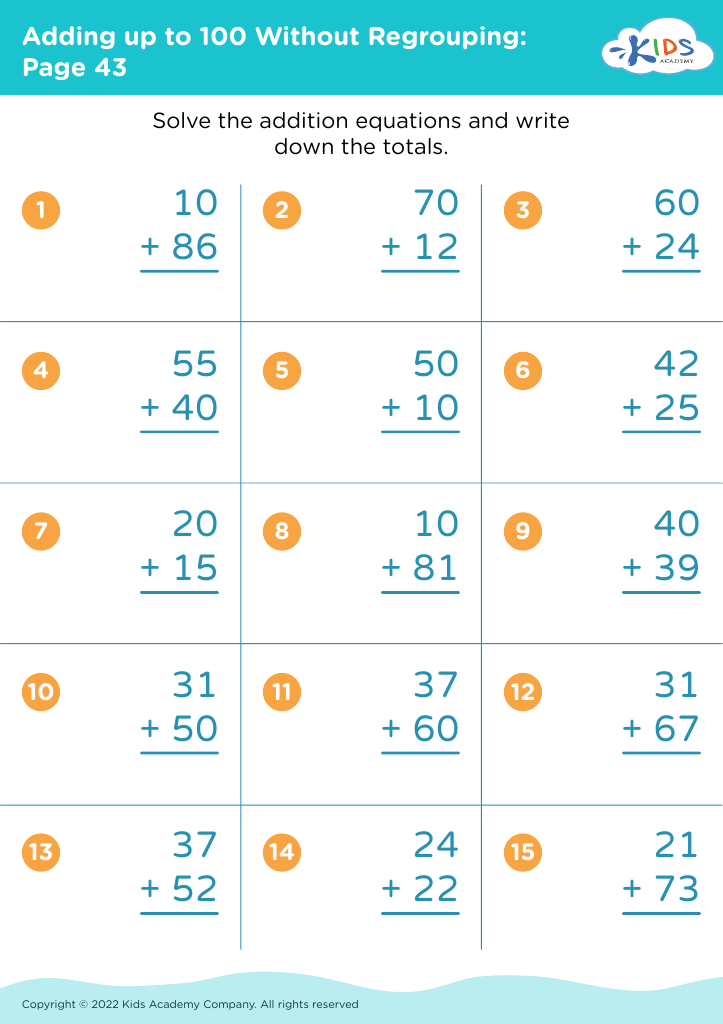
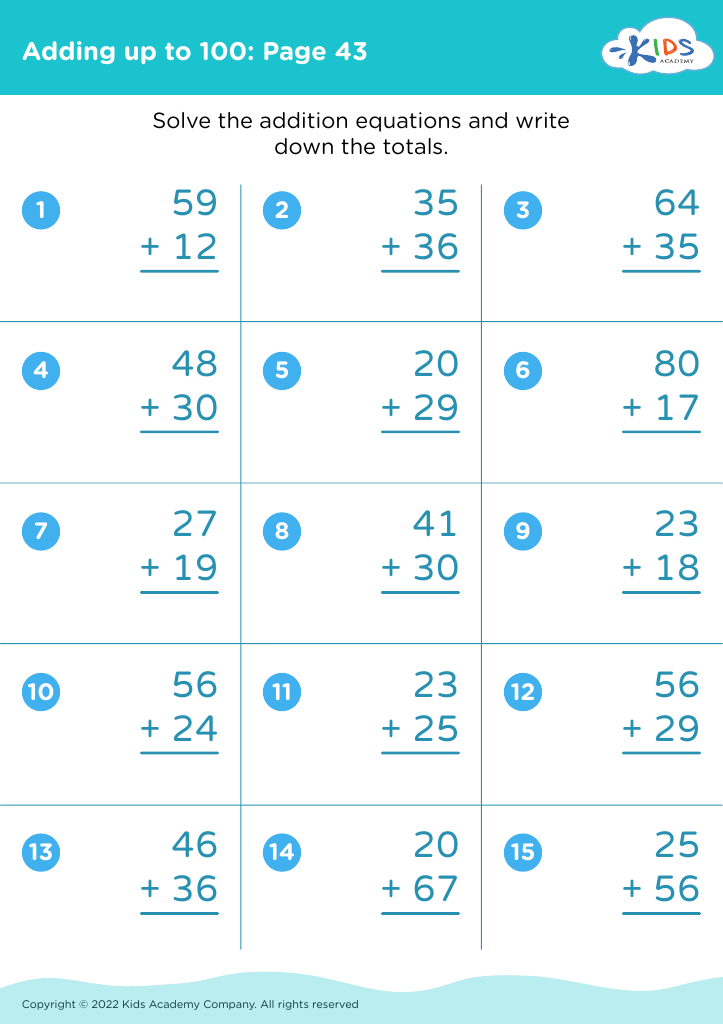
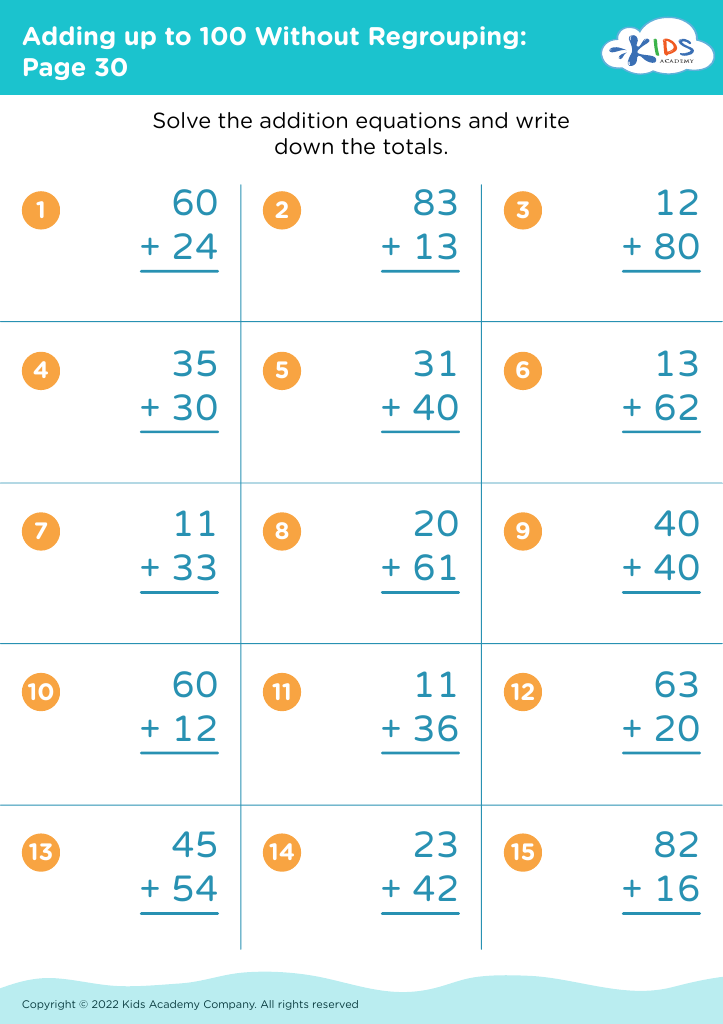
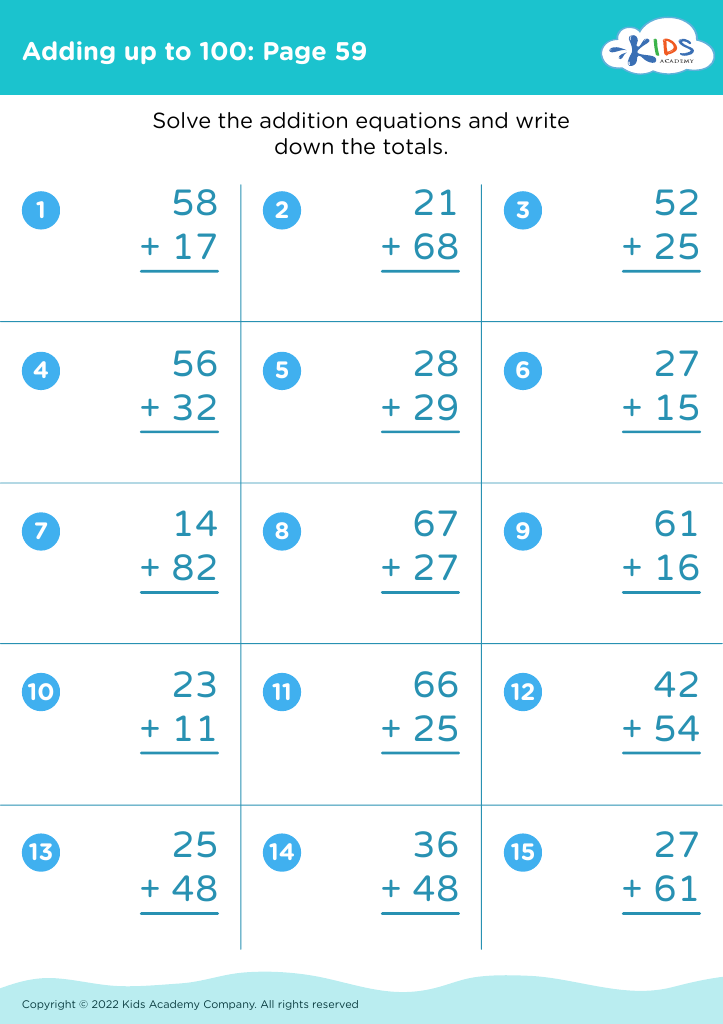
Dive into the world of numbers with our "Understanding Patterns Adding Up to 100 Worksheets!" Tailored for young minds, these exercises help children recognize and apply number patterns, enhancing their addition skills up to 100. Designed by experts, each worksheet builds foundational math skills critical for future learning. Engaging visuals and varied challenges keep kids motivated and excited. Ideal for classroom use or at-home practice, our worksheets support progressive learning and instill a love for math. Equip your child with the tools they need to succeed in mathematics with our interactive and fun learning resources. Try them today!
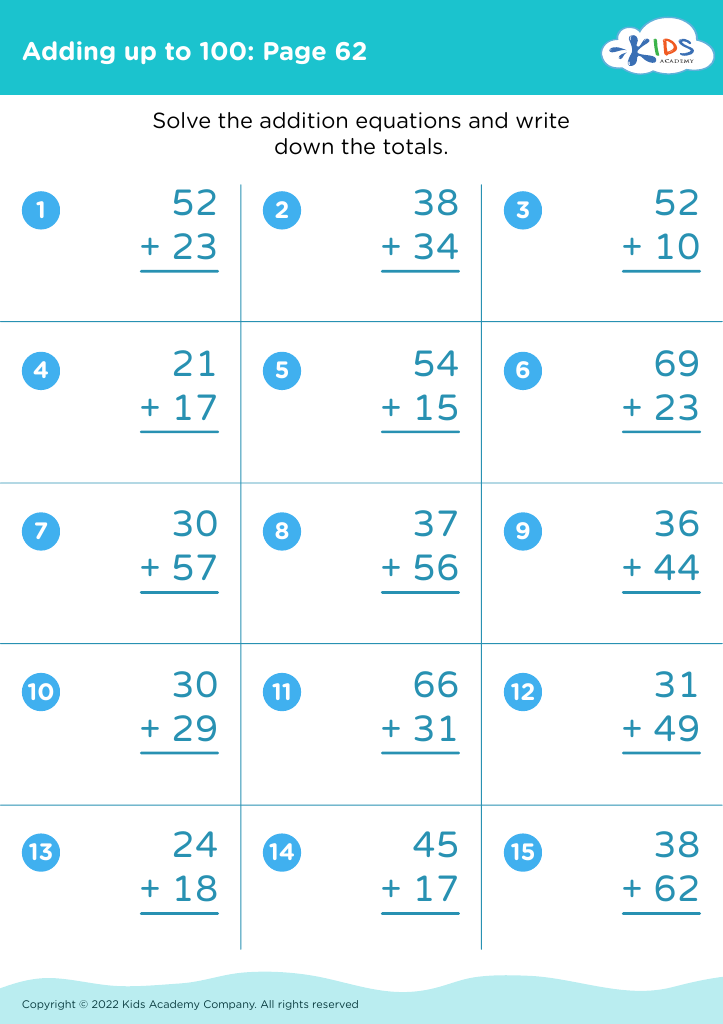
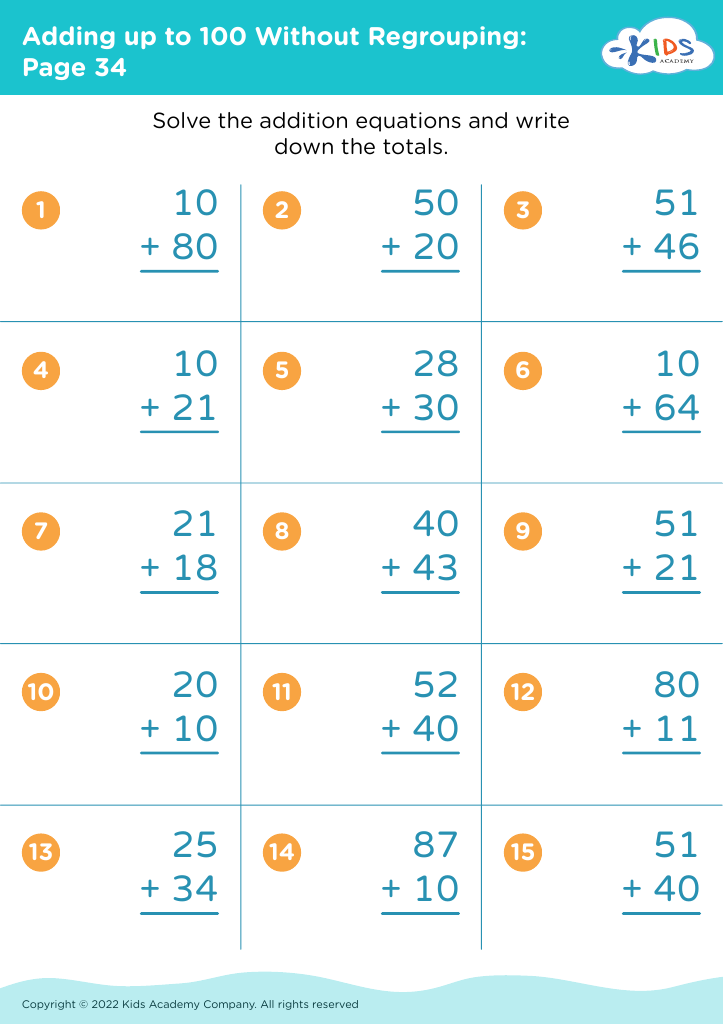
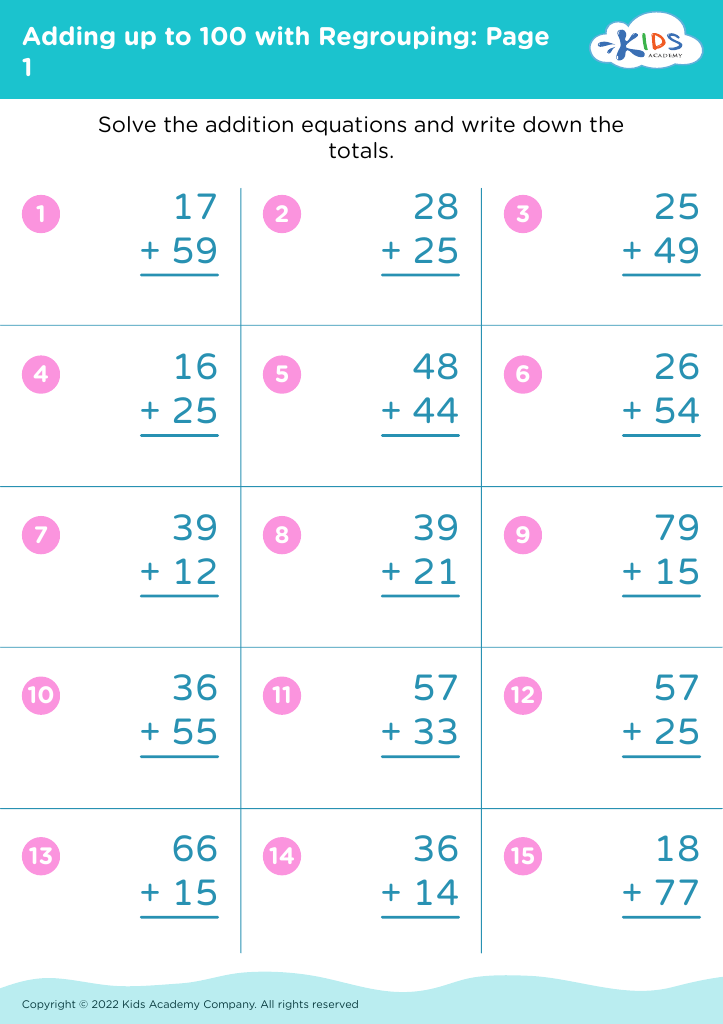


%20(1).jpg)




Understanding patterns that add up to 100 is crucial for early mathematics education and plays a significant role in developing a child's numeracy skills. For parents and teachers, appreciating the importance of these patterns can help foster a solid mathematical foundation and encourage a child's enthusiasm for learning.
Firstly, recognizing patterns in numbers helps children build strong mental math abilities. This competency allows them to quickly and efficiently solve arithmetic problems, boosting their confidence and proficiency in mathematics. When children see how numbers fit into various patterns, such as sequences or groups that sum to 100, they more easily grasp complex mathematical concepts down the road.
Moreover, understanding these patterns strengthens problem-solving skills. By dissecting how numbers interact and form predictable outcomes, students develop critical thinking abilities applicable across industry disciplines and real-life scenarios like budgeting or planning.
Additionally, it promotes an intuitive understanding of multiplication and division. When children discern how various number combinations total 100, they better understand relationships in more extensive mathematical operations.
Finally, it caters to a hands-on learning experience. Engaging young learners with practical activities, such as grouping objects or employing visual aids, can make abstract concepts tangible and enjoyable, paving the way for lifelong mathematical curiosity and competence.








