Vocabulary Building Adding up to 100 Worksheets
3 filtered results
-
From - To
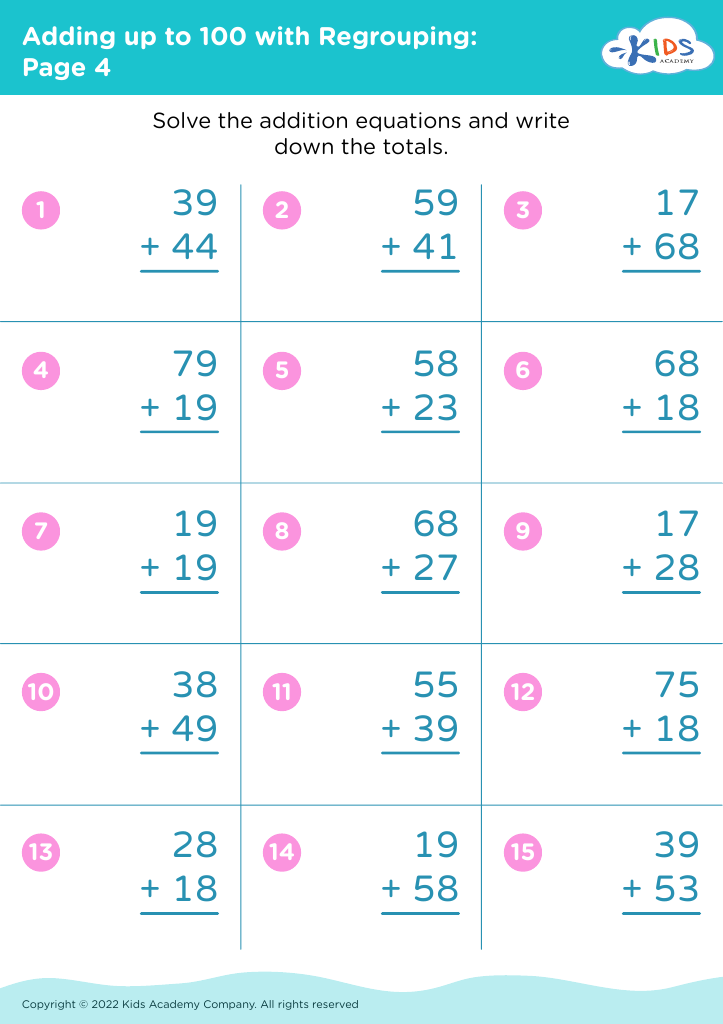
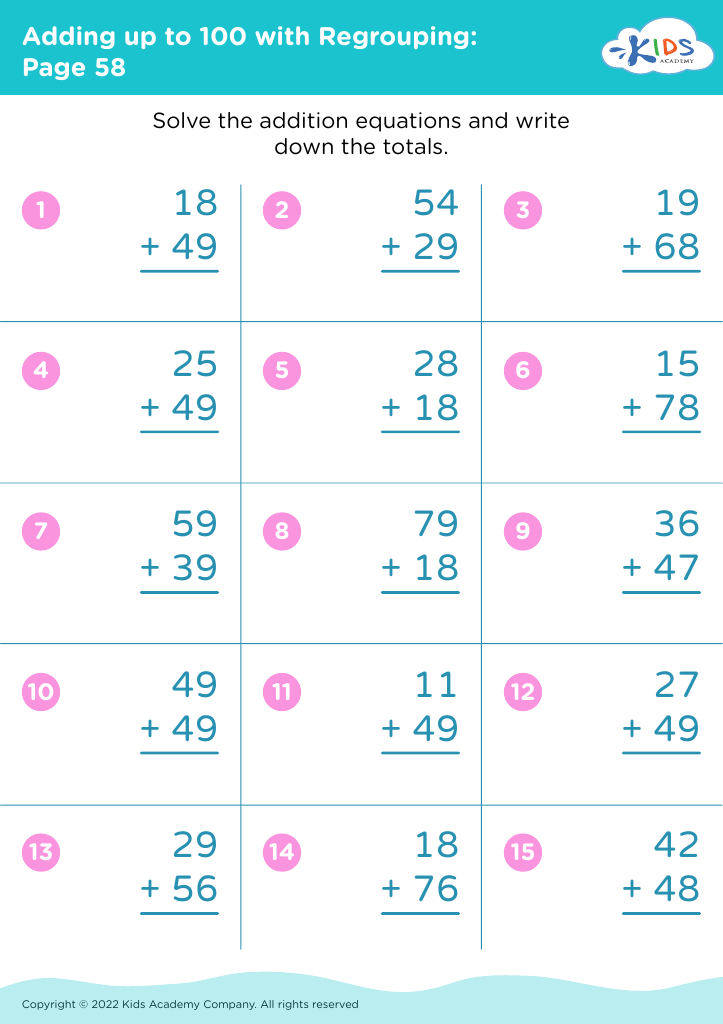
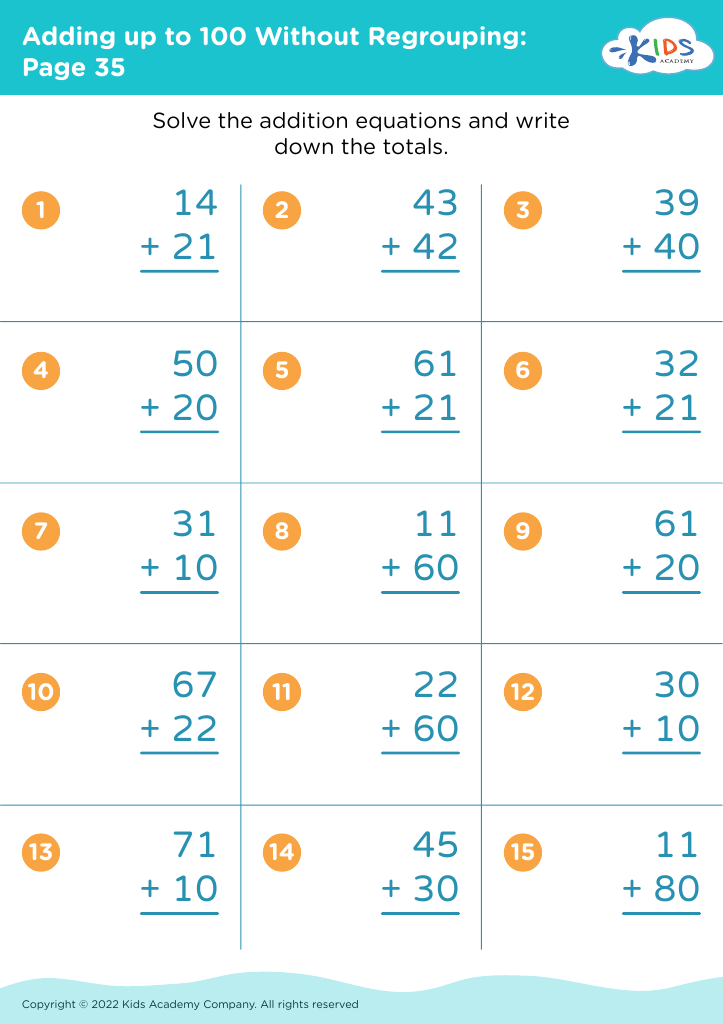
Unlock the power of vocabulary with our "Vocabulary Building: Adding Up to 100 Worksheets!" Designed for early learners, these engaging worksheets seamlessly combine math with language skills. Kids will expand their vocabulary while practicing addition through fun, interactive exercises. From basic terms to descriptive words, each worksheet encourages children to use language in context, enhancing comprehension and communication skills. Ideal for at-home learning or classroom use, our resources foster a love for learning and build confidence in young minds. Discover the joy of vocabulary growth today and watch your child thrive in both math and language arts!


%20(1).jpg)




Vocabulary building is crucial for young learners, significantly impacting their reading, writing, and overall academic success. When parents and teachers prioritize vocabulary development, they empower children to express themselves clearly and understand complex texts more effectively. A rich vocabulary lays the foundation for comprehension, enabling students to grasp new concepts and participate in discussions with confidence.
Learning new words enhances communication skills. It enables children to share their thoughts and ideas, ask questions, and articulate their feelings, fostering better relationships with peers and adults alike. Furthermore, a strong vocabulary is linked to better academic performance; children with expansive vocabularies are more likely to excel in standardized tests and develop critical thinking skills.
Moreover, engaging in vocabulary-building activities nurtures a love for language and learning. When parents and teachers introduce fun and interactive methods—like reading together, playing word games, or discussing new words in context—they make vocabulary acquisition enjoyable. This positive reinforcement helps kindle a lifelong passion for learning.
In essence, vocabulary building is not just about learning words; it is about nurturing confident communicators and skilled learners who can thrive academically and socially. Investing in this critical area benefits children far beyond the classroom, enriching their personal and professional lives in the future.








