Vocabulary enhancement Adding up to 100 Worksheets
3 filtered results
-
From - To
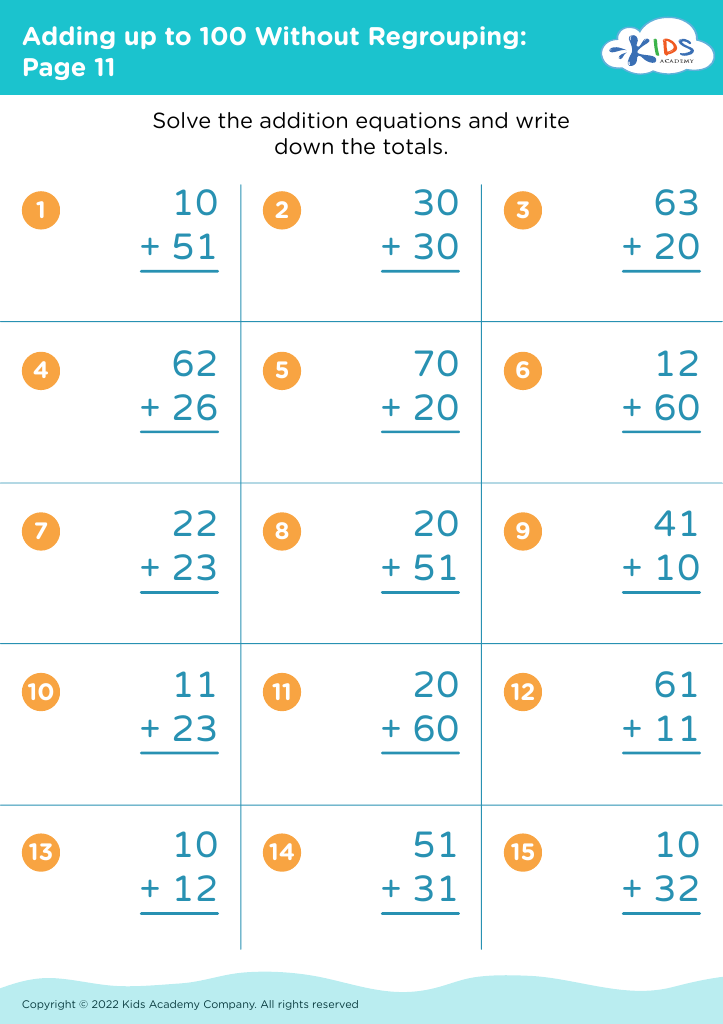
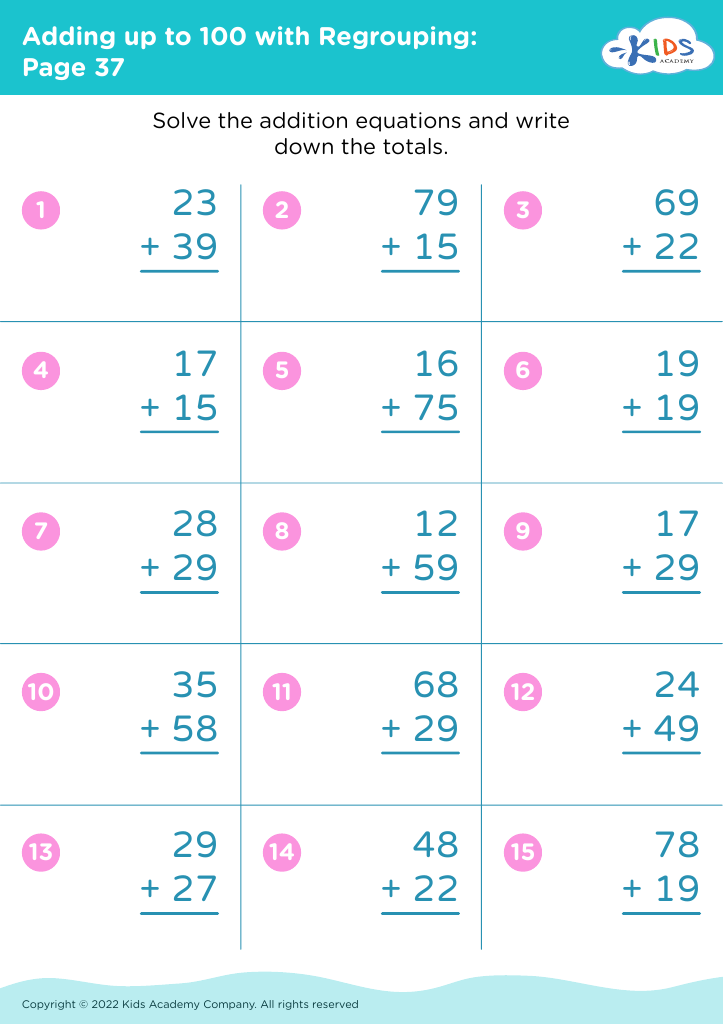
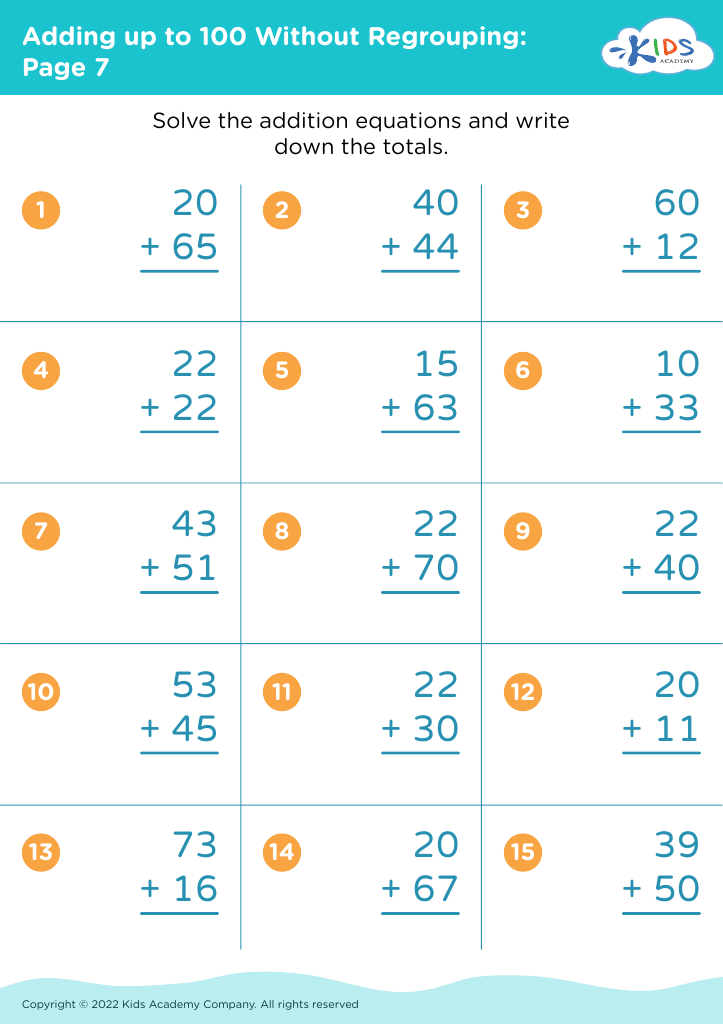
Enhance your child’s vocabulary while mastering math with our “Vocabulary Enhancement: Adding up to 100” worksheets! Designed for young learners, these engaging resources combine essential math skills with vocabulary development. Each worksheet features clear illustrations and age-appropriate language to help students understand mathematical terms as they practice adding numbers up to 100. By reinforcing the connection between language and math, children will build confidence and improve their academic performance. Explore our diverse selection of printable worksheets to provide your students with an exciting way to learn both math and vocabulary in a fun, interactive environment. Perfect for classroom or home learning!





%20(1).jpg)

Vocabulary enhancement is crucial for children’s academic success and overall development. A rich vocabulary allows children to express themselves clearly and understand complex concepts, fostering effective communication skills essential in both school and life. When parents and teachers focus on vocabulary enhancement, they equip children with the tools needed to excel in reading comprehension, writing, and verbal expression.
Improved vocabulary directly correlates with greater reading comprehension. As students encounter new words in texts, their ability to grasp the meaning of materials increases, promoting a love for reading and learning. Moreover, a strong vocabulary builds confidence; children who can articulate their thoughts well are more likely to participate in discussions and engage actively in their education.
In addition, diverse vocabulary aids critical thinking and problem-solving skills. It enables children to analyze, synthesize, and evaluate information more effectively. Early vocabulary development is also linked to later academic achievement. Thus, investing time and resources in enhancing vocabulary can yield extensive benefits as children's language skills form the foundation for future learning and lifelong success.
In summary, prioritizing vocabulary enhancement is essential for parents and teachers to nurture well-rounded, confident, and capable learners.








