Problem-Solving Skills Addition and Subtraction Word Problems Worksheets - Page 2
33 filtered results
-
From - To
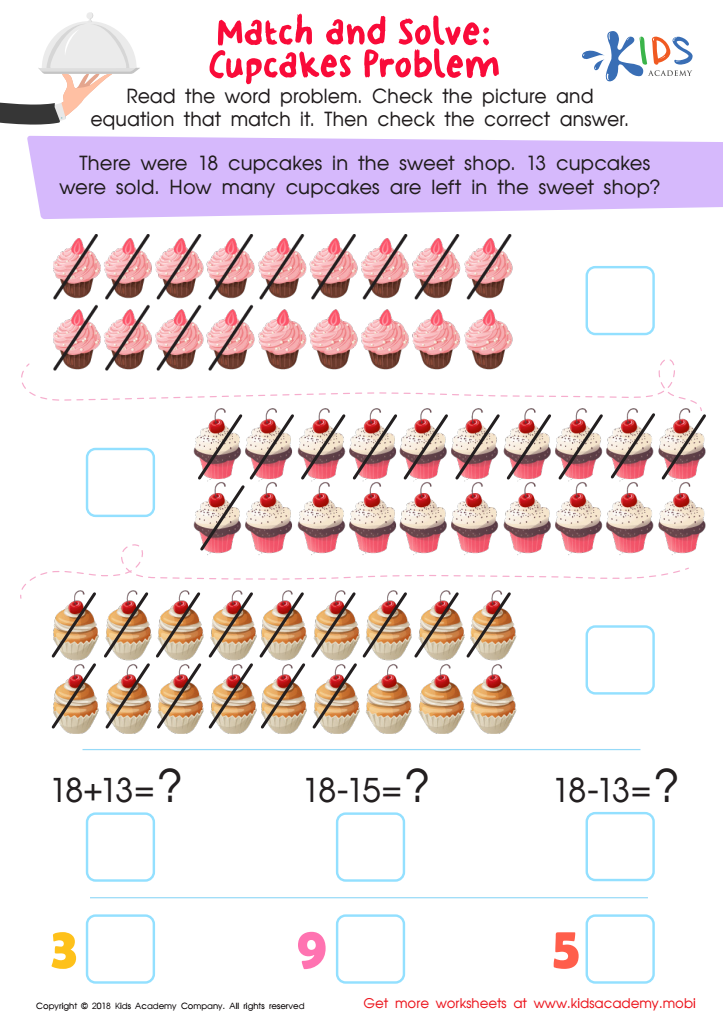
Match and Solve: Cupcakes Problem Worksheet
 Assign to My Students
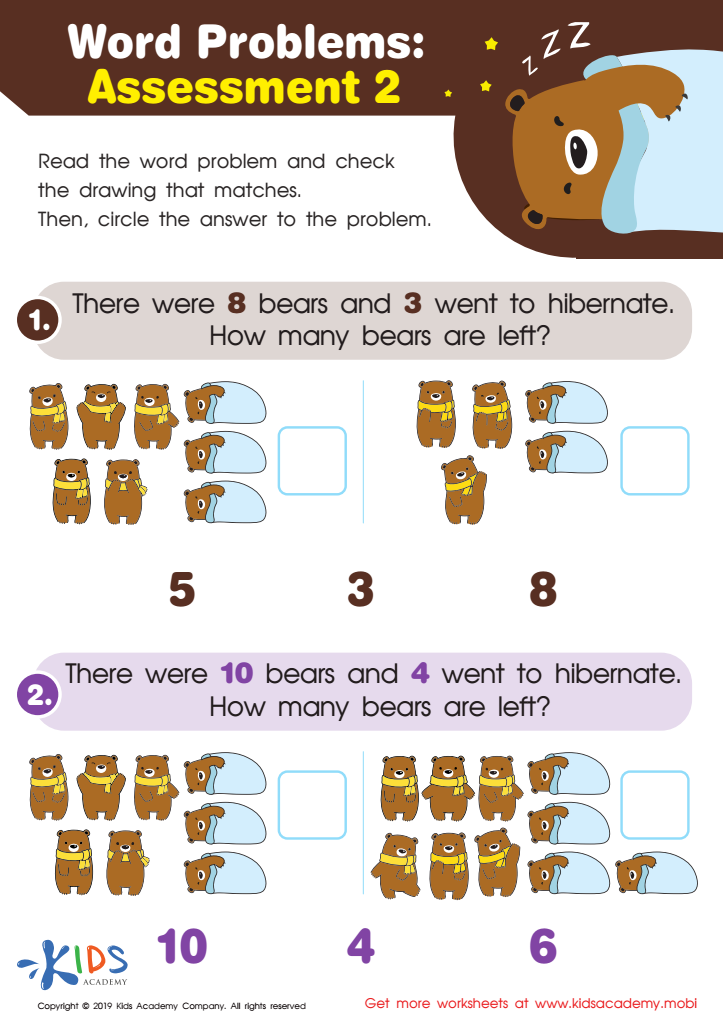
Word Problems: Assessment 2 Worksheet
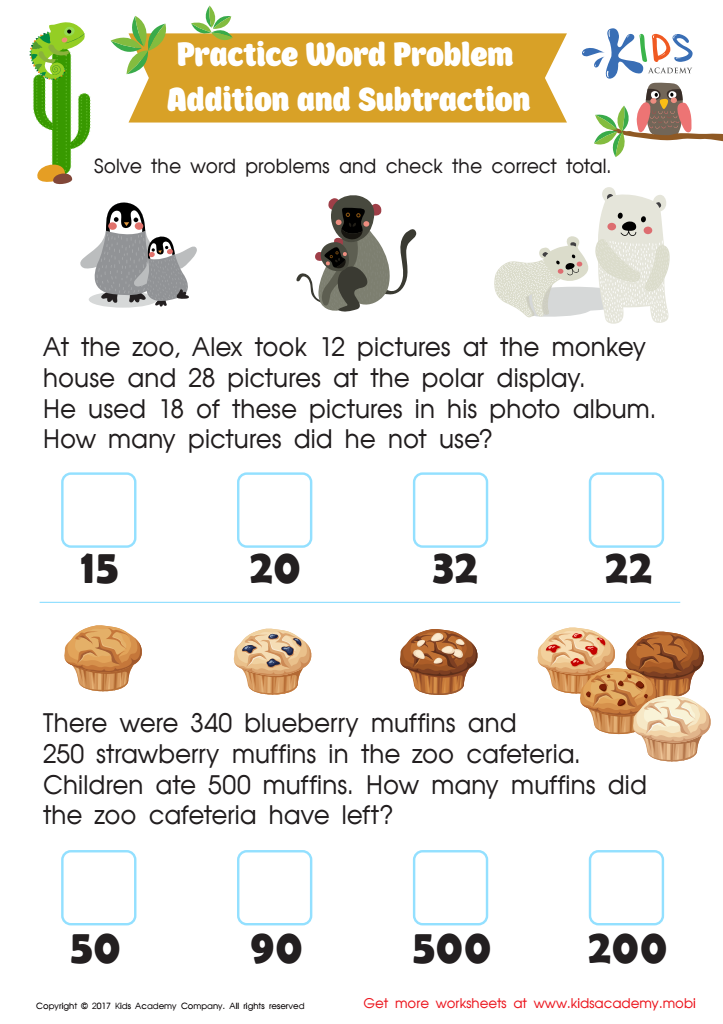
Addition and Subtraction: Word Problems Worksheet
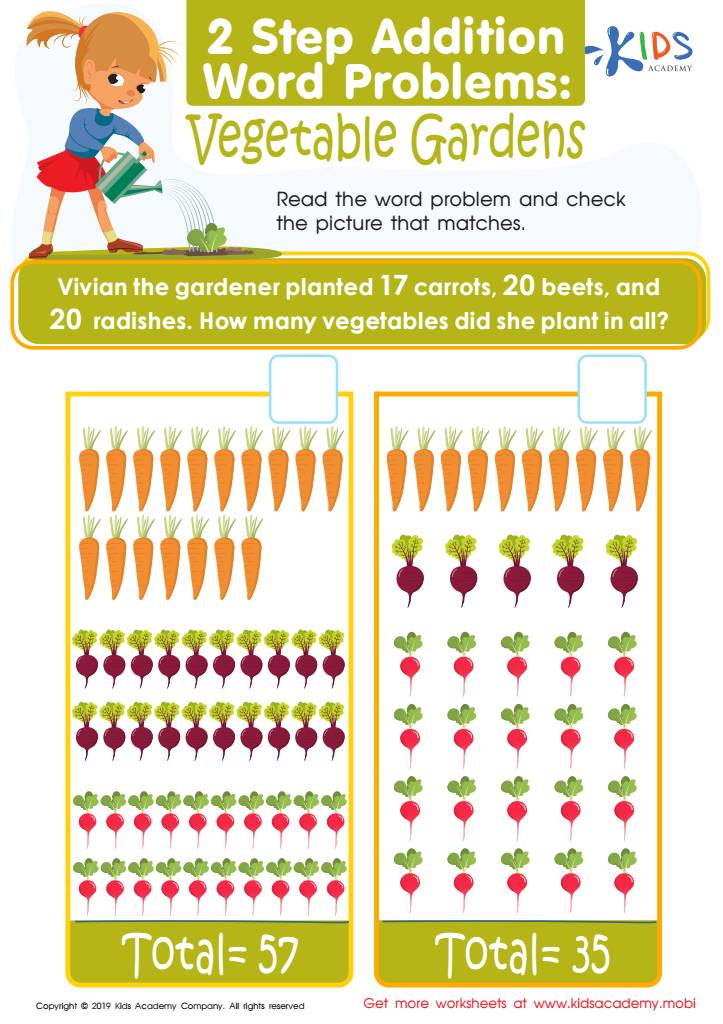
Vegetable Gardens Worksheet
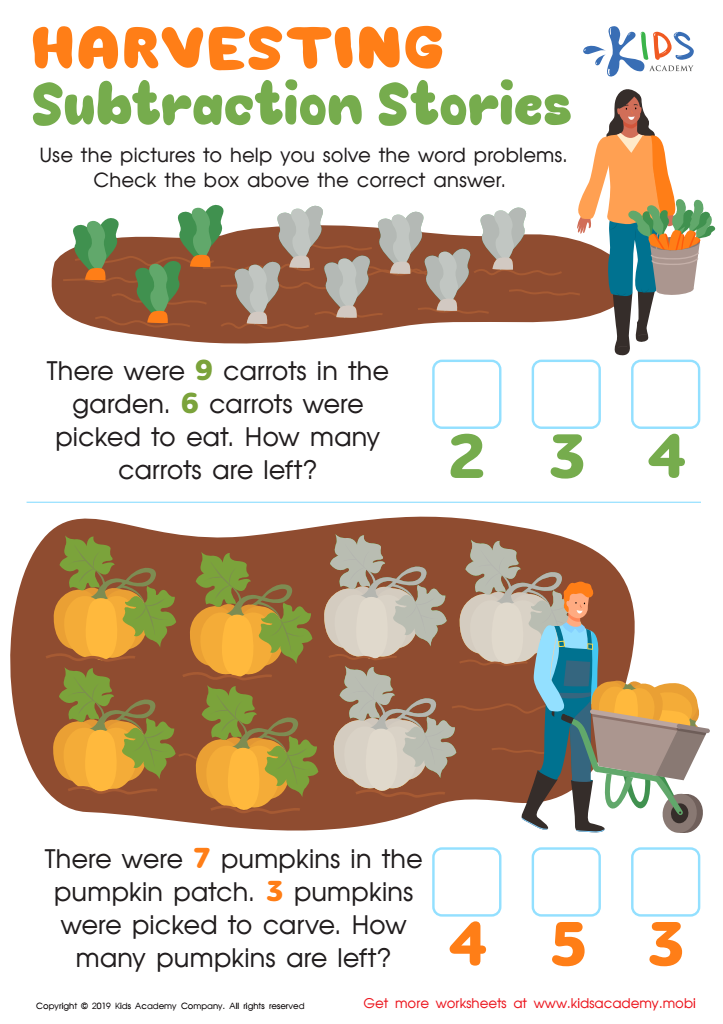
Harvesting Subtraction Stories Worksheet
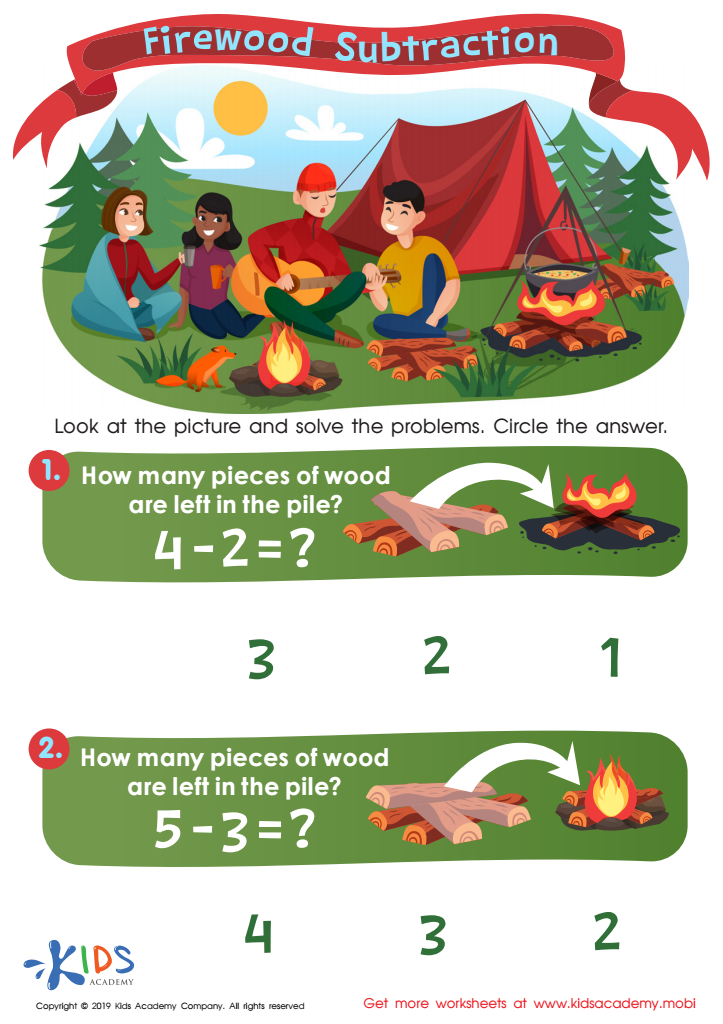
Firewood Subtraction Worksheet
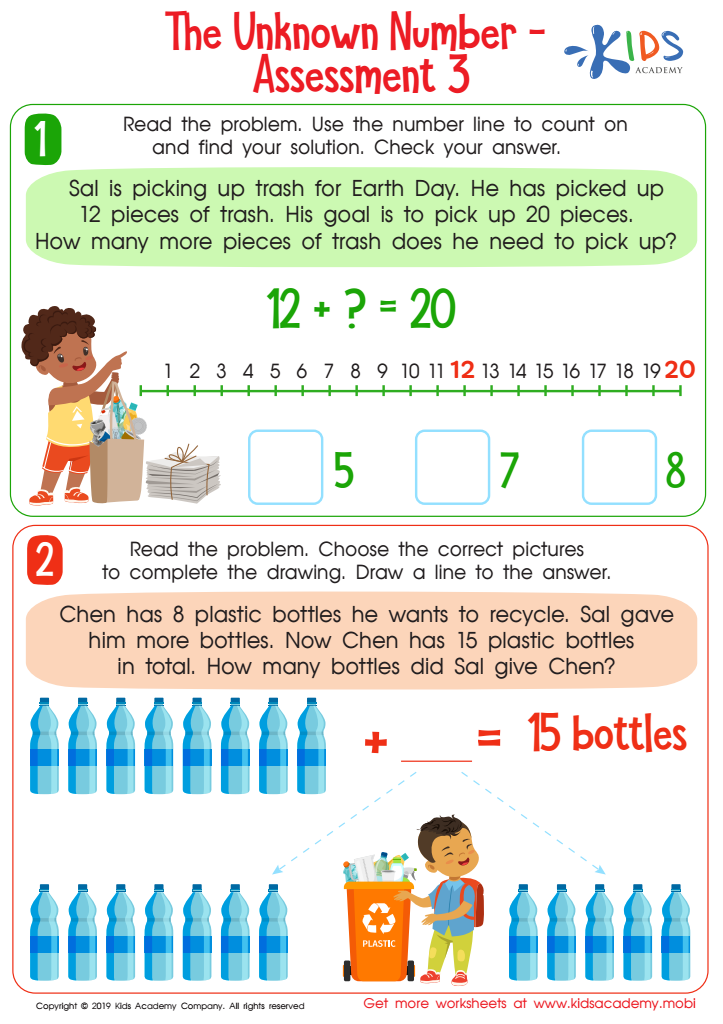
The Unknown Number - Assessment 3 Worksheet
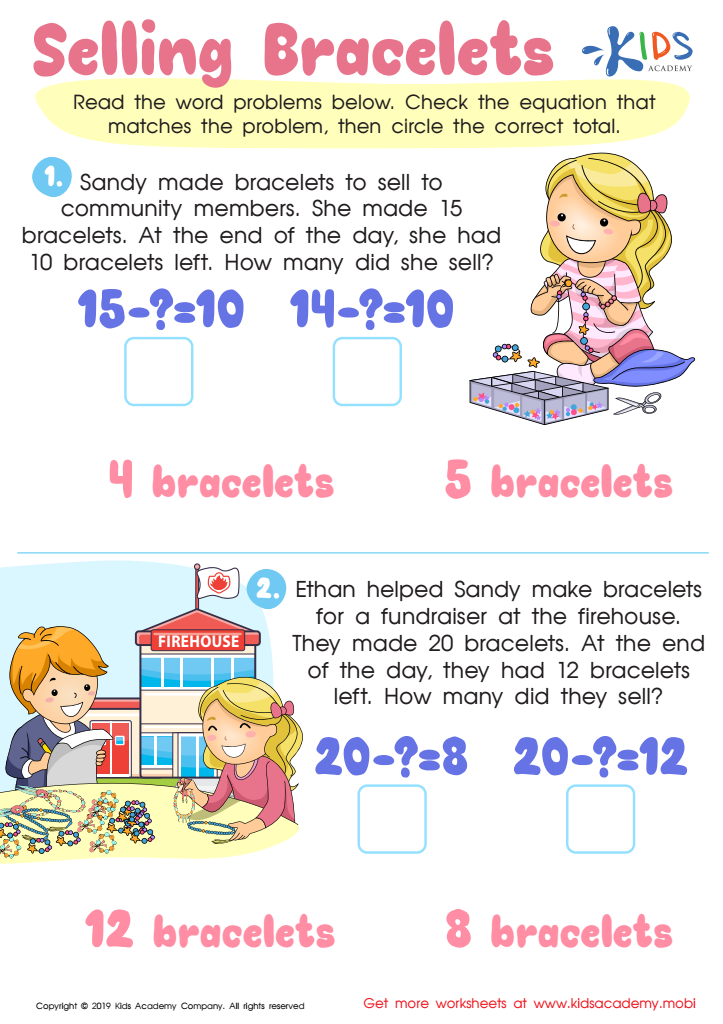
Selling the Bracelets Worksheet
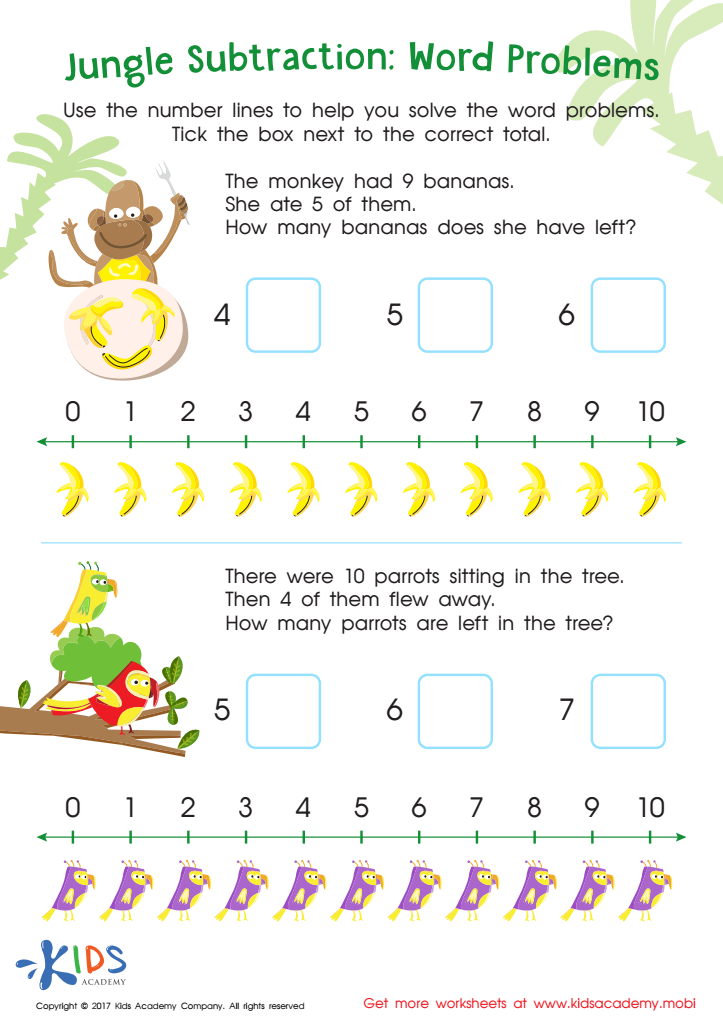
Jungle Subtraction Word Problems Substraction Worksheet








Parents and teachers should prioritize problem-solving skills in addition and subtraction word problems because these skills are foundational for children's mathematics education and overall cognitive development. Word problems require students to interpret scenarios, translate them into mathematical expressions, and apply their understanding of arithmetic operations. This process fosters critical thinking, logical reasoning, and the ability to analyze various situations pragmatically.
Moreover, developing problem-solving skills helps children to recognize the relevance of math in everyday life. By solving word problems, children learn to relate math concepts to real-world situations, enhancing their engagement and motivation in learning. It cultivates perseverance in tackling challenges as they learn that mistakes are part of the learning process, teaching them resilience.
Furthermore, these skills are essential not just in mathematics but also across subjects and in daily life. Proficient problem-solving promotes a growth mindset, where children become more confident in their abilities to face and overcome obstacles. Ultimately, when parents and teachers emphasize the importance of problem-solving in addition and subtraction word problems, they equip children with the necessary tools to navigate academic challenges and excel in various contexts throughout their lives.