Enhances critical thinking Addition & Subtraction Worksheets
3 filtered results
-
From - To
Enhance your child's critical thinking skills with our engaging Addition and Subtraction Worksheets! Designed for early learners, these worksheets offer a variety of challenging problems that encourage students to think deeply and logically while mastering basic math concepts. Our carefully curated activities promote problem-solving abilities and help build a solid foundation in mathematics. Each worksheet is interactive and visually appealing, making learning enjoyable and effective. Perfect for classroom use or homework, these resources will not only strengthen addition and subtraction skills but also foster analytical thinking. Explore our collection today and watch your child's confidence and math proficiency soar!
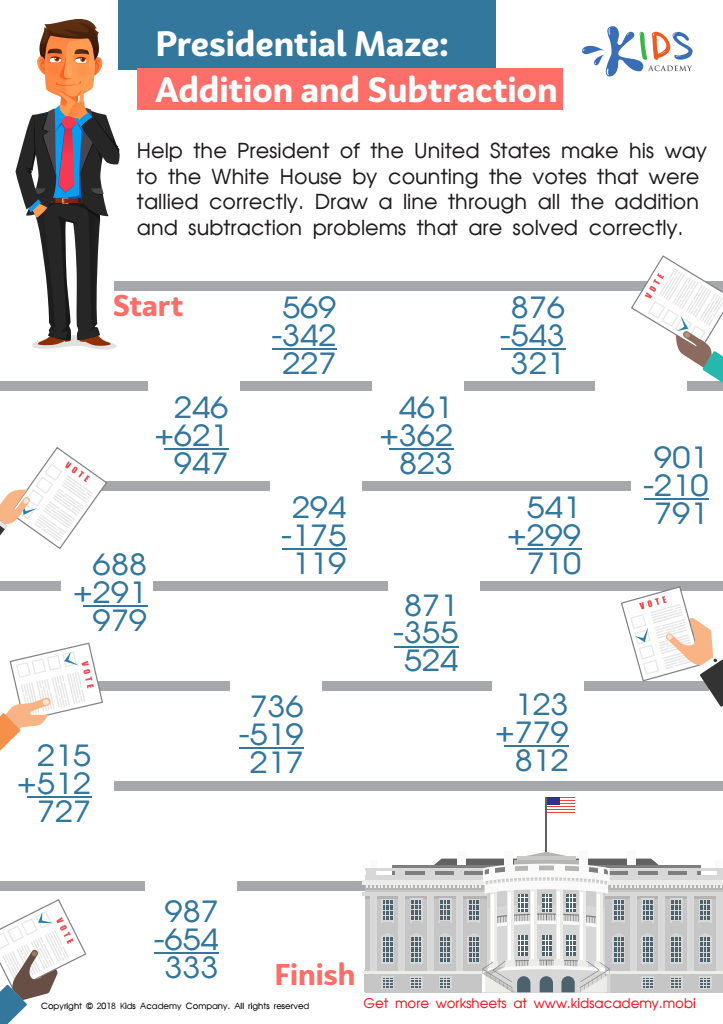
Presidential Maze: Addition and Subtraction Worksheet
 Assign to My Students
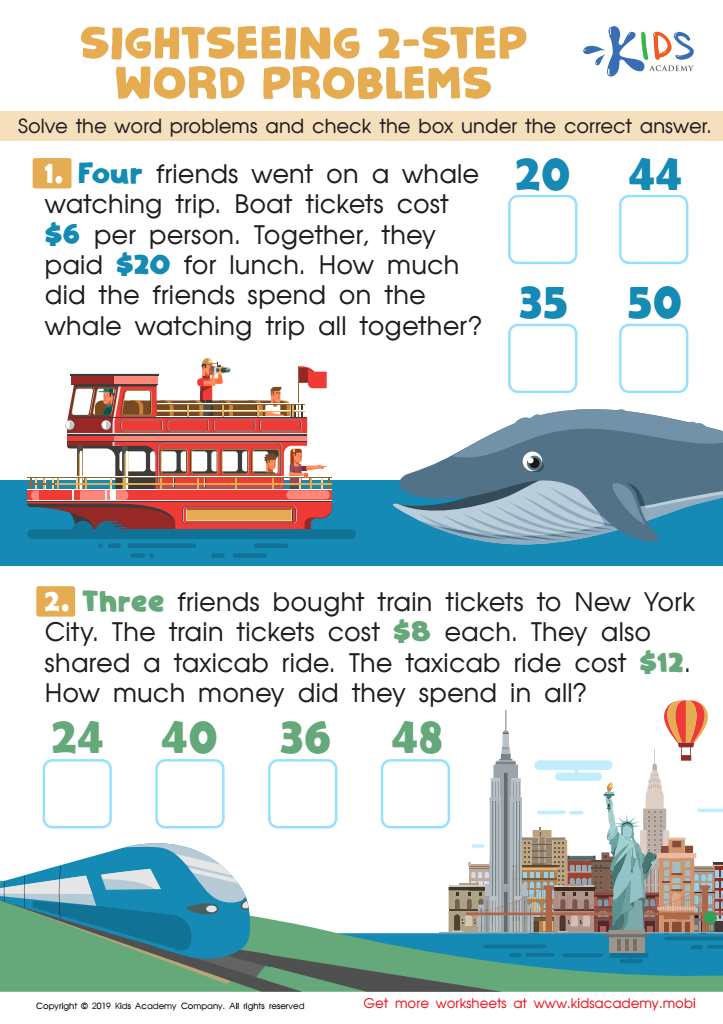
Sightseeing 2-Step Word Problems Worksheet








Enhancing critical thinking skills in primary education, particularly in the realms of addition and subtraction, is essential for several reasons. First, these foundational skills serve as building blocks for more complex mathematical concepts. When children understand basic arithmetic not just in rote formats but through critical thinking, they develop stronger problem-solving abilities that can be applied across various subjects, including science and reading.
Secondly, fostering critical thinking encourages children to approach problems analytically, evaluating different methods to arrive at solutions. This reflective process bolsters their confidence and creativity, essential qualities in an ever-evolving world. Moreover, as technology advances and knowledge expands, decisiveness rooted in sound critical thinking becomes invaluable; children are likely to face complex problems that demand innovative solutions.
Parents and teachers play pivotal roles in this developmental process. By engaging young learners in activities that promote logical reasoning—such as puzzles or real-life math scenarios—they can help enhance these core competencies. Ultimately, investing time in developing these skills not only prepares children academically but also equips them for critical thinking in life challenges, fostering independent learners and responsible decision-makers. Thus, the emphasis on critical thinking in early education should be a shared concern for parents and educators alike.








