Logical thinking Addition & Subtraction Worksheets
10 filtered results
-
From - To
Transform math practice into a fun adventure with our "Logical Thinking Addition & Subtraction Worksheets"! Designed for young learners, these worksheets blend core arithmetic skills with engaging logic puzzles, enhancing their analytical abilities. Each activity encourages problem-solving and critical thinking while reinforcing basic math concepts. Perfect for classroom use or homeschooling, these resources help students develop a strong foundation in addition and subtraction. Colorful illustrations and diverse exercises ensure kids stay motivated and enjoy their learning journey. Unlock your child's potential with our expertly crafted, educational worksheets. Visit Kids Academy to explore more and boost your child’s math proficiency today!
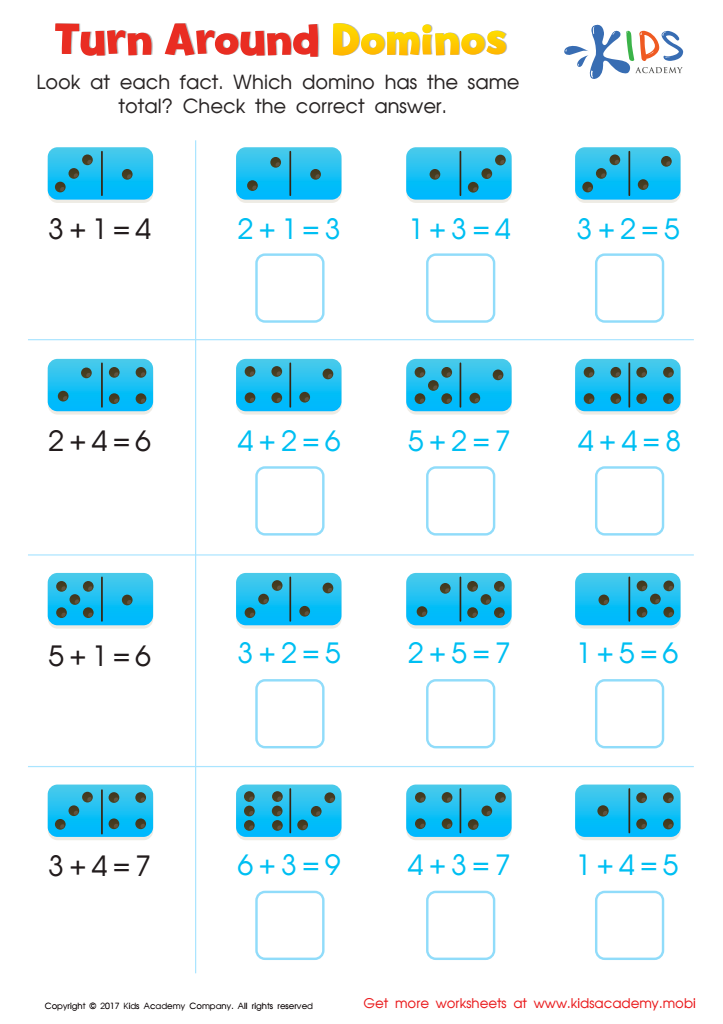
Turn Around Dominos Worksheet
 Assign to My Students
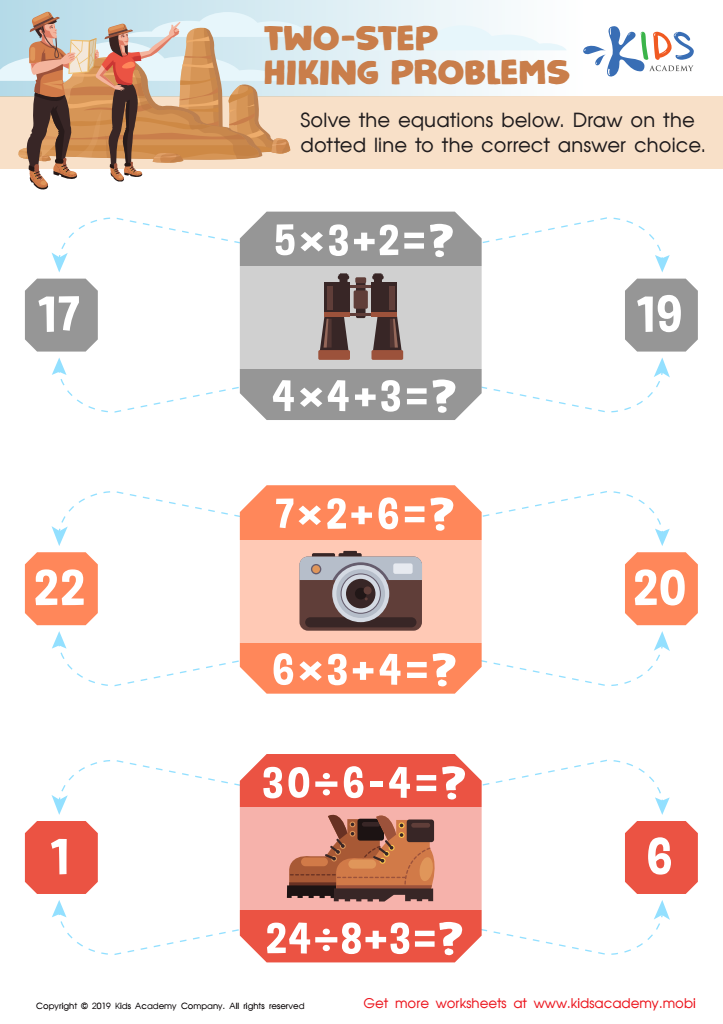
Two-Step Hiking Problems Worksheet
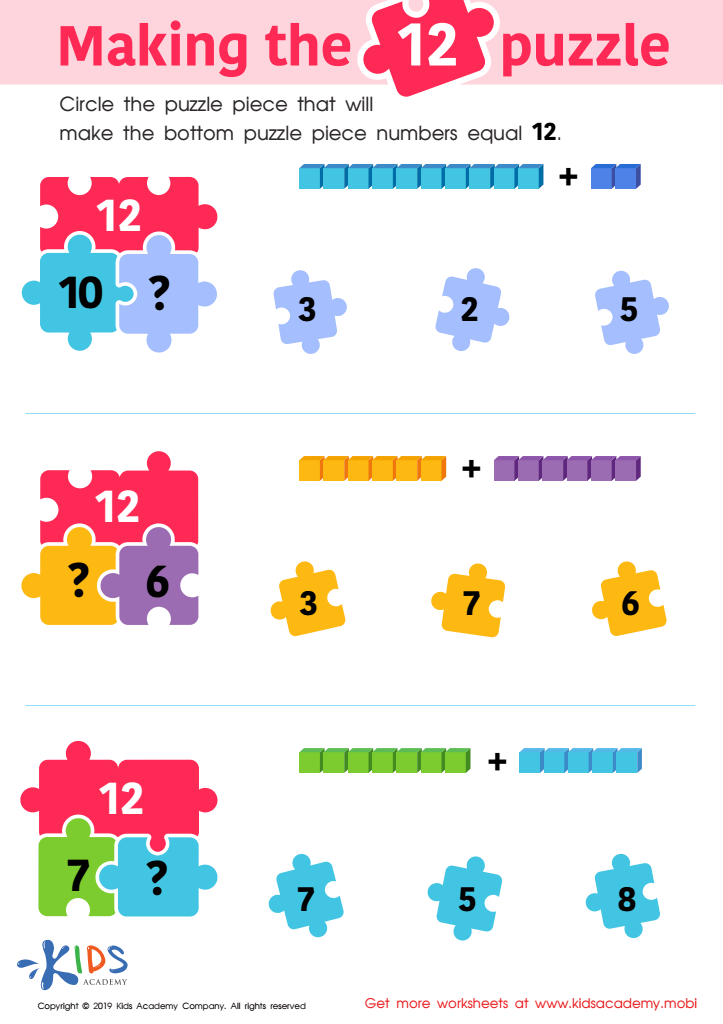
Making the 12 Puzzle Worksheet
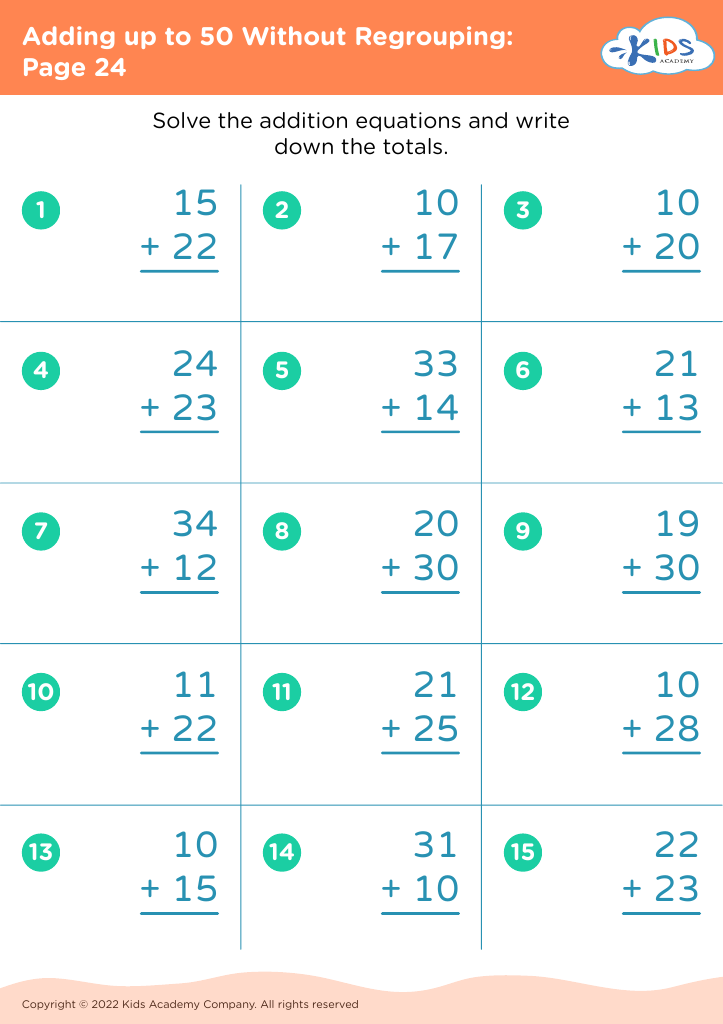
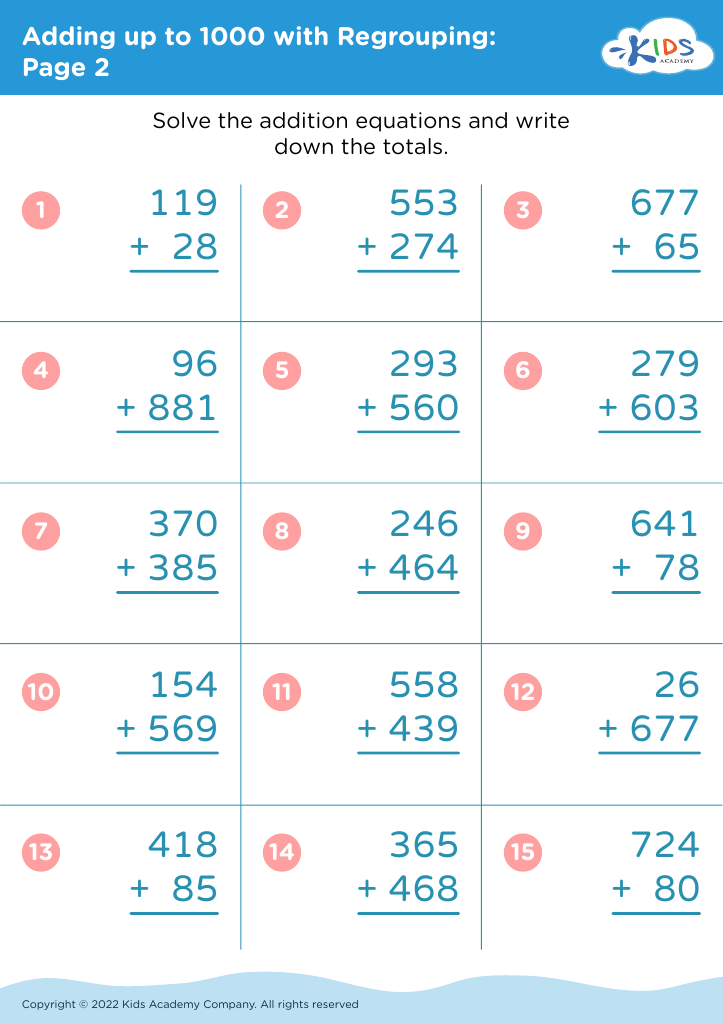








Parents and teachers should care deeply about fostering logical thinking and teaching addition and subtraction in early education because these skills are foundational to a child's cognitive development and academic success. Logical thinking enhances a child's ability to reason, solve problems, and make informed decisions, which are essential skills not just in math, but across all subjects and in everyday life.
Addition and subtraction are among the first mathematical concepts that children encounter. Mastery of these basic operations is crucial as they serve as the building blocks for more advanced math topics, such as multiplication, division, fractions, and algebra. Early proficiency in addition and subtraction also boosts a child's confidence and interest in mathematics, making them more likely to persist and succeed in future math challenges.
Furthermore, logical thinking and basic math skills are critical in helping children understand and interpret the world around them. From counting objects and understanding time to managing money and measuring ingredients for a recipe, these skills have practical applications that children will use throughout their lives.
By nurturing logical thinking and a strong foundation in addition and subtraction, parents and teachers set the stage for children to become capable problem solvers, critical thinkers, and lifelong learners, ultimately fostering their overall intellectual and emotional growth.








