Unlock your child's mathematical potential with our "Recognizing Patterns Addition & Subtraction Worksheets." Designed for early learners, these engaging worksheets guide children through the essential skill of identifying patterns in numbers. By recognizing sequences and trends, kids can enhance their addition and subtraction skills in a fun, interactive way. Each worksheet features colorful illustrations and captivating activities that encourage critical thinking and boost confidence in math. Perfect for classroom use or at-home learning, our resources are aligned with educational standards to ensure an effective learning experience. Encourage your child's growth in math today with our printable, easy-to-use worksheets!
Check out this FREE Trial Lesson on Addition & Subtraction!

Bar Graphs 1 Step Word Problems

Favorites
With answer key
Interactive
  • Recognizing Patterns
  • Addition & Subtraction
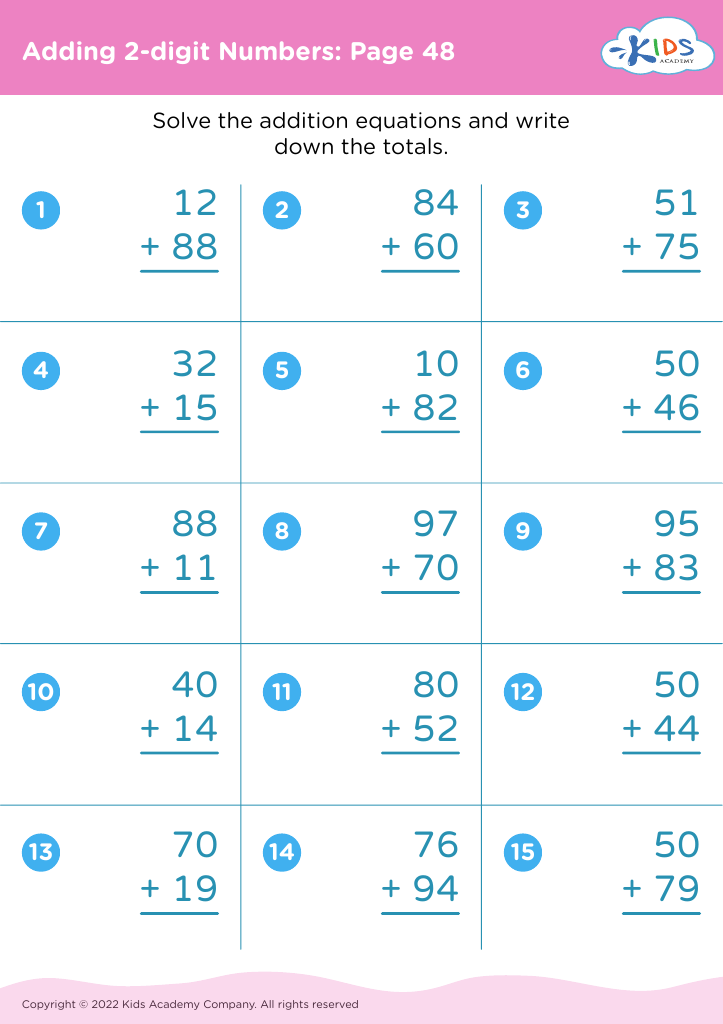
Adding 2-digit Numbers: Page 48

Adding 2-digit Numbers: Page 48

Adding 2-digit Numbers: Page 48
Worksheet
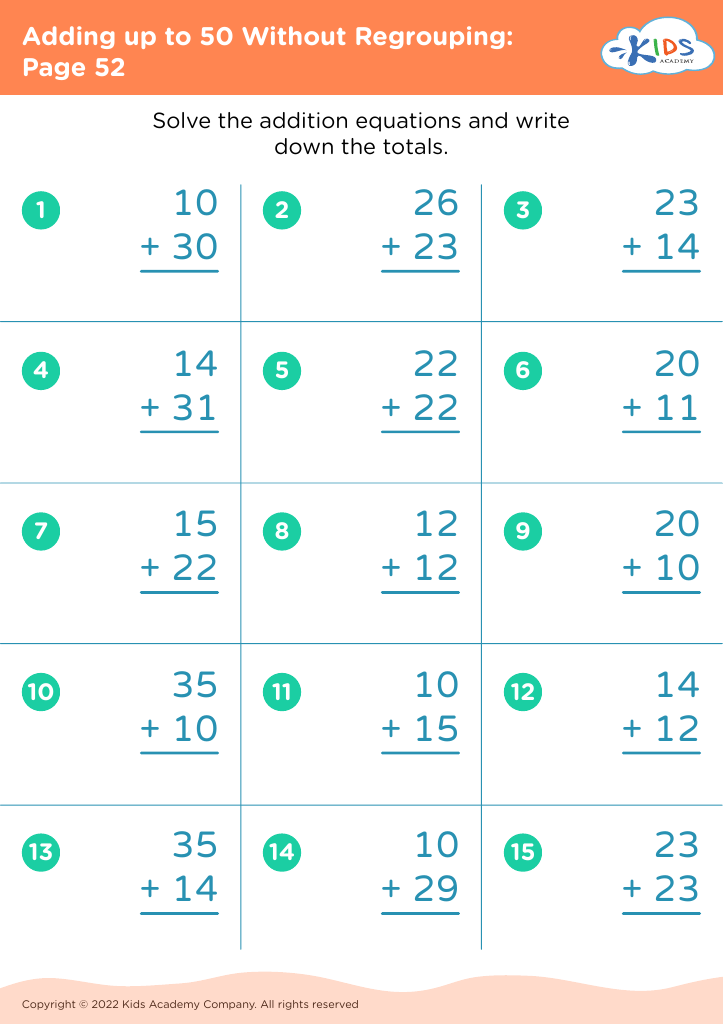
Adding up to 50 Without Regrouping: Page 52
Worksheet
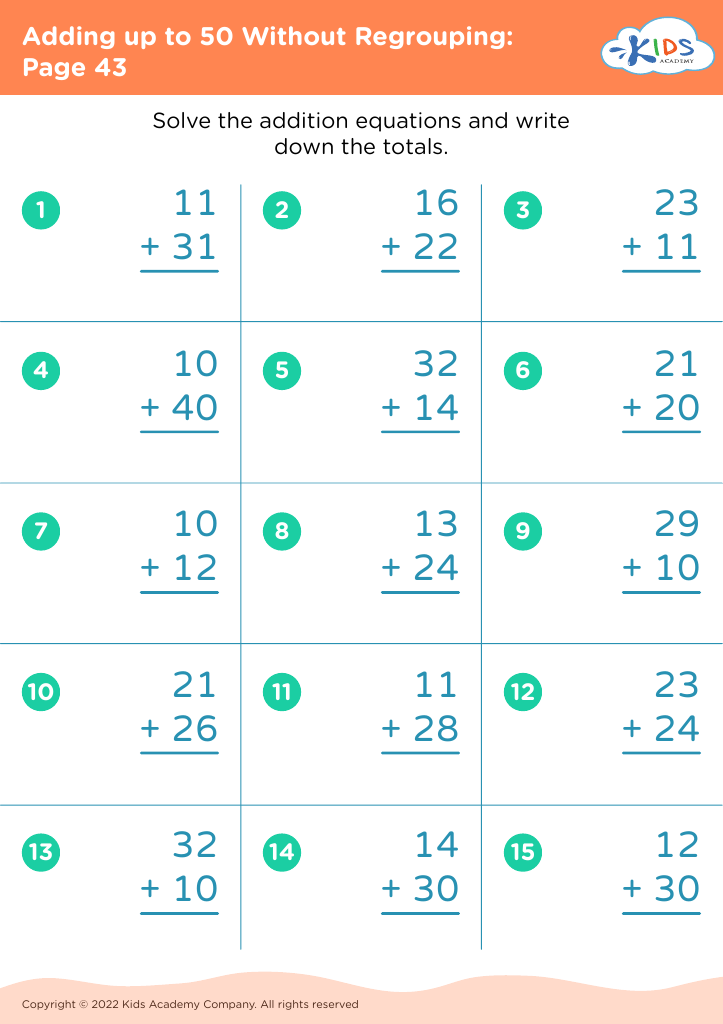
Adding up to 50 Without Regrouping: Page 43
Worksheet
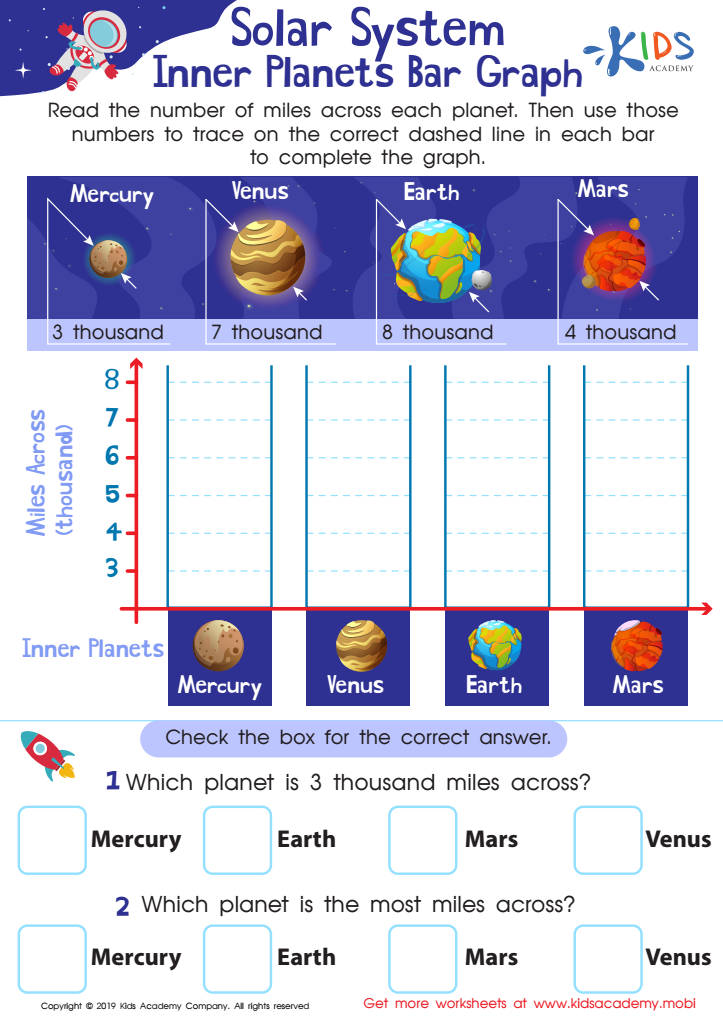
Planets Bar Graph Worksheet

Planets Bar Graph Worksheet

With this fun, educational worksheet, kids can learn about bar graphs and the solar system simultaneously. Introduce them to the concept by reading out the number of miles for each planet, then help them trace the dashed lines in each bar to complete the graph.
Planets Bar Graph Worksheet
Worksheet
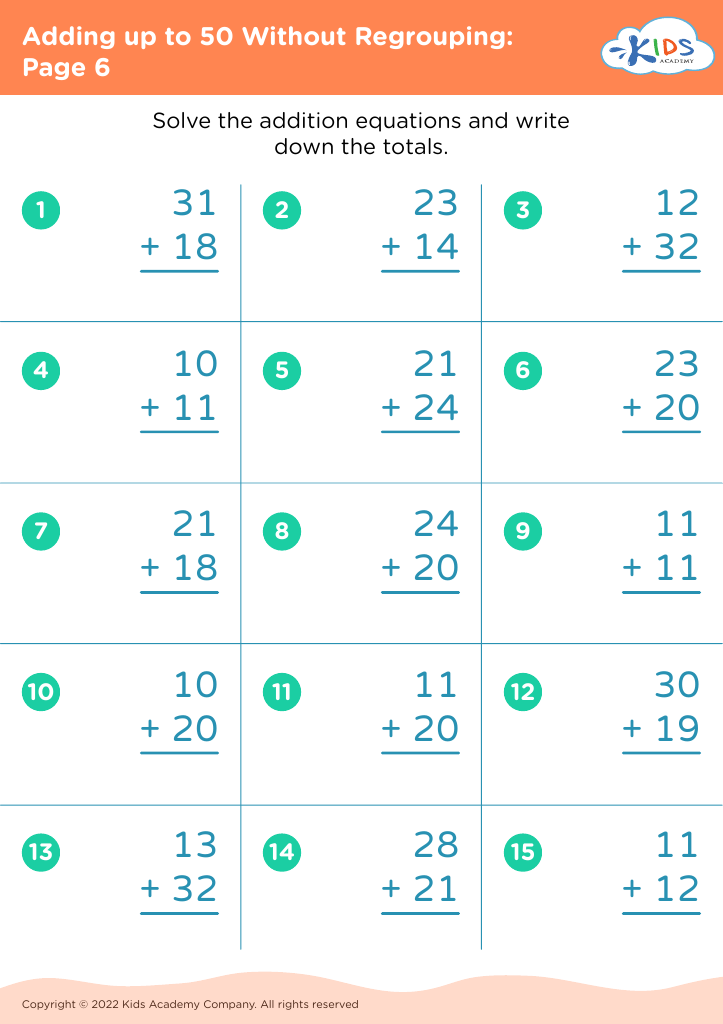
Adding up to 50 Without Regrouping: Page 6
Worksheet
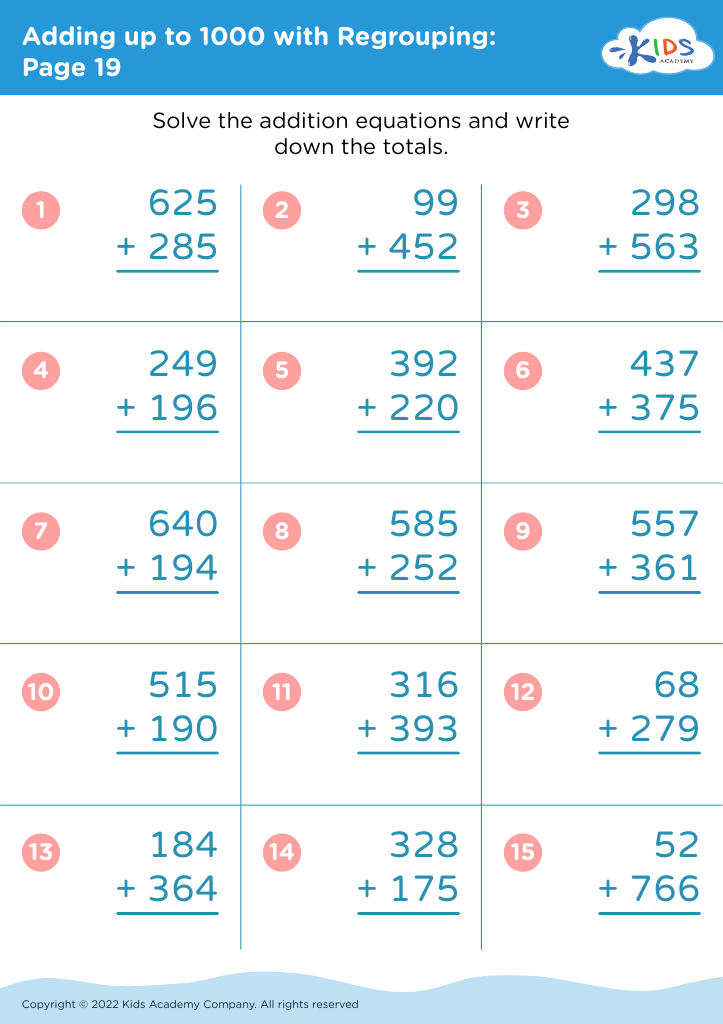
Adding up to 1000 with Regrouping: Page 19
Worksheet
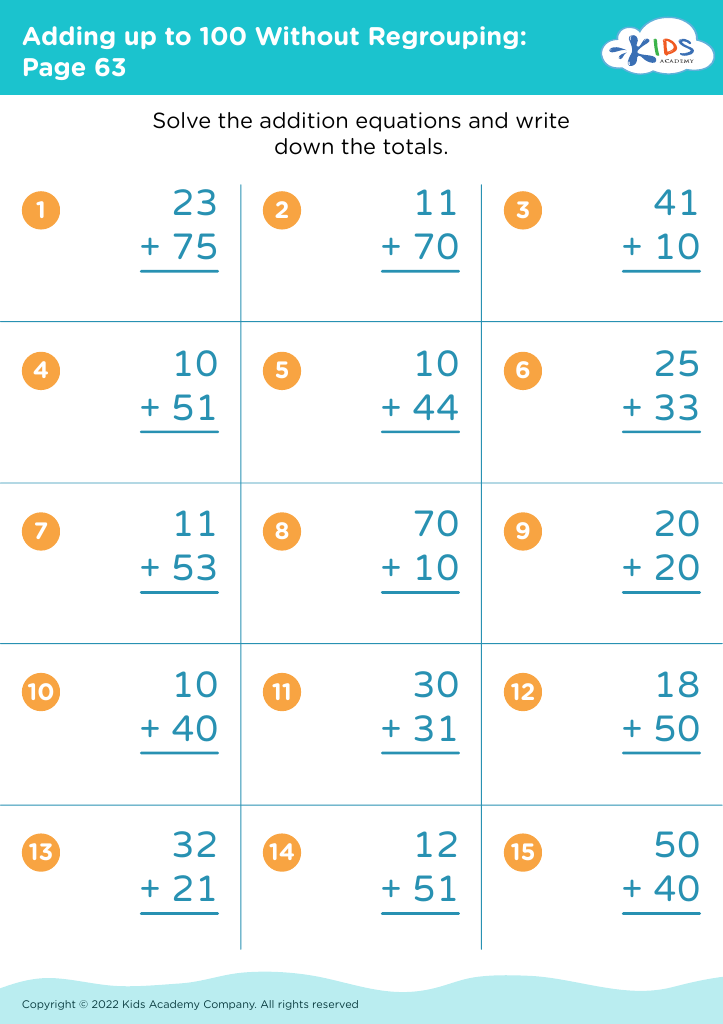
Adding up to 100 Without Regrouping: Page 63
Worksheet
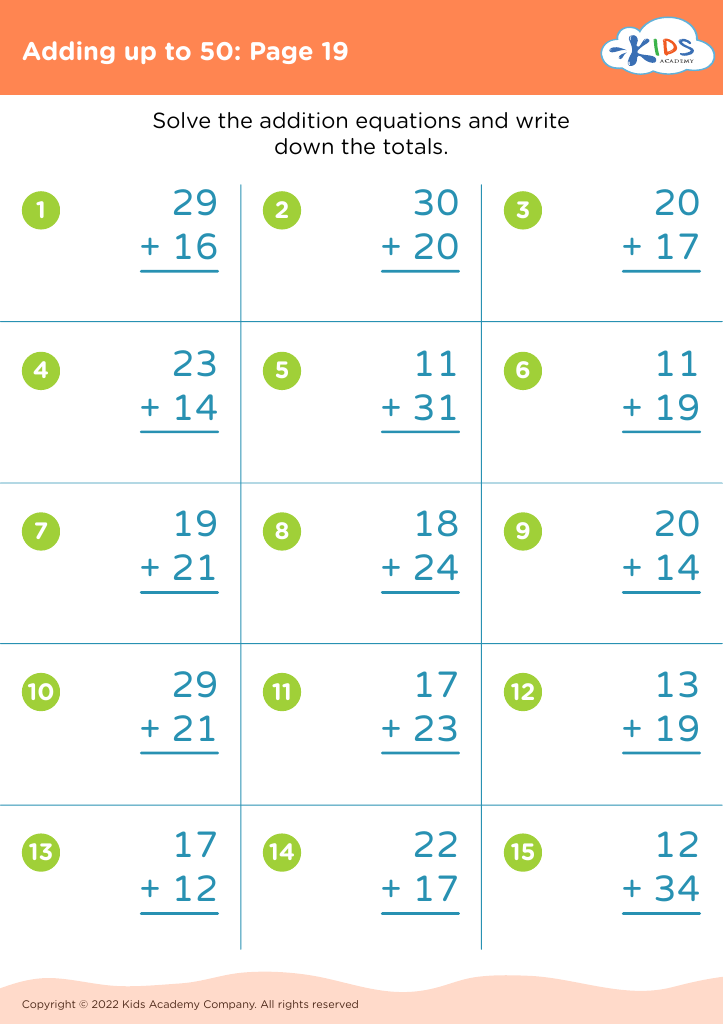
Adding up to 50: Page 19

Adding up to 50: Page 19

Adding up to 50: Page 19
Worksheet
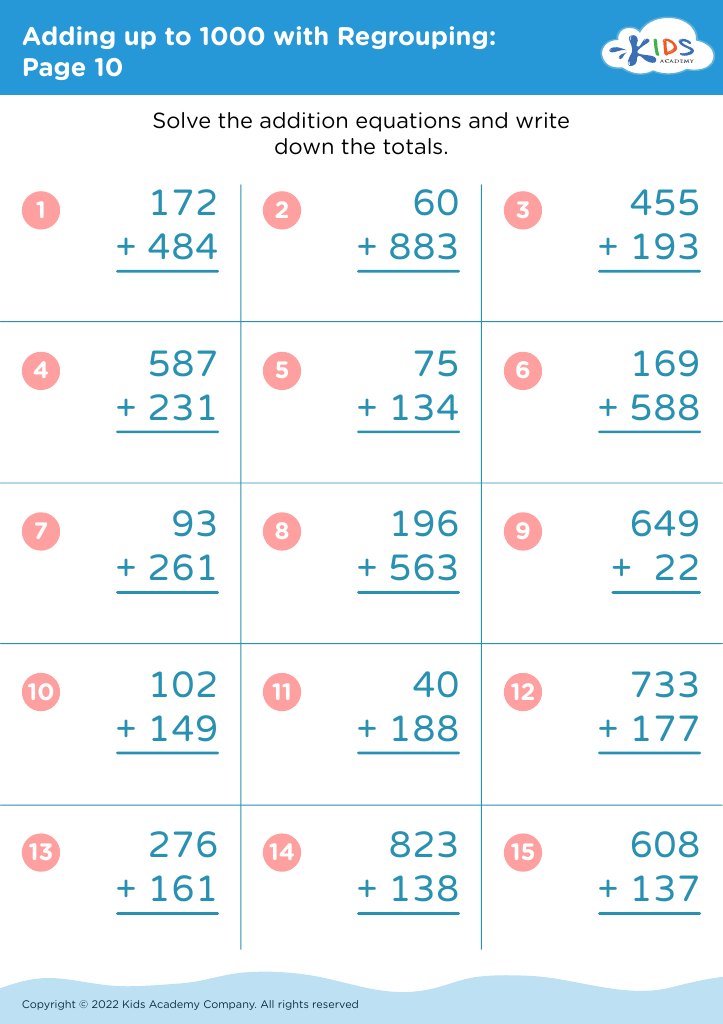
Adding up to 1000 with Regrouping: Page 10
Worksheet
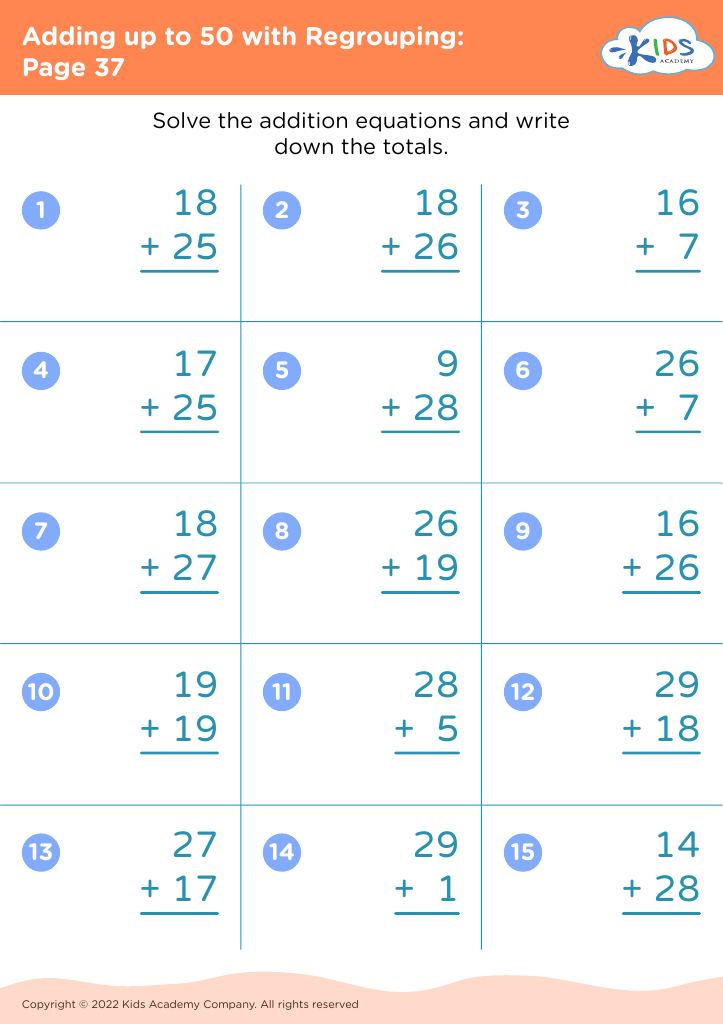
Adding up to 50 with Regrouping: Page 37
Worksheet
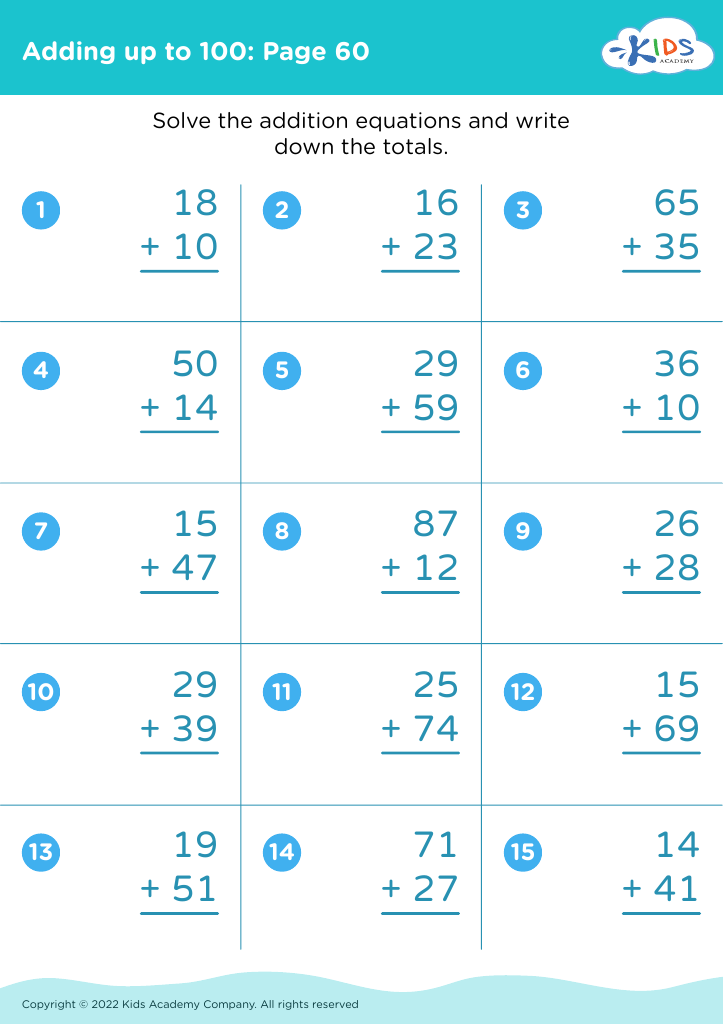
Adding up to 100: Page 60

Adding up to 100: Page 60

Adding up to 100: Page 60
Worksheet
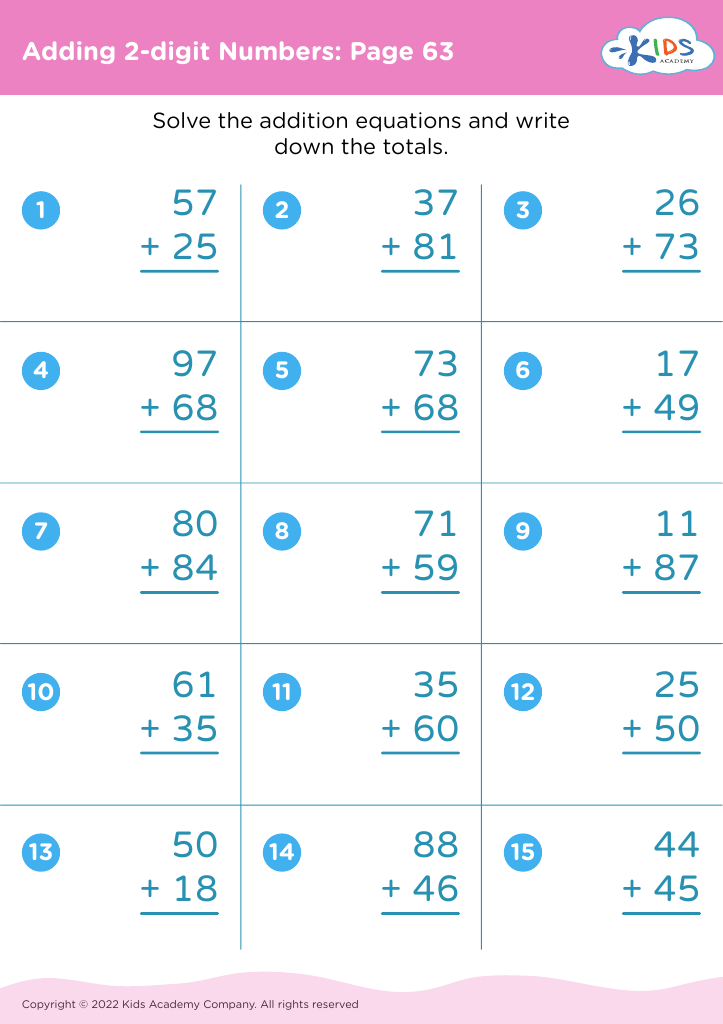
Adding 2-digit Numbers: Page 63

Adding 2-digit Numbers: Page 63

Adding 2-digit Numbers: Page 63
Worksheet
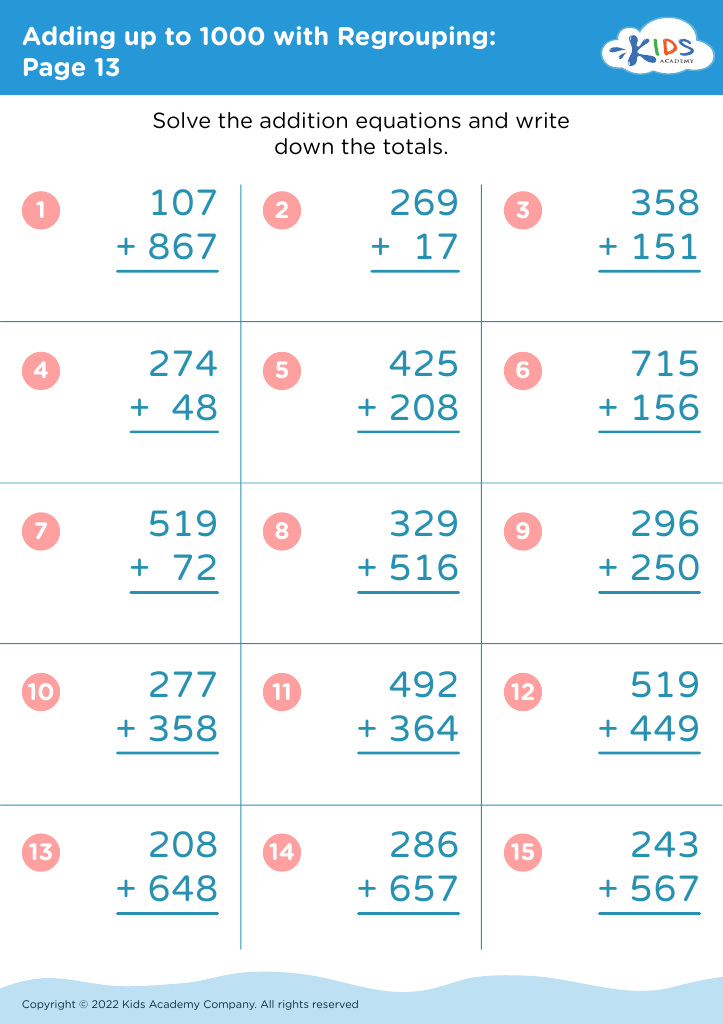
Adding up to 1000 with Regrouping: Page 13
Worksheet
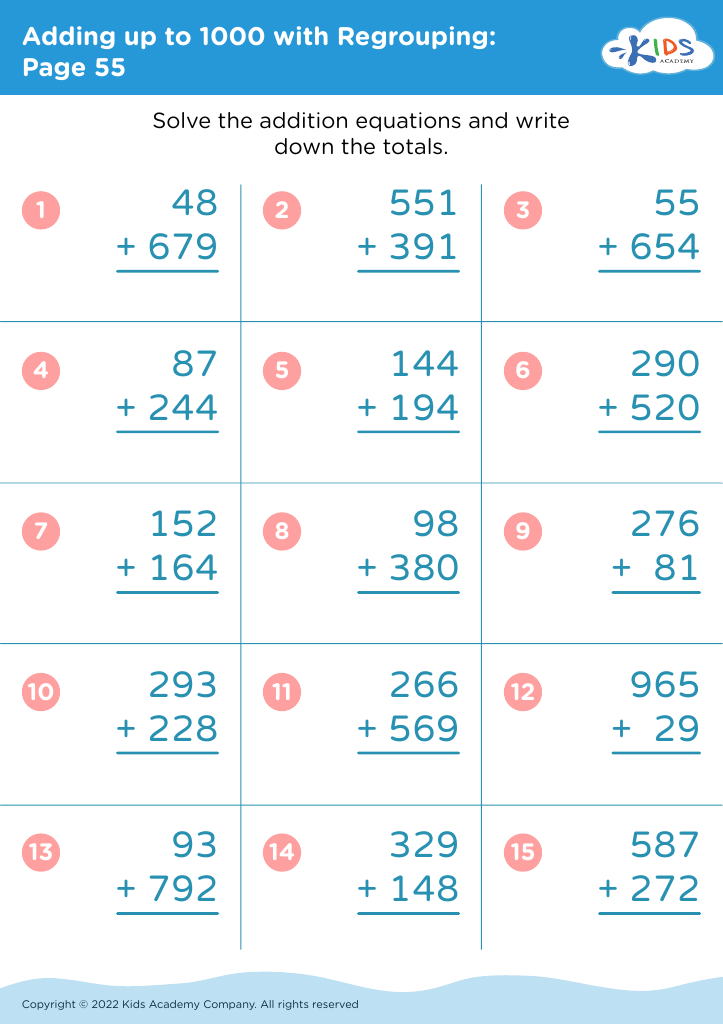
Adding up to 1000 with Regrouping: Page 55
Worksheet
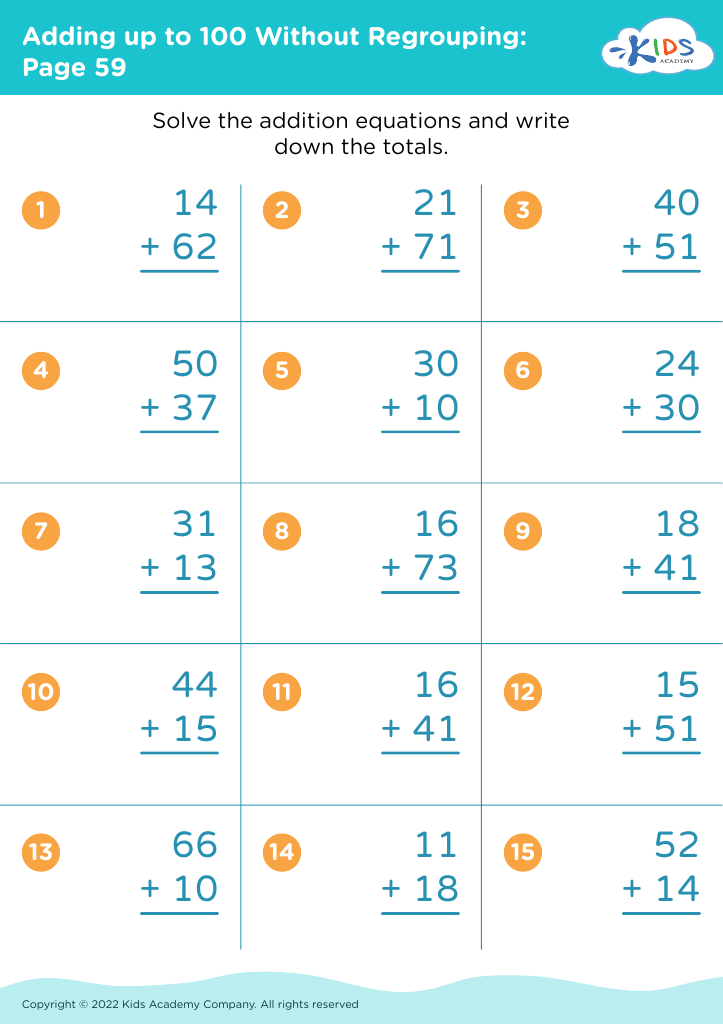
Adding up to 100 Without Regrouping: Page 59
Worksheet
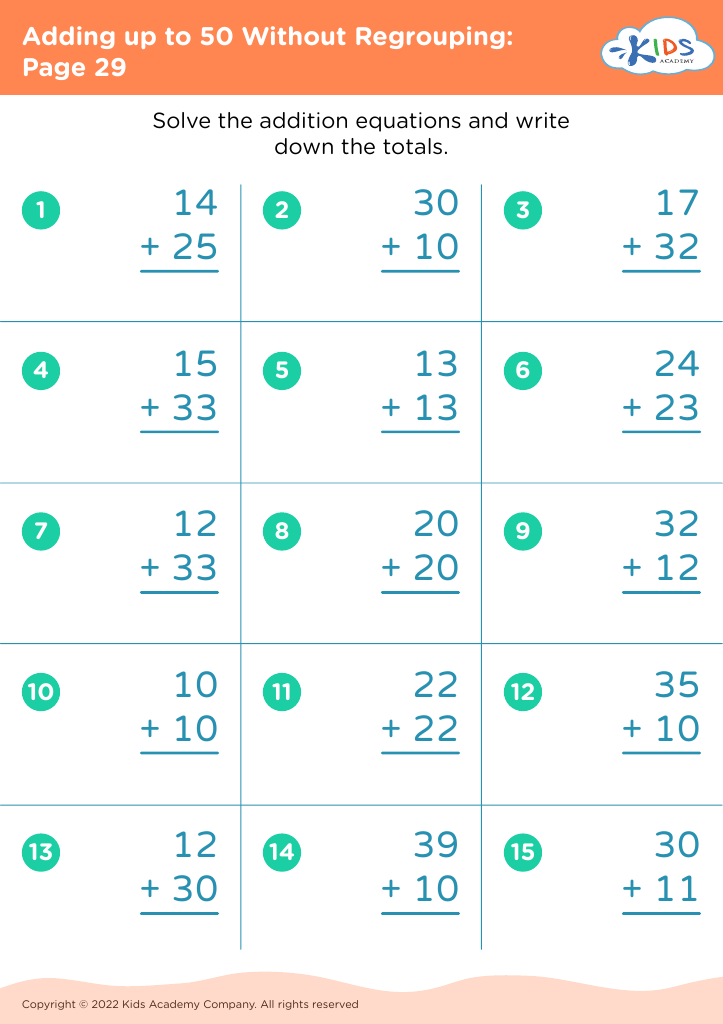
Adding up to 50 Without Regrouping: Page 29
Worksheet
Understanding Pictures as Equations Worksheet
Understanding Pictures as Equations Worksheet
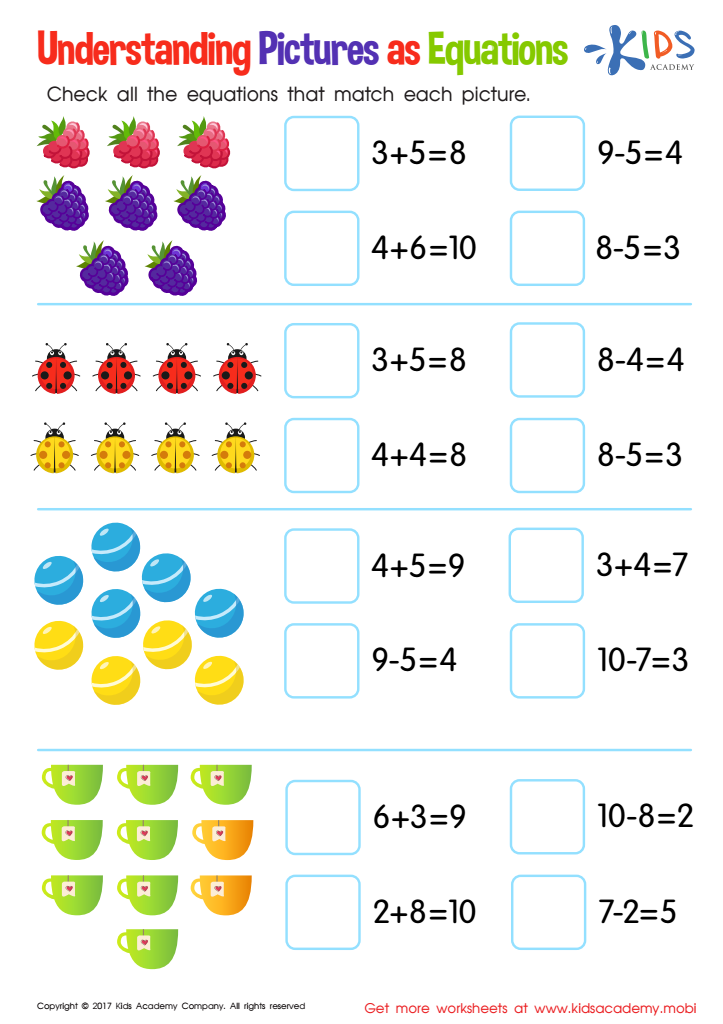
This worksheet helps your child interpret pictures into numbers and equations. Colourful grapes, ladybirds, balls and cups represent numbers which must be added to reach the total. Your child must also choose the equations that match the pictures correctly. A great way to practice math!
Understanding Pictures as Equations Worksheet
Worksheet
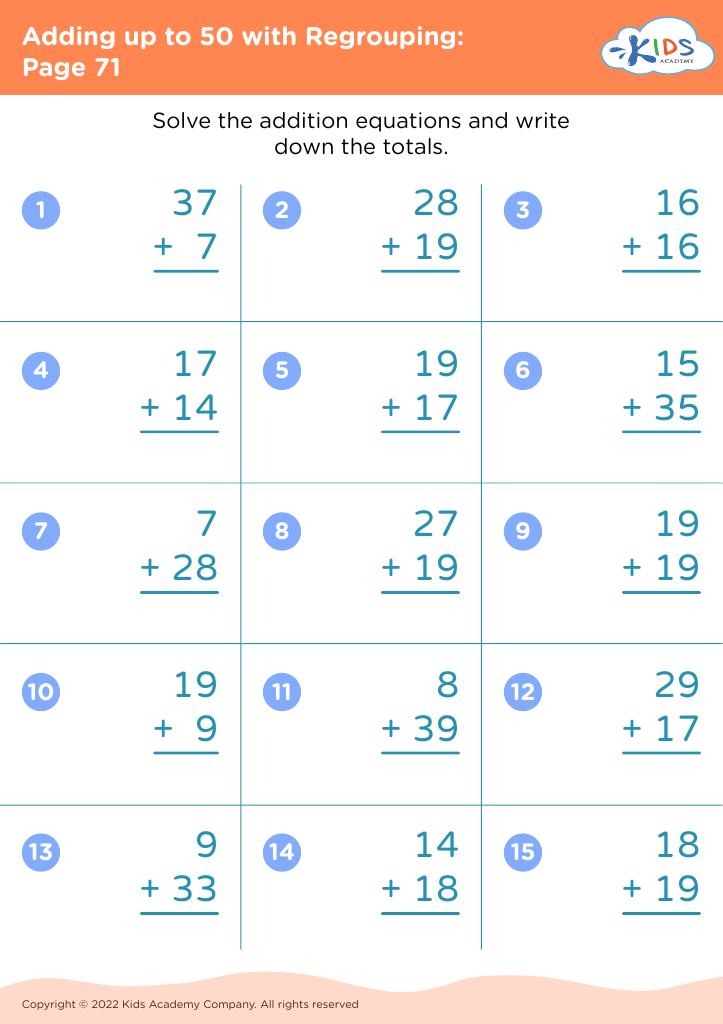
Adding up to 50 with Regrouping: Page 71
Worksheet
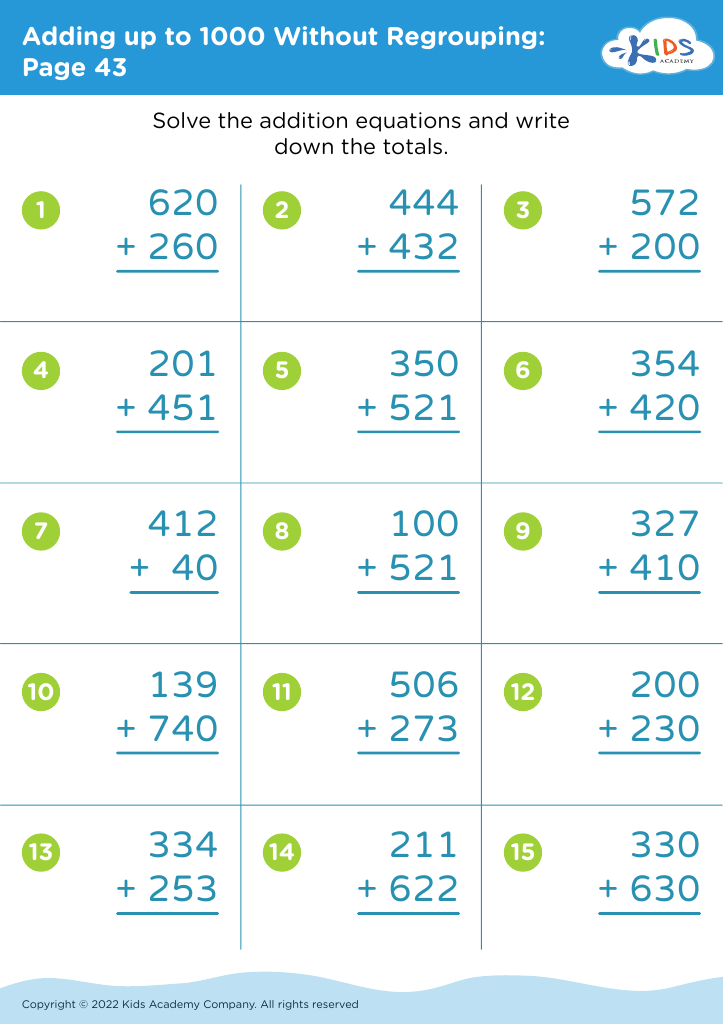
Adding up to 1000 Without Regrouping: Page 43
Worksheet
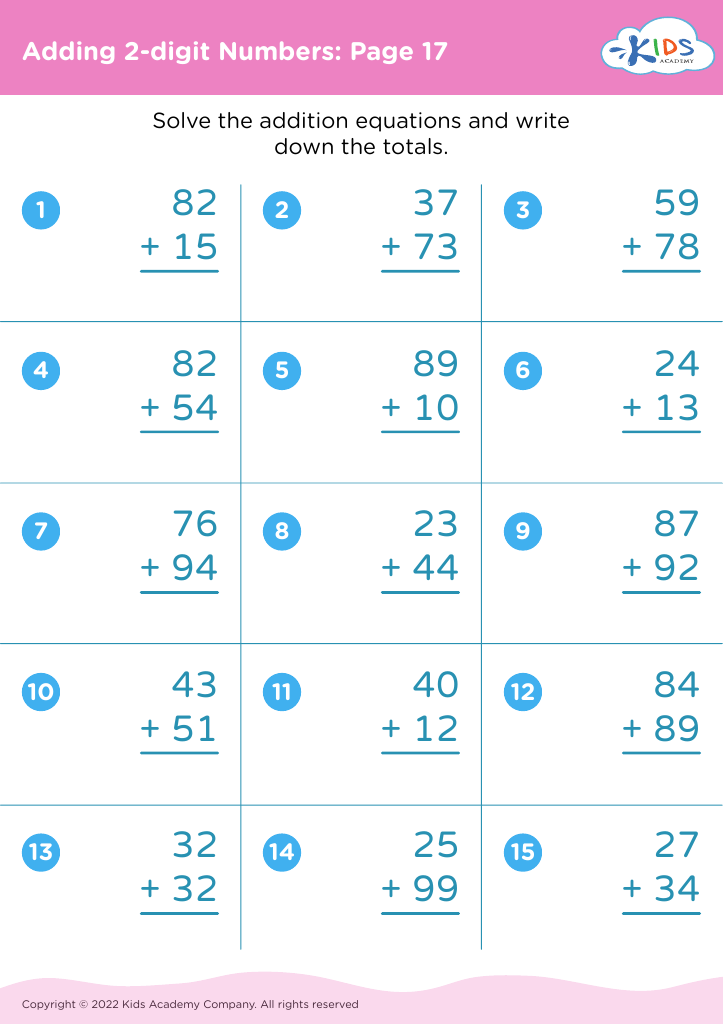
Adding 2-digit Numbers: Page 17

Adding 2-digit Numbers: Page 17

Adding 2-digit Numbers: Page 17
Worksheet
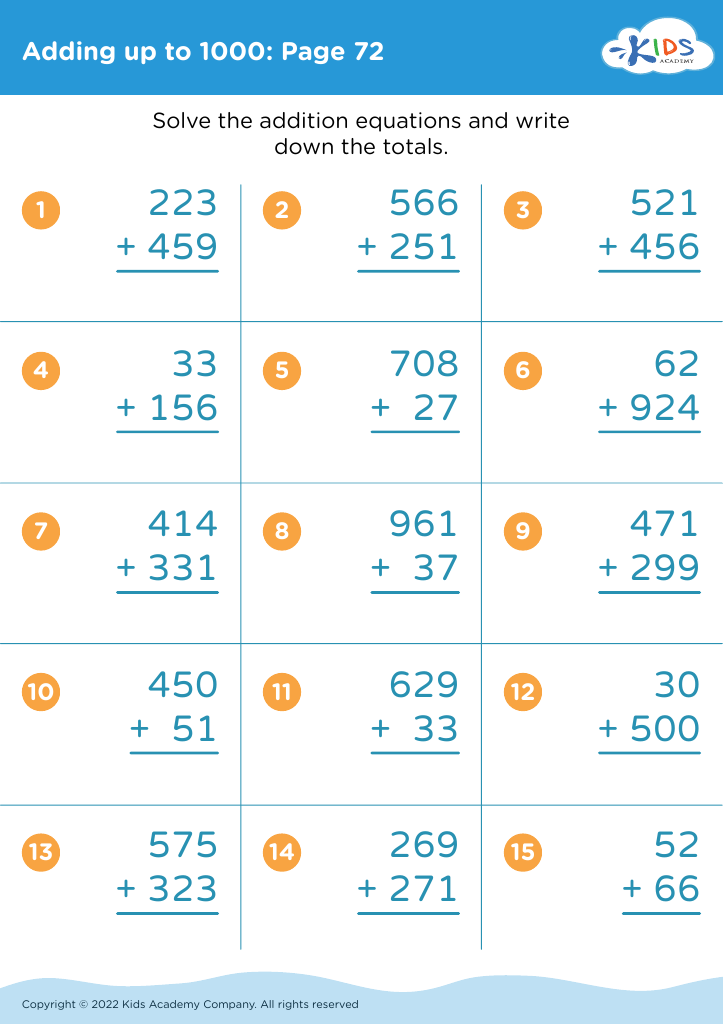
Adding up to 1000: Page 72

Adding up to 1000: Page 72

Adding up to 1000: Page 72
Worksheet
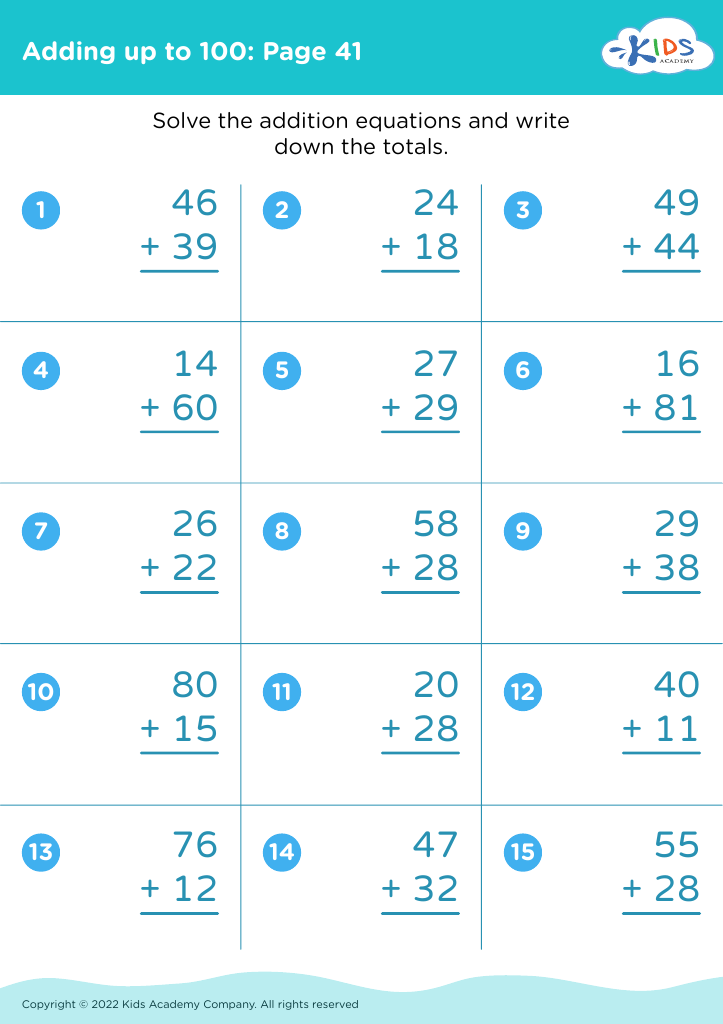
Adding up to 100: Page 41

Adding up to 100: Page 41

Adding up to 100: Page 41
Worksheet
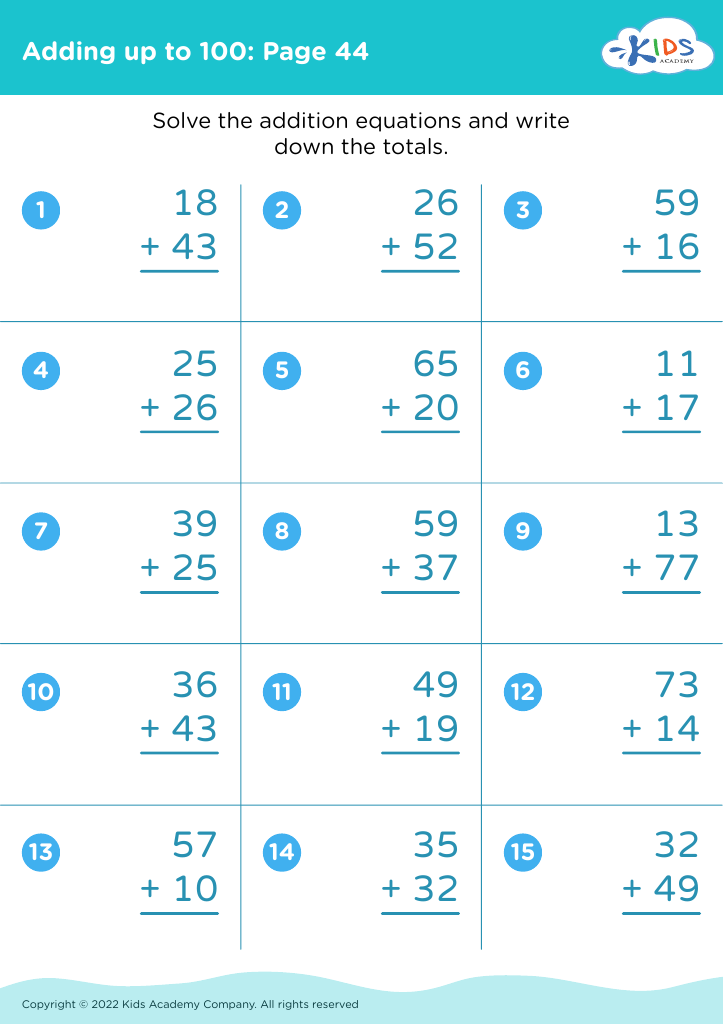
Adding up to 100: Page 44

Adding up to 100: Page 44

Adding up to 100: Page 44
Worksheet


Recognizing patterns in addition and subtraction is essential for young learners, and parents and teachers play a crucial role in this developmental process. Understanding patterns helps children grasp the foundational concepts of math, making it easier for them to solve problems and develop higher-order thinking skills. When students can recognize numeric patterns, they become adept at predicting outcomes, which leads to increased confidence and curiosity in their math abilities.

Additionally, recognizing patterns fosters critical cognitive skills such as logical reasoning and problem-solving. For example, noticing the consistent progression in adding or subtracting numbers (like how every even number is twinned with another even number) empowers children to develop strategies and shortcuts in their calculations. This proficiency becomes especially beneficial as they move towards more complex mathematical concepts.

Moreover, these skills support a strong mathematical foundation that is necessary for applied subjects in science, technology, engineering, and mathematics (STEM), paving the way for future academic success. Engaging in activities that promote pattern recognition not only strengthens math skills but also encourages collaboration and communication among peers, reinforcing essential social skills. Thus, supporting pattern recognition in math is a vital investment in a child's broad educational journey.