Understanding sequencing Addition & Subtraction Worksheets
7 filtered results
-
From - To
Discover the importance of sequencing in mastering addition and subtraction with our engaging worksheets! Designed for early learners, these activities encourage children to connect numbers in logical order, reinforcing their understanding of math operations. By practicing sequencing, students enhance their problem-solving skills and improve their ability to follow mathematical processes. Our printable worksheets are colorful, interactive, and tailor-made to keep children motivated while they explore addition and subtraction. Perfect for classrooms or at-home learning, these resources will help your child develop a strong mathematical foundation in a fun and accessible way. Start their journey to math mastery today!
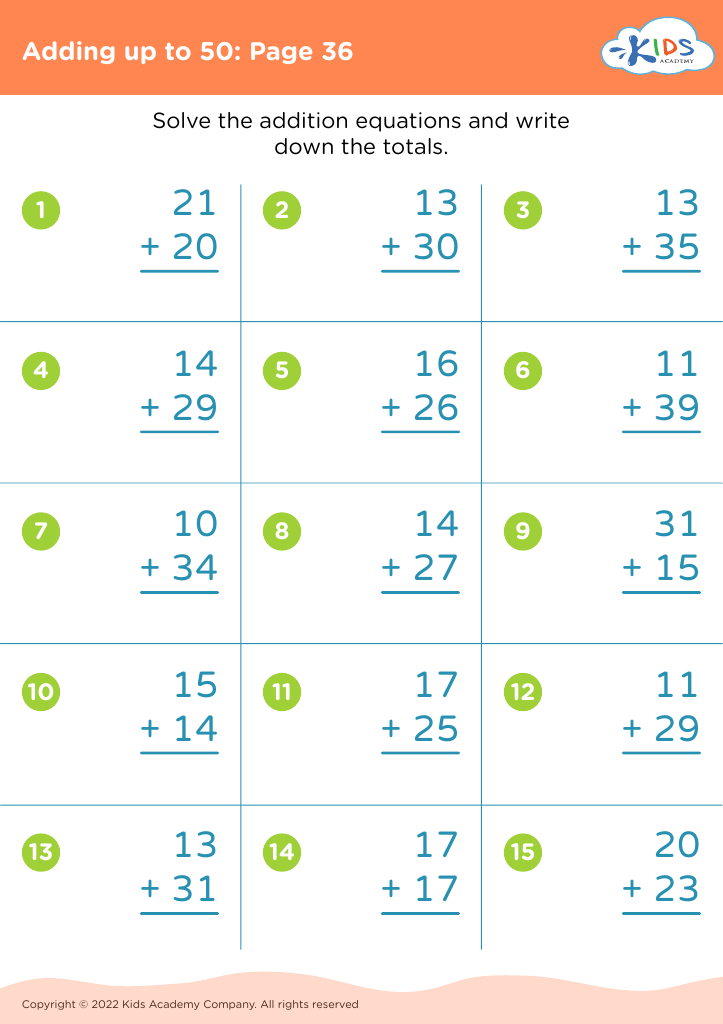
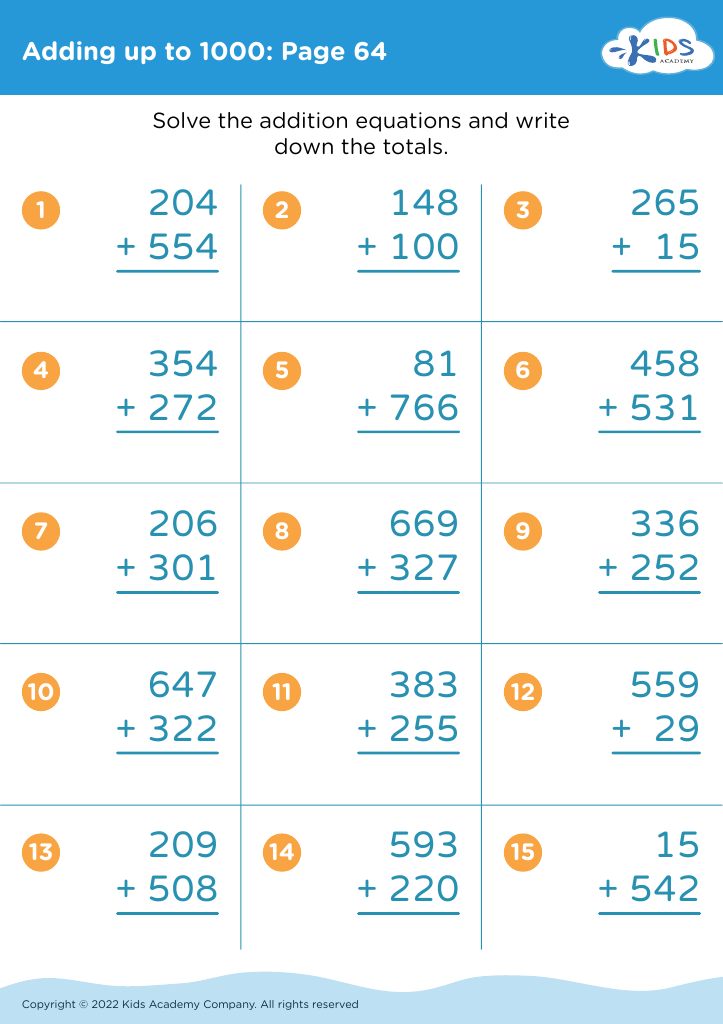
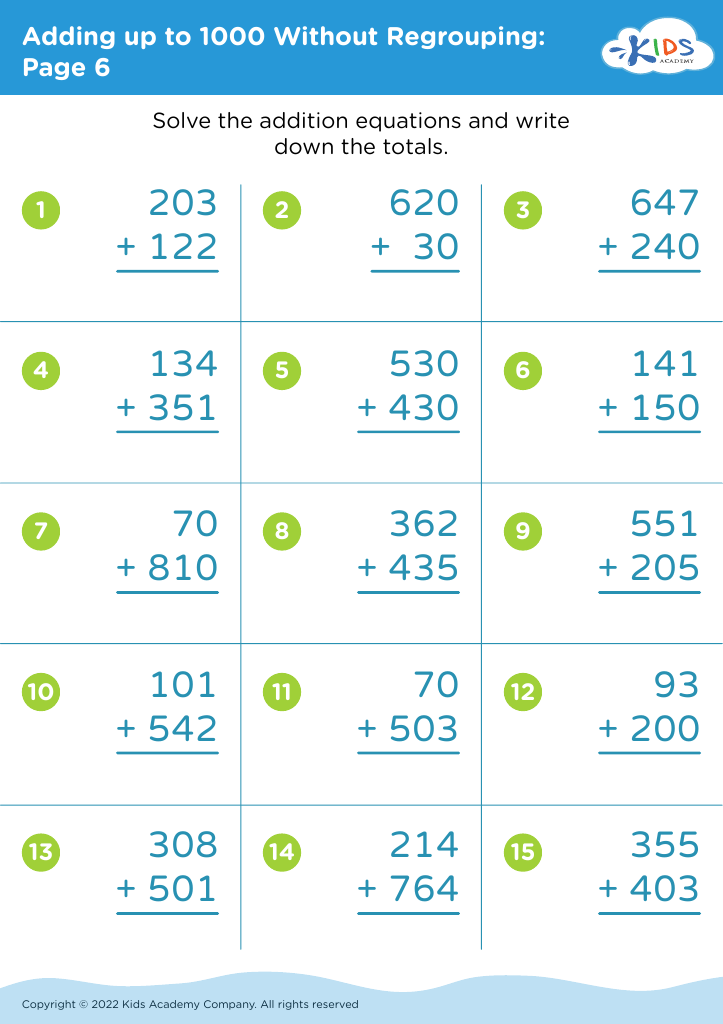
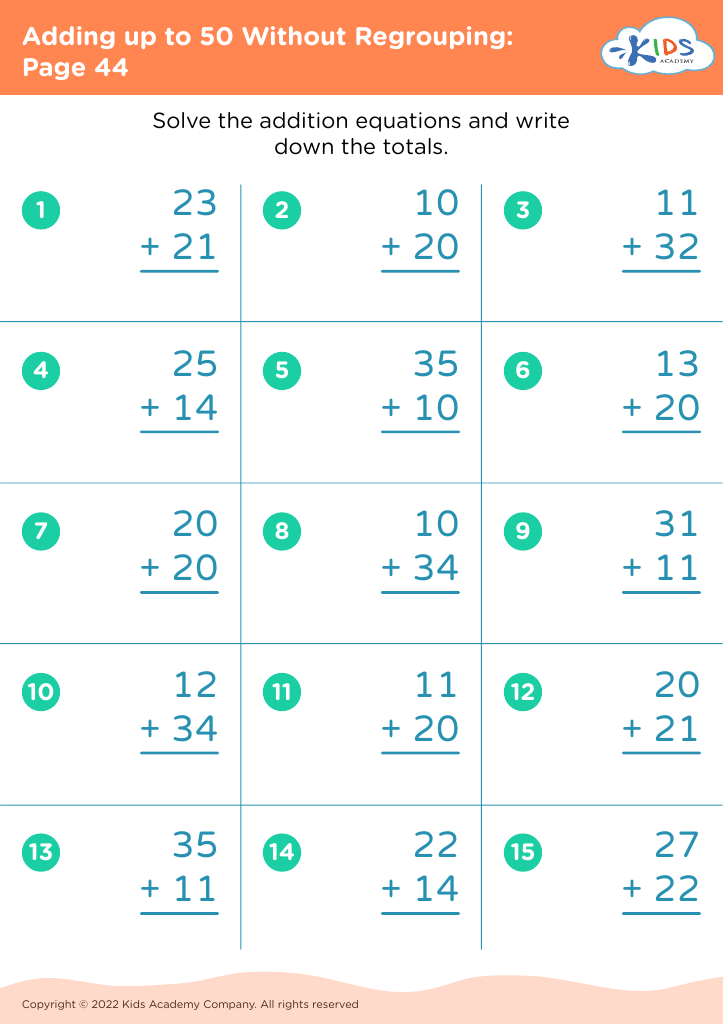
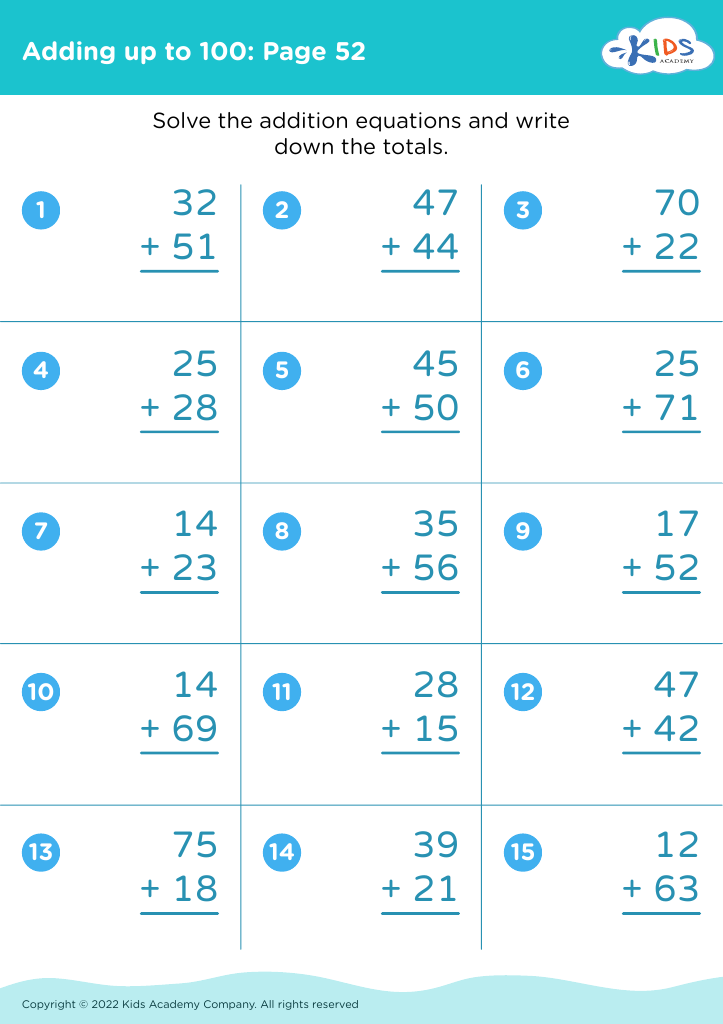
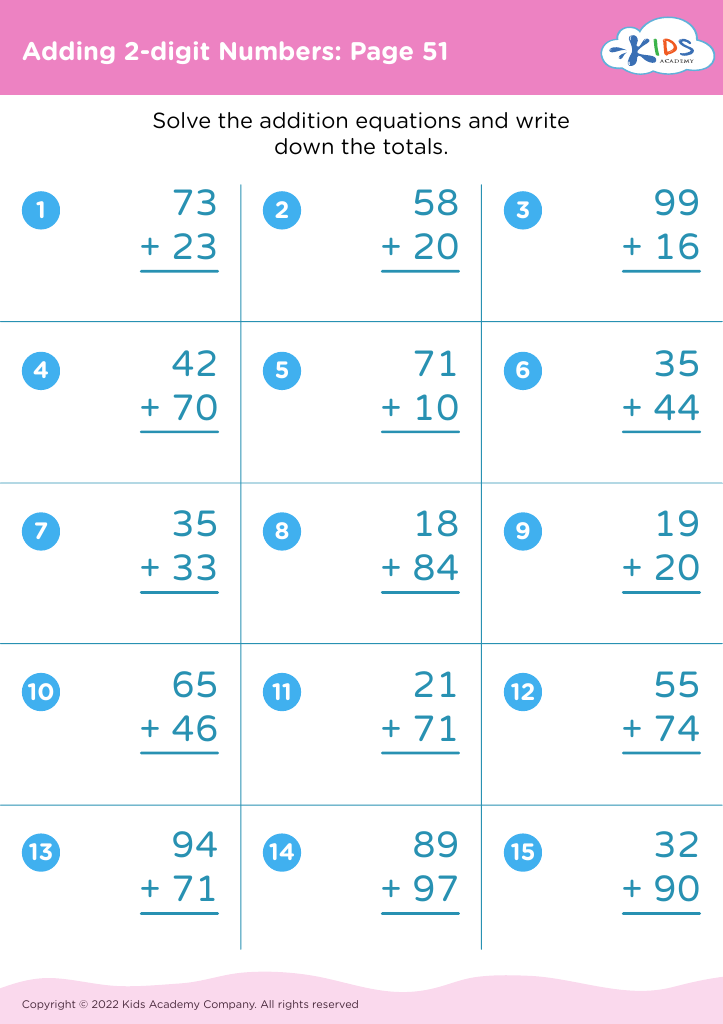
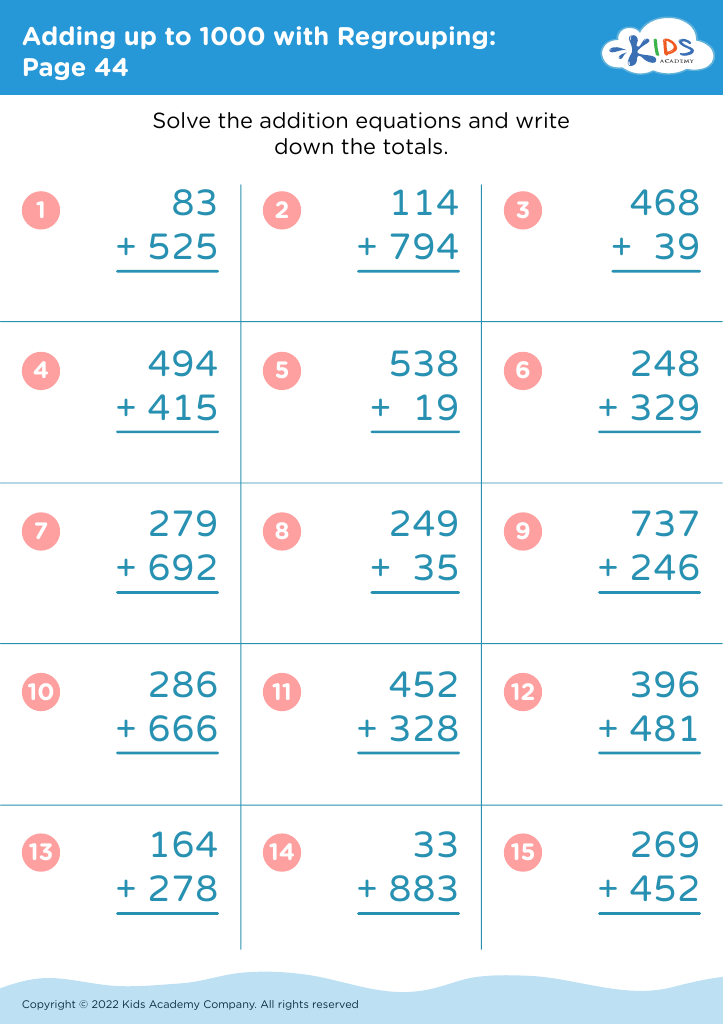








Understanding sequencing in addition and subtraction is crucial for early-grade students as it lays the foundation for broader mathematical concepts. When children grasp the order of operations in these basic calculations, they develop critical problem-solving skills that are essential for future learning. Parents and teachers should recognize that sequencing helps create a logical framework in a child's mind, allowing them to break down complex problems into manageable steps.
Moreover, mastering the sequencing of addition and subtraction fosters numerical fluency, which is essential in daily life and academic success. Through practicing these skills, children learn how numbers relate to one another and how to manipulate them effectively—a key cognitive skill that enhances their reasoning.
Additionally, understanding sequencing in math builds confidence. When students can successfully navigate their calculations, either independently or through guided instruction, they develop a positive attitude toward mathematics, which encourages resilience and a growth mindset. Parents and teachers play a vital role in instilling these skills by providing support and encouragement, making learning both enjoyable and impactful. In sum, teaching children about sequencing in addition and subtraction is integral to their overall mathematical journey, setting the stage for future academic achievement.








