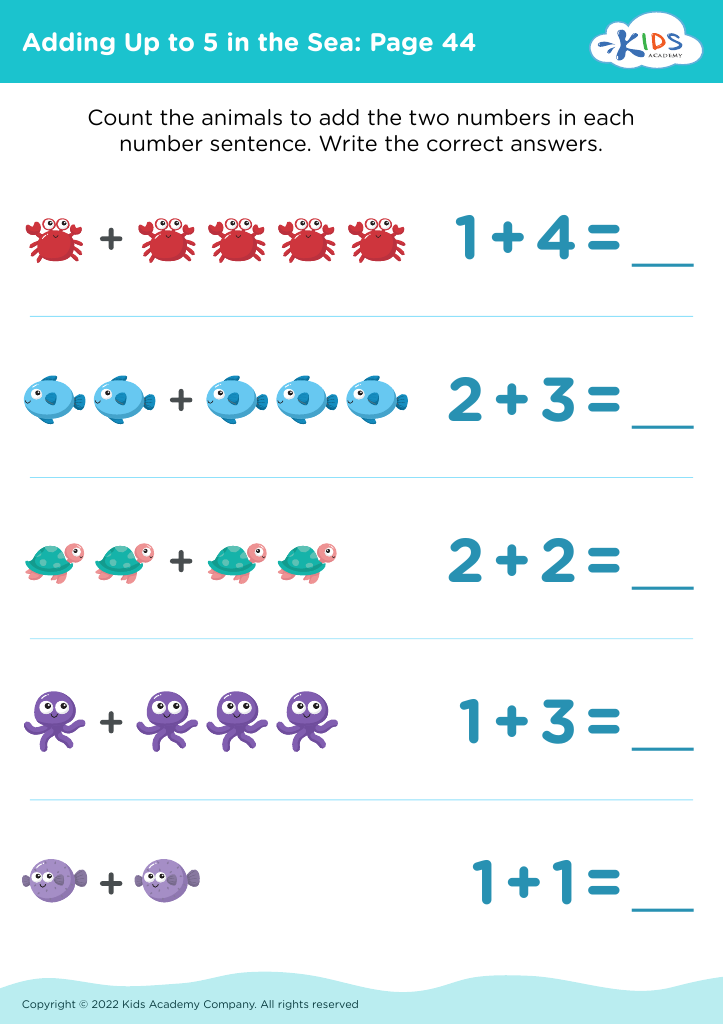
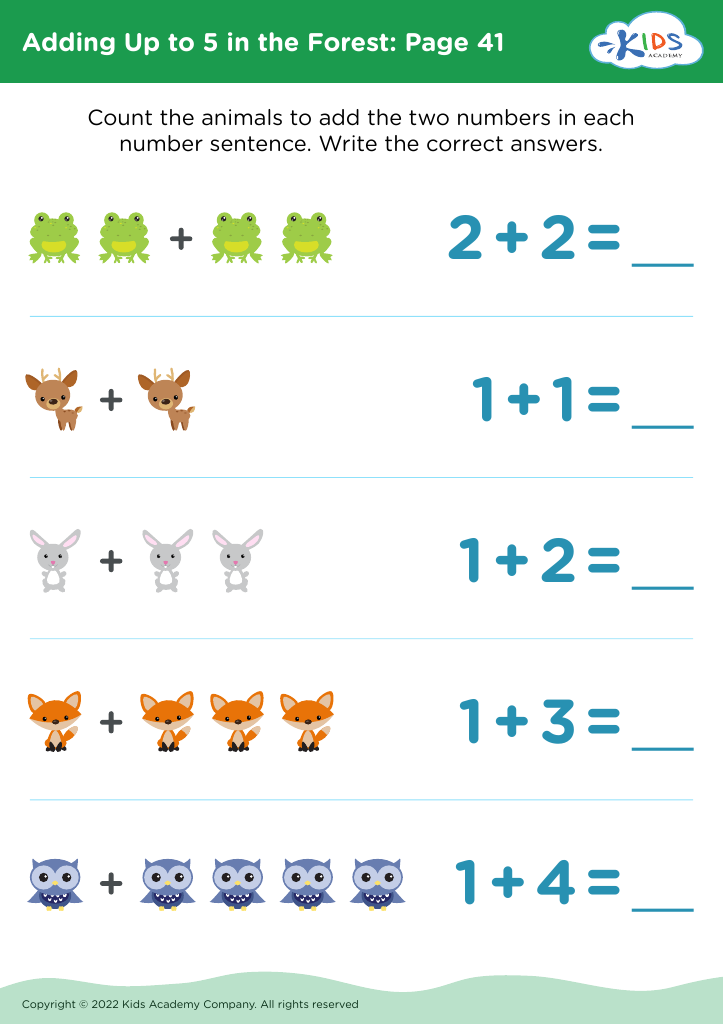








Counting practice and addition are fundamental building blocks in early mathematics education, and both parents and teachers have essential roles in fostering these skills. Mastery in counting lays the groundwork for numerical literacy, enabling children to understand and use numbers in elementary arithmetic operations such as addition, subtraction, multiplication, and division.
Firstly, counting practice helps children develop one-to-one correspondence, which is crucial for understanding number magnitude and sequencing. This practice enhances cognitive skills like problem-solving, logical reasoning, and pattern recognition. Familiarity with numbers cultivates confidence and reduces math anxiety, setting a positive foundation for future learning experiences.
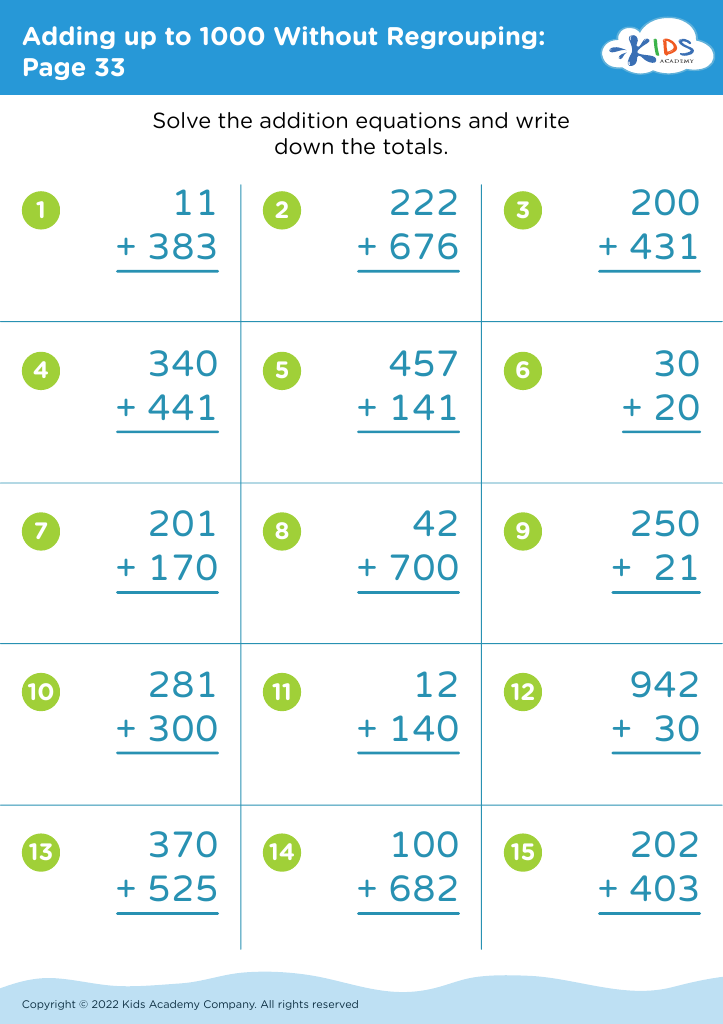
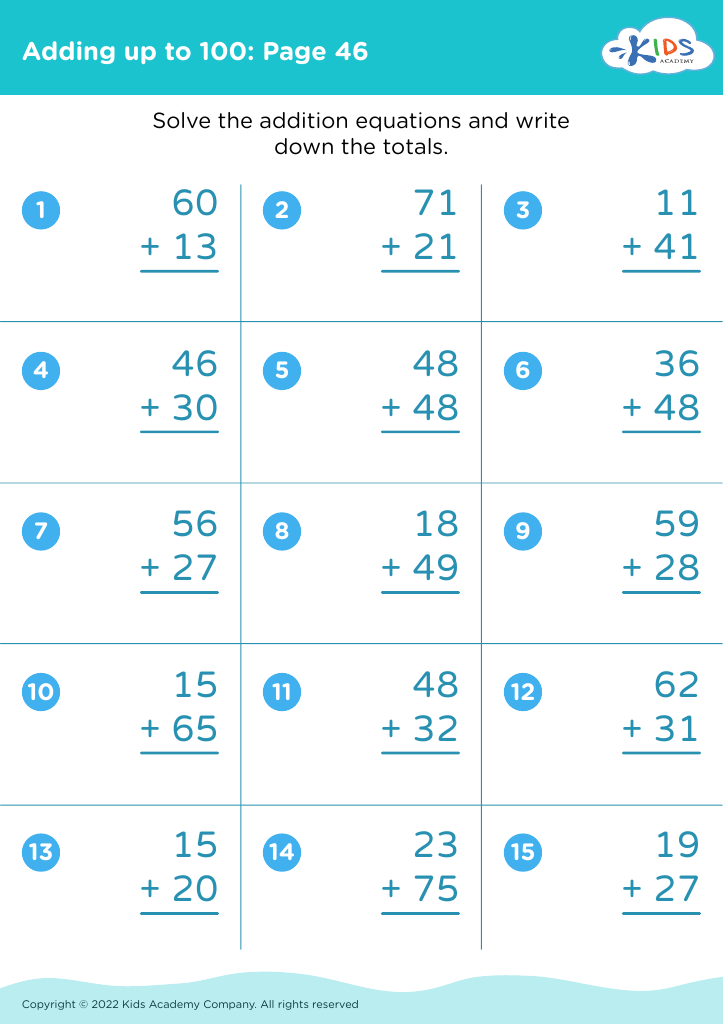
Secondly, addition is the cornerstone of mathematics. Repeated practice enables children to grasp more complicated operations and concepts, such as place value, regrouping, and multi-digit computations. Proficiency in addition directly correlates with better performance in higher-level math, which is critical for academic success and practical life skills.
Moreover, engaging children in fun and interactive counting and addition activities, such as games, stories, and real-world applications, fosters a love for learning. It builds a supportive and enriching environment that celebrates growth and effort, influencing children's perspectives toward learning and persistence.
In summary, a strong foundation in counting and addition is critical for mathematical competency, cognitive development, and long-term academic achievement. Parents and teachers nurture these skills to help children achieve their full potential and build a brighter educational future.








