Enhance counting skills Addition Worksheets
13 filtered results
-
From - To
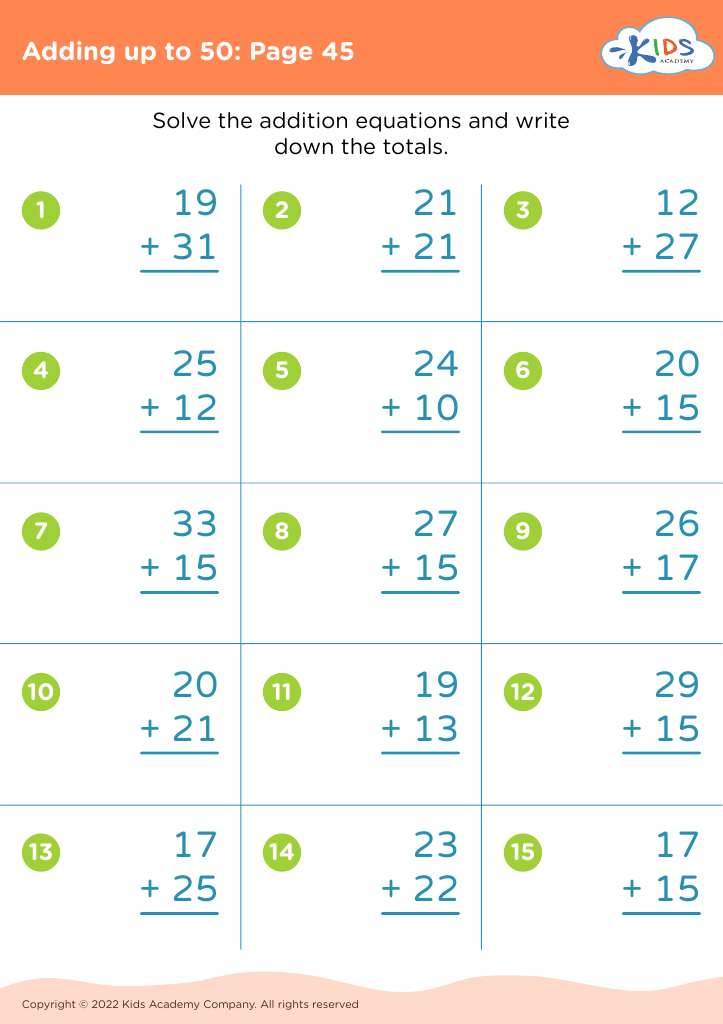
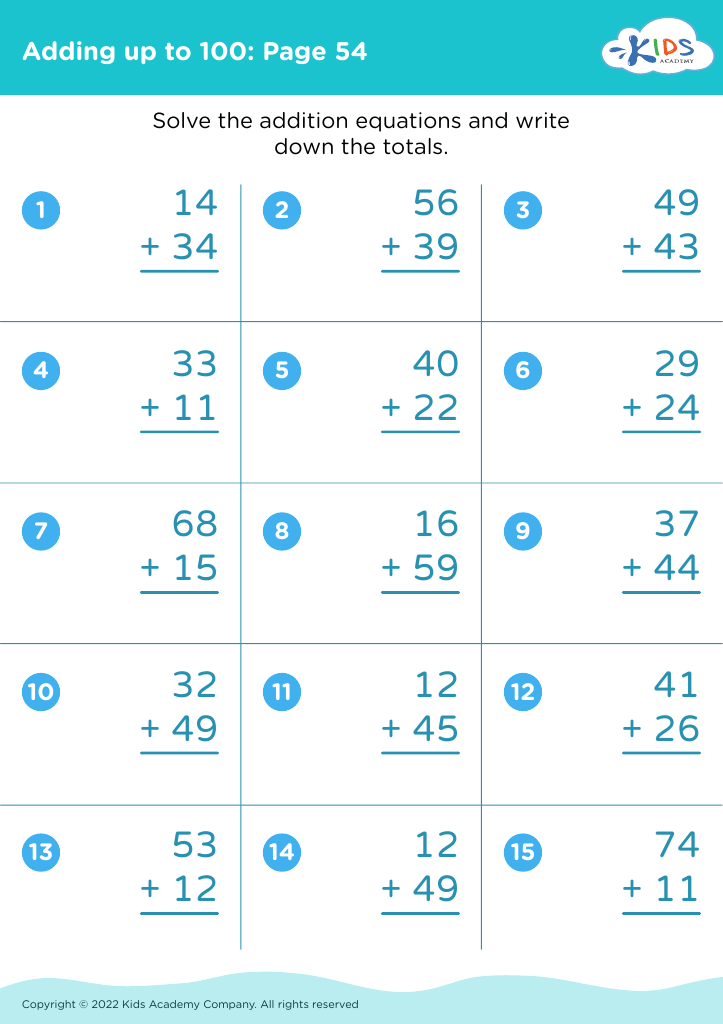
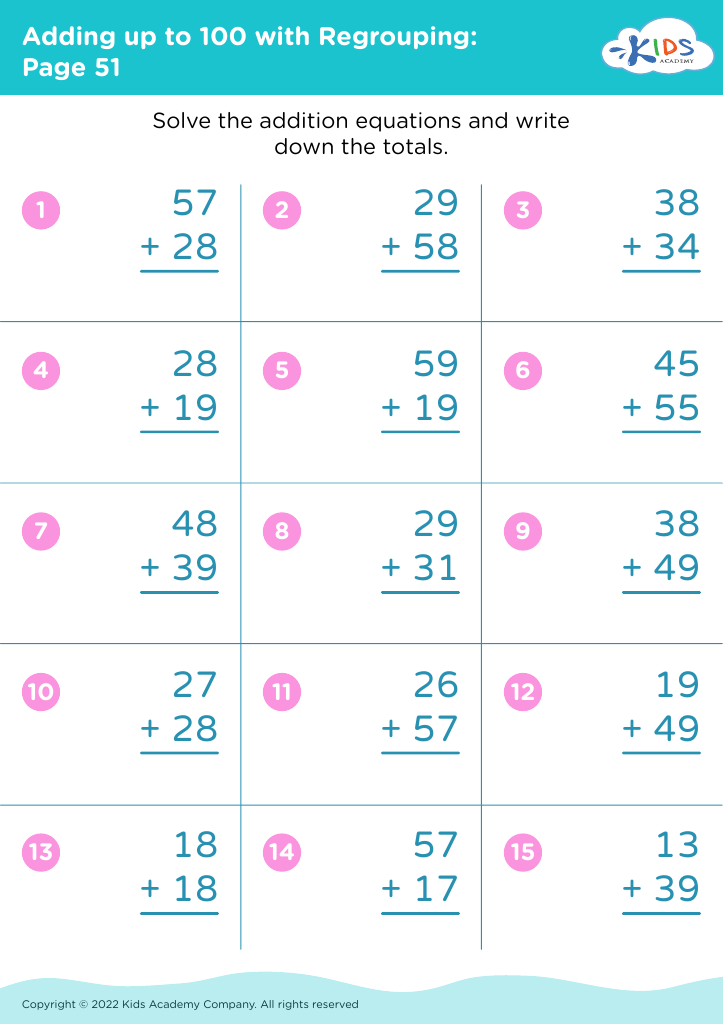
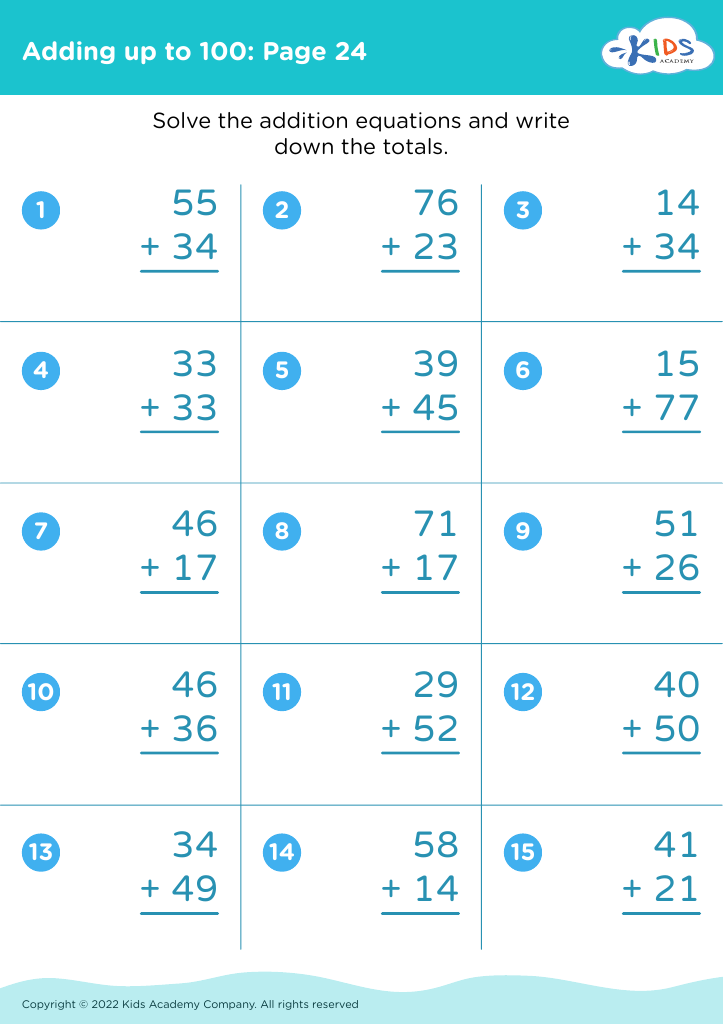
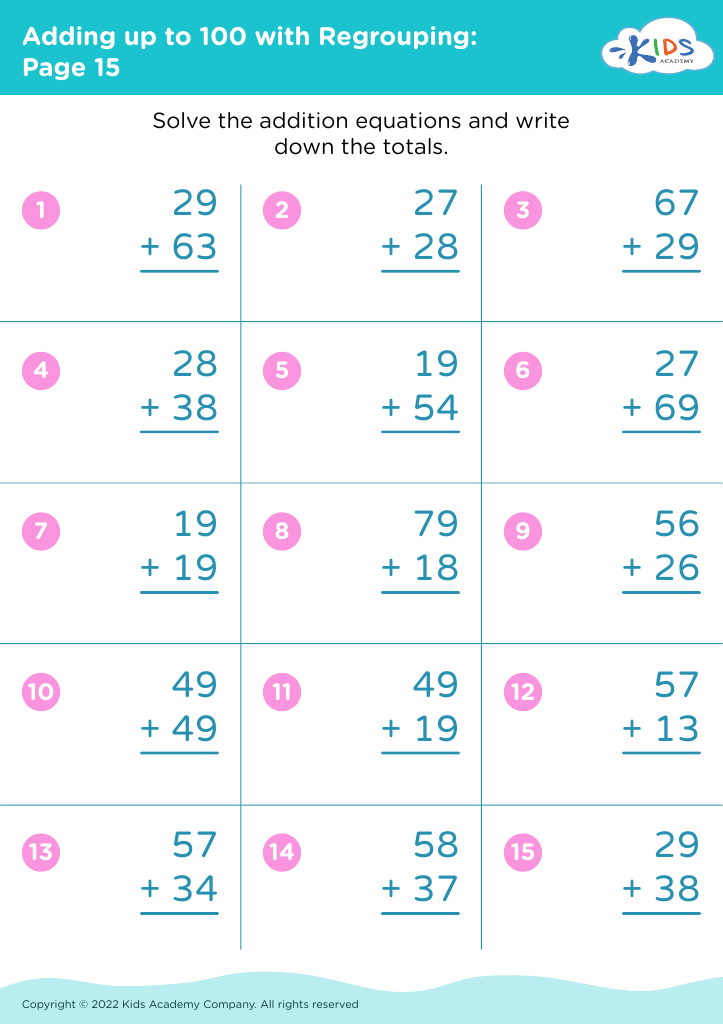
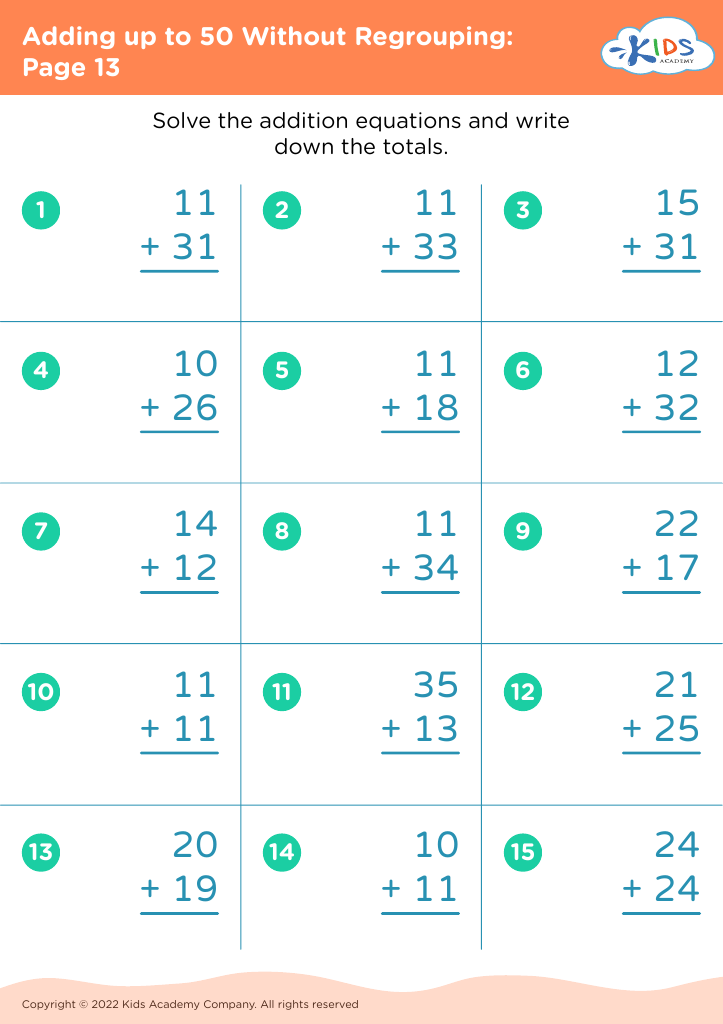
Enhance counting skills with our engaging addition worksheets, perfect for young learners! At Kids Academy, we’ve designed vibrant and interactive worksheets that transform basic counting into a fun and educational experience. These thoughtfully crafted printables help children develop essential math skills through counting exercises and addition problems. Easy to follow and richly illustrated, our worksheets cater to different learning styles, making math an enjoyable journey for kids. With topics gradually increasing in complexity, students build confidence and proficiency step-by-step. Download our free worksheets today and set a strong foundation for your child's mathematical success! Visit Kids Academy for more details.
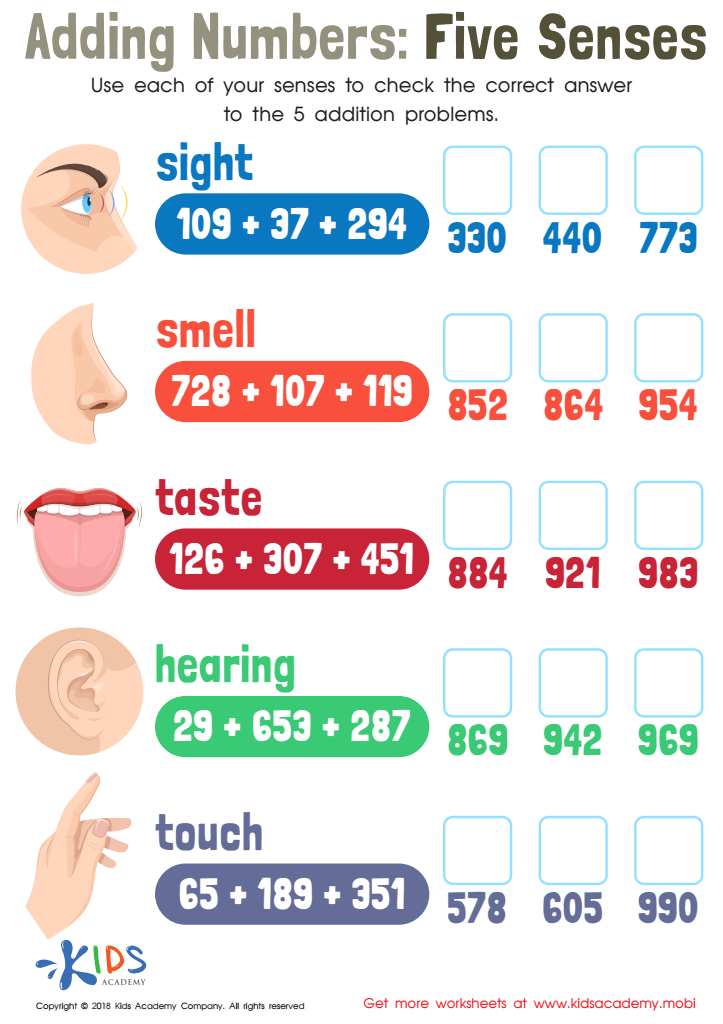
Adding Numbers: Five Senses Worksheet
 Assign to My Students
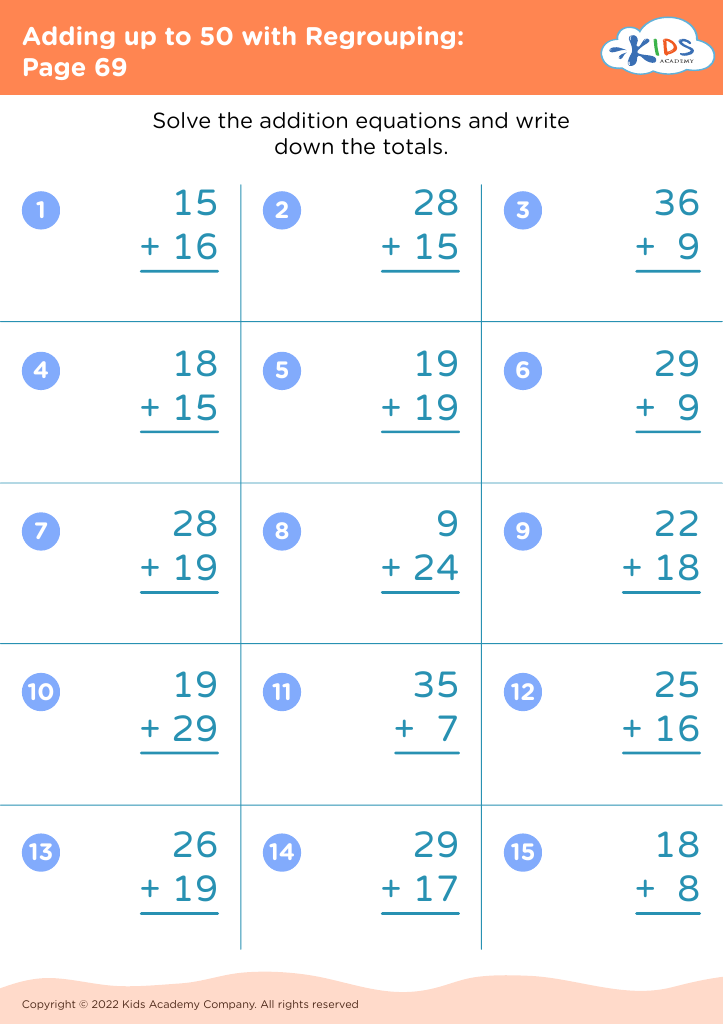
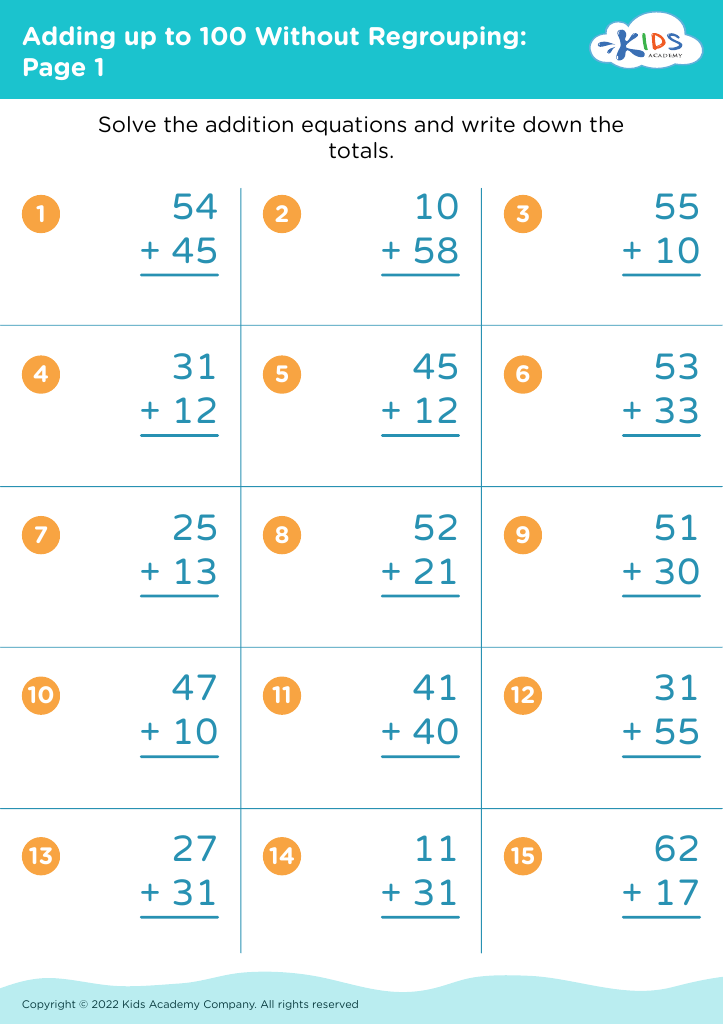
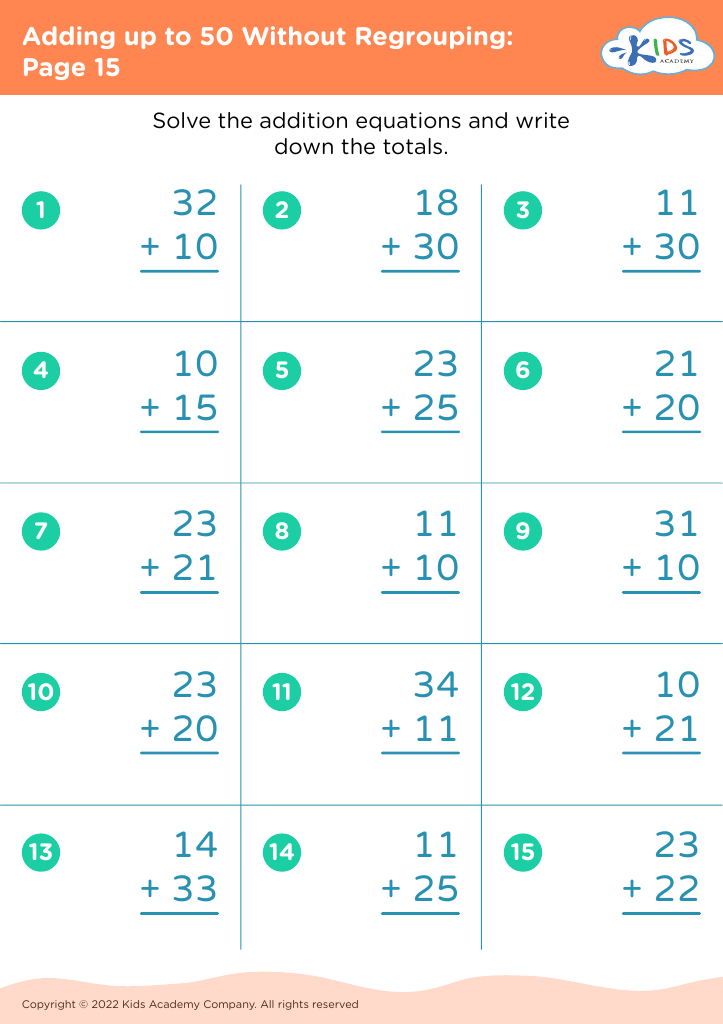
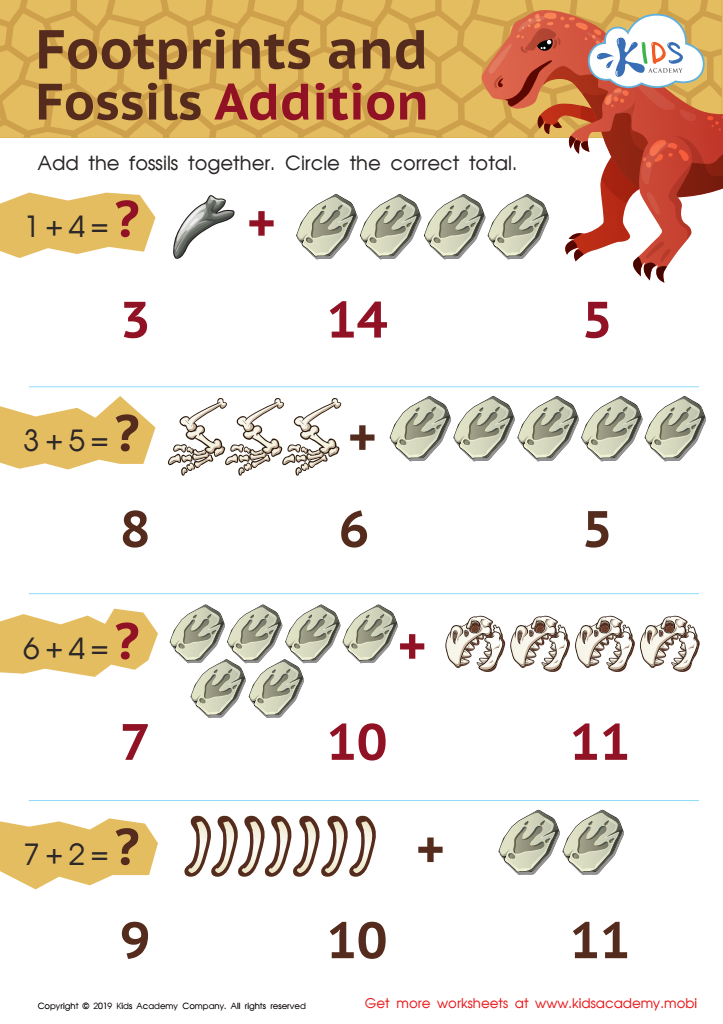
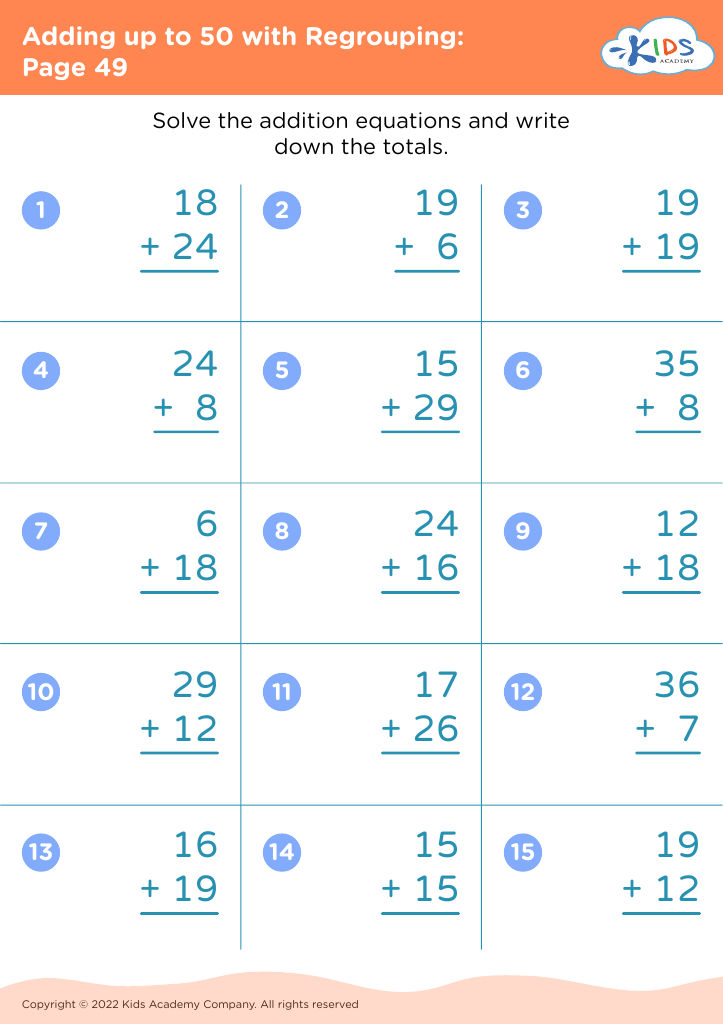
Footprints and Fossils Addition Worksheet
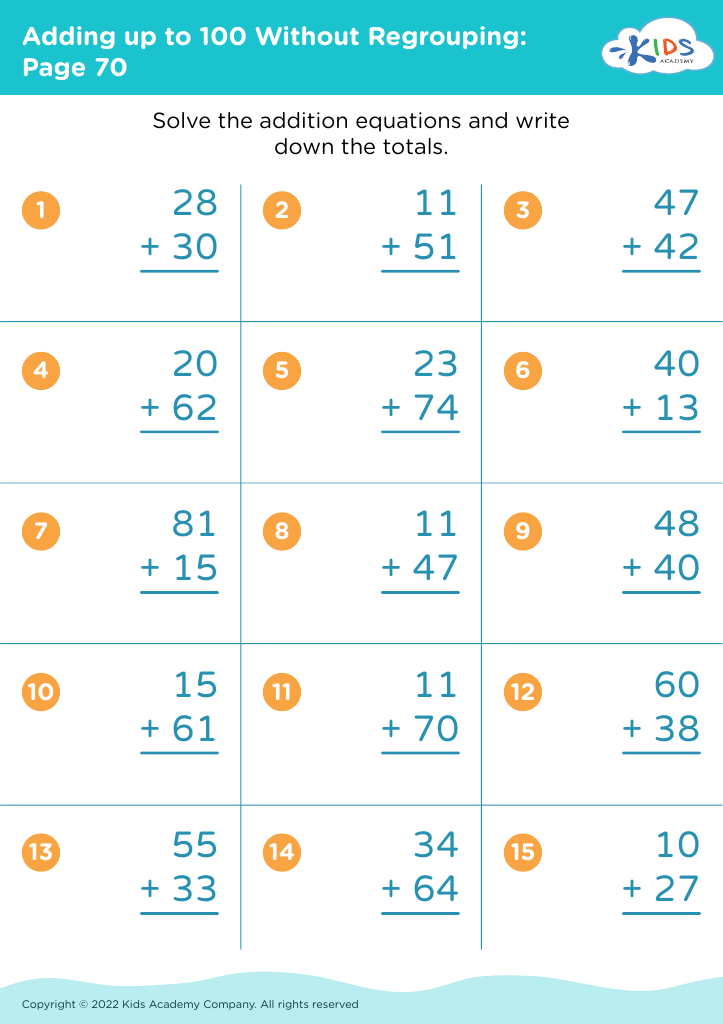








Enhancing counting skills and teaching addition are crucial for early learners as they form the cornerstone of mathematical understanding and overall cognitive development. Parents and teachers should care deeply about these skills because they provide children with foundational tools that are essential for critical thinking, problem-solving, and daily life activities.
First, strong counting skills help children grasp the concept of number sense, allowing them to understand the relationship between numbers and quantities. This is vital for everything from simple tasks like telling time and making purchases using pocket money, to more complex endeavors like budgeting or comparing measurements in scientific experiments.
Furthermore, addition introduces children to basic arithmetic, which not only has direct practical uses but also prepares them to tackle more advanced mathematical concepts in the future. Addition helps in boosting memory, improves concentration, and promotes the development of logical thinking.
For teachers, incorporating fun activities like using manipulatives, games, and songs facilitates engaging and effective learning experiences. Parents can support this at home by involving kids in everyday situations that require addition, such as cooking measurements or dividing items among family members.
Investing in these fundamental mathematical skills paves the way for academic success and equips children with the confidence to approach more complex problems both in school and in life.








