Enhances number recognition Addition Worksheets
4 filtered results
-
From - To
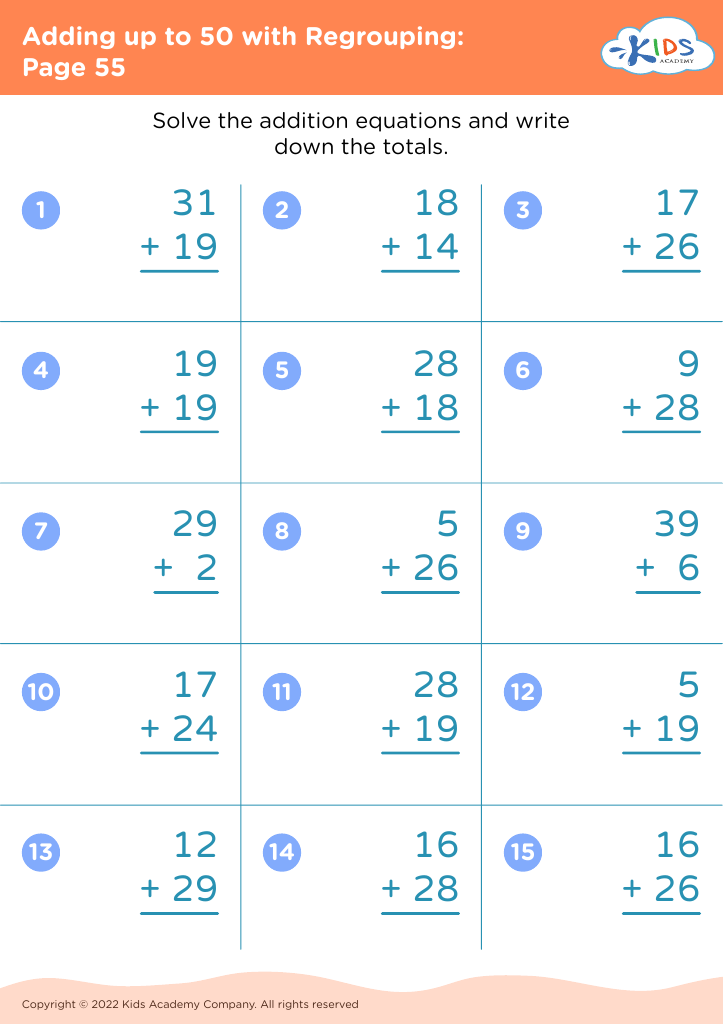
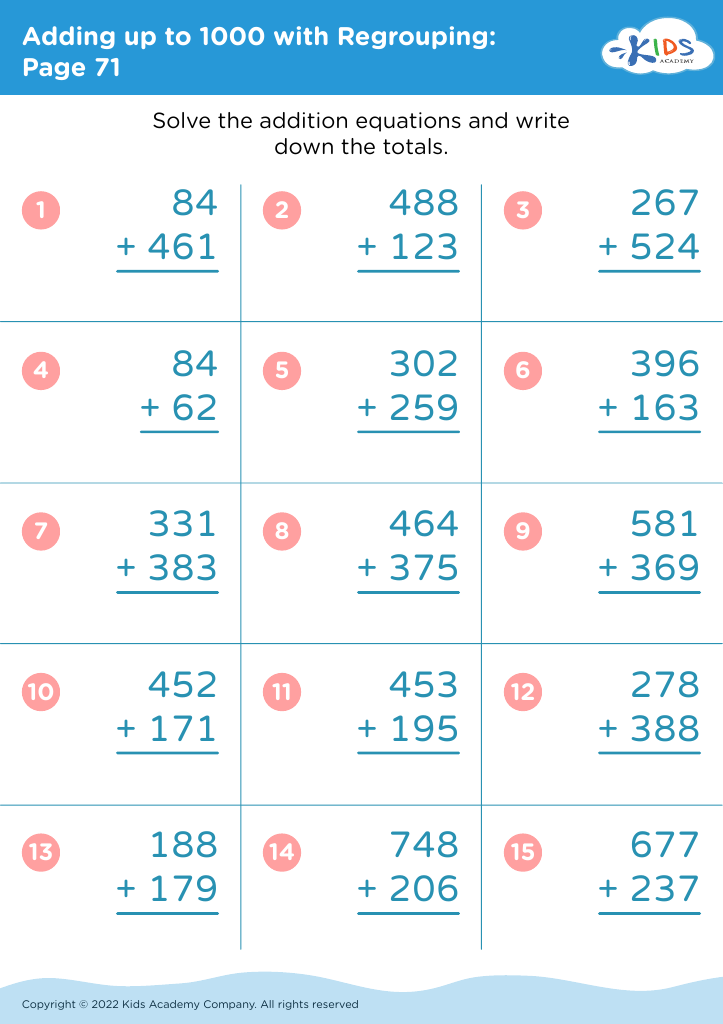
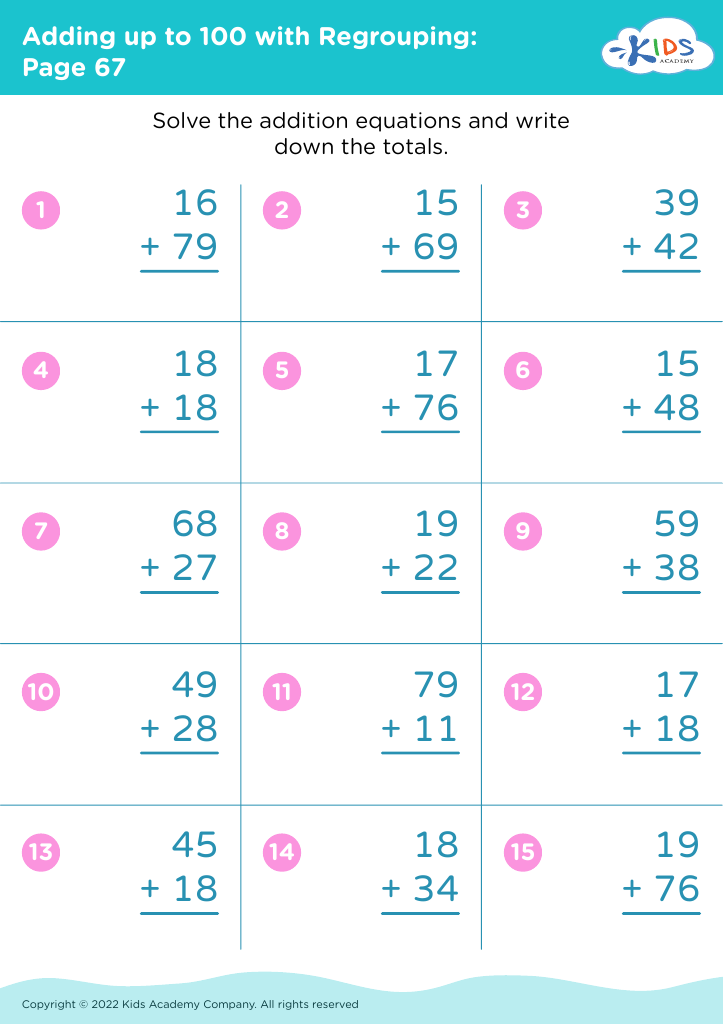
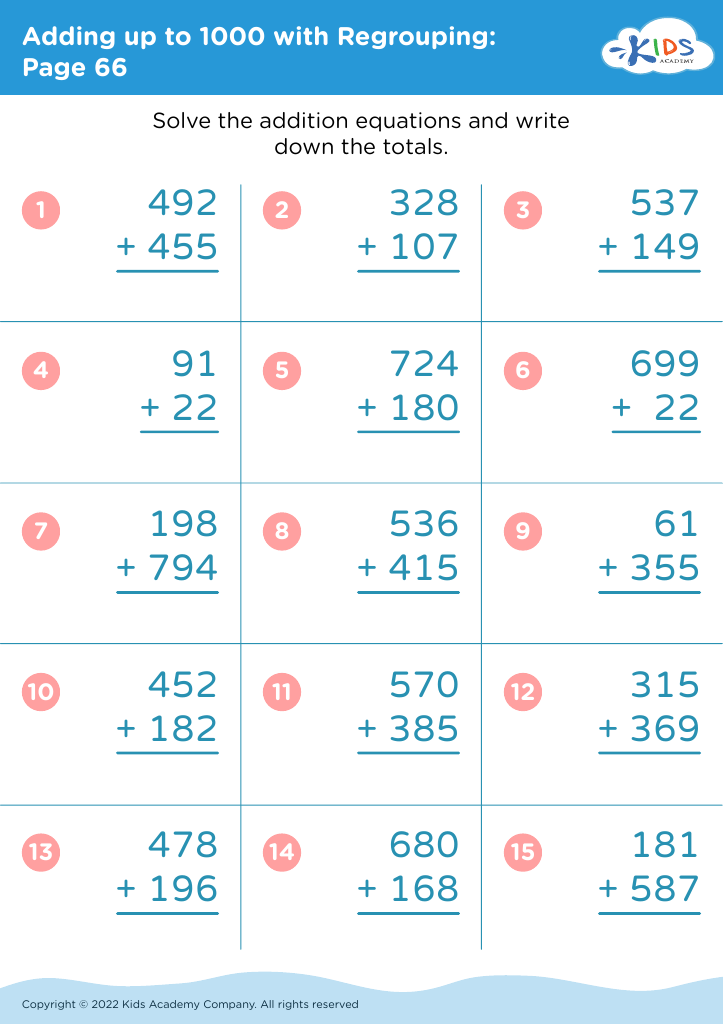
Explore our "Enhances Number Recognition Addition Worksheets" designed to help young learners boost their number recognition skills while mastering addition. These engaging worksheets provide fun activities that combine visual elements with math exercises, making learning enjoyable for kids. With colorful graphics and varied problem types, students will practice identifying numbers and adding them in a hands-on, interactive way. Perfect for early grade education, our resources promote confidence in mathematics, foster critical thinking, and lay a solid foundation for future learning. Ideal for both classroom and home learning, these worksheets transform math practice into a delightful adventure in number recognition and addition!








Enhancing number recognition and addition skills in early learners is crucial for several reasons, warranting the attention of both parents and teachers. Firstly, foundational mathematics skills serve as the building blocks for more complex mathematical concepts. Early proficiency in number recognition helps children understand quantities and relationships, setting a strong groundwork for arithmetic, problem-solving, and critical thinking.
Additionally, strong number recognition and addition skills foster confidence in young learners. When children can confidently identify numbers and perform basic addition, they are more likely to engage in math-related activities and develop a positive attitude towards learning. This self-assurance can mitigate anxiety around math—a common challenge faced by many students.
Furthermore, these skills facilitate everyday life activities. From counting objects to managing money, number recognition and addition are practical skills that students will utilize long after they leave the classroom. They form an integral part of citizens' ability to make informed decisions and solve real-world problems.
Ultimately, by emphasizing number recognition and addition, parents and teachers play a pivotal role in nurturing lifelong learners. These efforts contribute to holistic development, ensuring children possess not just academic skills, but the ability to navigate the complexities of the world successfully.








