Enhancing problem-solving abilities Addition Worksheets
10 filtered results
-
From - To
Unlock the power of problem-solving with our "Enhancing Problem-Solving Abilities Addition Worksheets." Tailored for early learners, these engaging worksheets help children build foundational math skills while fostering critical thinking. Through diverse problems, kids will navigate various strategies to tackle addition challenges, promoting not just numerical proficiency, but also resilience and creativity in finding solutions. Our comprehensive activities encourage children to explore mathematical concepts, enhancing their ability to apply knowledge in real-world contexts. Ideal for classrooms or home learning, these worksheets provide an effective and enjoyable way to strengthen problem-solving skills alongside essential math practice. Ignite your child's curiosity and confidence today!
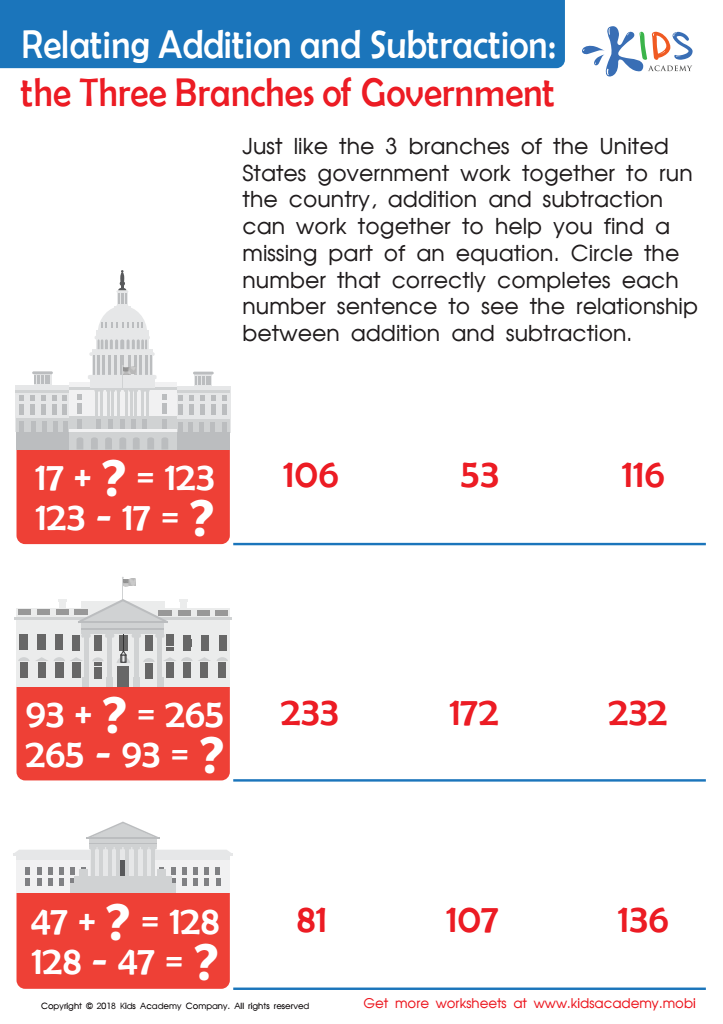
The Three Branches of Government Worksheet
 Assign to My Students
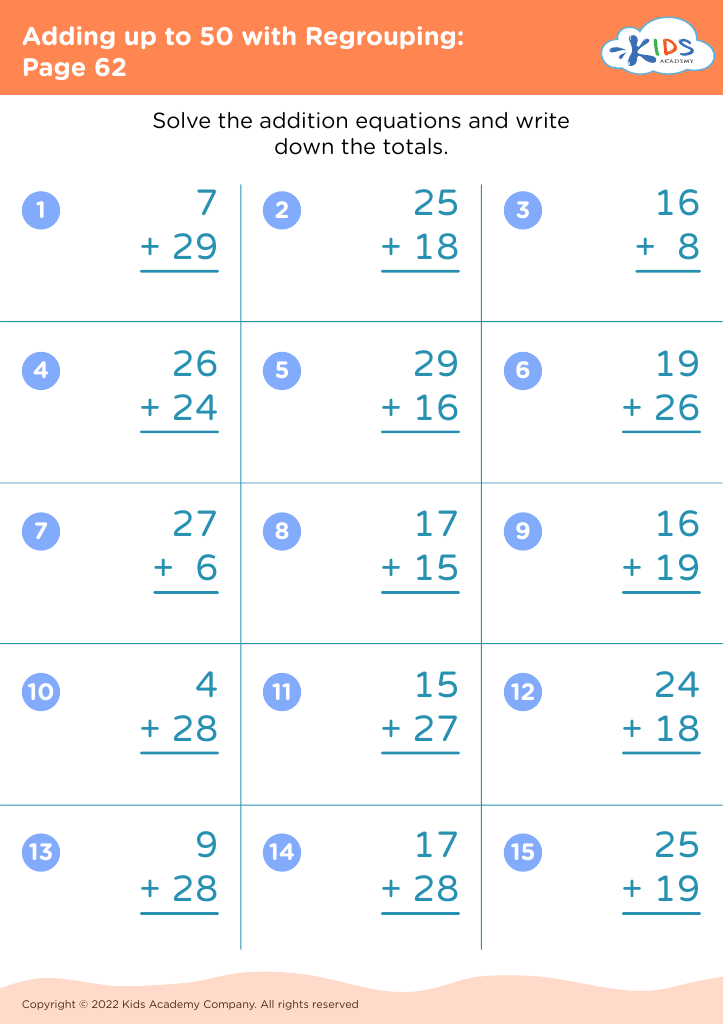
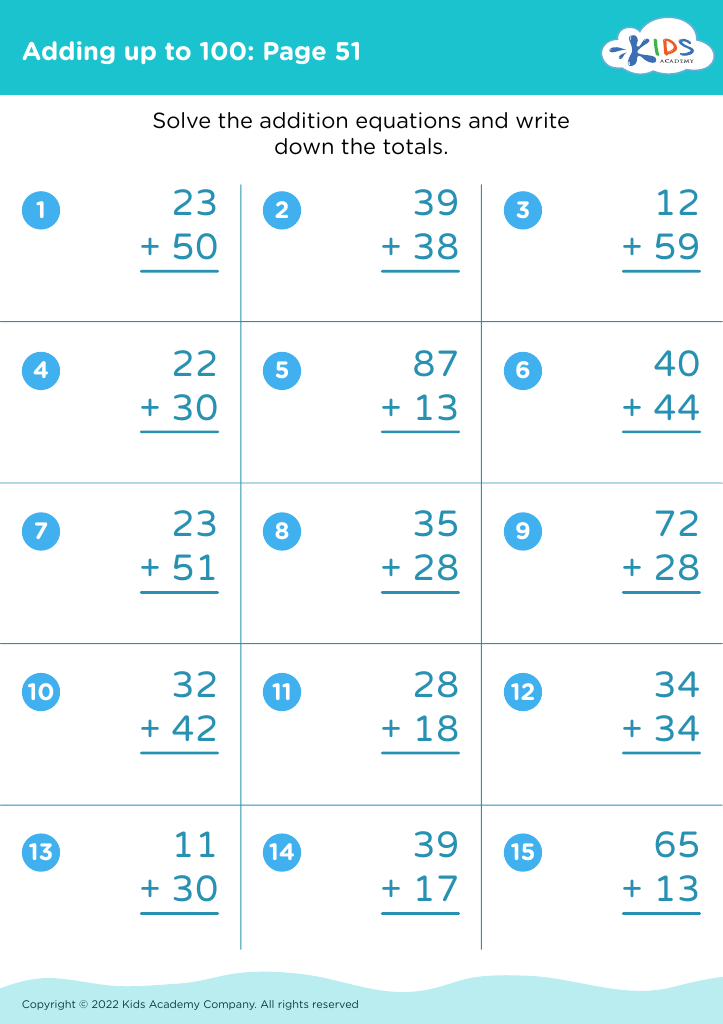
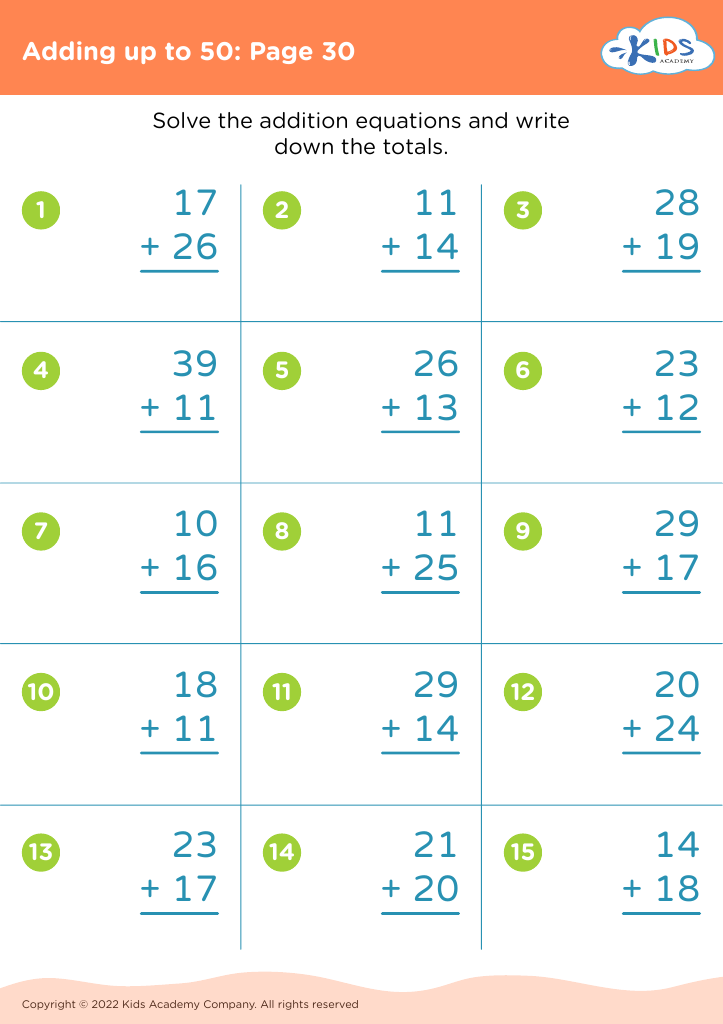
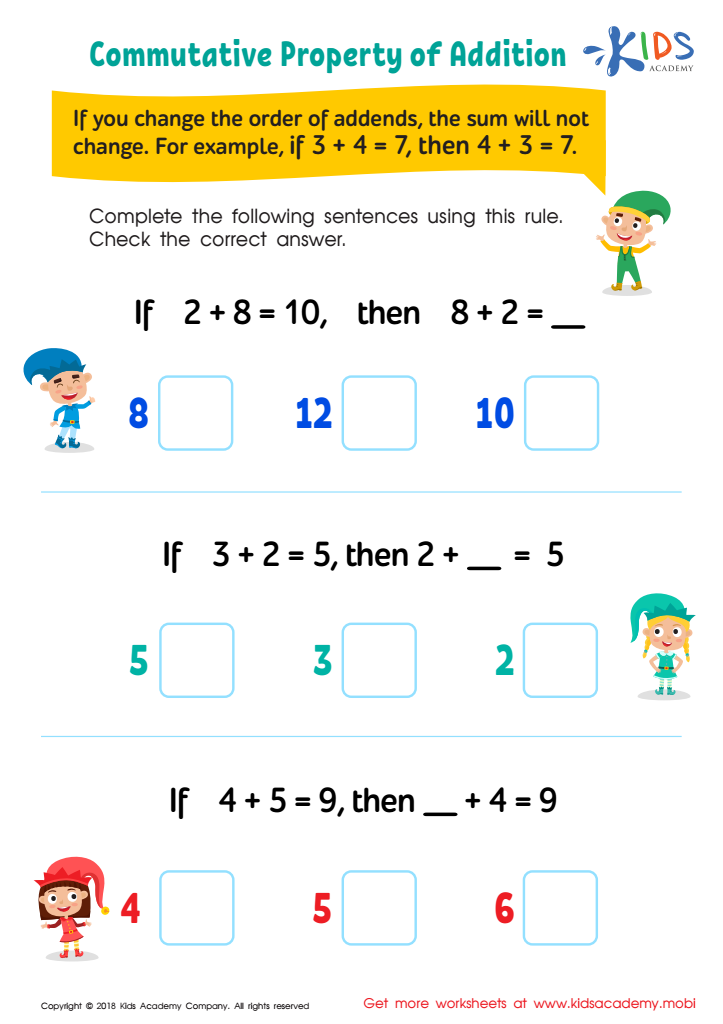
Commutative Property of Addition Worksheet
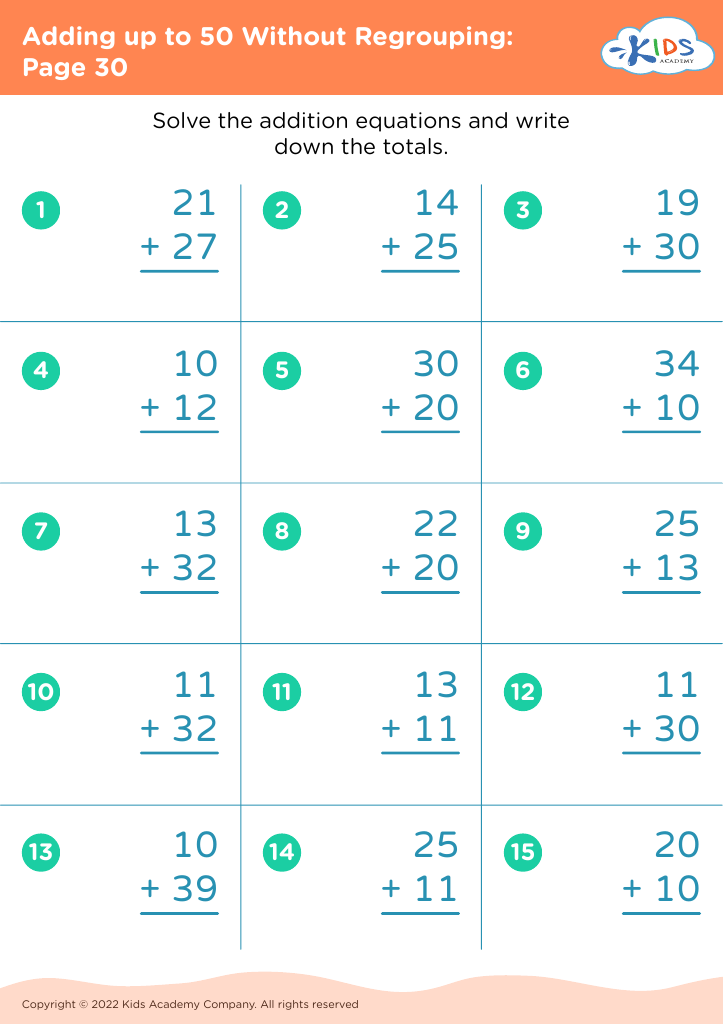








Enhancing problem-solving abilities in early learners, particularly in the context of addition, is crucial for several reasons. First, strong problem-solving skills enable students to approach mathematical concepts with confidence and creativity. When children learn to tackle addition problems effectively, they develop a solid foundation for more complex arithmetic and higher-level math skills.
Second, these abilities promote critical thinking and reasoning. When students encounter addition problems, they must analyze the situation, identify the necessary operations, and apply appropriate strategies. This analytical thought process fosters cognitive development, helping children to think logically and make informed decisions across various subjects and life situations.
Moreover, promoting problem-solving in math can improve academic performance overall. As students become adept at solving addition tasks, they gain confidence that translates into other learning areas, fostering a positive attitude towards education.
Finally, fostering strong problem-solving skills equips children with the tools they need for real-life challenges. Math concepts are prevalent in everyday scenarios—like budgeting and measuring—and mastering them early sets the stage for success in life. For these reasons, parents and teachers should prioritize enhancing problem-solving abilities in young learners, laying a foundation for lifelong learning and resilience.








