Improve counting Addition Worksheets
3 filtered results
-
From - To
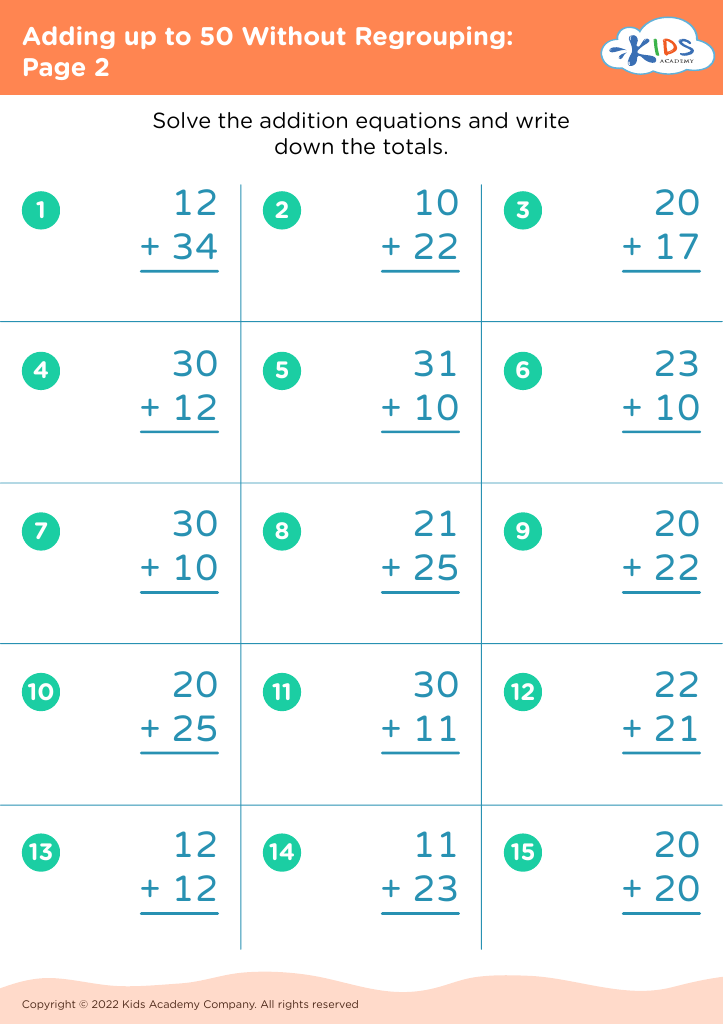
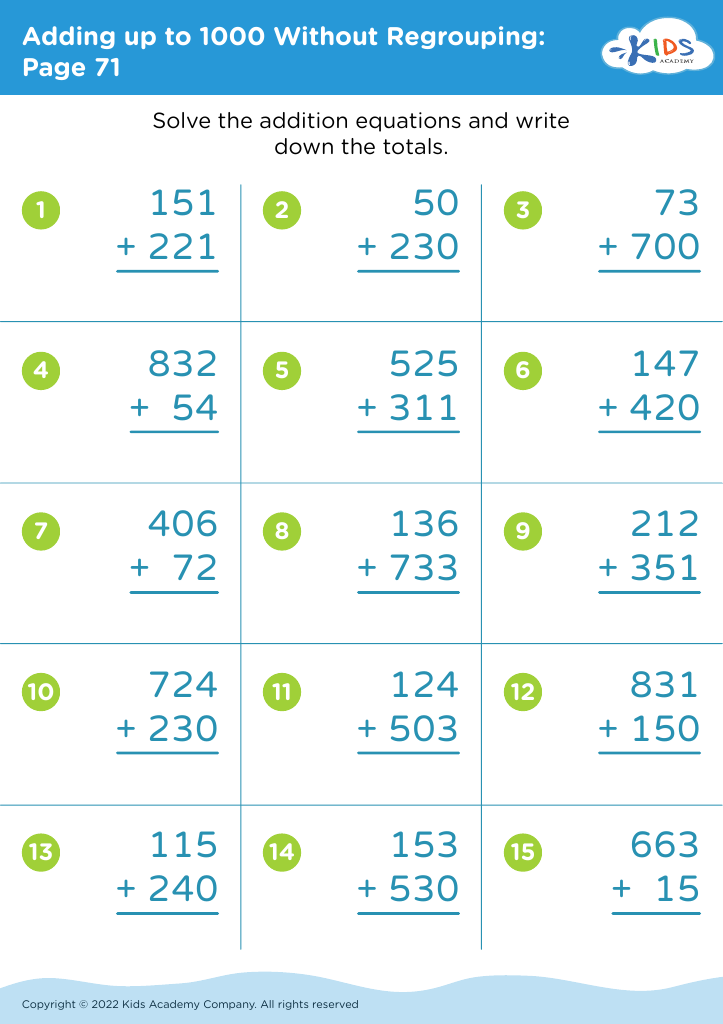
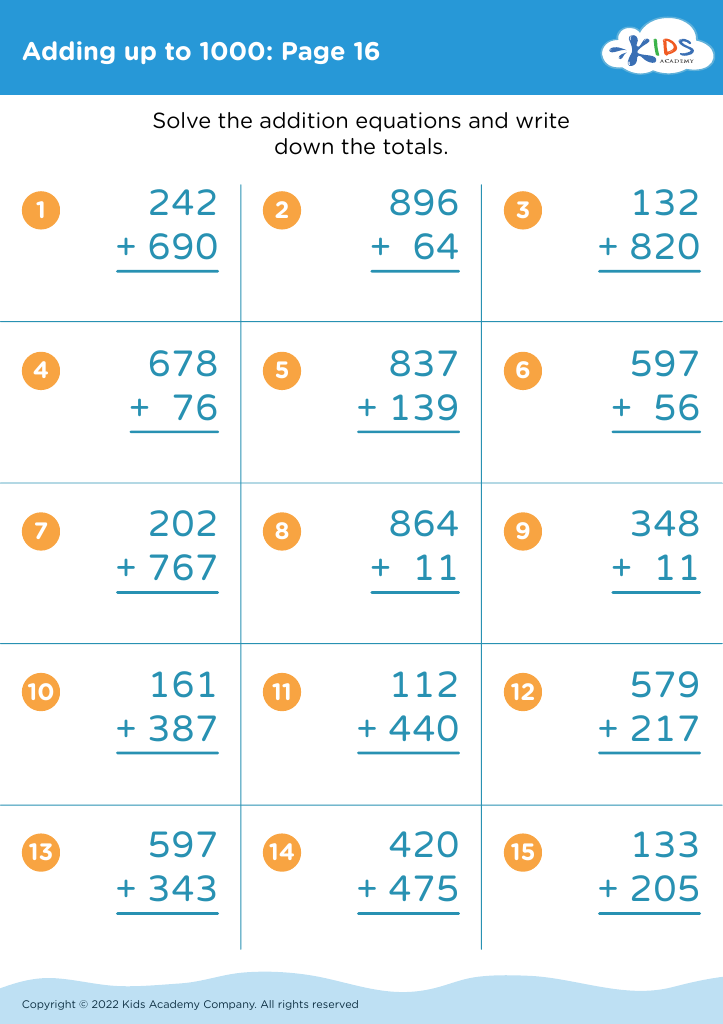
Boost your child's math skills with our "Improve Counting Addition Worksheets"! These engaging and interactive worksheets are designed for early learners to master the fundamentals of addition while enhancing their counting abilities. Each worksheet features colorful visuals and fun exercises, making learning enjoyable and effective. These resources focus on building confidence in number recognition, counting forward, and understanding basic addition concepts. Parents and educators will find these worksheets perfect for reinforcing classroom lessons or as enjoyable at-home activities. Help your child develop a strong mathematical foundation today! Explore our collection and watch their counting skills soar!








Parents and teachers should prioritize improving counting and addition skills among young children because these foundational math abilities are critical for overall academic success and everyday problem-solving. Strong counting skills form the basis for understanding larger concepts like number recognition, place value, and mathematical relationships. When children can confidently count and perform basic additions, they build the confidence necessary to tackle more complex math topics as they progress in their education.
Furthermore, mastering addition enhances cognitive development, promoting logical reasoning and critical thinking. These skills are not only pivotal for math-related subjects but also translate into areas such as science and even reading comprehension, where sequencing and recognizing patterns play a vital role.
Moreover, the ability to quickly and accurately perform addition fosters a sense of accomplishment in young learners, motivating them to engage more in their educational journey. Beyond academics, these skills equip children with the tools they need for daily activities, such as budgeting, cooking, or managing time – all of which involve basic math principles.
Involving parents in practicing these skills through games and hands-on activities can create a positive and supportive learning environment, reinforcing the importance of math in everyday life and nurturing a lifelong love for learning.








