Improve fine motor skills Addition Worksheets
3 filtered results
-
From - To
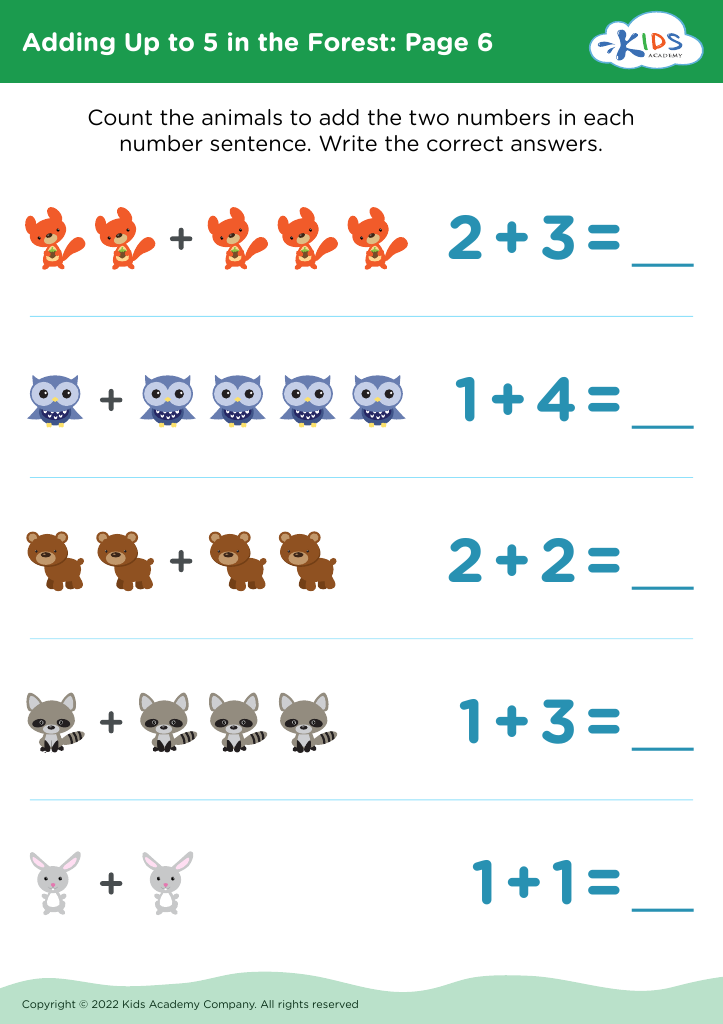
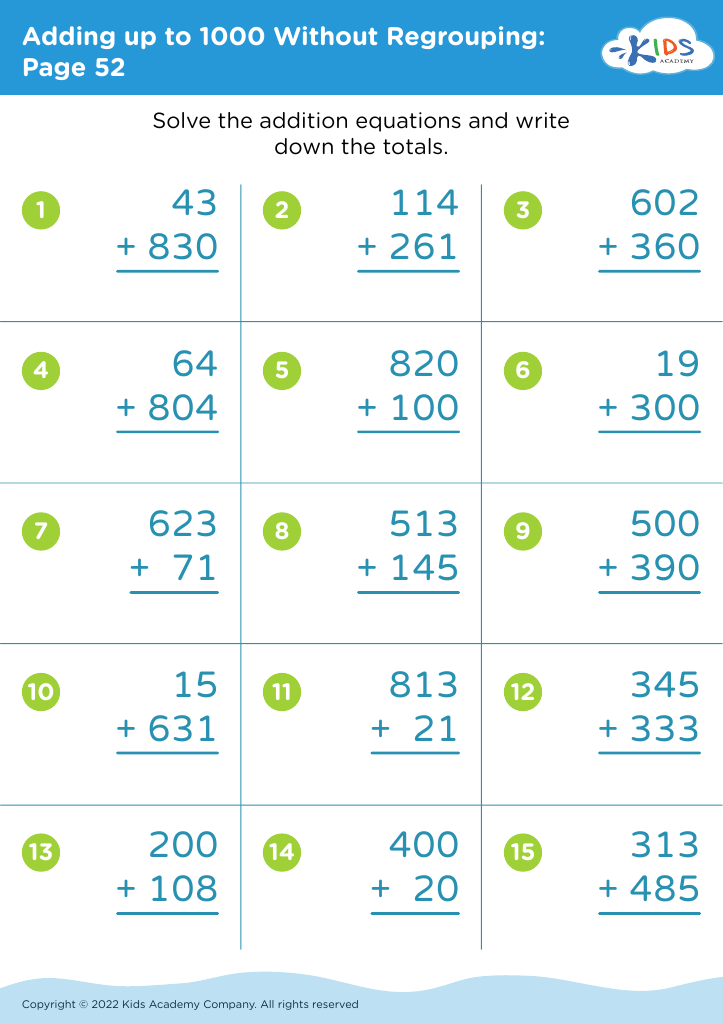
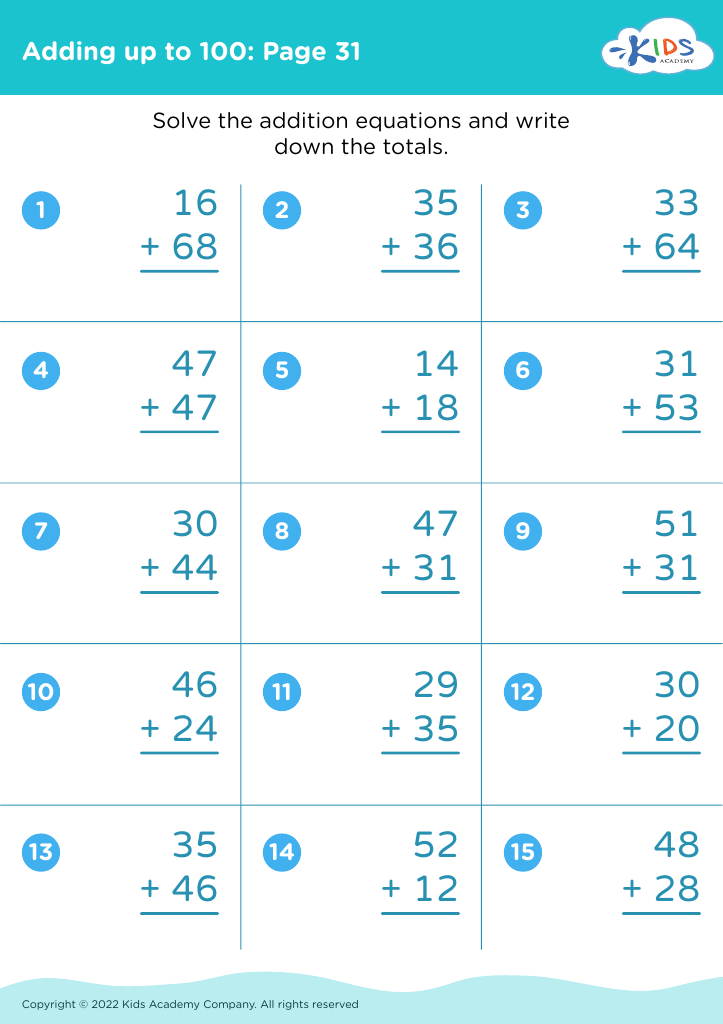
Enhance your child's fine motor skills and mathematical ability with our engaging Addition Worksheets. Expertly designed for early learners, these worksheets combine fun and learning by encouraging careful coloring, tracing, and writing. With challenging addition problems tailored to young minds, children are motivated to practice their pencil control while solving math equations. Perfect for little hands, our activities nurture essential hand-eye coordination and dexterity, setting the stage for success in school. Boost your child's confidence and foundations in math with our dynamic and educational resources, readily available for download and easy to incorporate into any learning routine.








Fine motor skills are crucial for young children's cognitive and physical development, directly impacting their academic success and daily functioning. Parents and teachers have compelling reasons to prioritize the improvement of these skills in early education. Firstly, fine motor skills involve the coordination of small muscles in the hands and fingers, essential for tasks such as writing, drawing, and cutting. Proficiency in these areas facilitates smooth and legible handwriting, which is vital for academic performance as children are frequently required to write in school.
Secondly, developing fine motor skills enhances a child's ability to perform self-care tasks such as buttoning clothes, tying shoelaces, and using utensils, fostering greater independence and confidence. Moreover, these skills are intricately linked with children's cognitive development; activities that require precision and hand-eye coordination, such as puzzles and building blocks, promote problem-solving abilities and spatial awareness.
Lastly, strong fine motor skills are foundational for a progression of more complex motor and academic tasks in the future. By caring about and actively improving these skills, parents and teachers set children up for long-term success, both academically and in everyday life. Investing time in activities that refine these abilities demonstrates a commitment to a well-rounded, supportive, and empowering approach to child development.








