Matching skills Addition Worksheets
3 filtered results
-
From - To
Enhance your child’s math proficiency with our Matching Skills Addition Worksheets. Perfect for young learners, these engaging worksheets provide a fun and interactive way to develop essential addition skills. By pairing sums with their corresponding problems, students build confidence, improve problem-solving abilities, and grasp foundational math concepts. Featuring colorful graphics and a variety of addition exercises, these worksheets cater to preschool and early-grade students. Ideal for classroom use or at-home practice, our expertly designed worksheets lay a strong foundation for future math success. Available for easy download, give your child the tools to excel in mathematics with these stimulating resources.
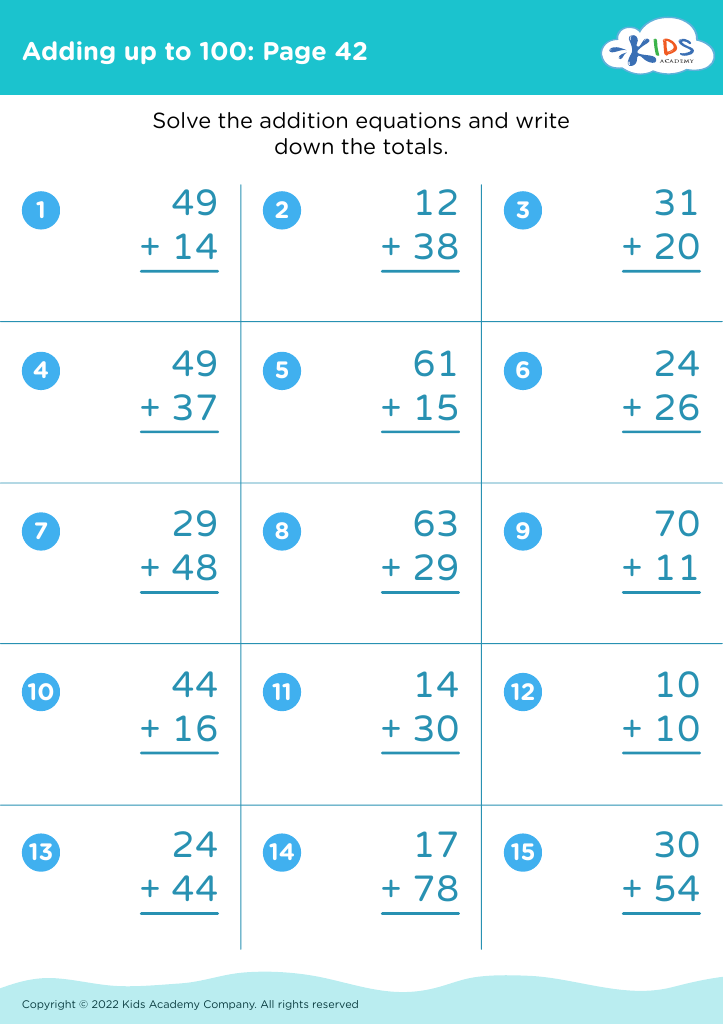
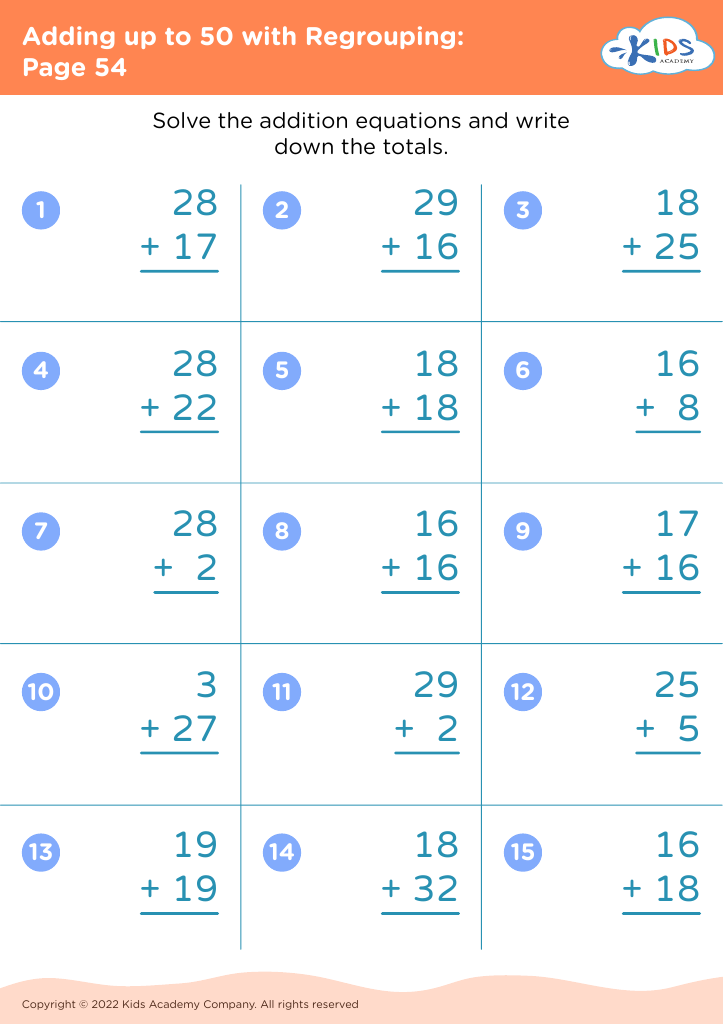
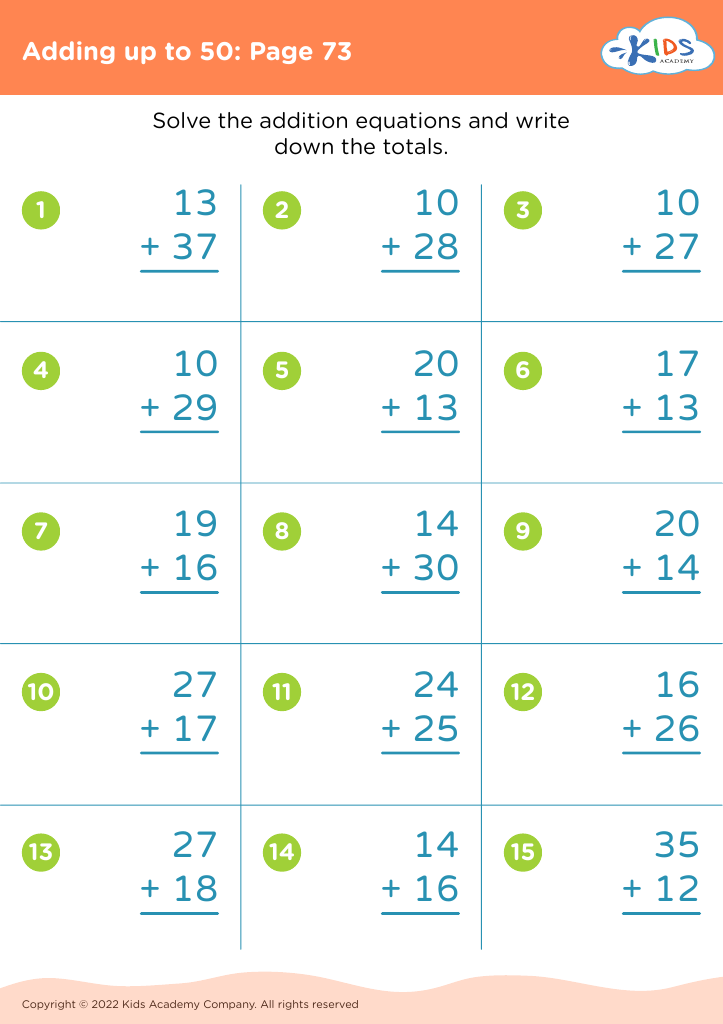








Matching skills with addition is fundamental because it lays the groundwork for a child's mathematical development, enhancing both academic performance and daily life skills. For young learners, mastering basic addition through matching numbers and objects fosters numerical fluency, enabling them to understand more complex mathematical concepts in the future. This early familiarity with numbers nurtures confidence and enthusiasm for math, reducing anxiety associated with the subject.
For parents and teachers, prioritizing these skills supports a holistic educational approach. Teachers can create engaging activities, like matching games involving addition, to make learning fun and interactive, thus maintaining children's interest and encouraging active participation. Parents who invest in reinforcing these skills at home further their child's practice, fostering a supportive learning environment.
Additionally, proficiency in early arithmetic contributes to essential life skills, such as problem-solving, critical thinking, and logical reasoning. Children who excel in addition are better equipped to handle tasks involving budgeting, time management, and measurement—skills vital beyond the classroom. Addressing and encouraging these foundational skills early helps ensure children have a robust base for future academic success and everyday functioning. Consequently, both teachers and parents play a crucial role in a child's formative learning journey and can significantly influence their lifelong relationship with math.








