Numeracy development Addition Worksheets
3 filtered results
-
From - To
Unlock the power of numeracy with our engaging Addition Worksheets, tailored for young learners. Designed to enhance early math skills, these worksheets focus on foundational addition concepts through fun and interactive exercises. Children will practice counting, number recognition, and simple addition in a variety of formats, ensuring a comprehensive understanding of addition. Our user-friendly design is perfect for educators and parents looking to foster a love for math in their children. With colorful graphics and appealing activities, these numeracy development worksheets make learning addition an exciting journey. Start nurturing your child's math abilities today with our thoughtfully crafted resources!
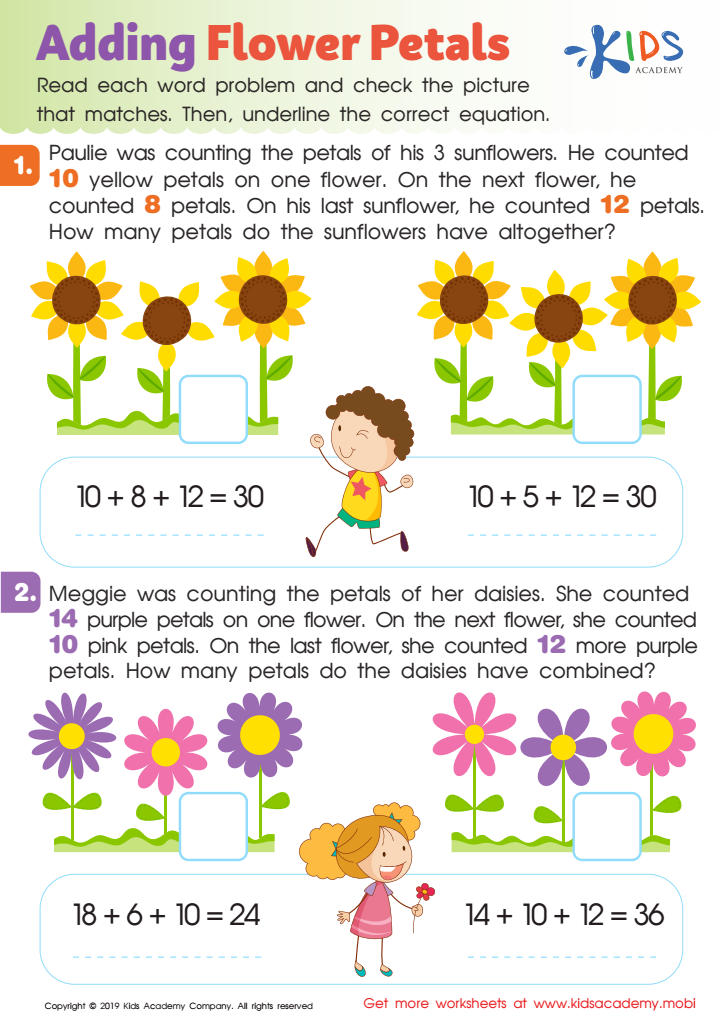
Adding Flower Petals Worksheet
 Assign to My Students
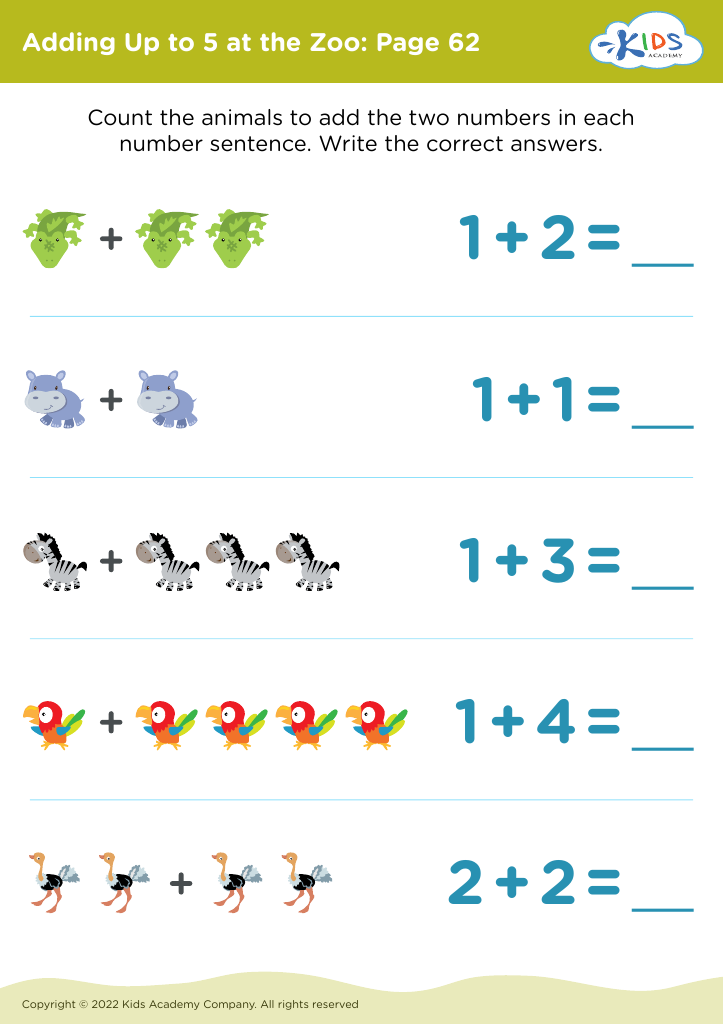
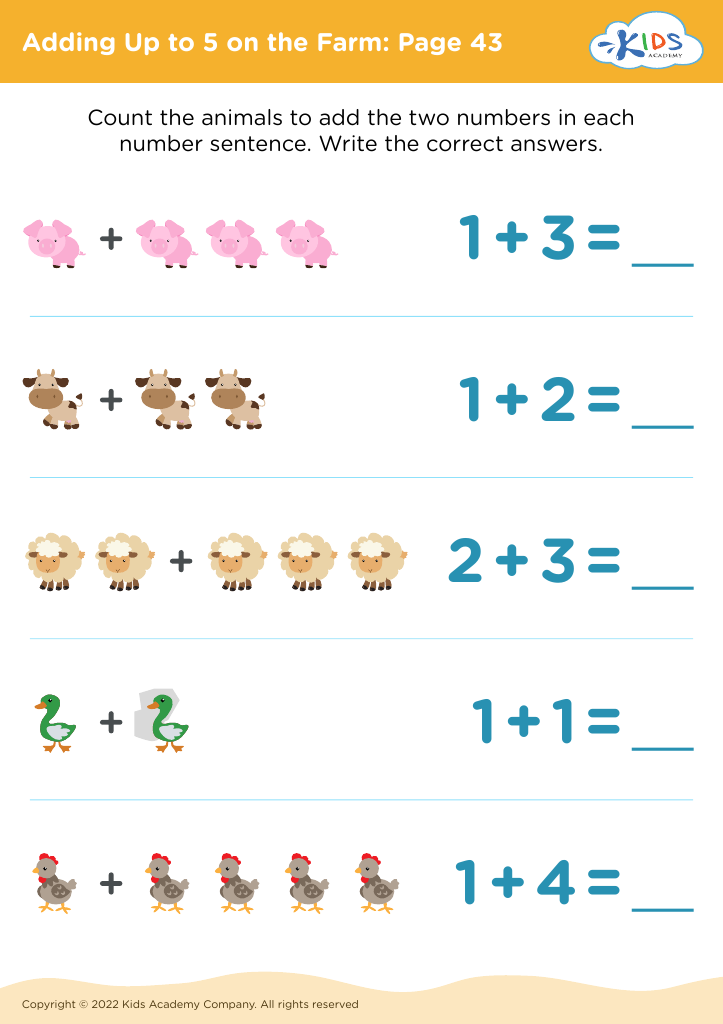








Numeracy development, particularly in addition, is a crucial foundation for children’s overall mathematical understanding and everyday decision-making. Parents and teachers should care about this aspect because it equips children with essential skills that extend beyond the classroom.
Firstly, addition helps develop critical thinking and problem-solving abilities. When children learn how to combine numbers, they gain insights into how quantities interact, enhancing their cognitive skills and ability to analyze situations.
Secondly, mastering addition leads to confidence in handling more complex mathematical concepts, paving the way for success in future learning, such as subtraction, multiplication, and division. A solid grasp of addition also supports skills in areas like budgeting, time management, and measuring, which are vital for daily life.
Moreover, a strong numeracy foundation fosters a positive attitude towards mathematics. Children who are confident in their ability to add are more likely to engage with math in the future, reducing math anxiety and encouraging a growth mindset.
Finally, parental and teacher involvement in early numeracy development within a supportive environment enhances children's learning experiences. Engaging in activities that promote addition not only strengthens relationships but also cultivates an appreciation for mathematics, setting the stage for lifelong learning and success.








