Recognizing numbers Addition Worksheets
4 filtered results
-
From - To
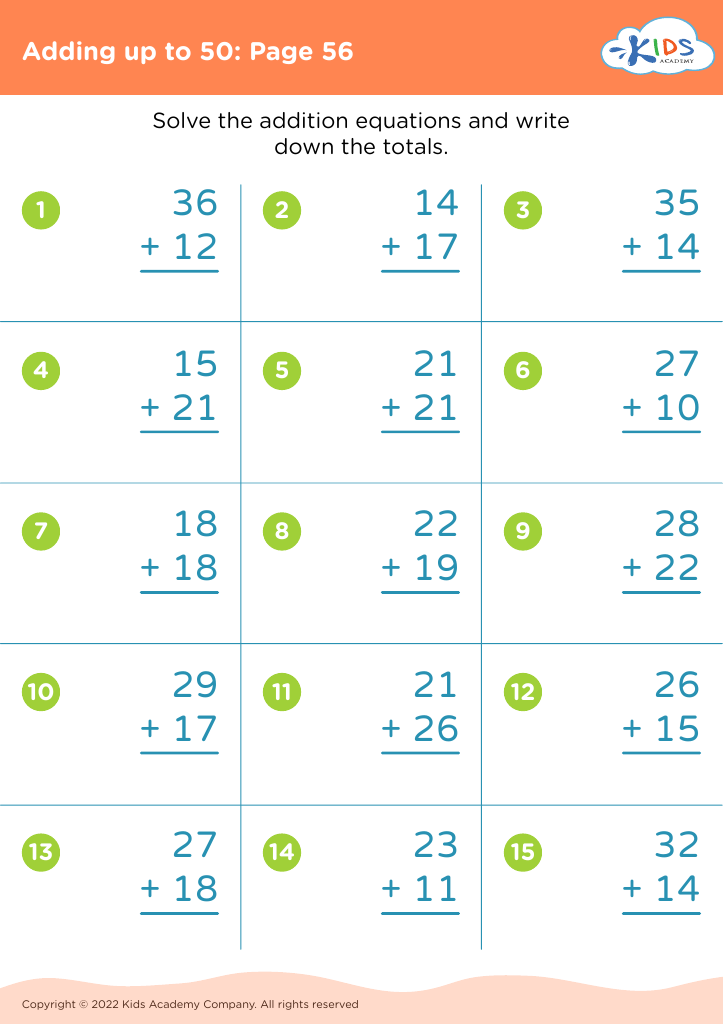
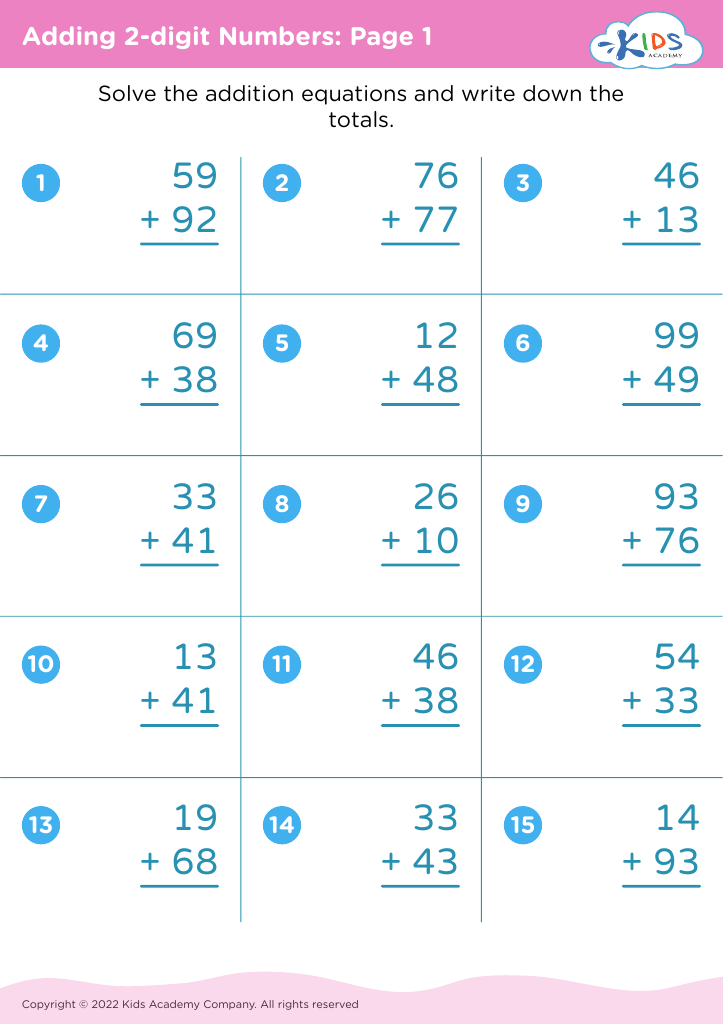
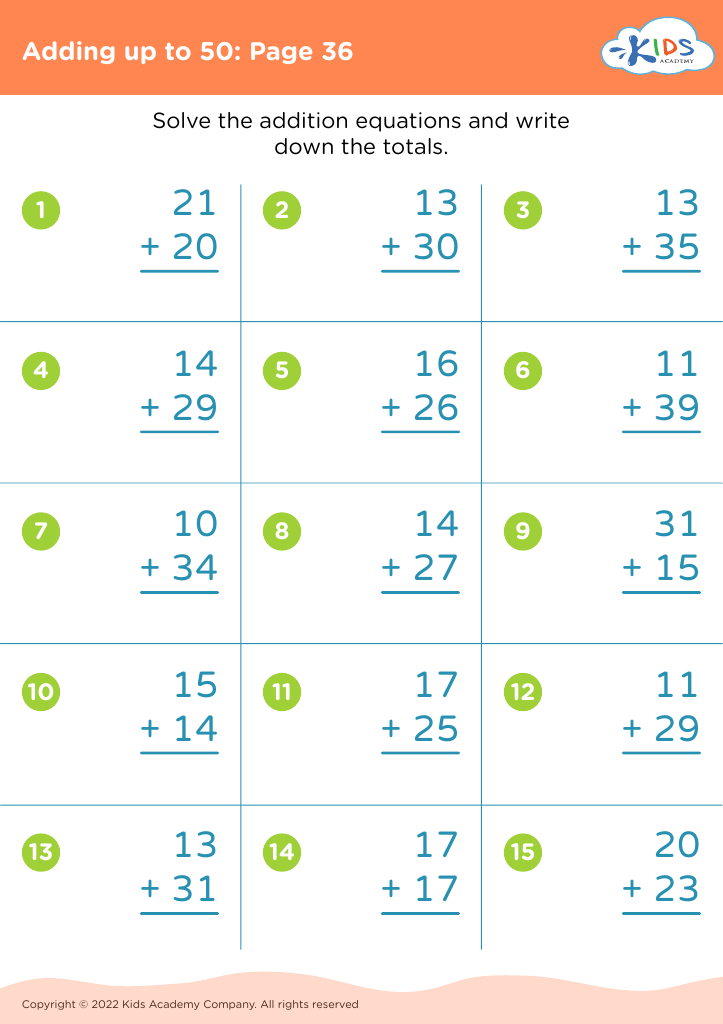
Recognizing Numbers Addition Worksheets help young learners build strong foundational math skills. Designed for early educators and parents, these engaging worksheets support children in recognizing and understanding numbers through fun addition exercises. With colorful illustrations and a variety of activities, students practice adding single-digit numbers while enhancing their number sense and counting abilities. Perfect for classroom use or at-home learning, these resources keep kids motivated and confident in their math journey. Whether introducing new concepts or reinforcing existing skills, our worksheets offer an interactive and educational experience to help your child excel in math.
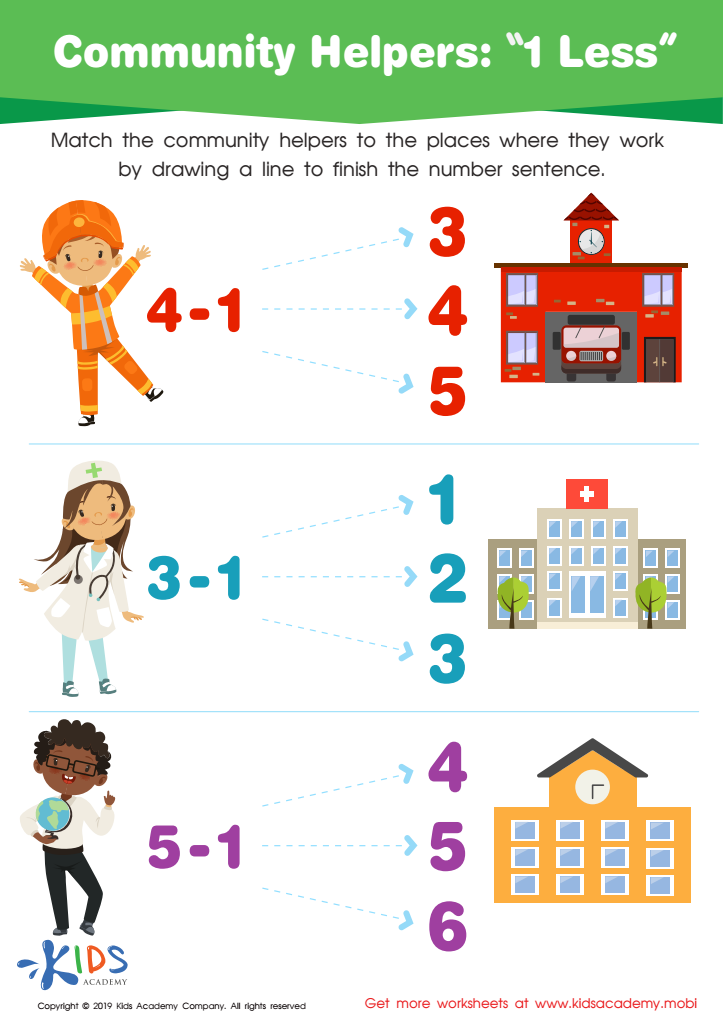
Community Helpers: 1 less Worksheet
 Assign to My Students







.jpg)
Recognizing numbers and understanding basic addition are foundational skills crucial for early childhood development, laying the groundwork for more complex mathematical concepts later on. When children start recognizing numbers, they are essentially building their number sense, which involves understanding number relationships, patterns, and real-life applications.
For parents and teachers, emphasizing these skills promotes cognitive development and enhances problem-solving abilities. Early proficiency in recognizing numbers and performing addition boosts a child's confidence and encourages a love for learning. It aids in activities ranging from simple daily tasks like counting objects, telling time, and handling money, to academic scenarios that require calculating, measuring, or spatial planning.
Moreover, familiarizing children with numbers and addition early on supports brain development linked to logic and reasoning skills. It prepares them for more advanced mathematics, making transitions more fluid as they progress to higher grades.
Additionally, early positive experiences with math reduce anxiety often associated with the subject, setting a robust foundation not only for mathematics but for other STEM disciplines too. Engaged parents and teachers can offer individualized attention, making learning numbers and addition more accessible and enjoyable, thus promoting lifelong numerical literacy and academic success.








