Reinforce math concepts Addition Worksheets
3 filtered results
-
From - To
Discover our fun and engaging Reinforce Math Concepts Addition Worksheets! Designed for early learners, these worksheets provide a comprehensive approach to mastering addition. With diverse activities, including colorful visuals and interactive exercises, students can practice essential skills while enjoying the learning process. Perfect for teachers and parents, our worksheets cater to various learning styles and levels, promoting confidence in math. Dive into an array of problems that reinforce key addition concepts, helping children solidify their understanding. Explore the world of math with our thoughtful resources and foster a positive learning environment. Start your child’s math journey today with our expertly crafted worksheets!
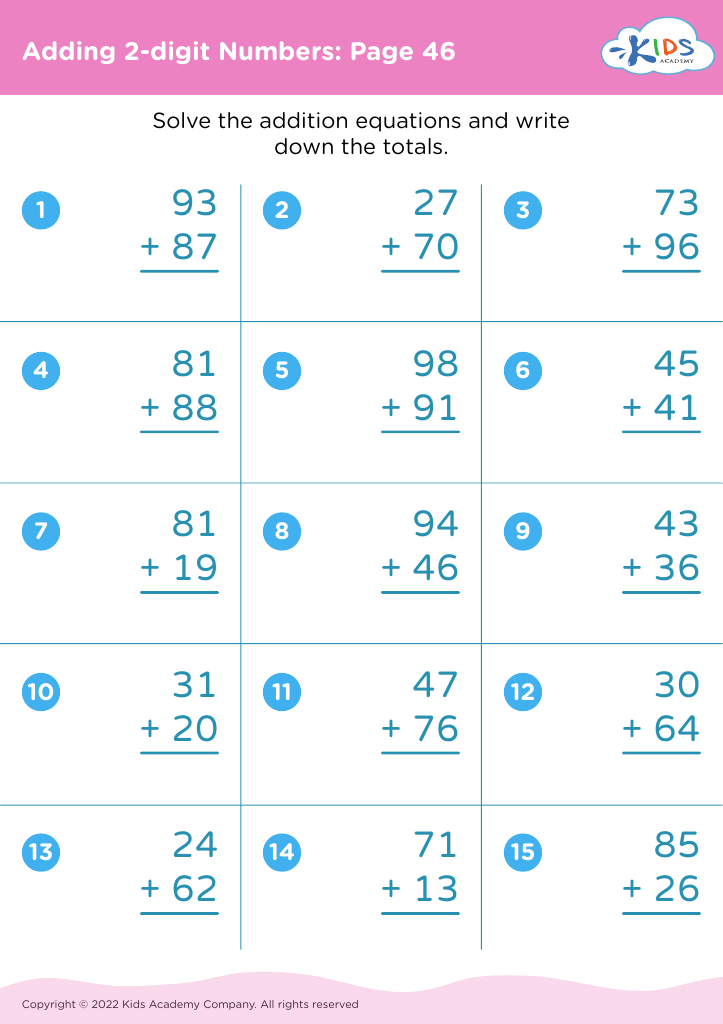
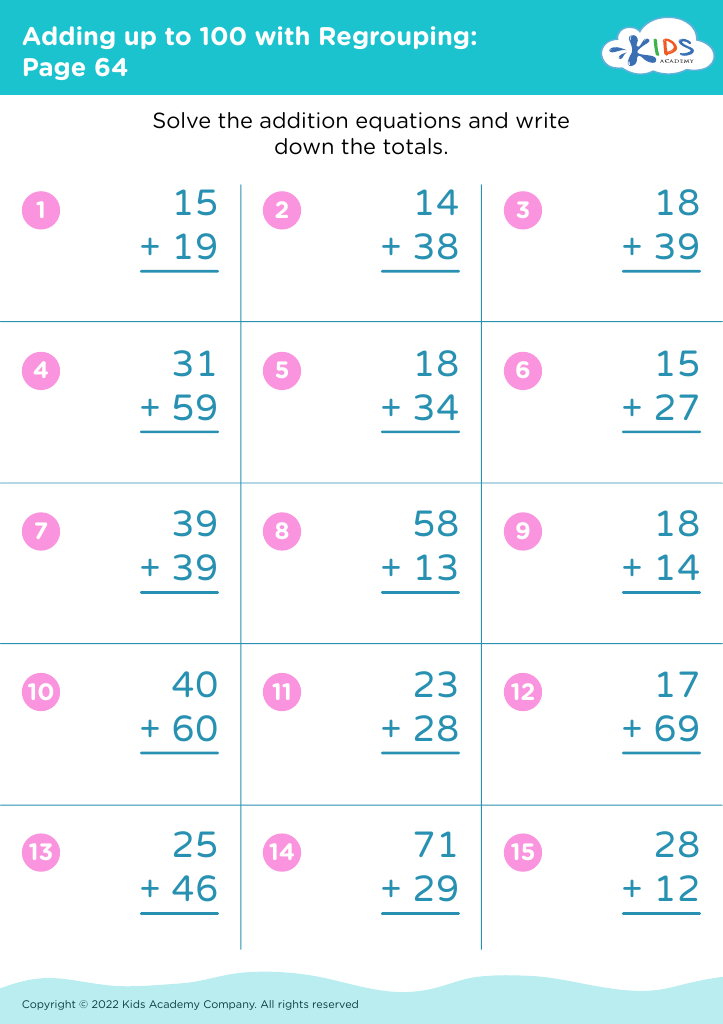
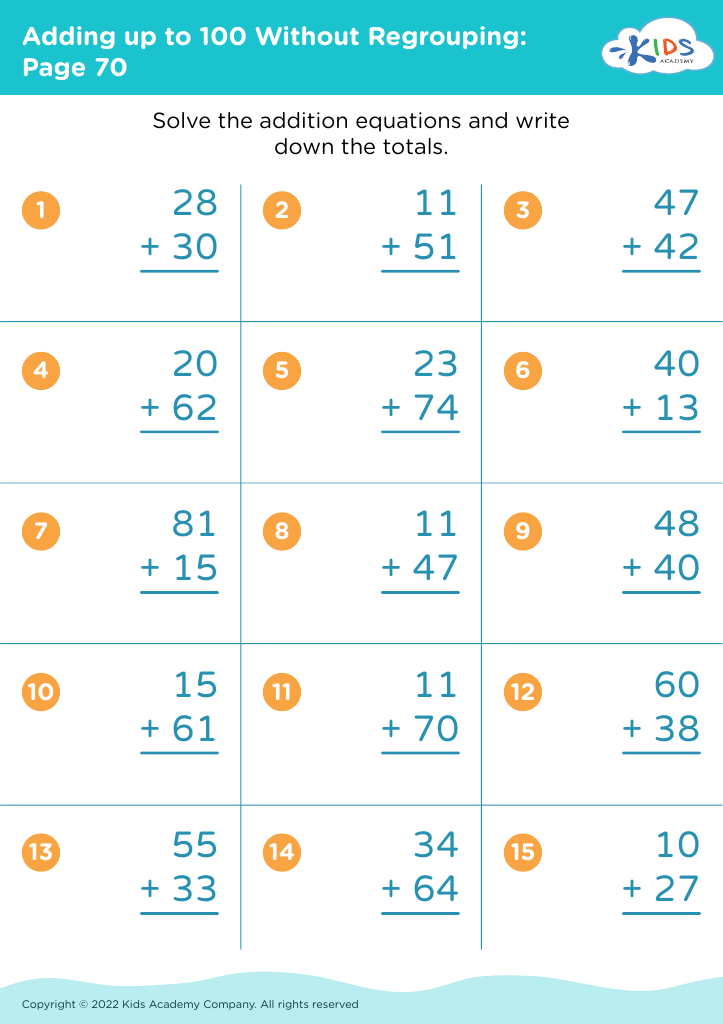








Parents and teachers should care about reinforcing math concepts like addition because foundational skills in mathematics are essential for children's overall academic success. Addition, as one of the primary building blocks of math, helps students develop critical problem-solving skills and logical thinking.
Reinforcing addition not only boosts children's confidence in their abilities but also lays the groundwork for more complex mathematical concepts, such as subtraction, multiplication, and division. By ensuring that children grasp addition through engaging activities, games, and everyday examples, they build a strong numerical literacy that extends beyond the classroom into real-life situations—whether it’s counting change, measuring ingredients, or planning schedules.
Moreover, consistent reinforcement from both parents and teachers fosters a supportive learning environment. This collaboration helps consolidate learning, making it easier for children to ask questions and seek help when they encounter challenges. It also encourages a positive attitude toward learning math, which often carries into higher levels of education.
In conclusion, prioritizing the reinforcement of addition ultimately equips children with essential skills that are crucial not just for academic success, but also for effective functioning in the modern world.








