Sea creatures identification Addition Worksheets
3 filtered results
-
From - To
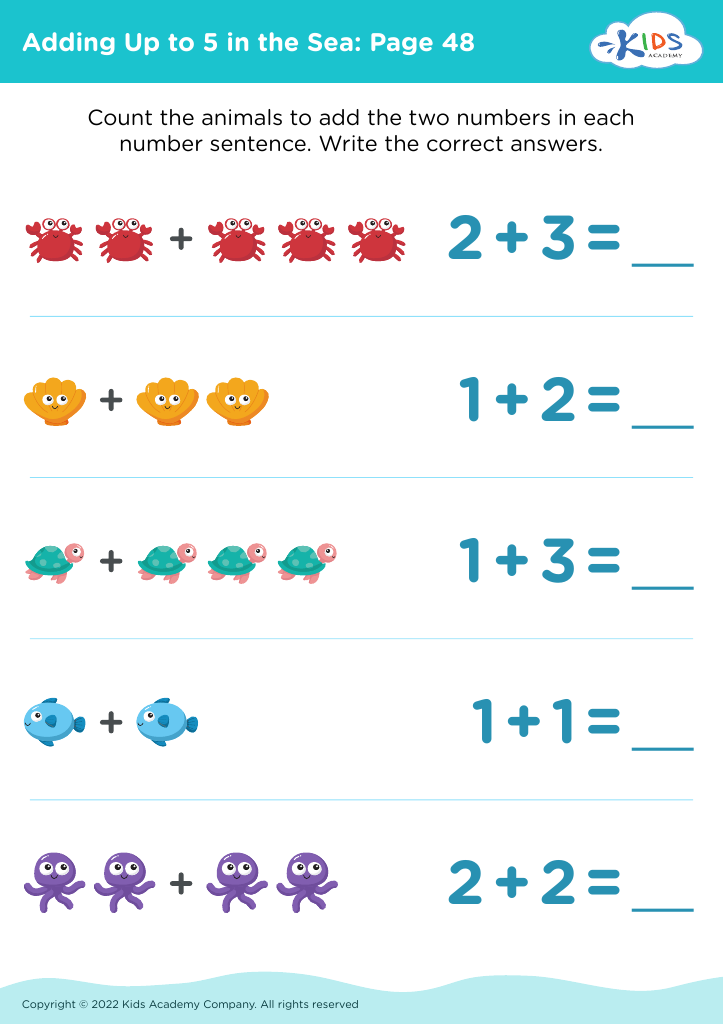
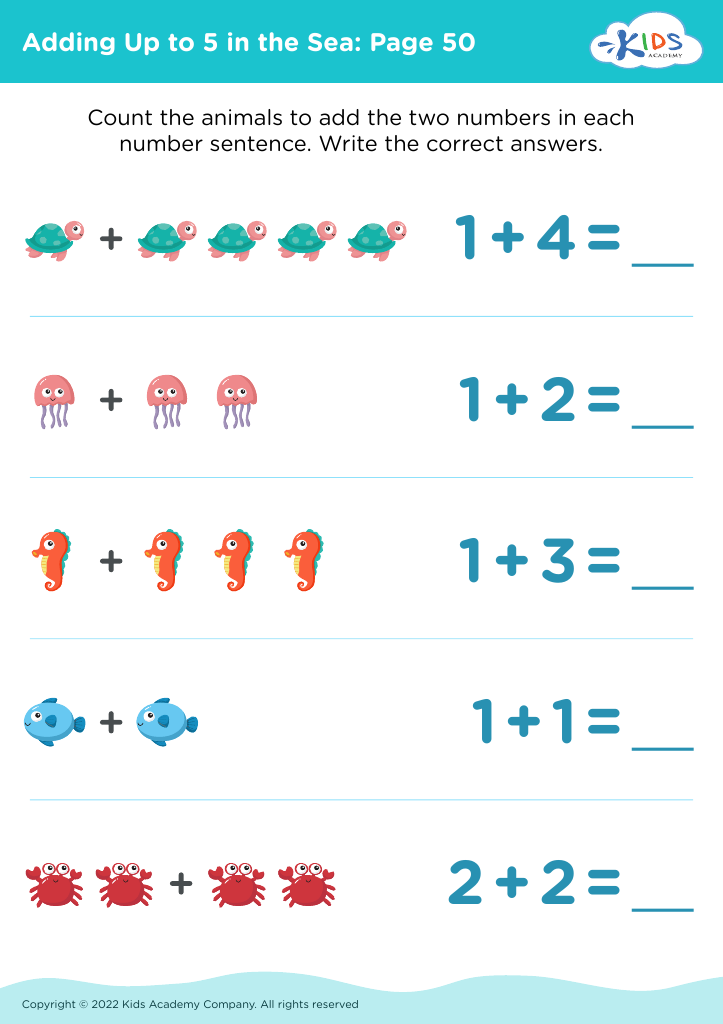
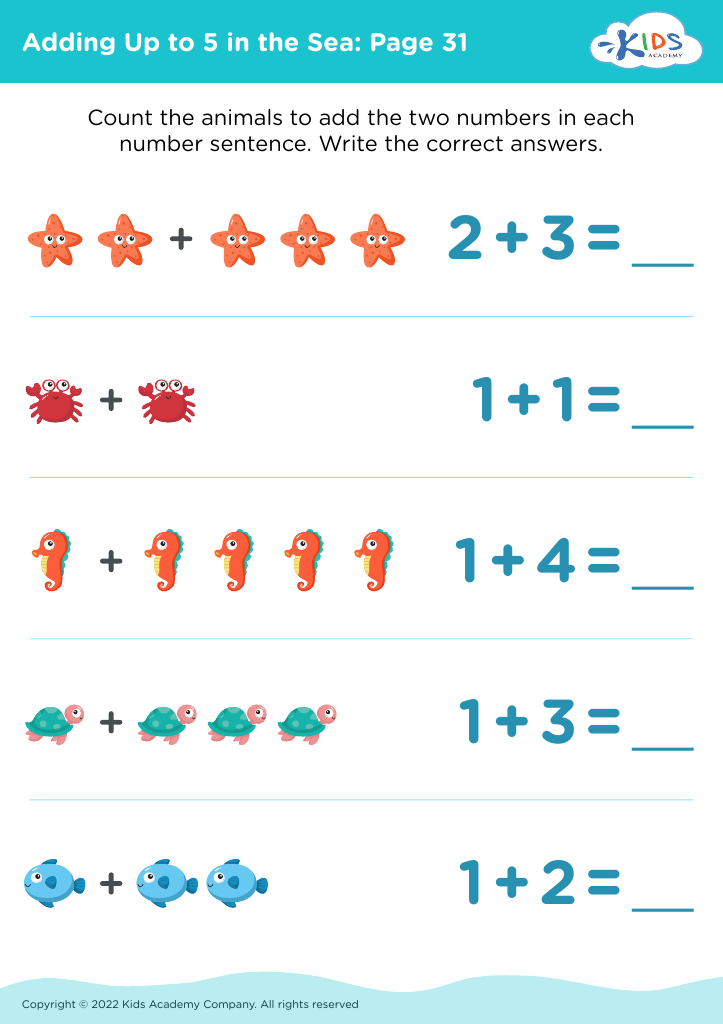
Dive into an exciting undersea learning adventure with our "Sea Creatures Identification Addition Worksheets"! Perfect for early grade students, these engaging activities combine fundamental math skills with marine biology. Kids will practice addition while identifying fascinating sea creatures, making math both fun and educational. Each worksheet is beautifully illustrated to capture children’s imaginations, helping them associate numbers with real-world images. These printable resources are perfect for classroom activities or homeschooling, fostering both numerical and environmental awareness. Enhance your child's learning experience with entertaining and informative resources from Kids Academy. Start exploring the ocean of knowledge today!







.jpg)
Parents and teachers should care about sea creature identification because it fosters curiosity and a deeper understanding of the natural world among children. Learning to identify different sea creatures can spark an interest in marine biology, ecology, and conservation from a young age. This knowledge encourages respect and a sense of responsibility towards the environment, which is crucial in today’s context of global environmental challenges.
Moreover, identifying sea creatures can enhance cognitive development by sharpening observation skills and attention to detail. It involves recognizing patterns, understanding habitats, and learning classification, all of which are important STEM (Science, Technology, Engineering, and Math) skills. These foundational skills are not only relevant to academic success but also critical for problem-solving and critical thinking in various aspects of life.
Engaging with sea creature identification can also be a fun and interactive way to learn, making science exciting and hands-on. It can include activities like beach trips, aquarium visits, interactive books, and educational apps, creating memorable learning experiences. For parents and teachers, incorporating such topics into learning encourages holistic education, combining knowledge with real-world application. It connects children with marine life, fostering a lifelong appreciation for the oceans and their importance to global biodiversity and human sustenance.








