Filters

32 filtered results

Clear all filters
Favorites
With answer key
Interactive

32 filtered results

Difficulty Level

Grade


Elevate your child's learning journey with our engaging Shape Recognition Addition Worksheets! These thoughtfully crafted worksheets seamlessly combine shape recognition and addition skills, creating a fun yet educational experience for young learners. Each page features colorful shapes and simple addition problems, designed to keep kids captivated while reinforcing essential math concepts. Our worksheets are perfect for early grade students, fostering cognitive development and enhancing problem-solving abilities. Whether used in the classroom or at home, they offer an interactive way to boost your child's confidence and competence in math. Start building strong academic foundations today with our vibrant, pedagogically sound resources!
Check out this FREE Trial Lesson on Addition!

Sorting Objects into 3 Categories

Favorites
With answer key
Interactive
  • Shape Recognition
  • Addition
Adding up to 100 with Regrouping: Page 24
Worksheet
Adding up to 50 with Regrouping: Page 30
Worksheet
Adding up to 50 with Regrouping: Page 11
Worksheet
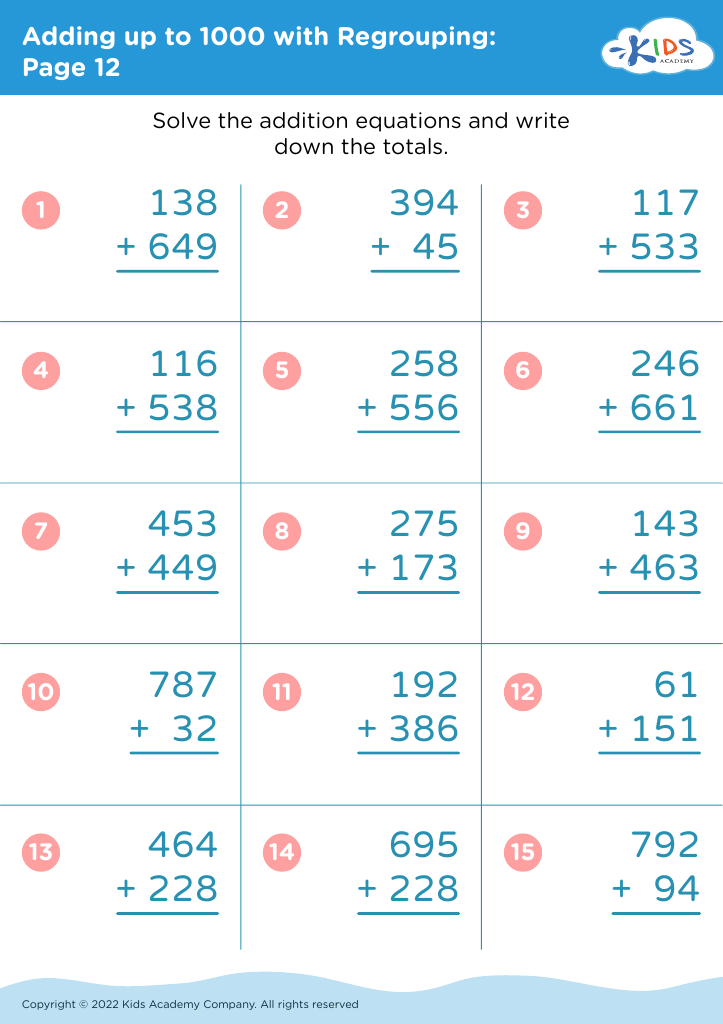
Adding up to 1000 with Regrouping: Page 12
Worksheet
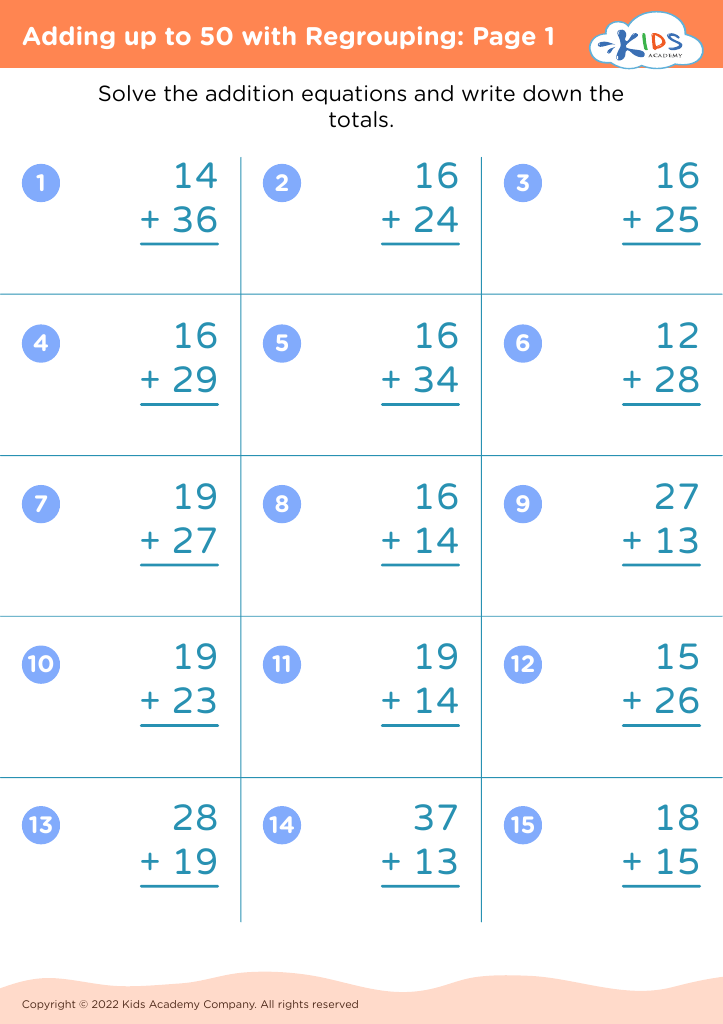
Adding up to 50 with Regrouping: Page 1
Worksheet
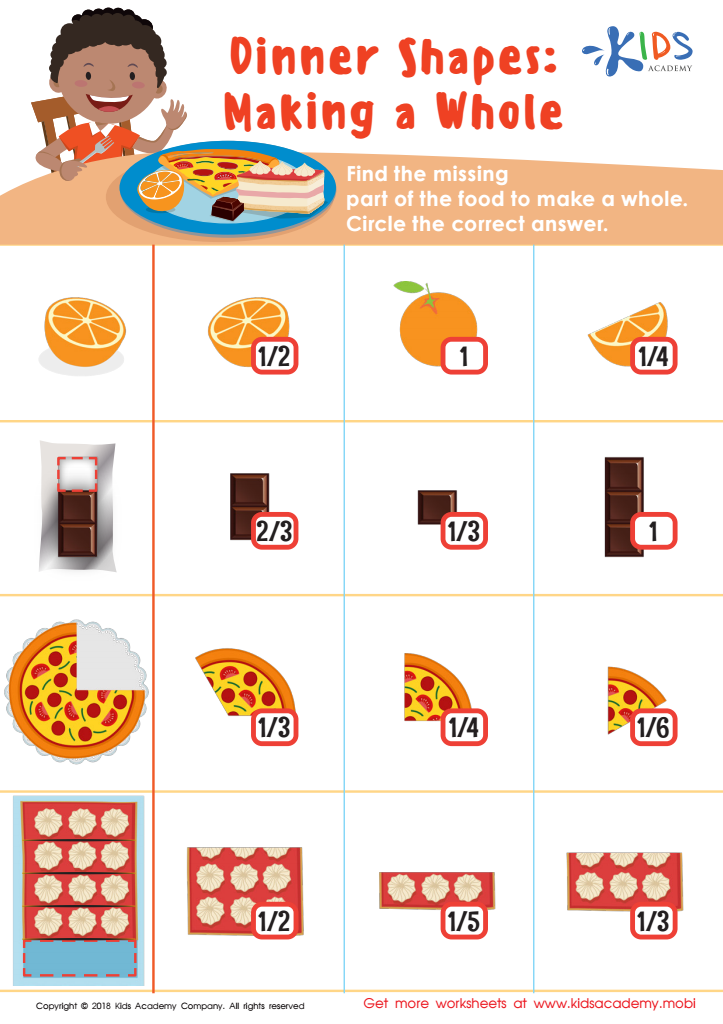
Dinner Shapes: Making a Whole Worksheet

Dinner Shapes: Making a Whole Worksheet

Using food and snacks to stimulate learning and interest in topics is a great strategy. Fractions can prove tricky, but this worksheet can help your child become an expert. Have them look for the missing parts of the food to make a whole, then circle the answer.
Dinner Shapes: Making a Whole Worksheet
Worksheet
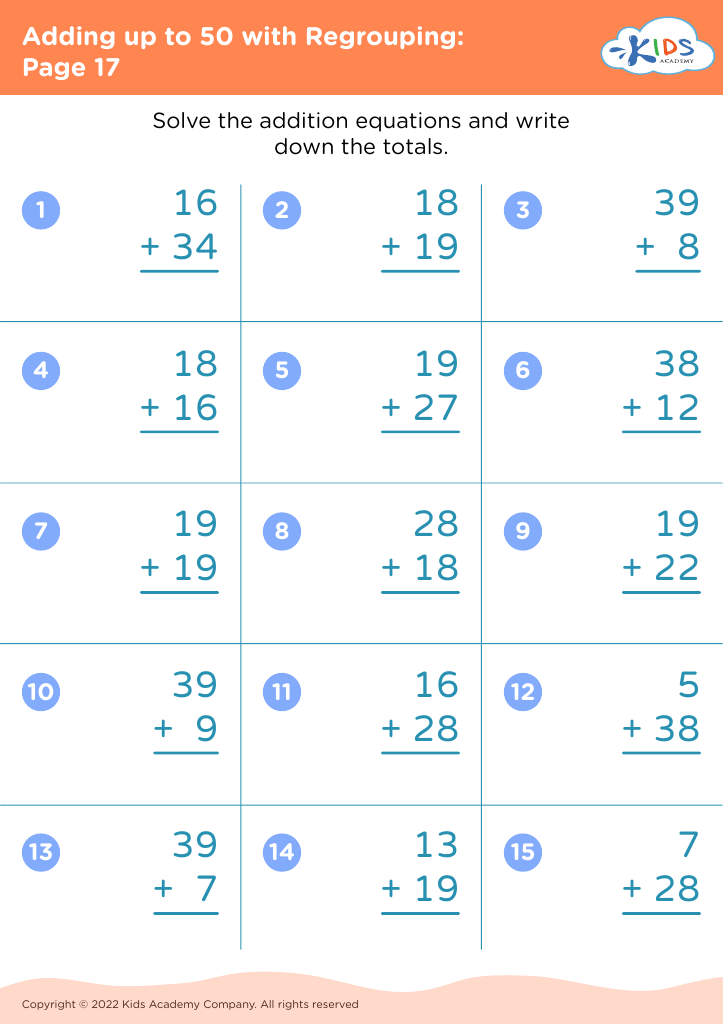
Adding up to 50 with Regrouping: Page 17
Worksheet
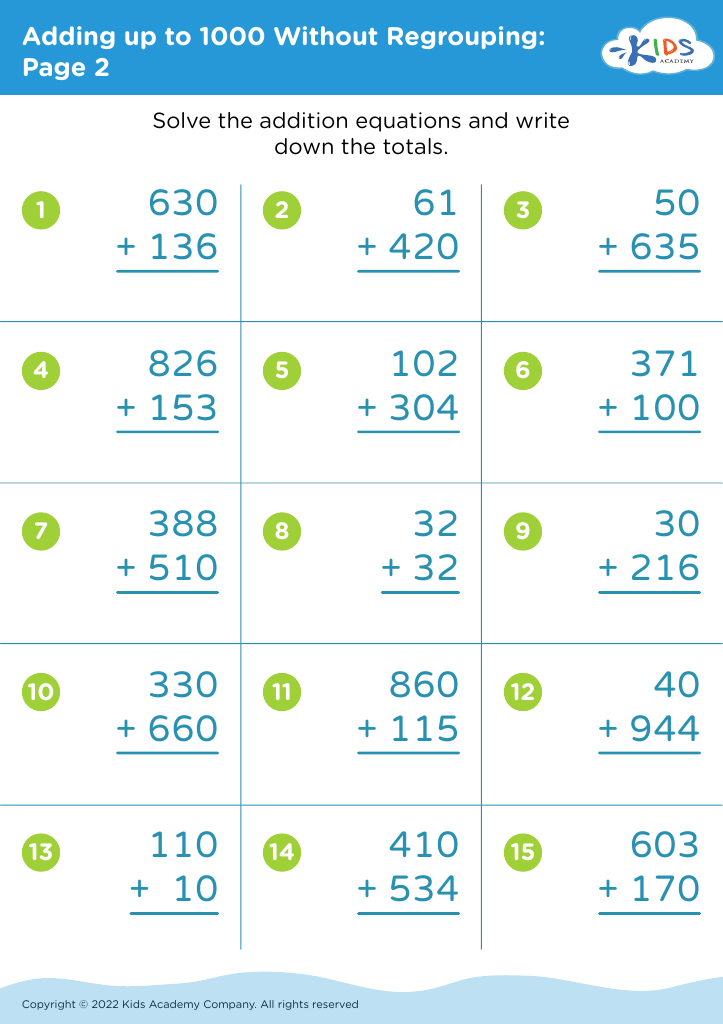
Adding up to 1000 Without Regrouping: Page 2
Worksheet
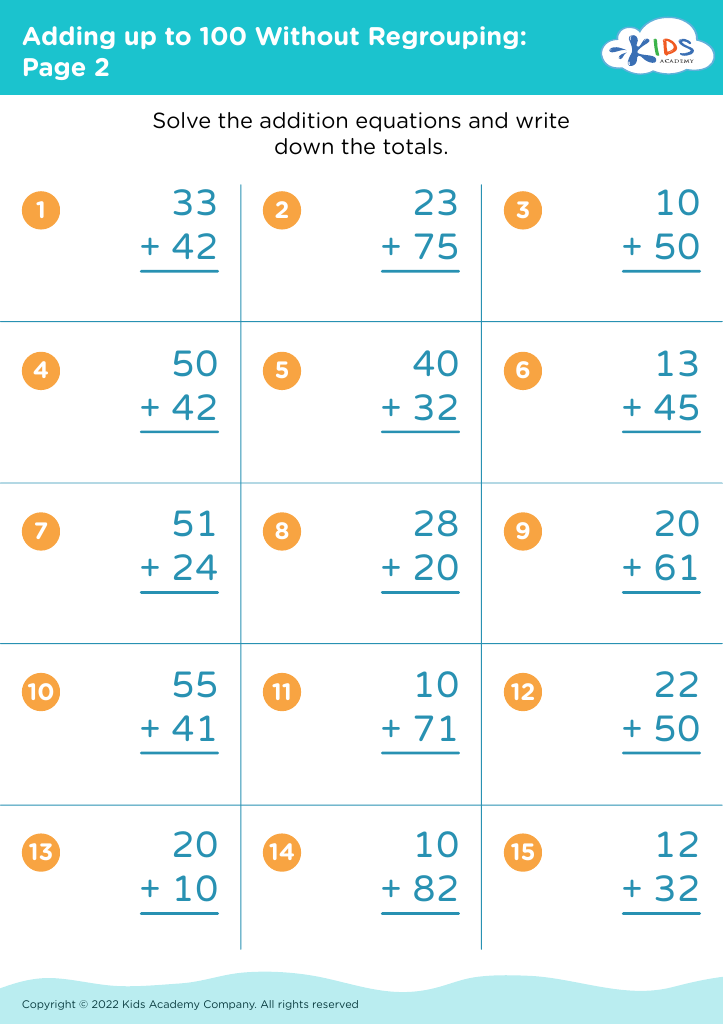
Adding up to 100 Without Regrouping: Page 2
Worksheet
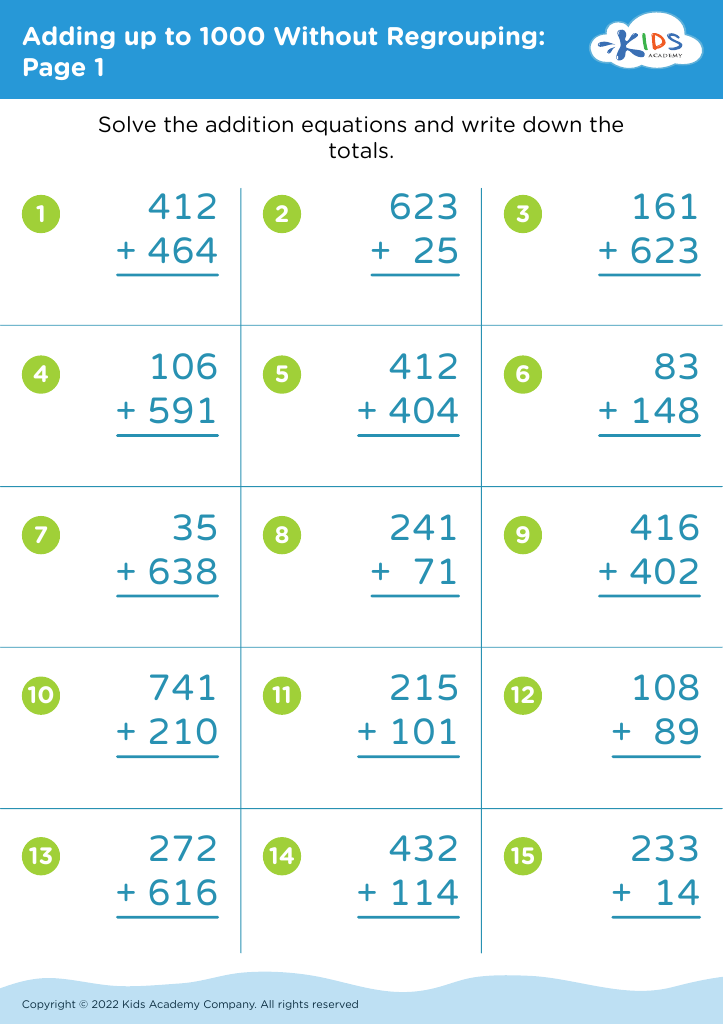
Adding up to 1000 Without Regrouping: Page 1
Worksheet
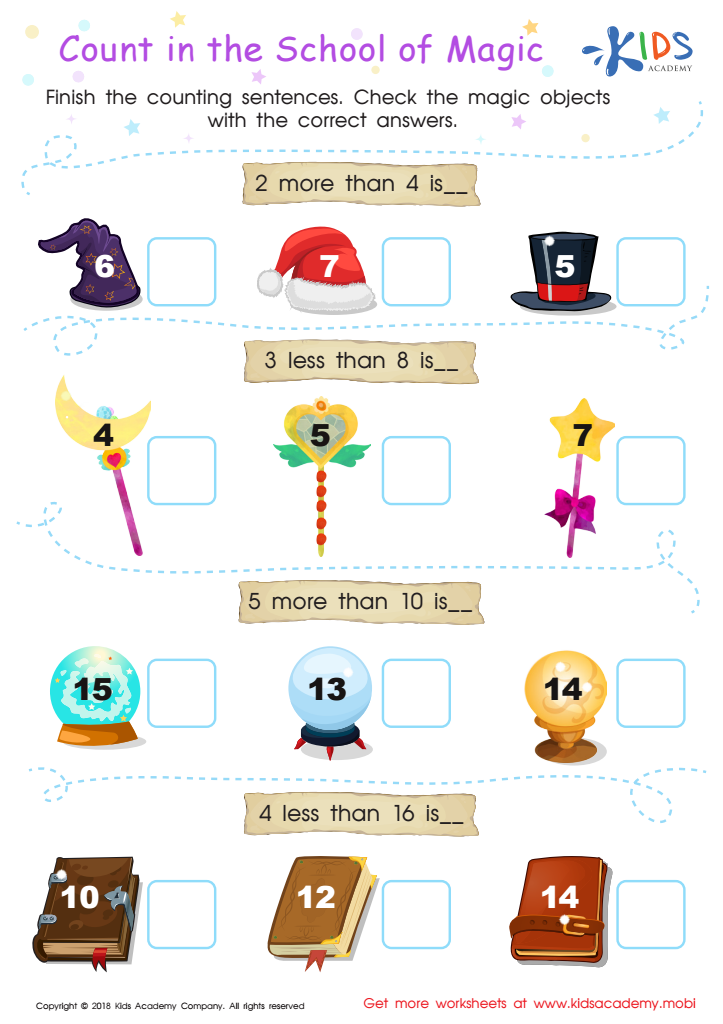
Count in the School of Magic Worksheet
Count in the School of Magic Worksheet
Your math learners can explore the School of Magic with this worksheet. They'll read equations with addition and subtraction numbers under 20, count back and forth to find the answer, then complete the counting sentences. Fun pictures and easy accuracy make it an enjoyable and successful learning experience.
Count in the School of Magic Worksheet
Worksheet
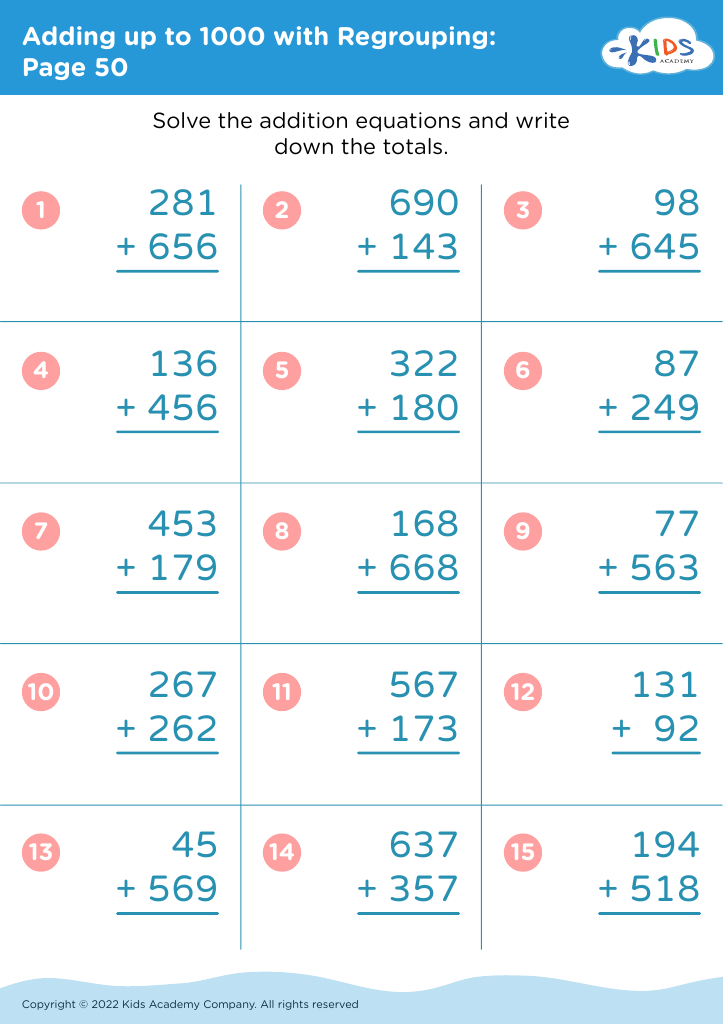
Adding up to 1000 with Regrouping: Page 50
Worksheet
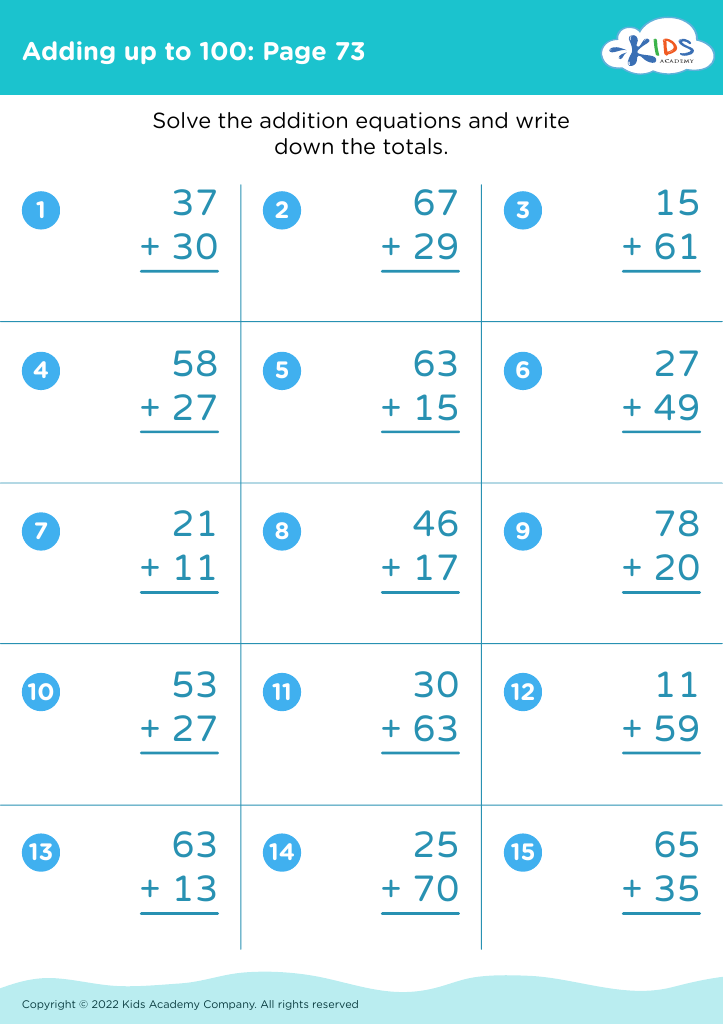
Adding up to 100: Page 73

Adding up to 100: Page 73

Adding up to 100: Page 73
Worksheet
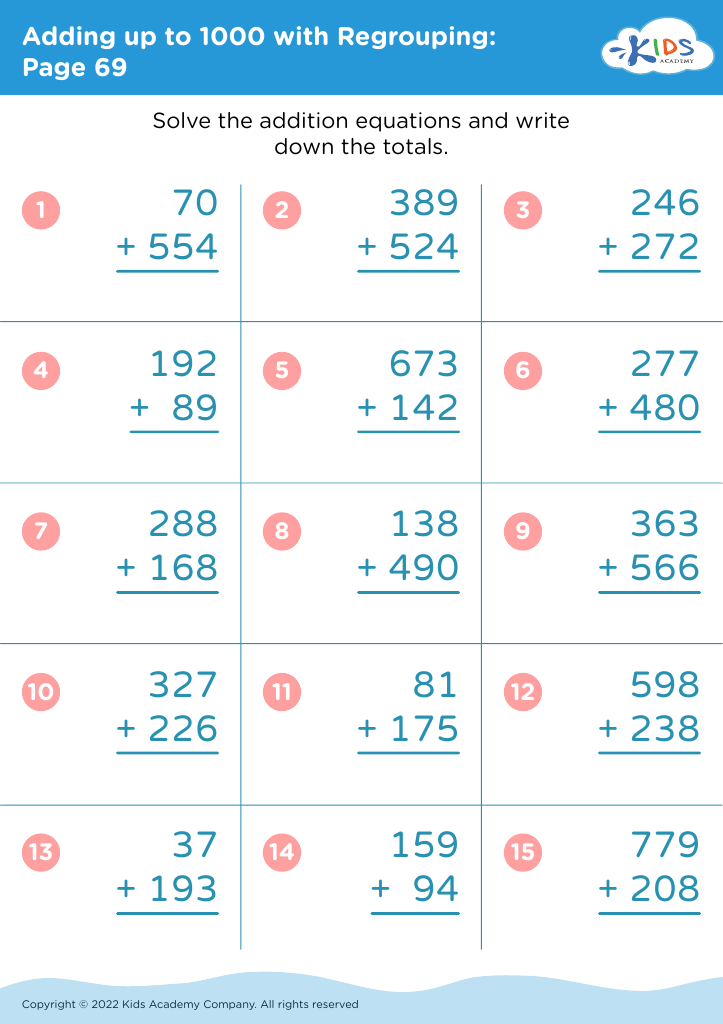
Adding up to 1000 with Regrouping: Page 69
Worksheet
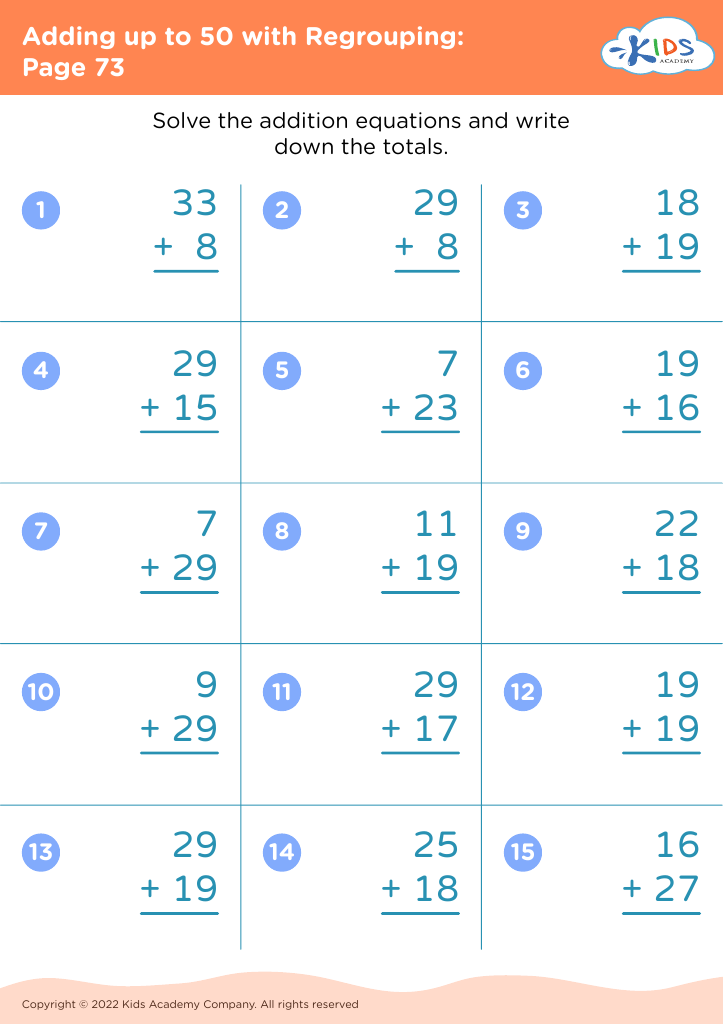
Adding up to 50 with Regrouping: Page 73
Worksheet
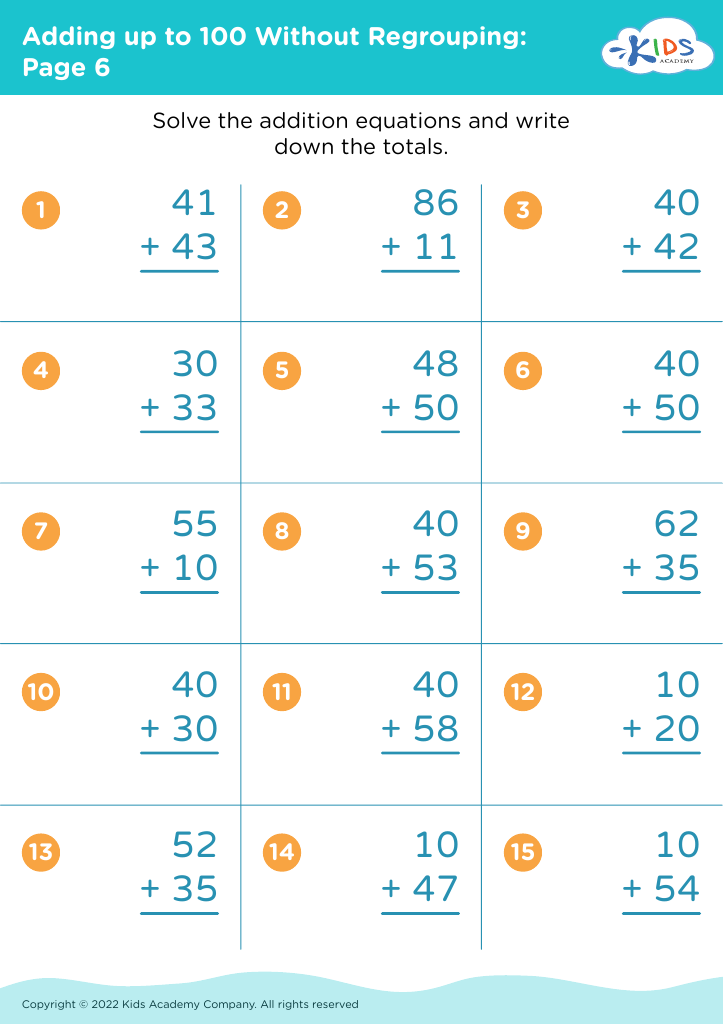
Adding up to 100 Without Regrouping: Page 6
Worksheet
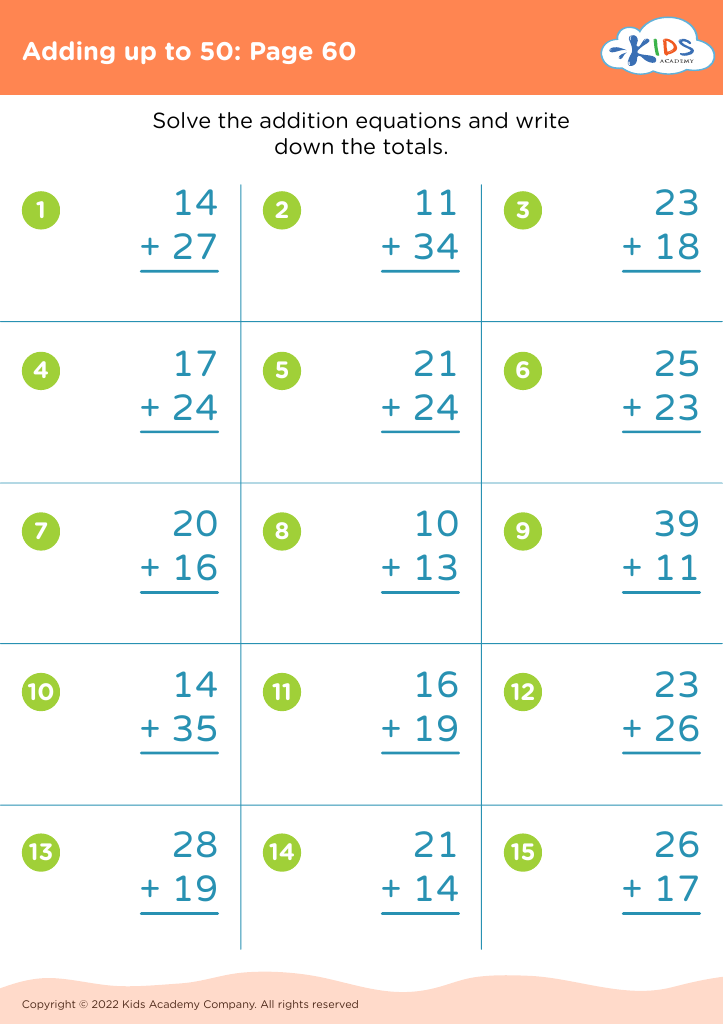
Adding up to 50: Page 60

Adding up to 50: Page 60

Adding up to 50: Page 60
Worksheet
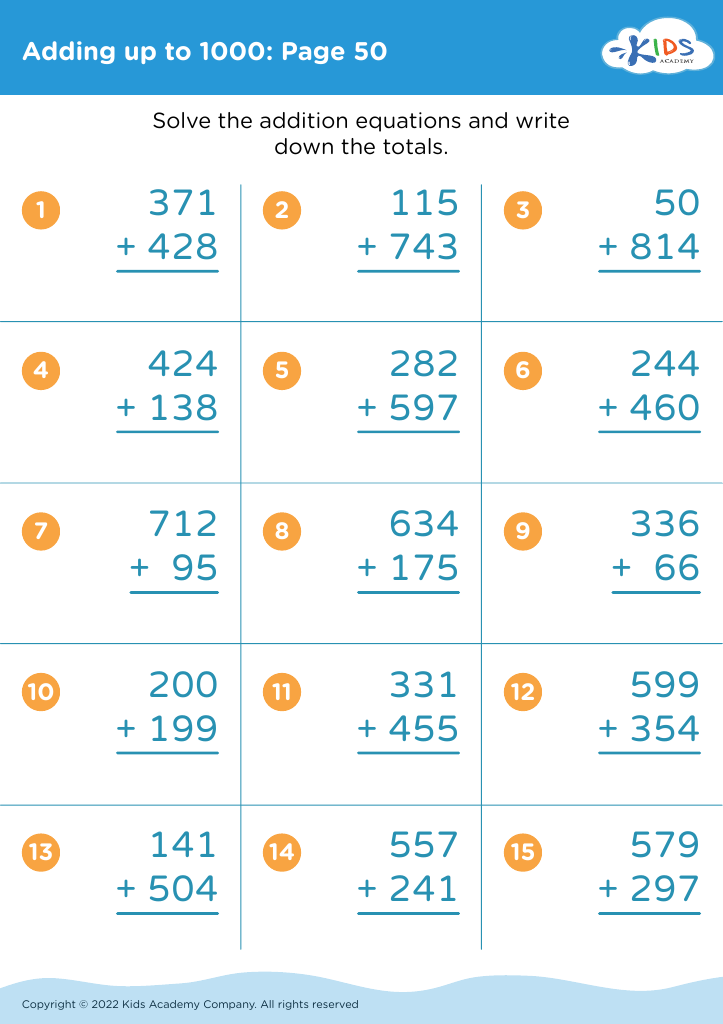
Adding up to 1000: Page 50

Adding up to 1000: Page 50

Adding up to 1000: Page 50
Worksheet
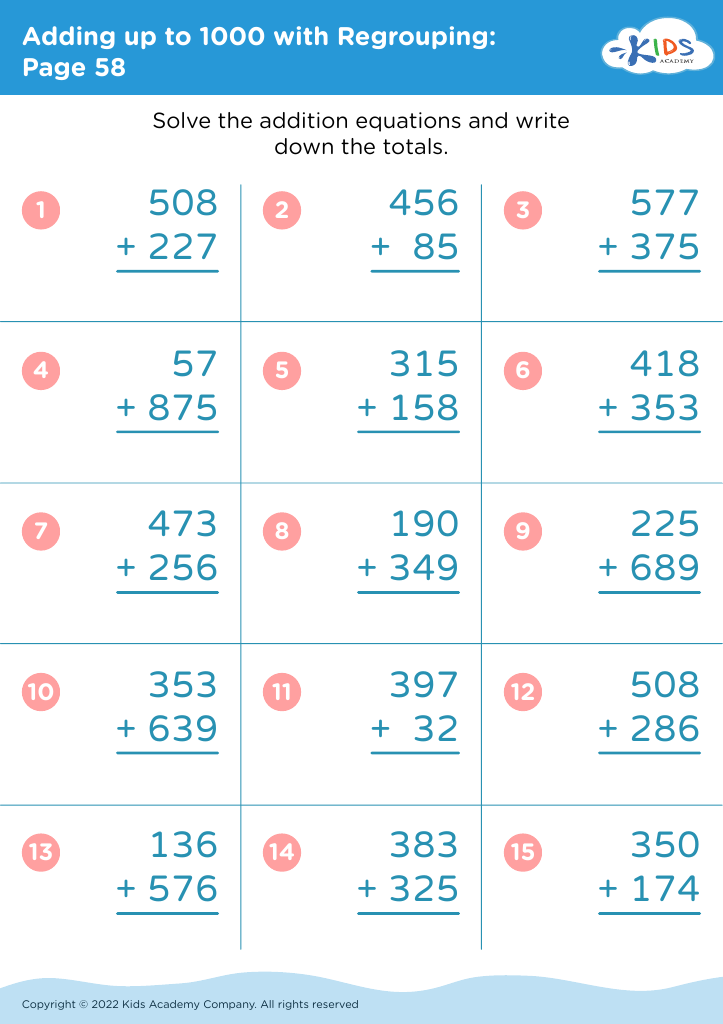
Adding up to 1000 with Regrouping: Page 58
Worksheet
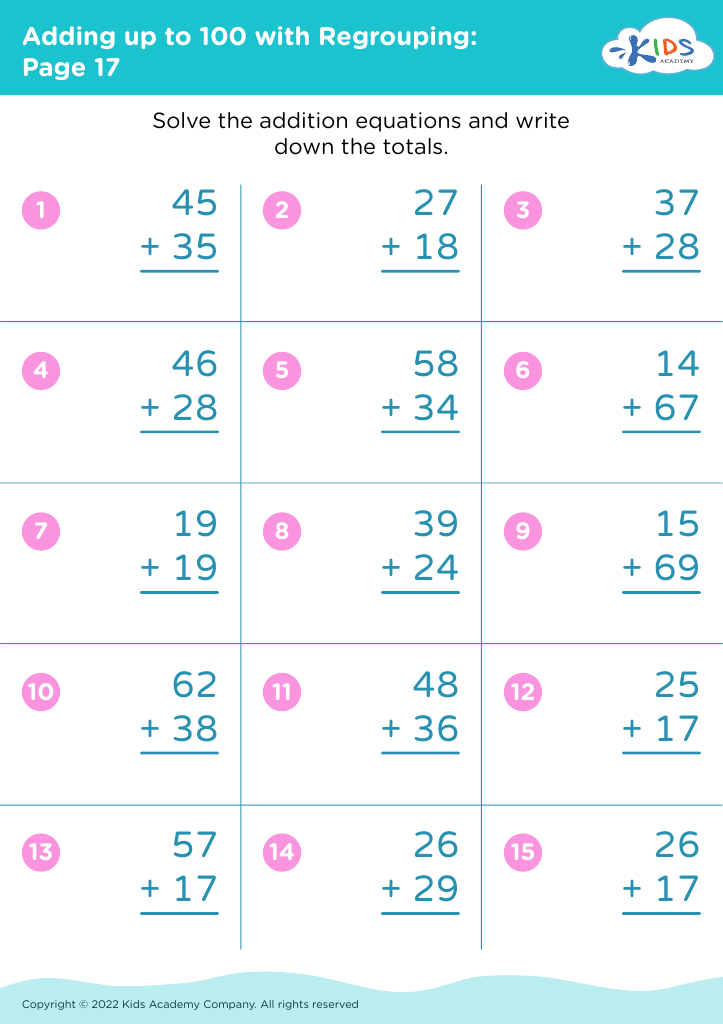
Adding up to 100 with Regrouping: Page 17
Worksheet
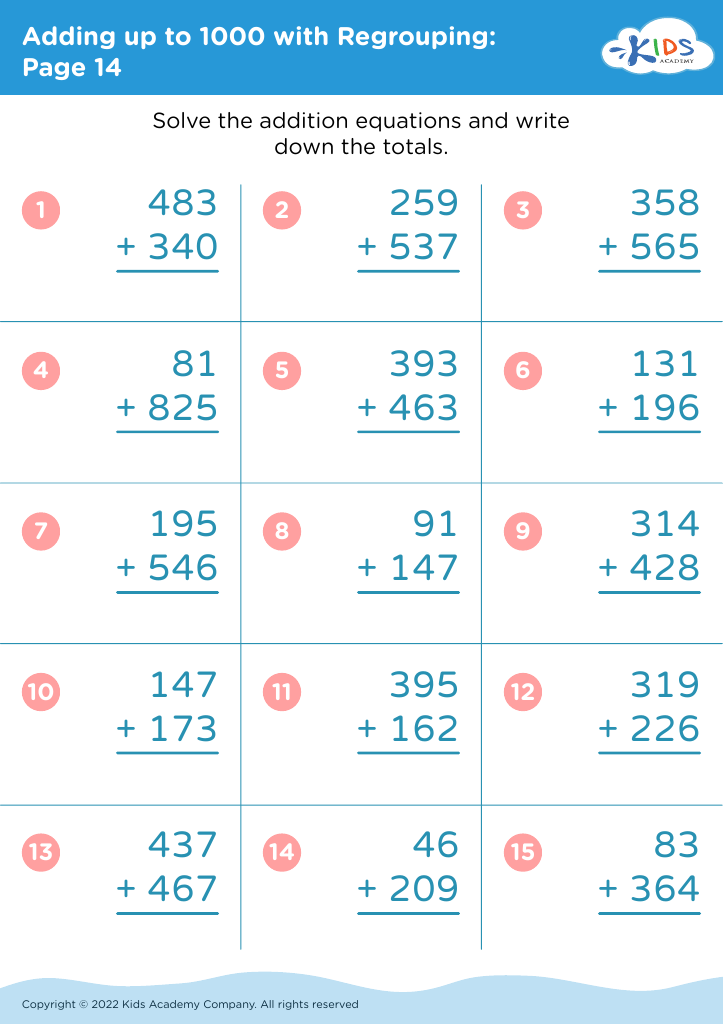
Adding up to 1000 with Regrouping: Page 14
Worksheet
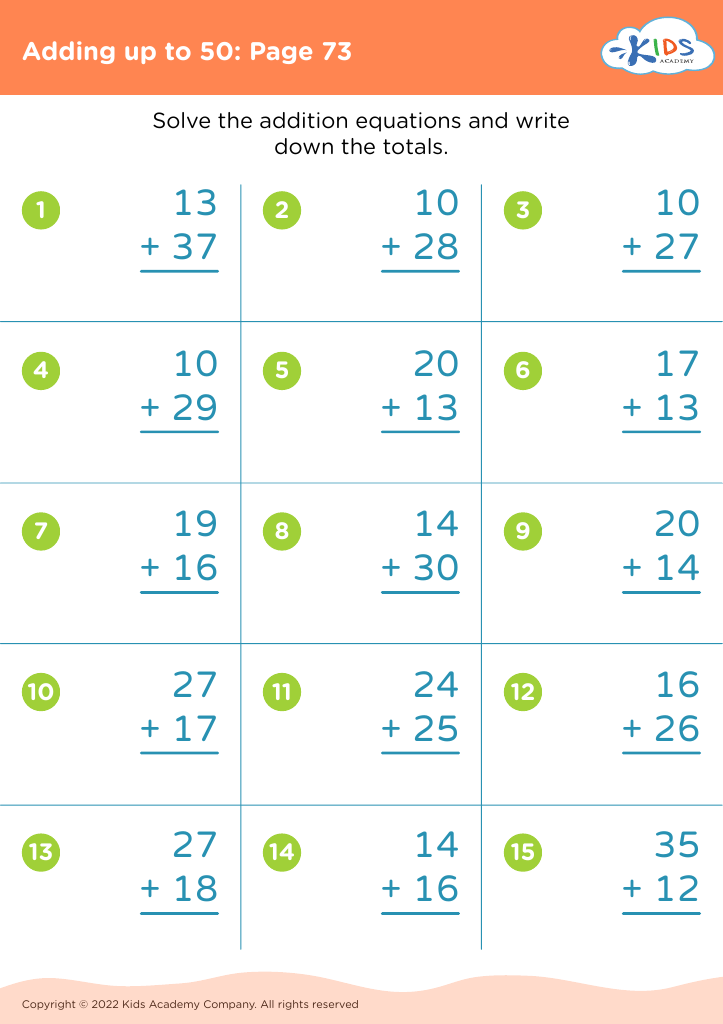
Adding up to 50: Page 73

Adding up to 50: Page 73

Adding up to 50: Page 73
Worksheet
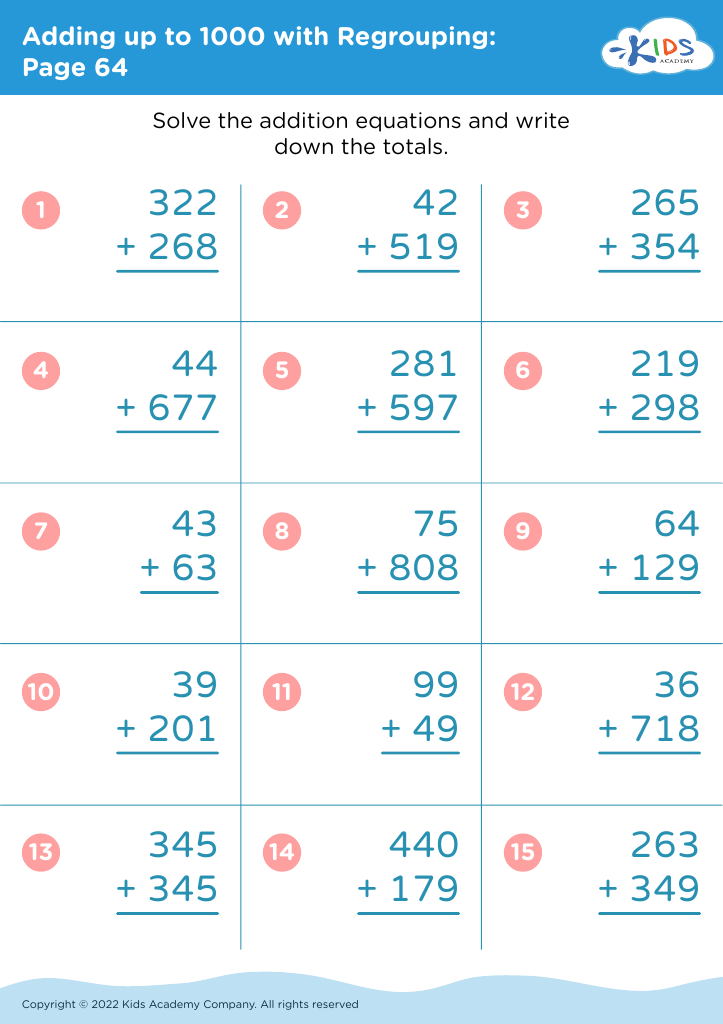
Adding up to 1000 with Regrouping: Page 64
Worksheet
Adding up to 50 Without Regrouping: Page 67
Worksheet


Shape Recognition Addition is essential for young learners because it merges foundational math skills with essential cognitive development. By engaging children in recognizing and adding shapes, parents and teachers support several critical aspects of early education. Firstly, this practice helps develop spatial awareness, making it easier for children to understand the physical relationships between objects, which is crucial in many daily tasks and future academic learning.

Secondly, Shape Recognition Addition strengthens early math skills by combining visual learning with numerical concepts. Children who can identify and add shapes by count or properties (e.g., counting corners) begin to understand basic arithmetic more naturally, giving them a strong foundation for future math learning. Integrating shapes into addition exercises makes the activity more interactive and visually stimulating, which can significantly increase a child's interest and engagement in learning.

Finally, this practice contributes to language development. As children learn to name and describe shapes, they expand their vocabulary and improve their communication skills. Shape Recognition Addition also encourages problem-solving and critical thinking. By consistently practicing these activities, children learn to approach problems methodically and develop critical-thinking skills which benefit overall academic performance and adaptability.

In sum, Shape Recognition Addition is a multifaceted educational strategy that supports broad developmental aspects, creating a robust academic and cognitive foundation for young learners.