Discover a fun and educational way to help your child master fraction addition with our "Simplifying Fractions Addition Worksheets." Designed for young mathematicians, these worksheets provide step-by-step guidance to simplify and add fractions effortlessly. Each worksheet is filled with engaging exercises that focus on building core math skills while making learning enjoyable. Whether at home or in the classroom, our printable worksheets ensure children grasp the fundamental concepts, enhancing their confidence in math. Perfect for Grades 3-5, these resources support continuous learning and practice, setting a strong foundation for future mathematical success. Download today and make fractions fun!
Check out this FREE Trial Lesson on Addition!

T

Favorites
With answer key
Interactive
  • Simplifying Fractions
  • Addition
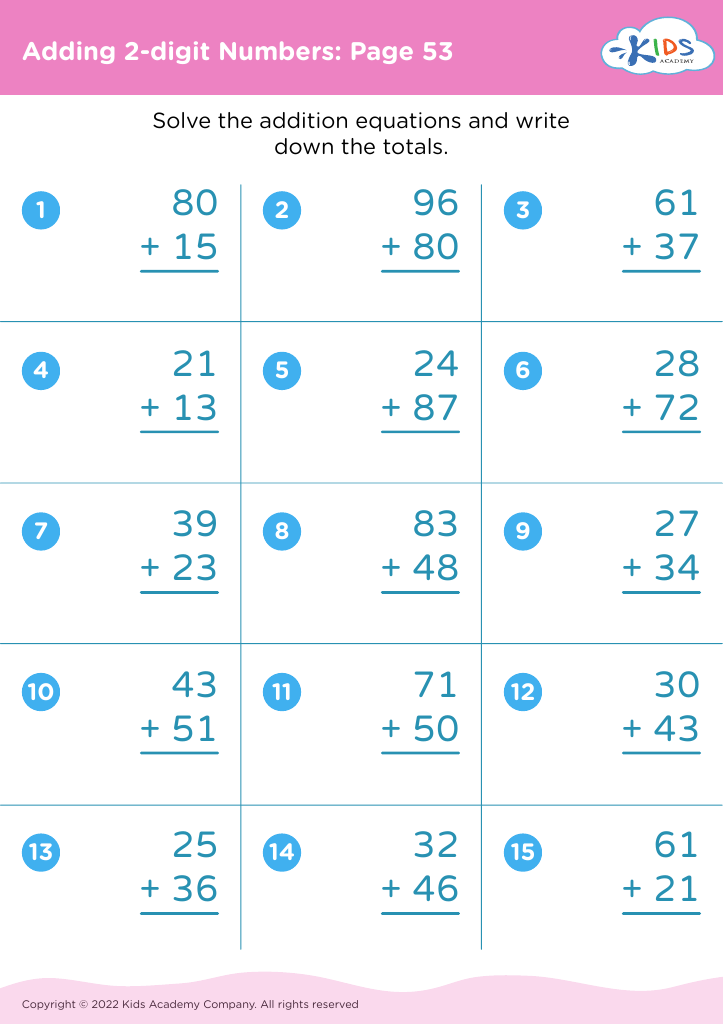
Adding 2-digit Numbers: Page 53

Adding 2-digit Numbers: Page 53

Adding 2-digit Numbers: Page 53
Worksheet
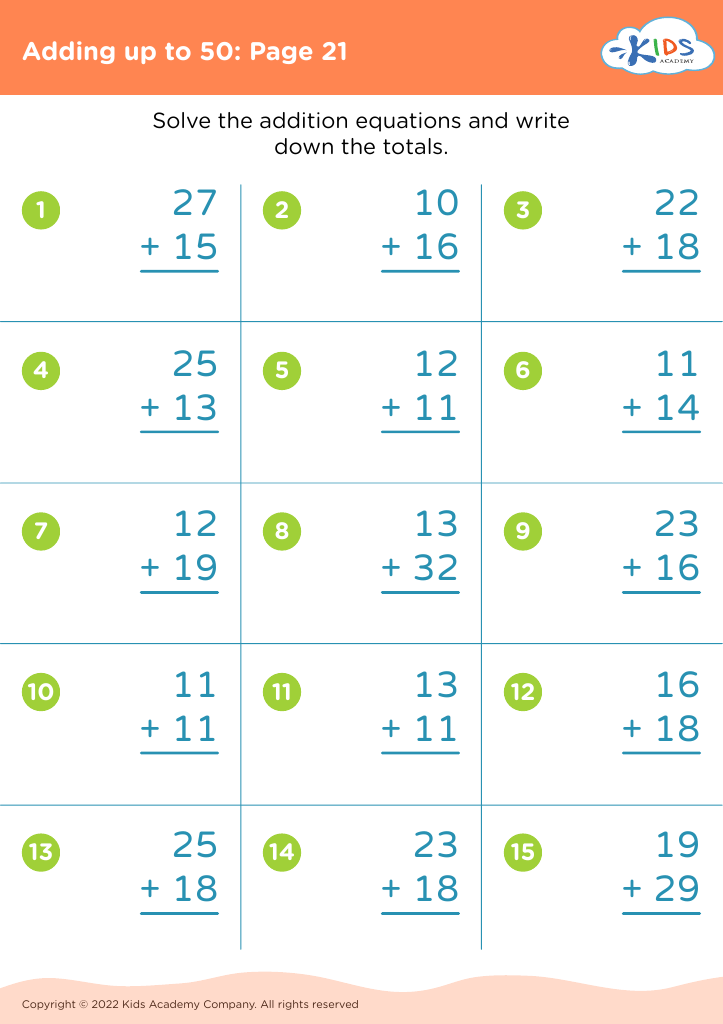
Adding up to 50: Page 21

Adding up to 50: Page 21

Adding up to 50: Page 21
Worksheet
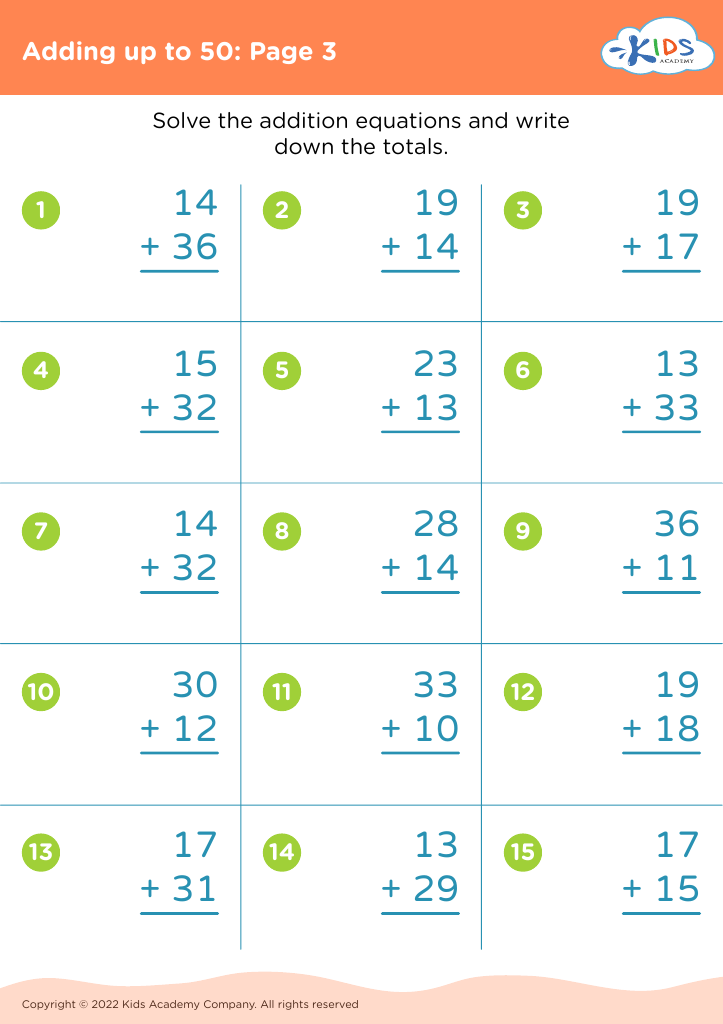
Adding up to 50: Page 3

Adding up to 50: Page 3

Adding up to 50: Page 3
Worksheet
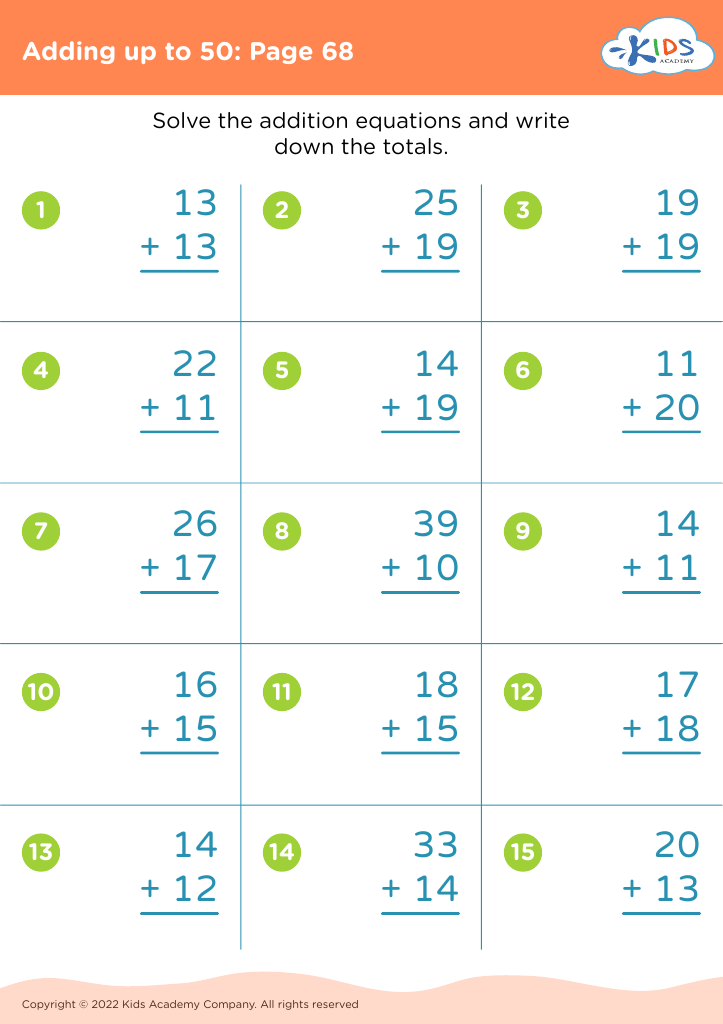
Adding up to 50: Page 68

Adding up to 50: Page 68

Adding up to 50: Page 68
Worksheet
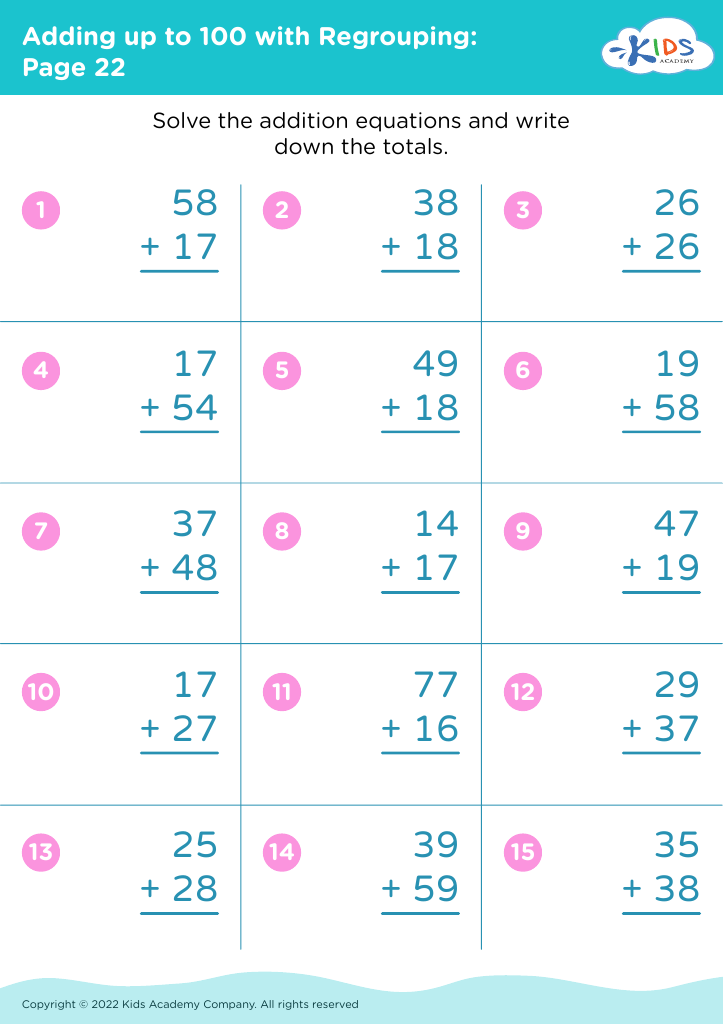
Adding up to 100 with Regrouping: Page 22
Worksheet
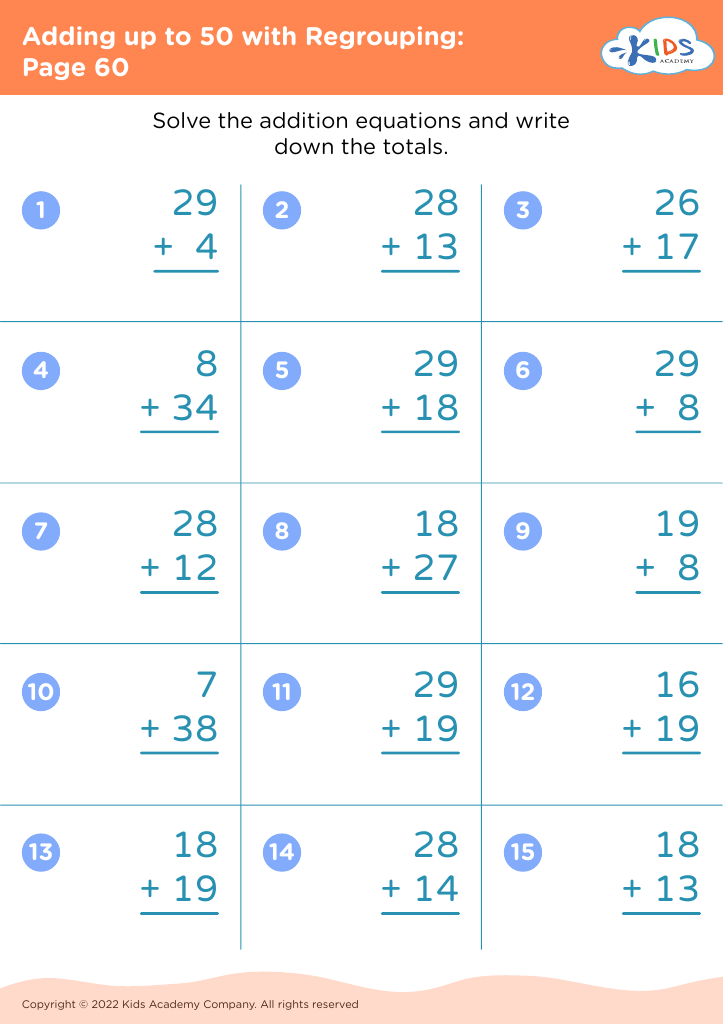
Adding up to 50 with Regrouping: Page 60
Worksheet
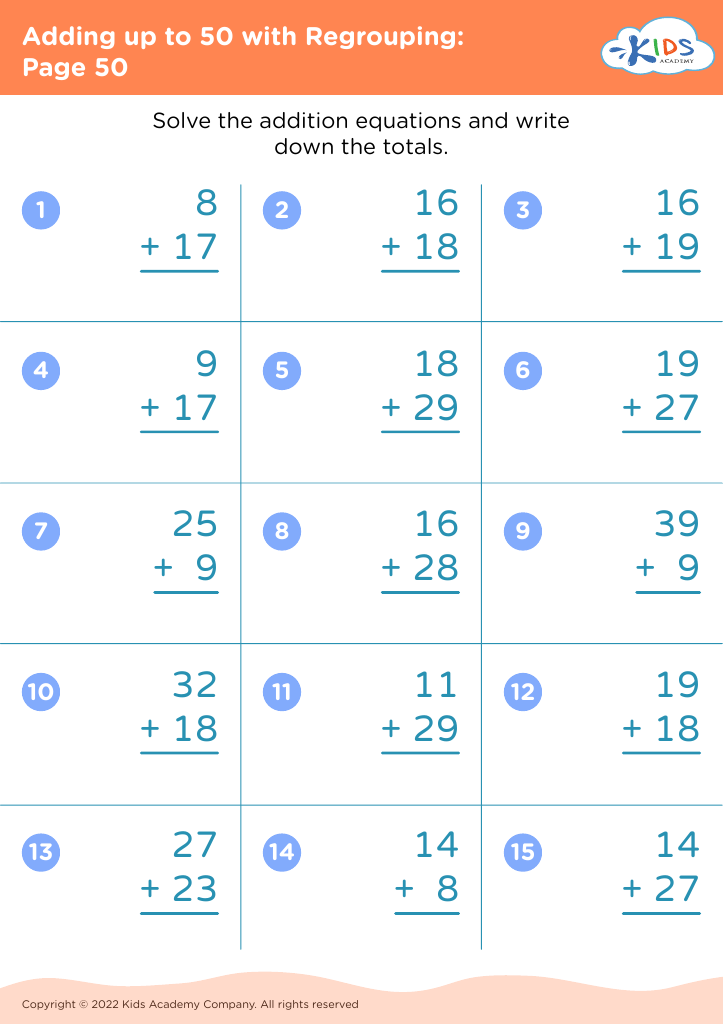
Adding up to 50 with Regrouping: Page 50
Worksheet
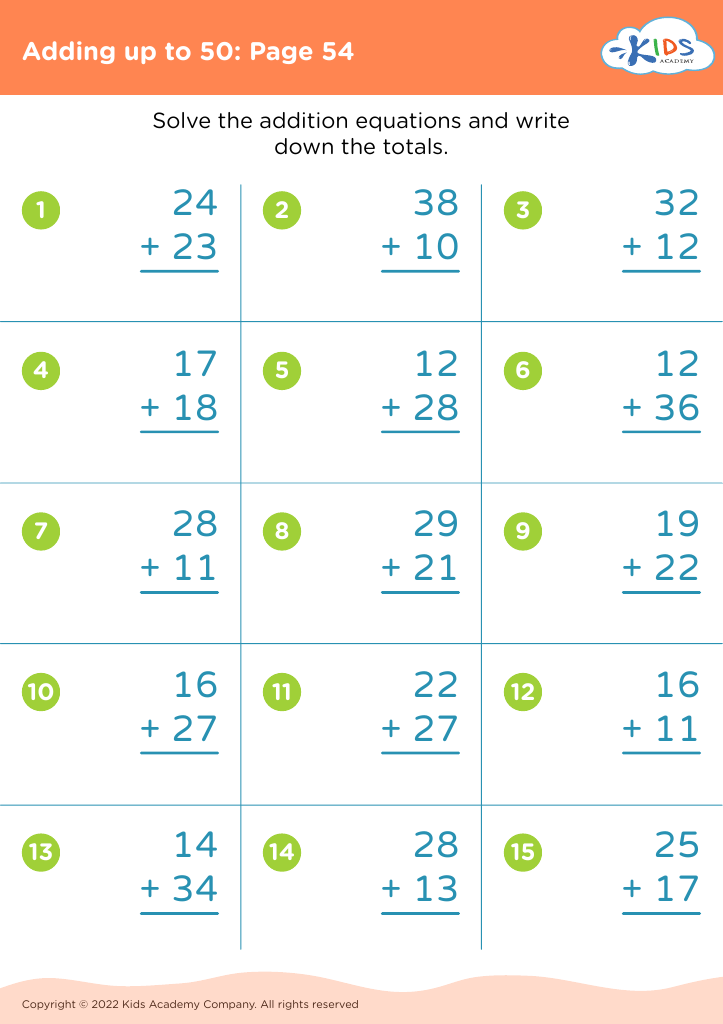
Adding up to 50: Page 54

Adding up to 50: Page 54

Adding up to 50: Page 54
Worksheet
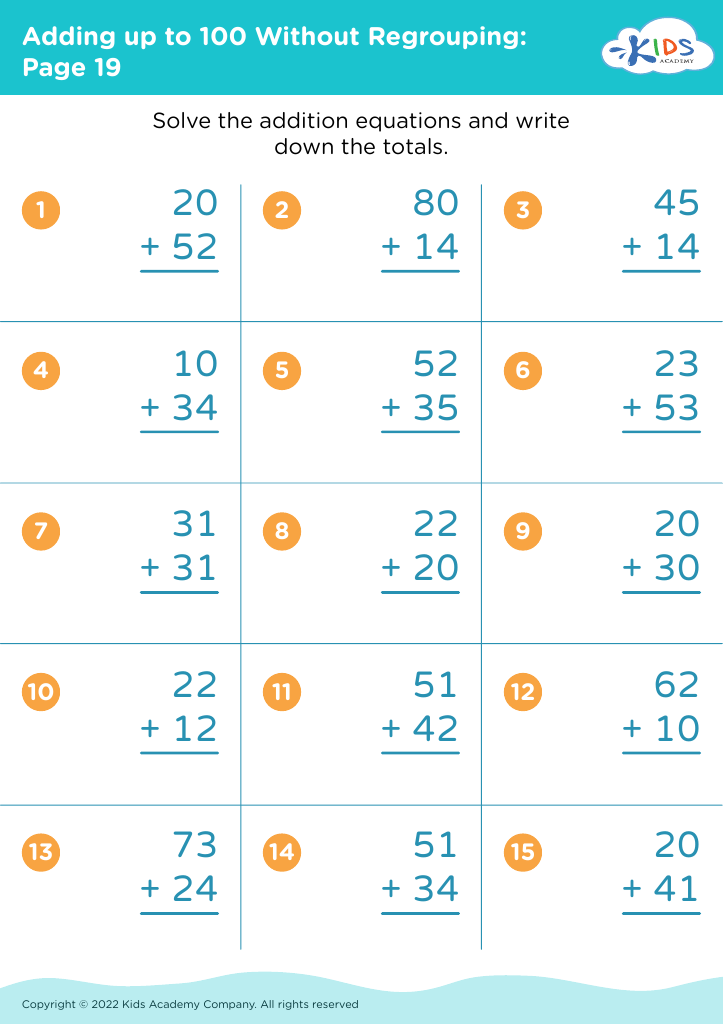
Adding up to 100 Without Regrouping: Page 19
Worksheet
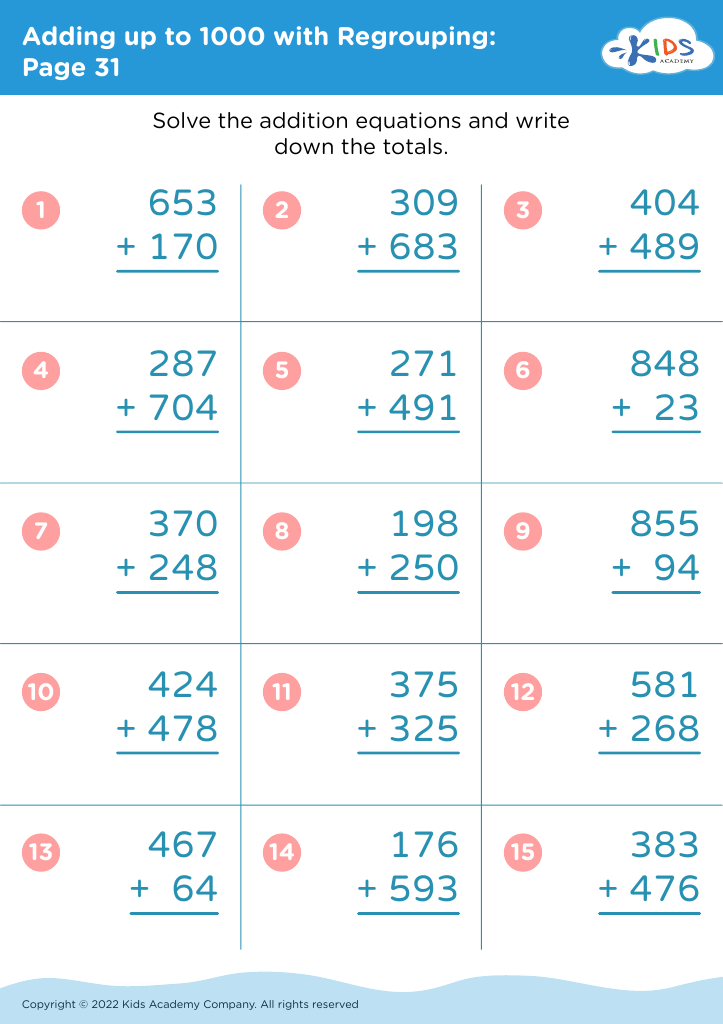
Adding up to 1000 with Regrouping: Page 31
Worksheet
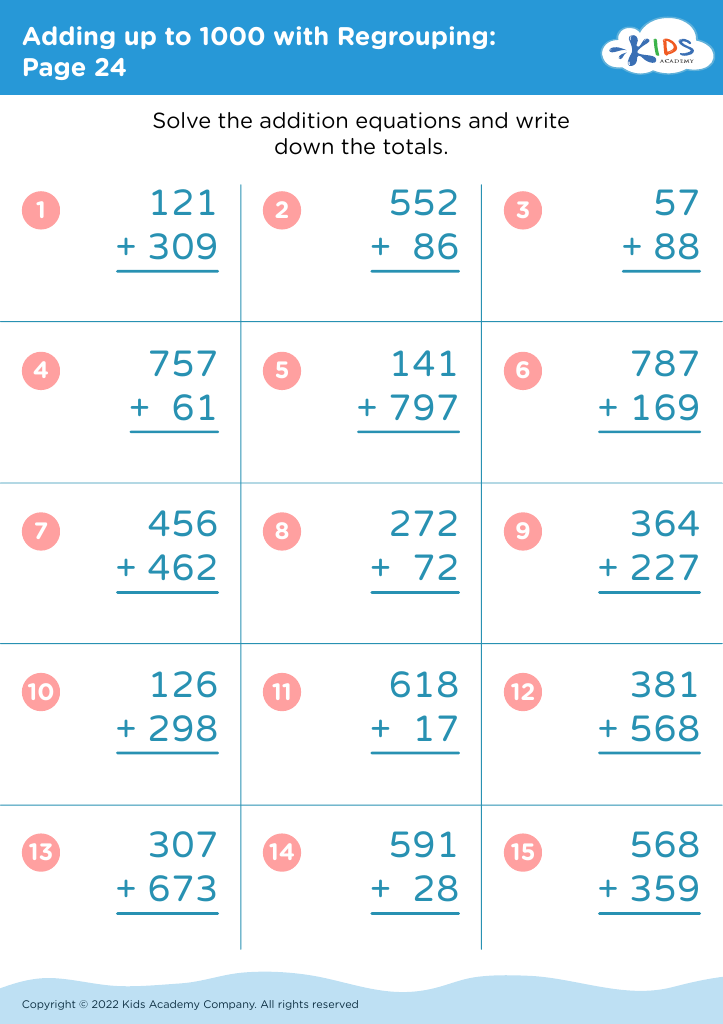
Adding up to 1000 with Regrouping: Page 24
Worksheet
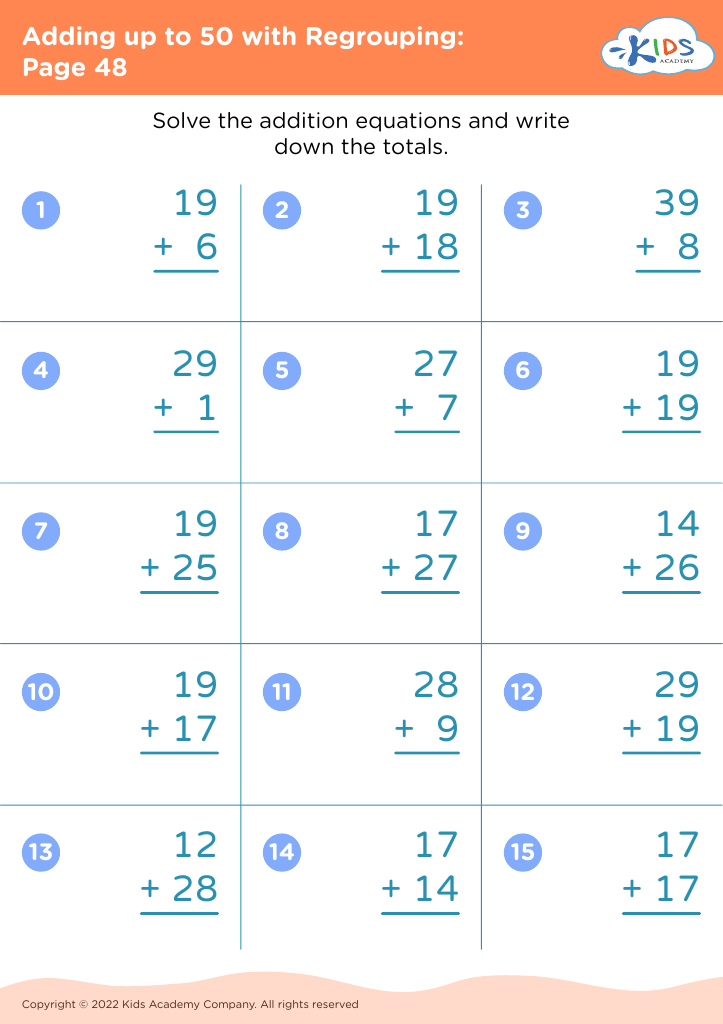
Adding up to 50 with Regrouping: Page 48
Worksheet
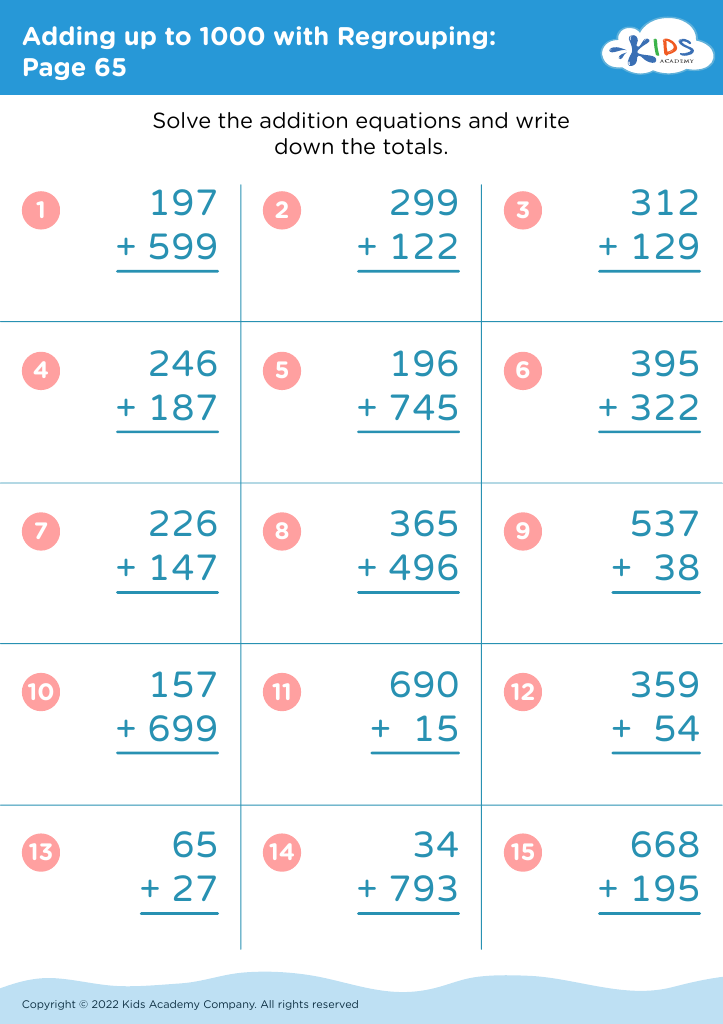
Adding up to 1000 with Regrouping: Page 65
Worksheet
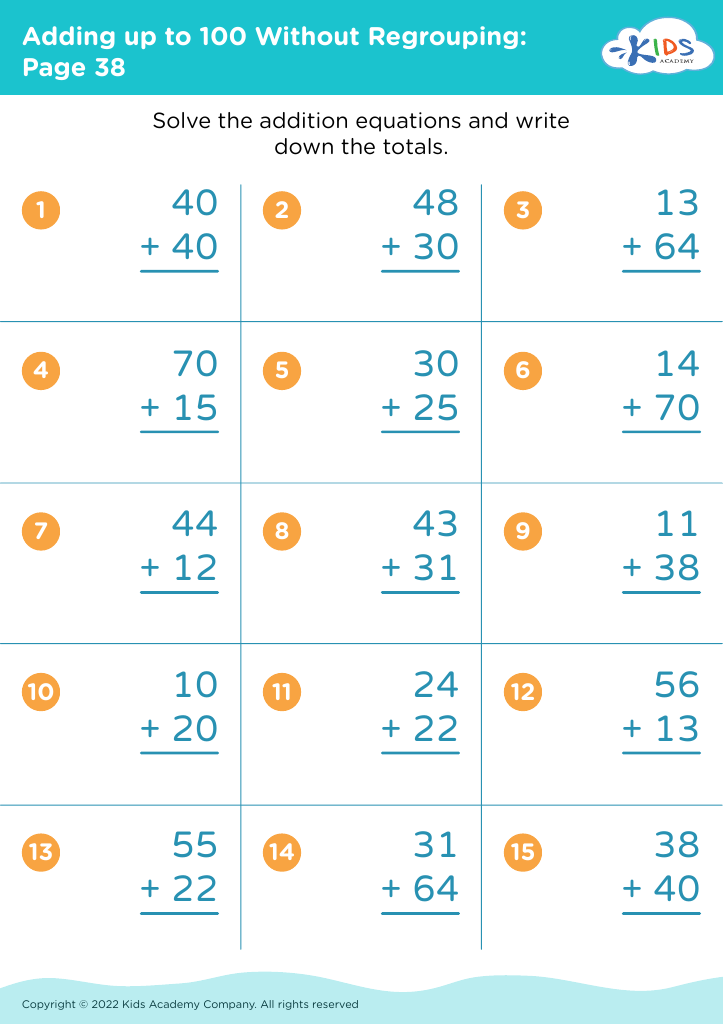
Adding up to 100 Without Regrouping: Page 38
Worksheet
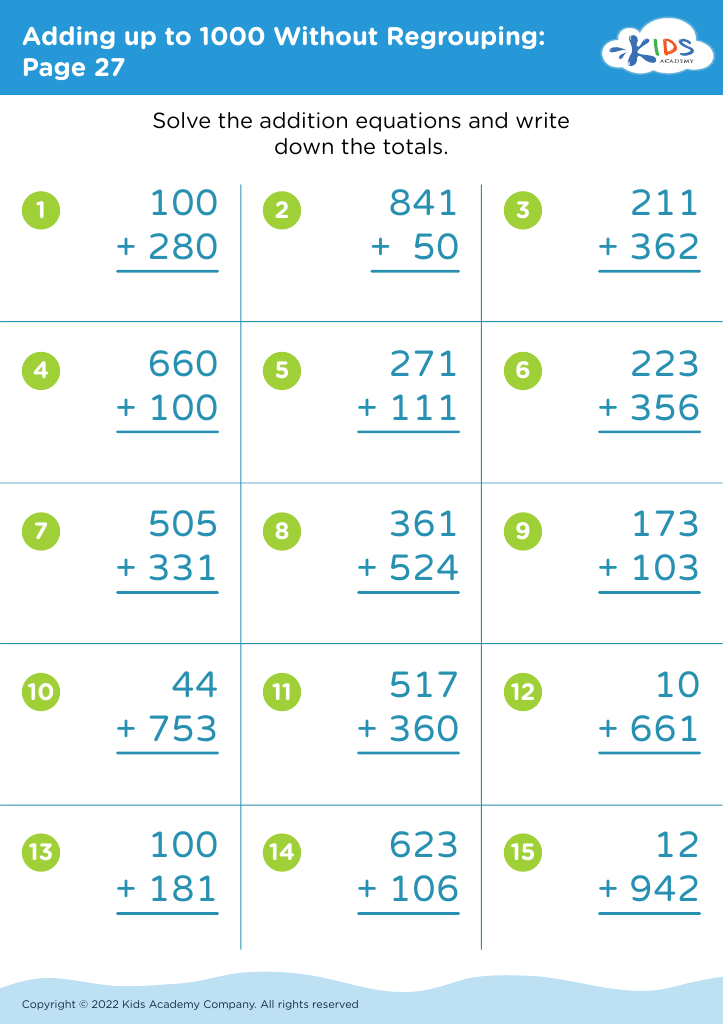
Adding up to 1000 Without Regrouping: Page 27
Worksheet
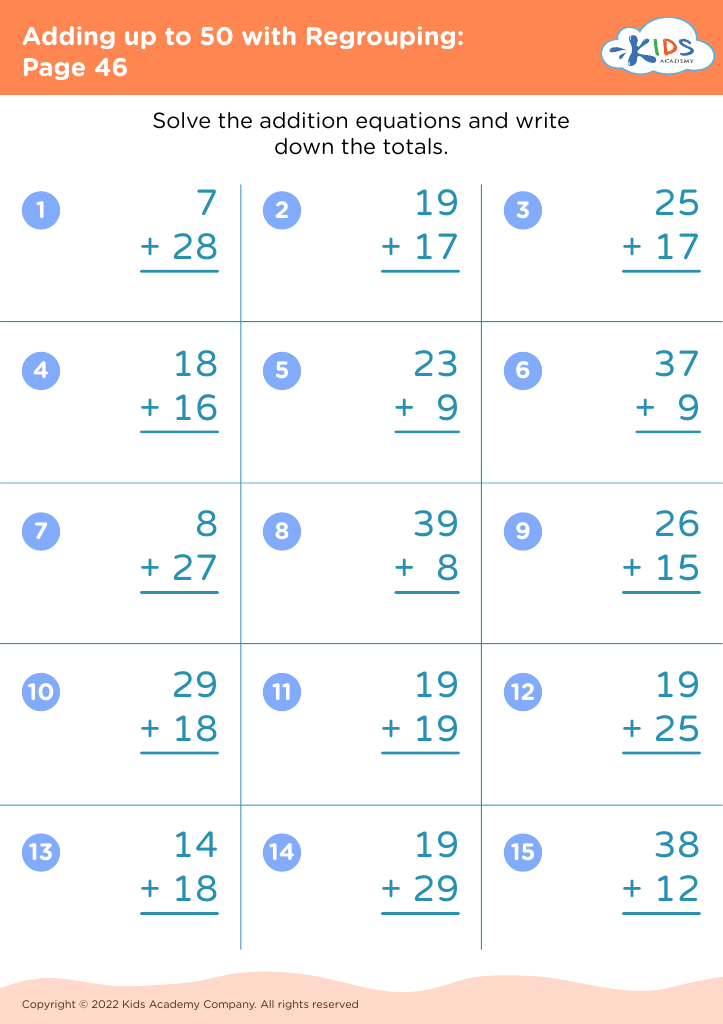
Adding up to 50 with Regrouping: Page 46
Worksheet
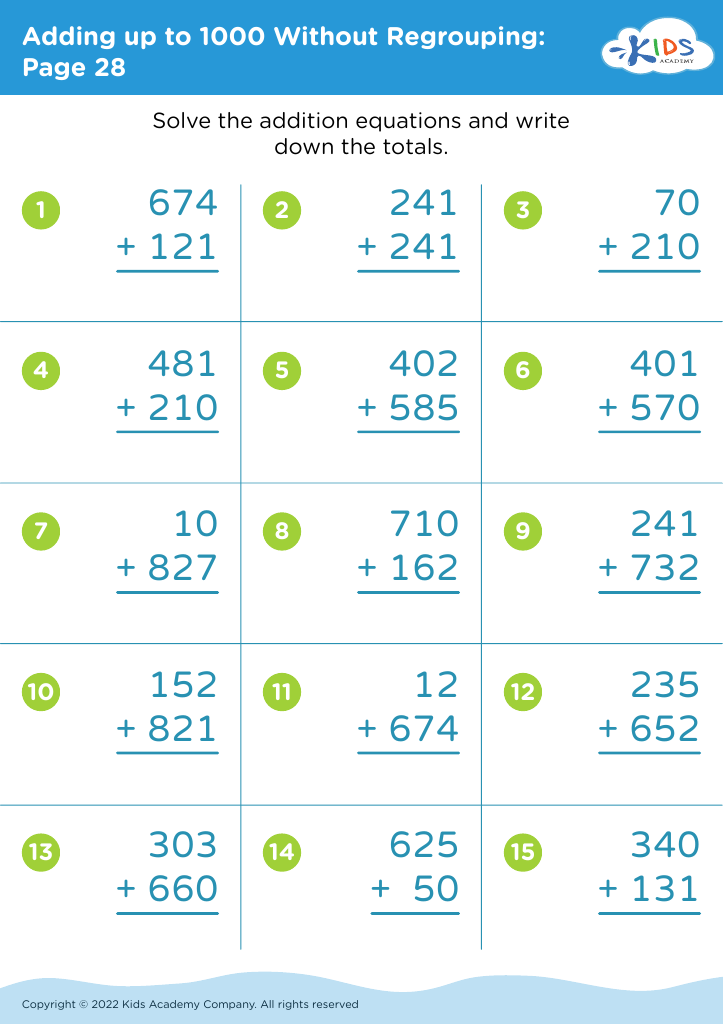
Adding up to 1000 Without Regrouping: Page 28
Worksheet
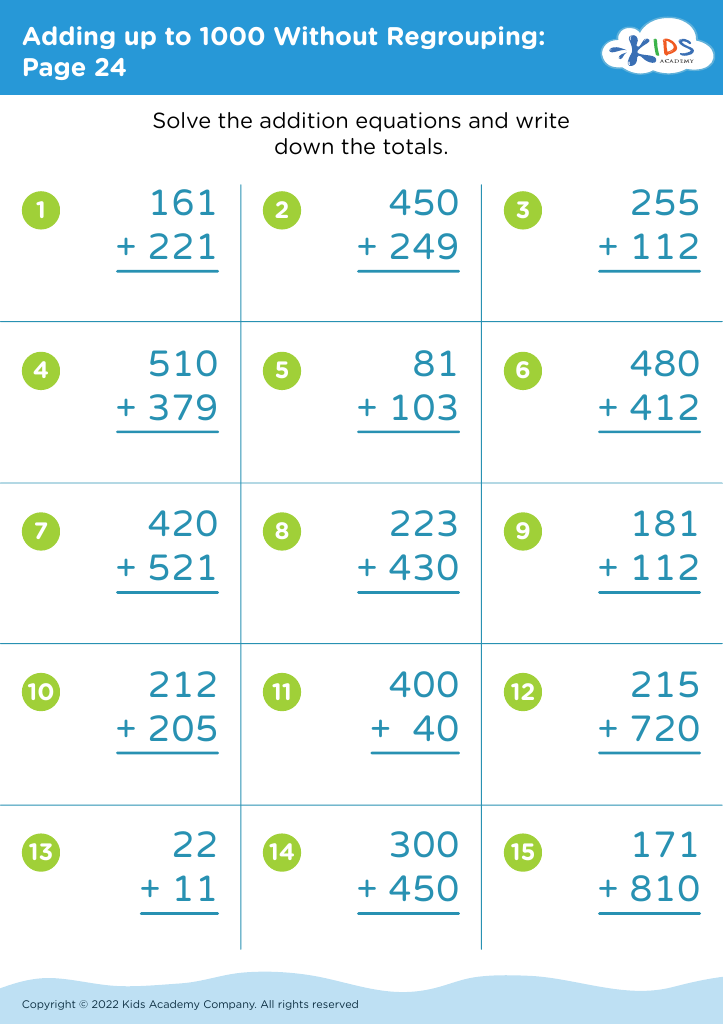
Adding up to 1000 Without Regrouping: Page 24
Worksheet


Understanding how to simplify fractions during addition is crucial for several reasons, and both parents and teachers have significant roles in facilitating this concept for young learners.

Firstly, simplifying fractions makes mathematical calculations easier and helps students develop clarity and precision when handling numbers. This foundational skill aids in problem-solving exercises, allowing learners to manage complex operations with confidence.

Secondly, a solid grasp of simplifying fractions creates a smoother transition to advanced mathematical concepts, such as algebra, geometry, and calculus. Laying a good foundation early helps prevent misconceptions and learning gaps that can cause difficulties in later stages of education.

Moreover, teaching children how to simplify fractions strengthens their logical thinking and reasoning skills. It encourages them to break problems down into smaller, manageable parts—a critical skill not just in math but across various subjects and real-life situations.

Beyond academics, this knowledge ensures students can apply math in everyday life, be it in cooking, financial planning, or even making quick, rational decisions. Therefore, parents and teachers should prioritize simplifying fractions in early education to foster a robust mathematical foundation and cultivate essential life skills, thus enabling their children and students to thrive academically and personally.