Understanding number sequence Addition Worksheets
3 filtered results
-
From - To
Our "Understanding Number Sequence Addition Worksheets" are designed to help young learners build a solid foundation in math. These engaging, easy-to-follow worksheets focus on enhancing children's understanding of number sequences through fun addition exercises. Each worksheet provides a variety of problems that encourage students to identify patterns and apply their addition skills effectively. Ideal for classroom use or additional home practice, these resources ensure that learners develop critical thinking and problem-solving abilities while enjoying the process. With colorful and interactive designs, our worksheets make mastering addition both delightful and educational for early graders.
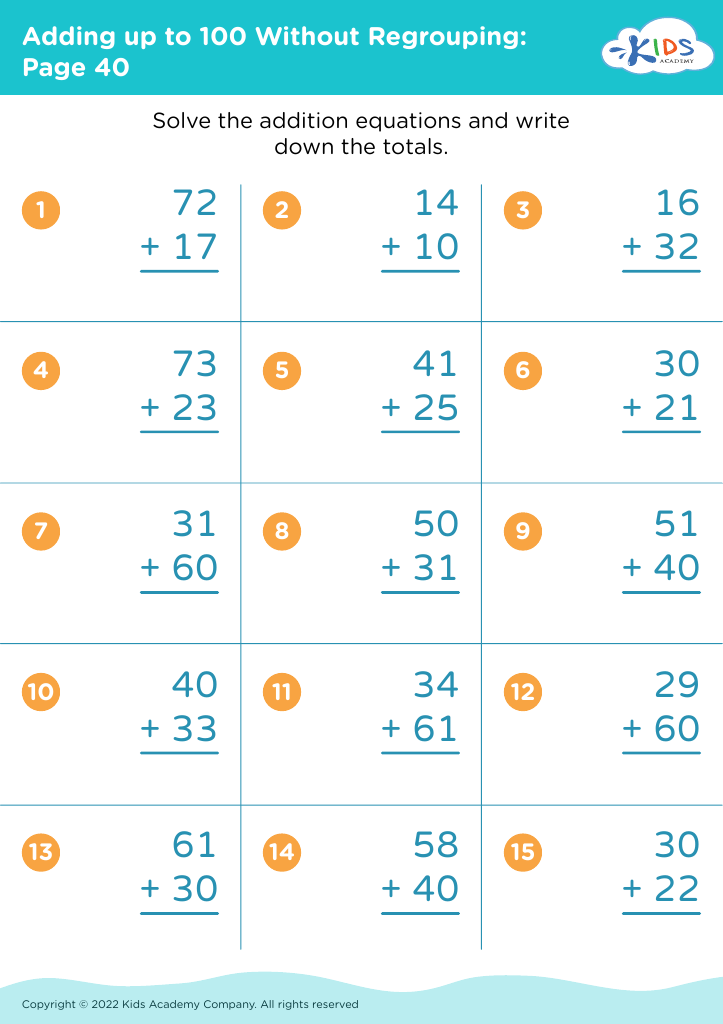
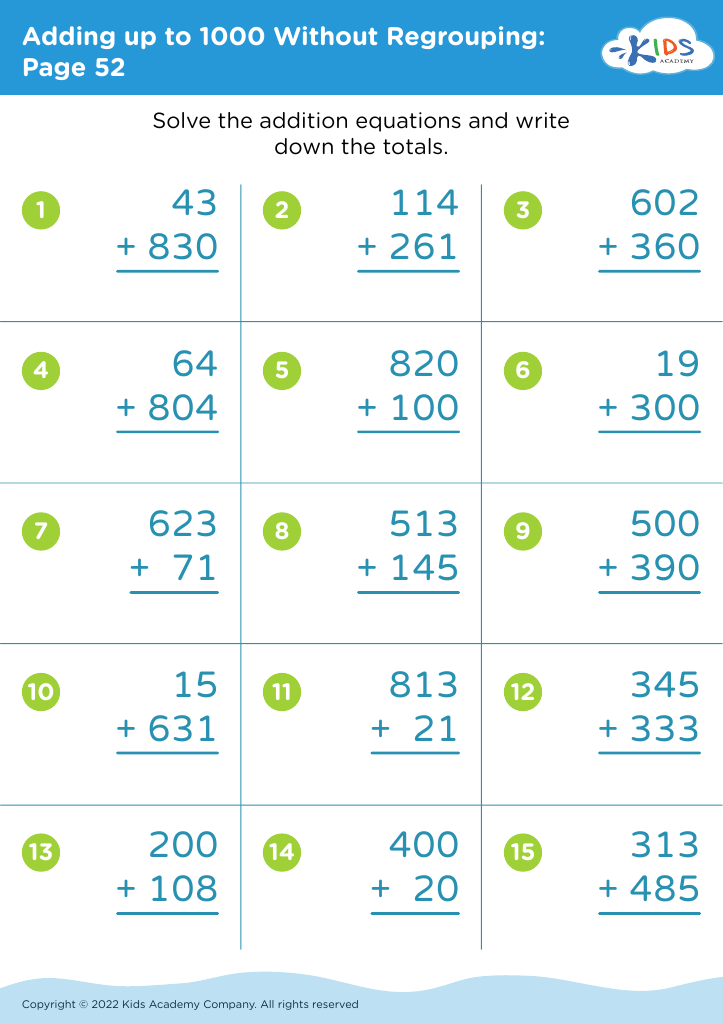
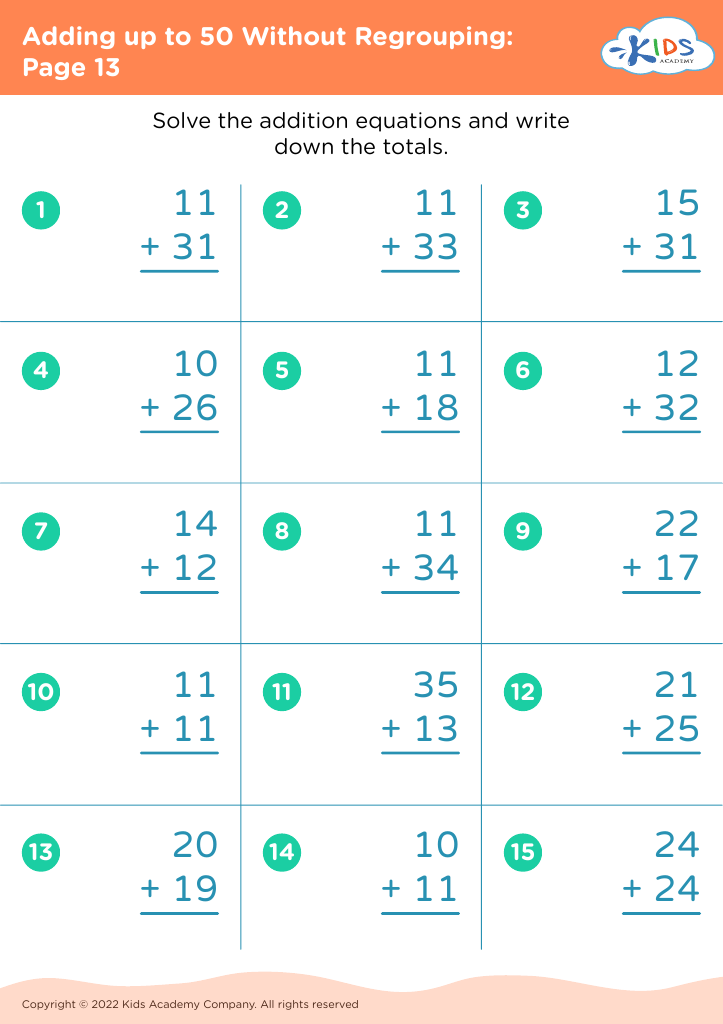








Understanding number sequence addition is fundamental for young learners as it forms the cornerstone of mathematical fluency and logical reasoning. Parents and teachers should care about this for several compelling reasons. Firstly, it strengthens numeracy skills, ensuring children grasp how numbers are organized and related. This foundational understanding aids in more complex mathematical concepts later on, such as multiplication and division.
Secondly, early exposure to number sequence addition enhances cognitive development. It promotes problem-solving skills, critical thinking, and analytical reasoning. When children learn to navigate through number sequences, they begin to recognize patterns and make predictions, vital components of their cognitive toolkit.
Moreover, foundational arithmetics like number sequence addition have real-world applications. From managing allowances to telling time and following recipes, basic math skills are indispensable. Cultivating these skills early makes these day-to-day tasks easier and fosters independence.
Lastly, success in math often boosts self-confidence. Children who can easily comprehend and manipulate numbers are more likely to enjoy math, participate actively in school, and think more positively about learning. By prioritizing understanding number sequence addition, parents and teachers provide children with the tools needed for academic achievement and lifelong problem-solving capabilities.








