Visual discrimination Addition Worksheets
5 filtered results
-
From - To
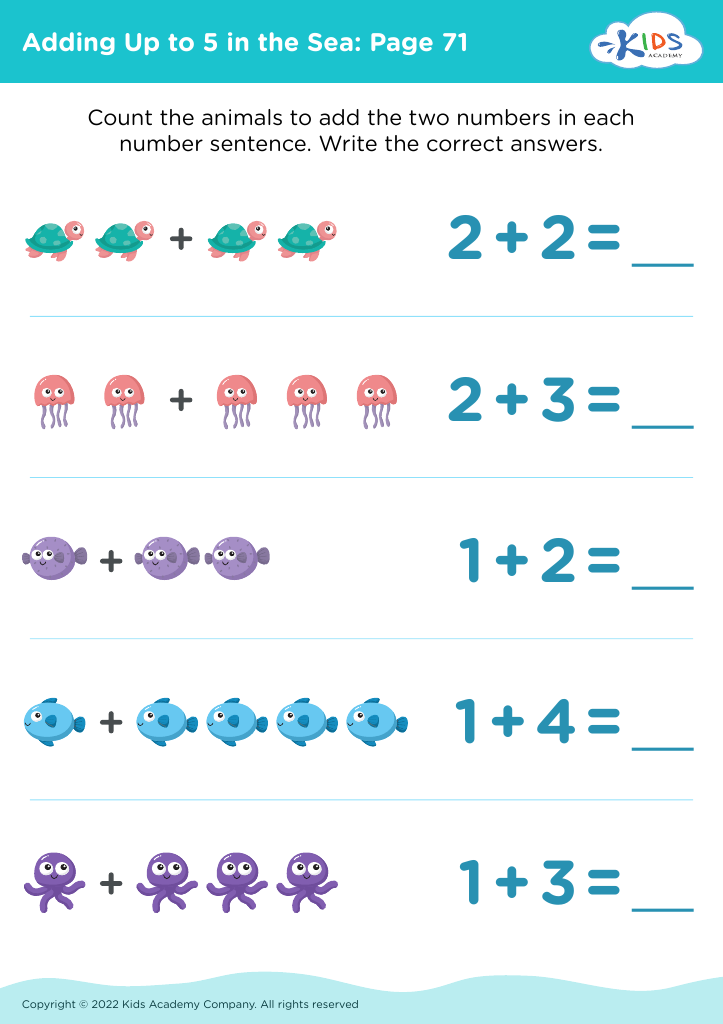
Boost your child's math skills with our Visual Discrimination Addition Worksheets! Designed for early learners, these engaging worksheets help students enhance their ability to recognize differences and similarities in numbers and images, laying a solid foundation for addition. Children will enjoy fun activities that foster critical thinking and build confidence as they accurately identify and combine quantities. Perfect for home or classroom use, these worksheets cater to various learning styles, ensuring every child can succeed. Download now to give your child the tools they need to excel in math! Explore our resources and watch their skills soar!
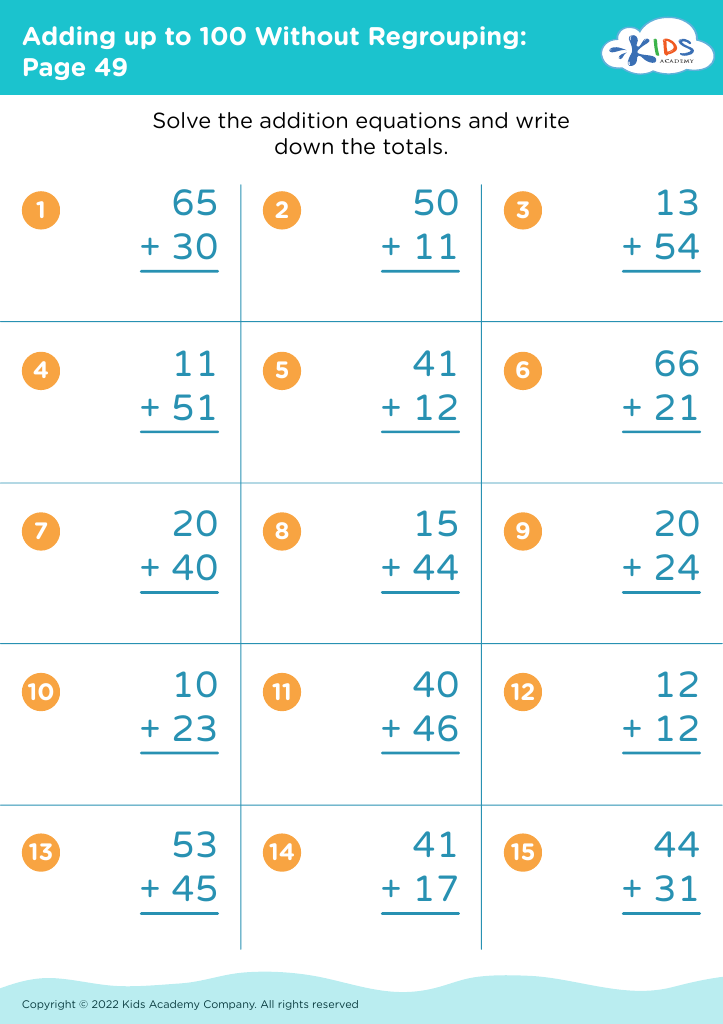
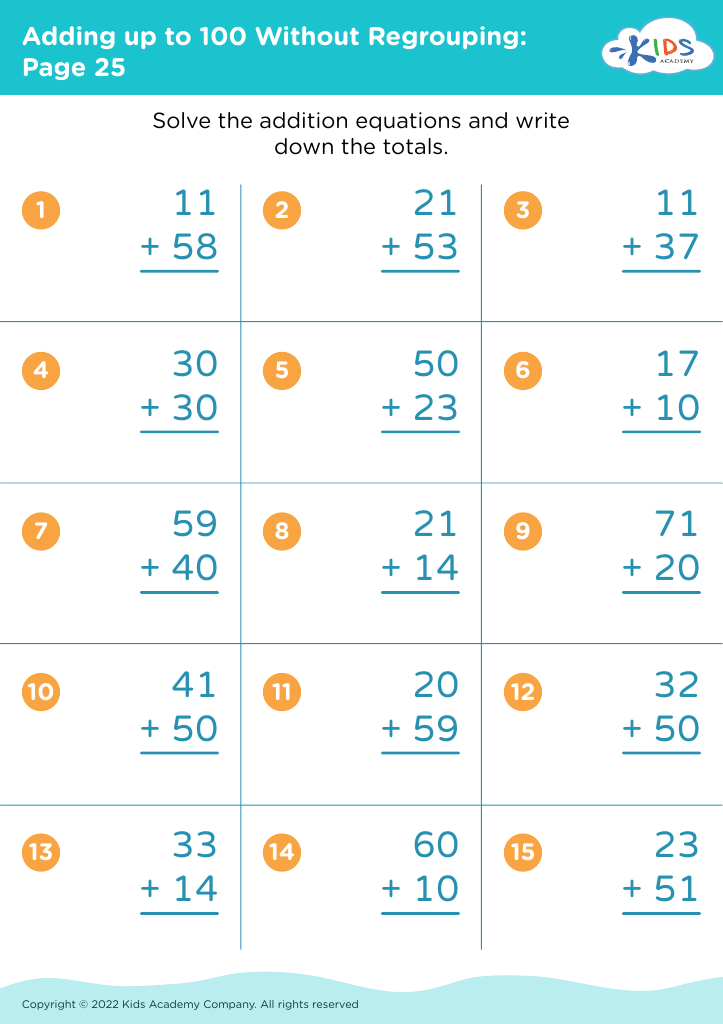
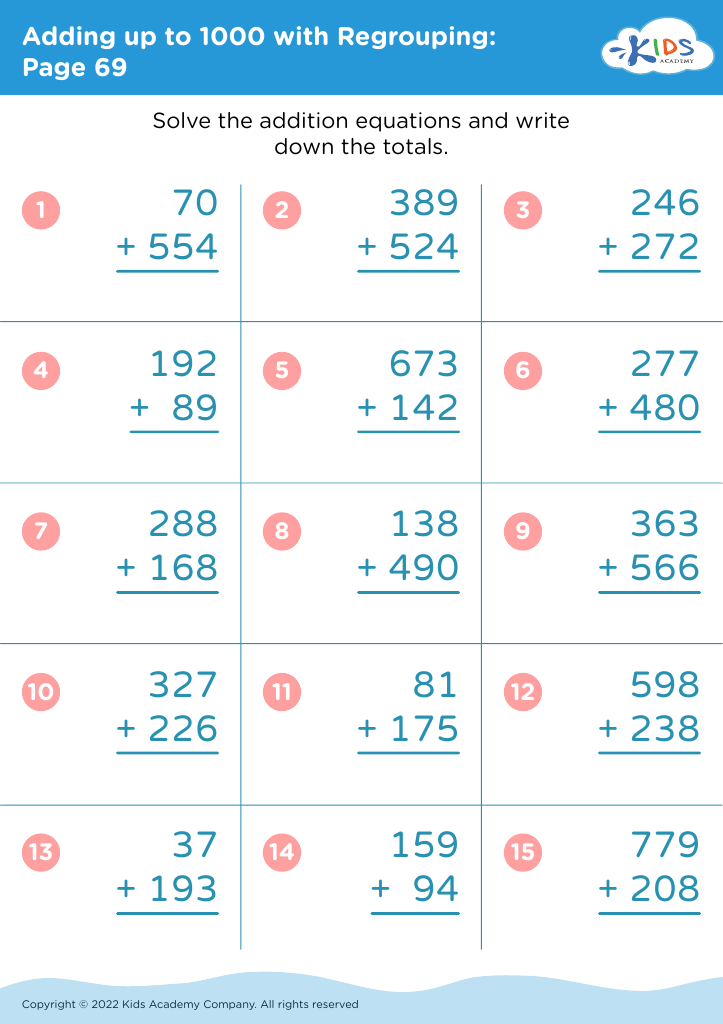
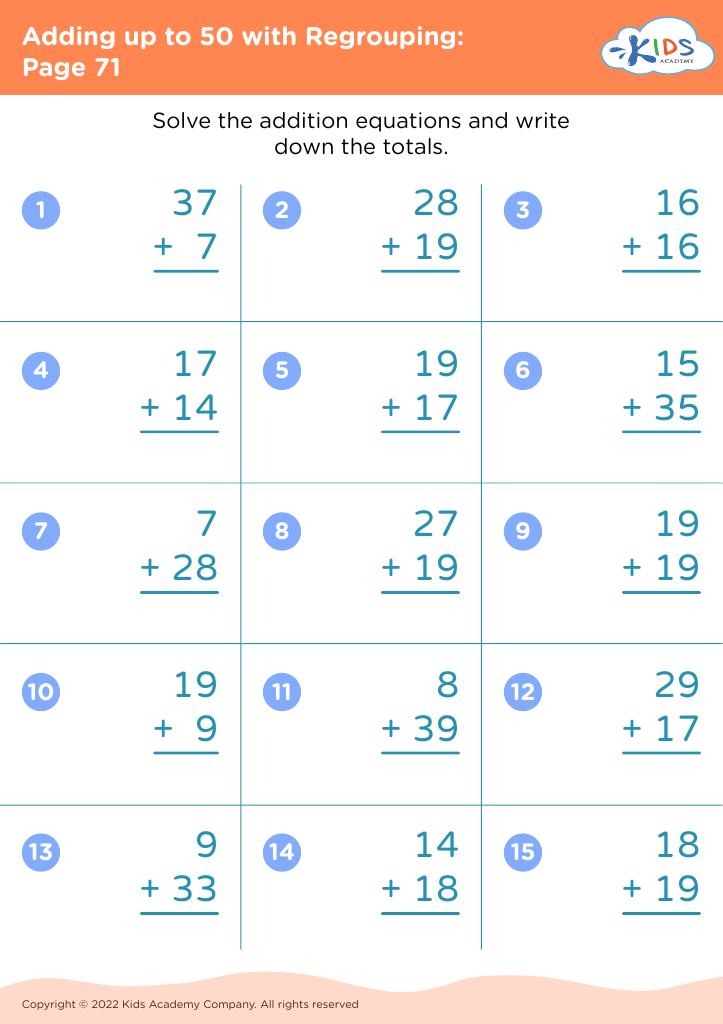





.jpg)


Visual discrimination, particularly in the context of addition, plays a crucial role in a child's early mathematical development. It refers to the ability to differentiate between various symbols, shapes, or numbers based on their visual attributes. Parents and teachers should prioritize this skill, as it lays the foundation for more advanced math concepts and operations.
First, visual discrimination helps children accurately recognize numbers and symbols. When adding, a child must quickly cluster and differentiate between digits, ensuring they are grouping the right ones for calculation. Without strong visual discrimination, confusion can lead to errors and misconceptions.
Moreover, practicing visual discrimination in addition fosters problem-solving skills and cognitive flexibility. Children learn to analyze and visualize math problems, enhancing their overall academic readiness and confidence. This skill also intersects with literacy, as great visual discrimination aids in reading, allowing children to spot differences in letters and words.
By nurturing visual discrimination within addition, parents and teachers not only enhance a child's mathematical proficiency but also support their lifelong learning. It's imperative to cultivate these skills early on, setting a solid foundation for future educational success.








