Visual interpretation Addition Worksheets
5 filtered results
-
From - To
Boost your child's math skills with our Visual Interpretation Addition Worksheets! Designed for early learners, these worksheets help children understand addition through engaging visuals and fun exercises. By incorporating colorful images and relatable scenarios, kids can grasp the concept of addition more intuitively. Our materials promote critical thinking and problem-solving skills, making math enjoyable and accessible. With a variety of worksheets tailored for different learning levels, children can practice adding objects, using visual aids to enhance their comprehension. Perfect for classroom use or at-home learning, these worksheets offer a fun way to strengthen math foundations and build confidence in young learners.
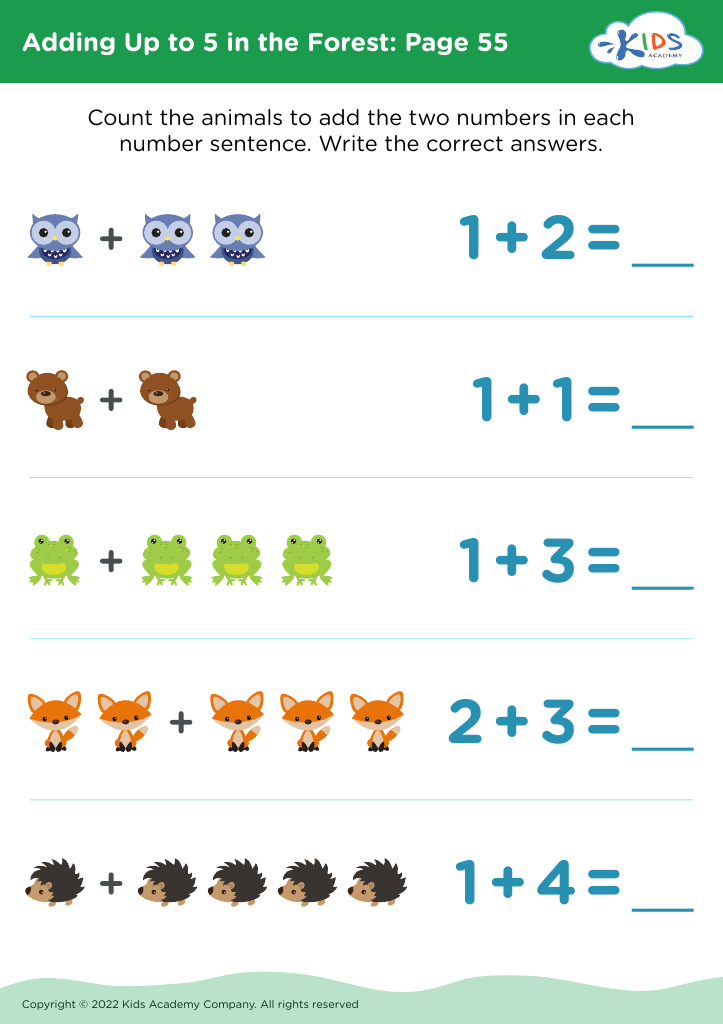
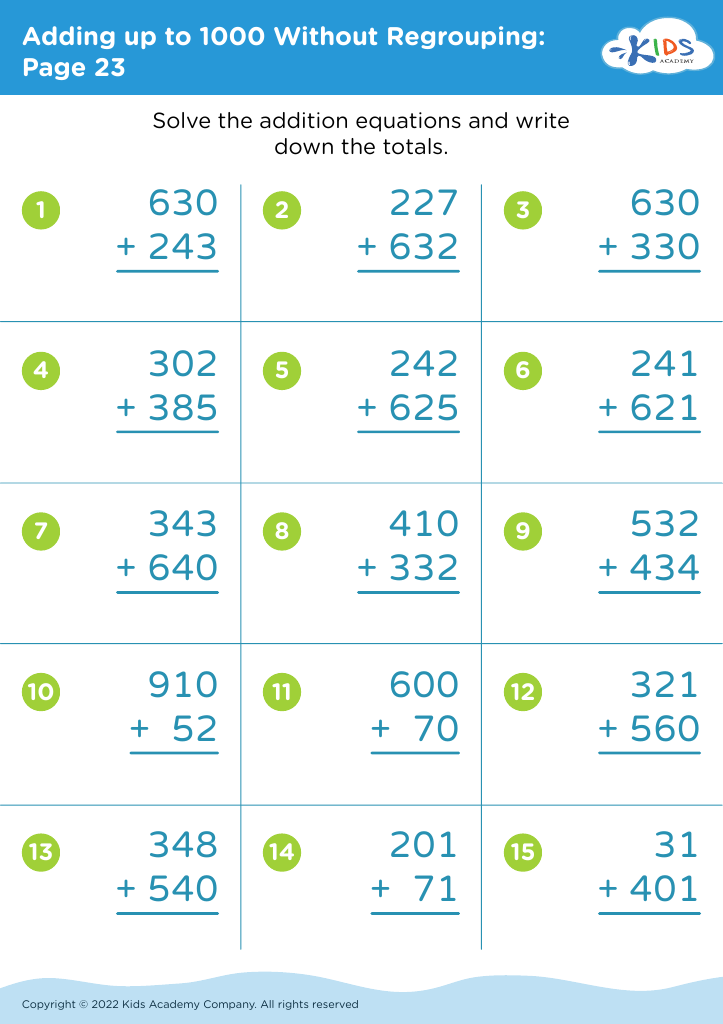
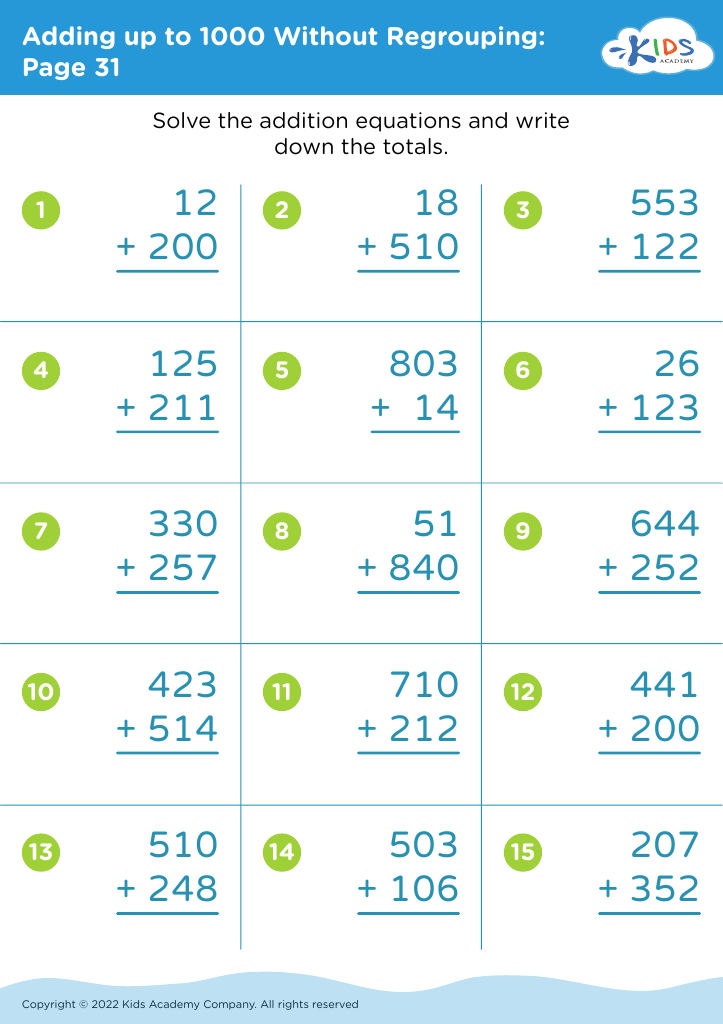
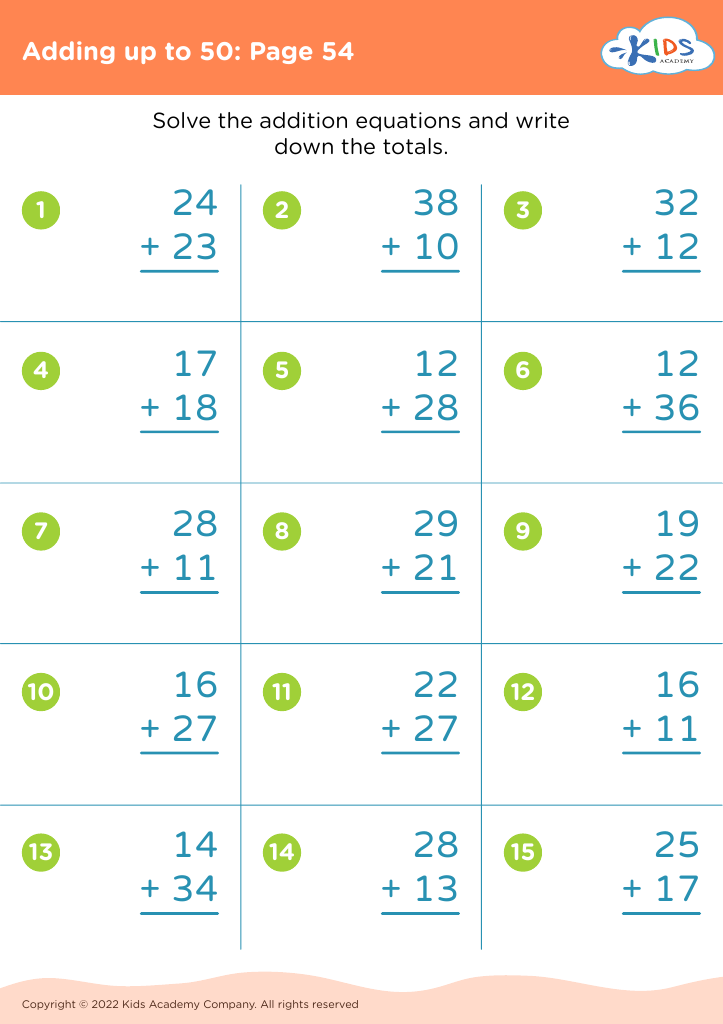
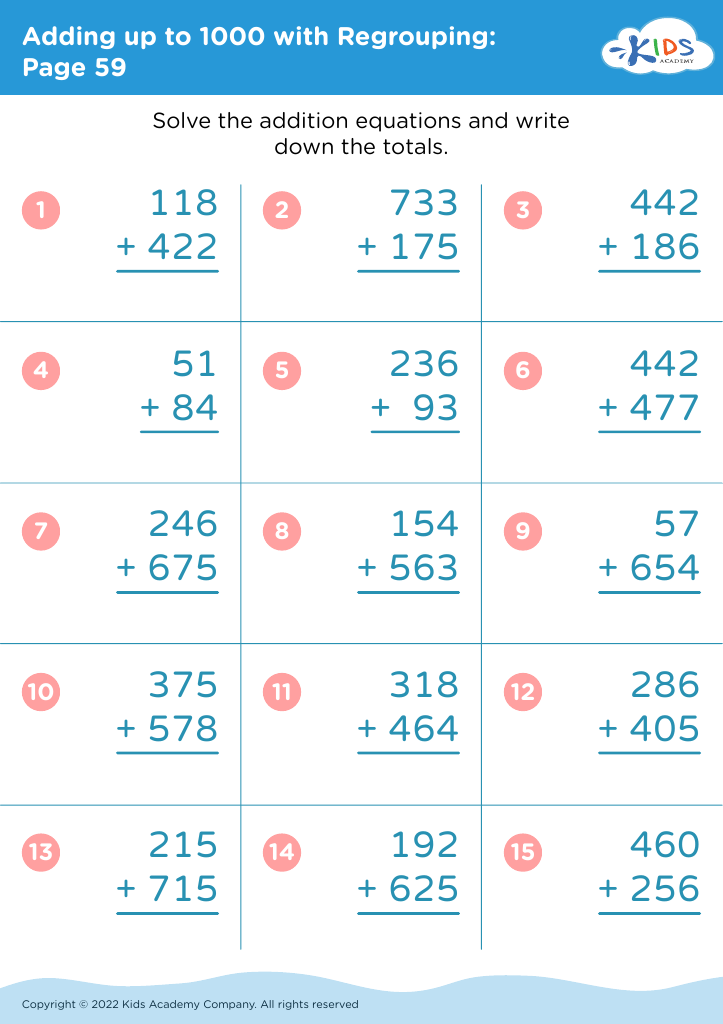








Visual interpretation in addition is a vital skill for early learners, as it helps them develop a strong foundational understanding of mathematical concepts. Parents and teachers should care about this because visual interpretation enhances children's ability to grasp and manipulate numbers through imagery and representation. When children use visual aids, such as number lines, counters, or manipulatives, they can see the relationships between numbers more clearly, making abstract concepts more concrete.
This skill also fosters critical thinking and problem-solving abilities. By interpreting visual information, students learn to analyze patterns, comprehend data, and make logical deductions—skills that are essential not only in mathematics but across all subject areas. Additionally, engaging with visual representations encourages creativity and motivates students, as they often find visual learning methods more enjoyable and accessible.
Moreover, visual interpretation promotes inclusivity in the classroom, accommodating different learning styles. Students with varied cognitive abilities can benefit from this approach, ensuring that no child is left behind. Ultimately, emphasizing visual interpretation in addition not only cultivates mathematical competence but also nurtures confident, well-rounded learners equipped for future academic challenges, making it a key area of focus for parents and educators alike.








