Visualization skills Addition Worksheets
3 filtered results
-
From - To
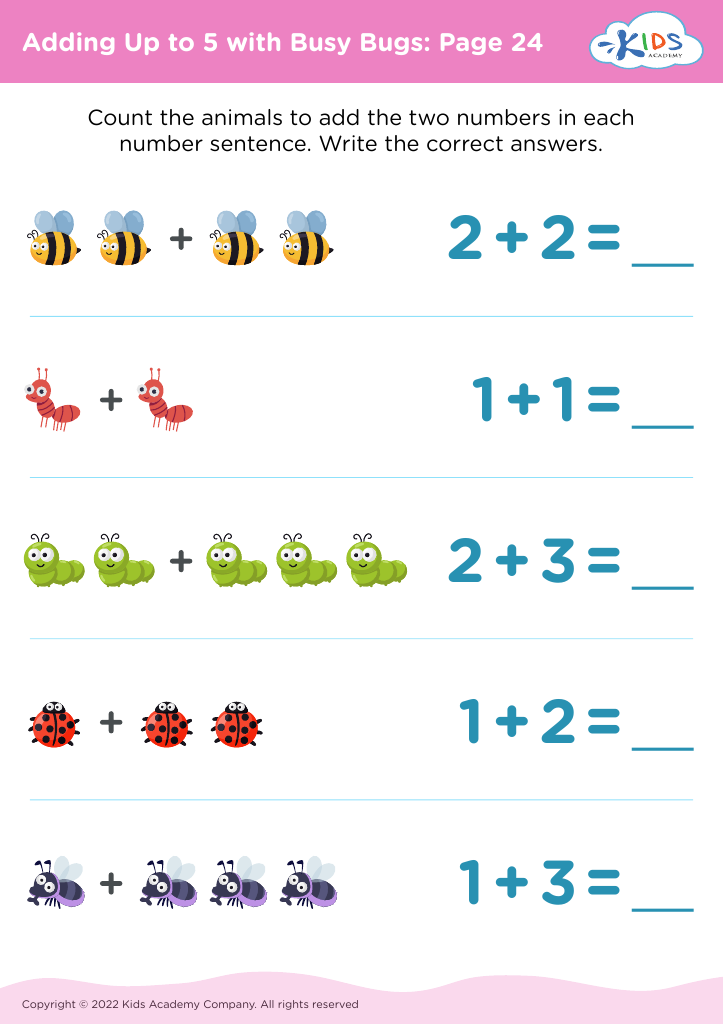
Enhance your child's math proficiency with our Visualization Skills Addition Worksheets! Designed for early learners, these engaging worksheets help students visualize mathematical concepts, making addition easier and more intuitive. By working through various exercises, kids will learn to recognize patterns and develop mental math strategies that boost confidence and problem-solving abilities. Each worksheet is crafted to support visual learning, featuring colorful graphics and relatable scenarios. Perfect for classroom use or at-home practice, these resources encourage a positive attitude towards math while reinforcing essential addition skills. Unlock your child’s potential with fun, educational activities that promote visualization in mathematics!
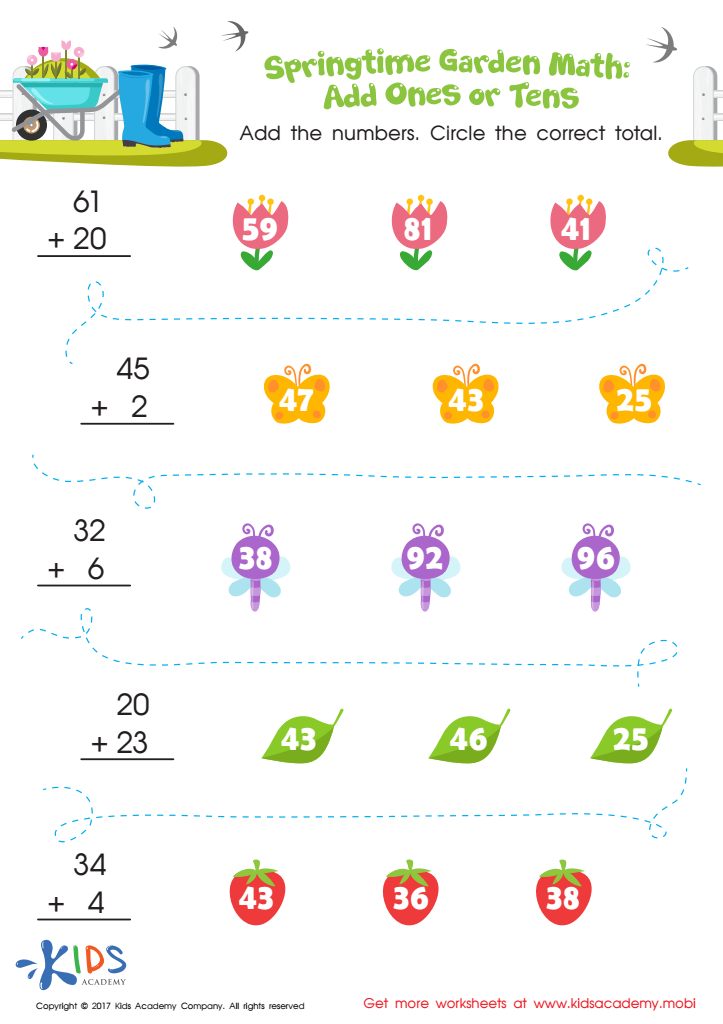
Springtime Garden Math Worksheet
 Assign to My Students
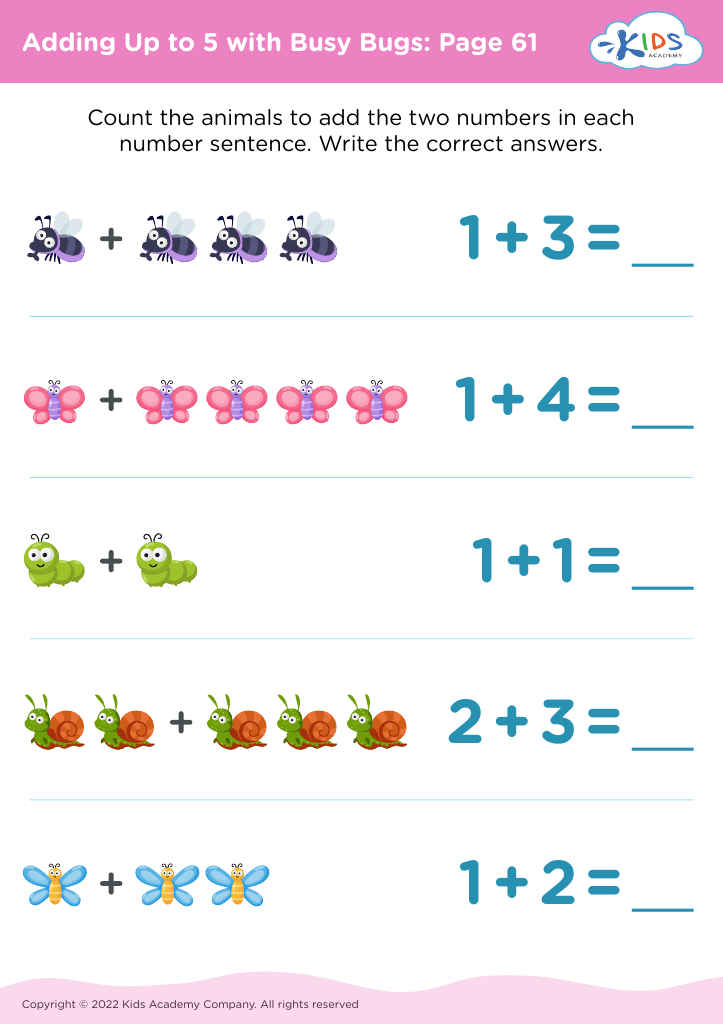








Visualization skills are crucial for children's understanding of mathematical concepts like addition. When parents and teachers foster these skills, they enable children to manipulate and understand numbers mentally, rather than just relying on rote memorization. Visualization allows learners to mentally picture numbers, see relationships, and understand how different quantities can come together, leading to a more profound grasp of addition.
For example, when children visualize addition using objects, drawings, or even mental imagery, they develop problem-solving strategies that go beyond simple computation. This deepens their comprehension, bolsters confidence, and promotes a positive attitude toward math.
Additionally, strong visualization skills are linked to improved overall cognitive development. They help in enhancing memory retention and spatial reasoning, which are beneficial in various subjects beyond mathematics. When children are comfortable visualizing problems, they are better equipped to tackle advanced concepts in the future.
Ultimately, by emphasizing visualization in addition, parents and teachers contribute to a child's mathematical literacy and critical thinking skills, laying the groundwork for lifelong learning and success in academic endeavors. Engaging children in visual and experiential learning activities can spark their interest in mathematics and related disciplines.








