Understanding measurements Comparing Numbers Worksheets
3 filtered results
-
From - To
Unlock the world of measurements and comparisons with our "Understanding Measurements: Comparing Numbers" worksheets. Specially designed for kids, these engaging activities help students grasp essential math skills by comparing and understanding different measurements. Each worksheet offers immersive, interactive tasks that make learning both fun and educational. By working through varied exercises, children enhance their ability to compare lengths, heights, weights, and volumes. Foster a deeper understanding of measurement concepts, sharpen critical thinking, and build a strong mathematical foundation. Perfect for classroom use or at-home practice, our worksheets cater to young learners, ensuring they master the basics while enjoying every moment.
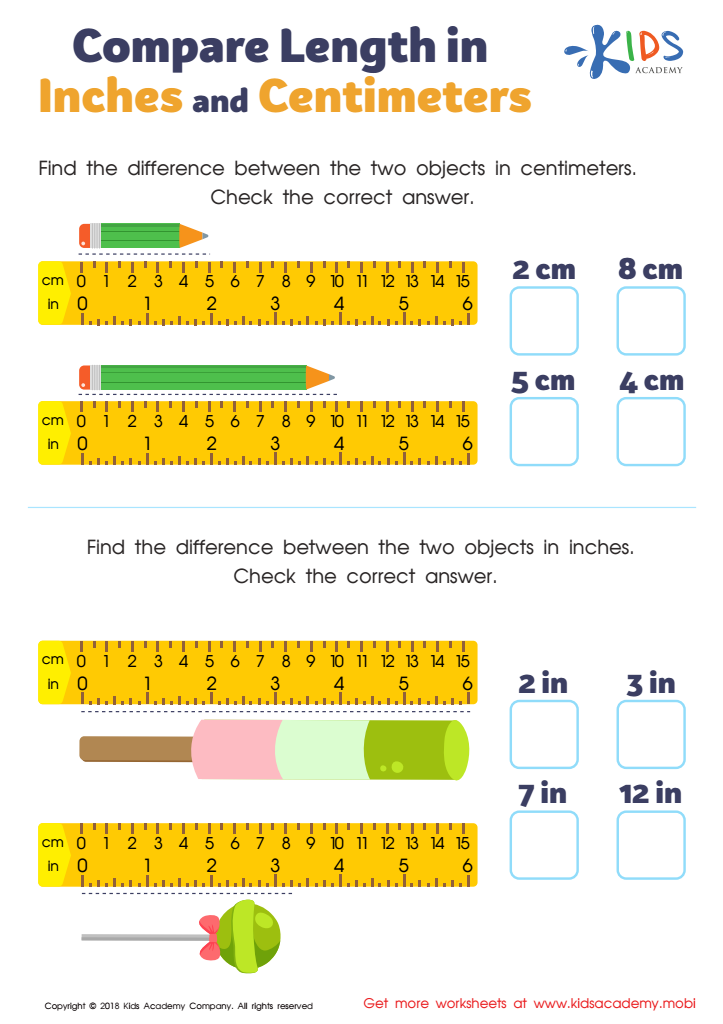
Compare Length in Inches and Centimeters Worksheet
 Assign to My Students
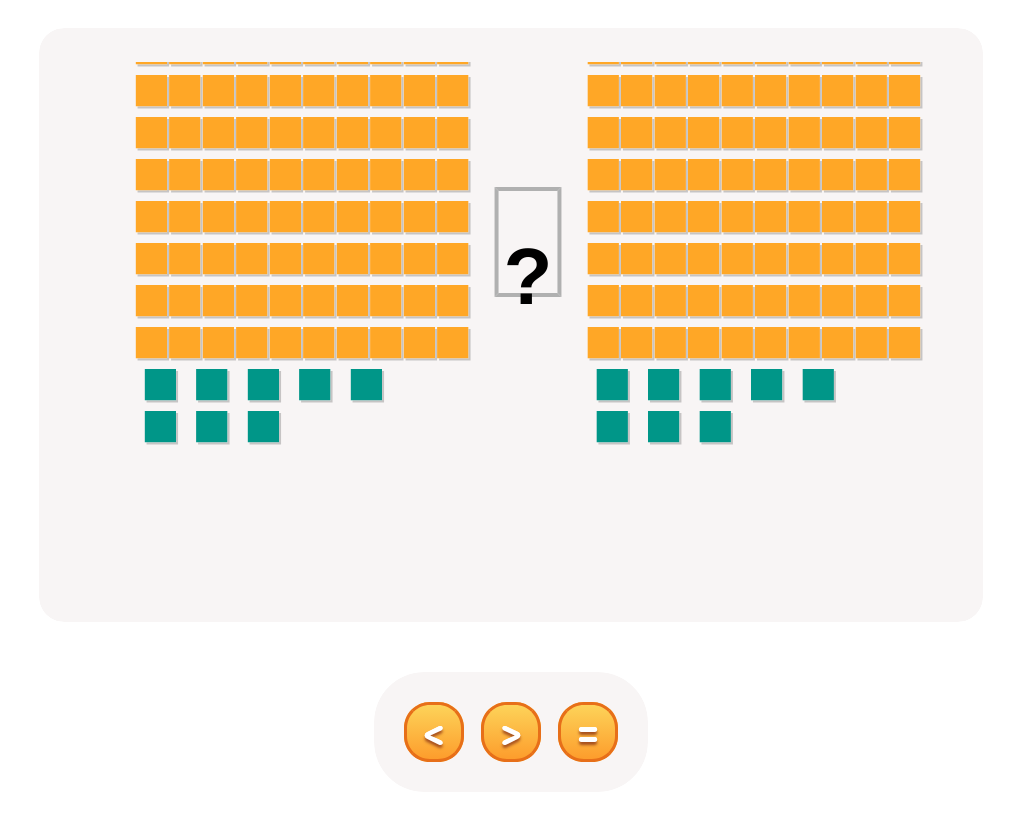

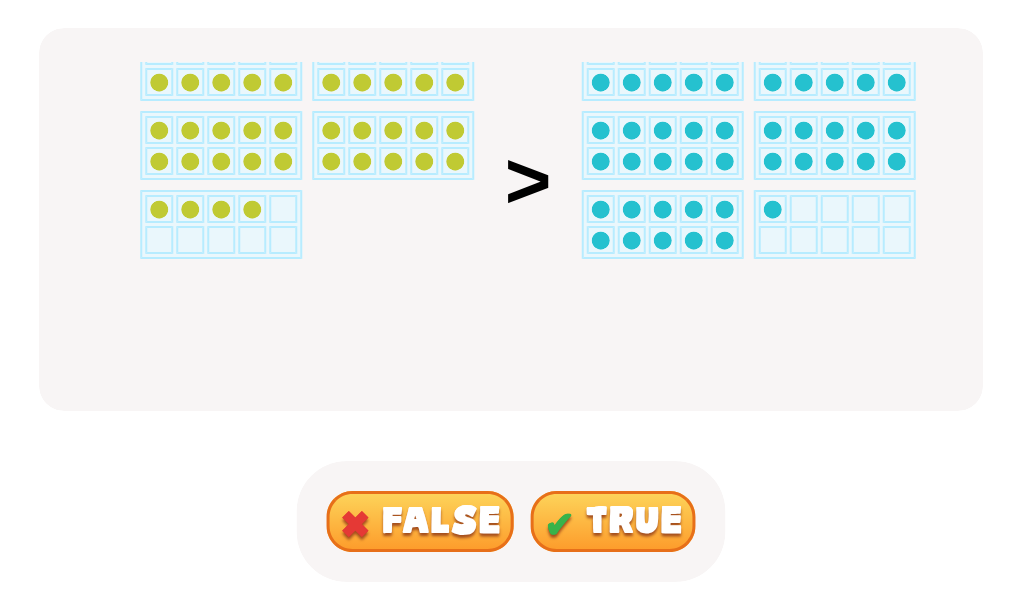
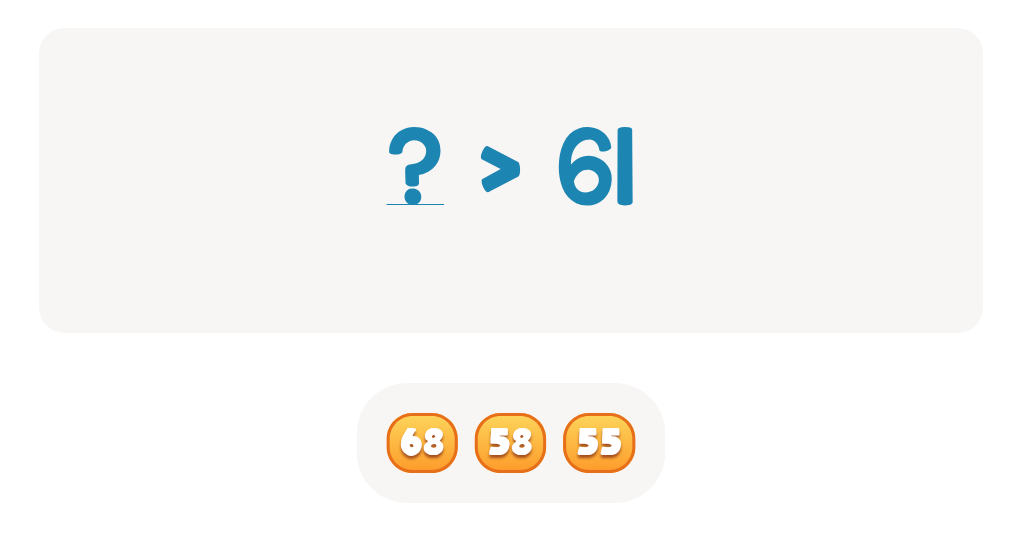
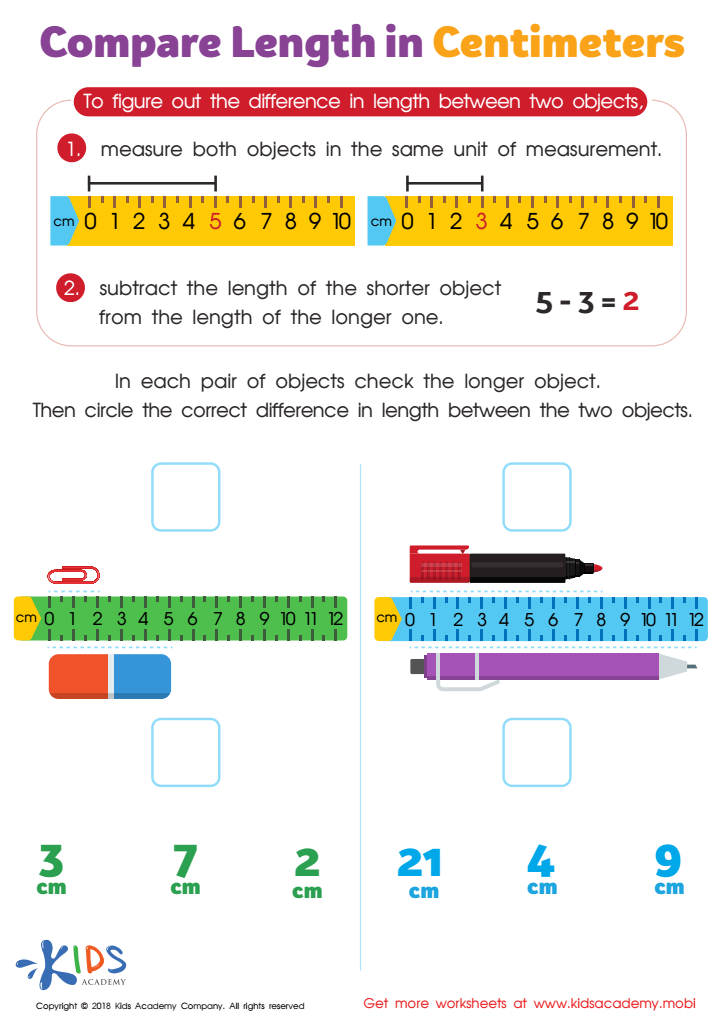
Compare Length in Centimeters Worksheet
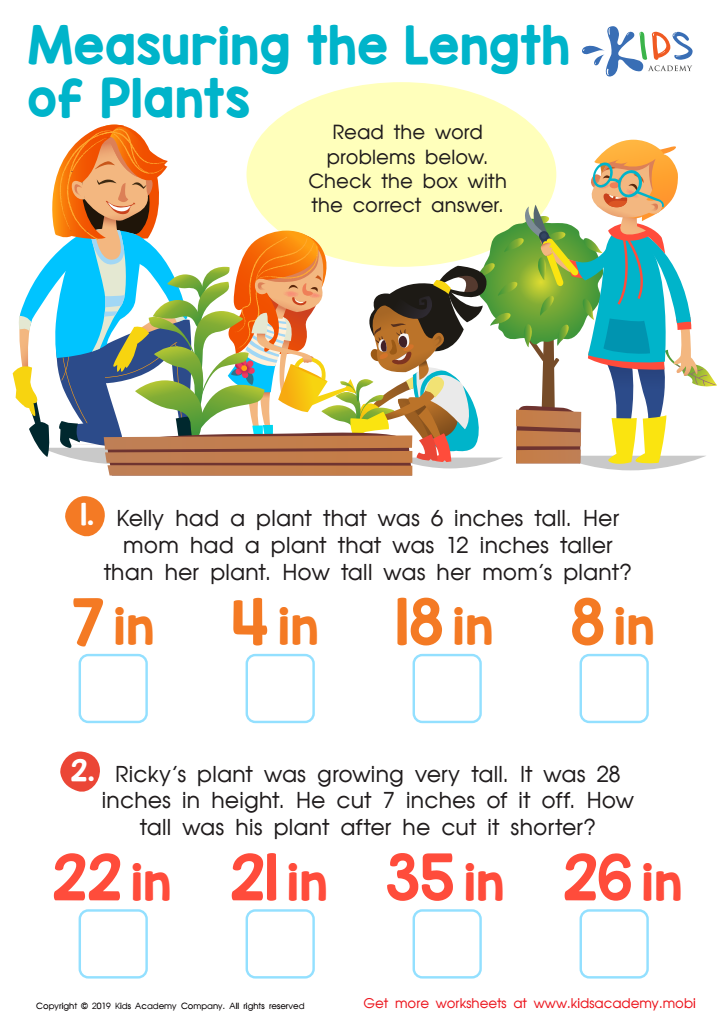
Measuring the Length of Plants Worksheet








Parents and teachers play a crucial role in a child's early education, and understanding measurements and comparing numbers are foundational skills essential for their mathematical development. These skills help children build a sense of spatial awareness and quantitative reasoning, which are fundamental for everyday tasks and future academic pursuits.
When children understand measurements, they can relate to the size, length, volume, and weight of objects, enabling them to make sense of the physical world around them. This knowledge assists in practical situations, such as cooking, creating art projects, or playing sports. Moreover, understanding measurements fosters problem-solving skills and scientific thinking, encouraging children to ask questions and explore their environment.
Comparing numbers is equally important as it hones a child's ability to assess quantities, discern differences, and recognize patterns. These skills are the bedrock of arithmetic operations and algebraic thinking, which are vital for more advanced mathematics. Additionally, comparing numbers teaches critical thinking and decision-making skills, as children learn to make informed judgments based on numerical information.
In conclusion, by fostering an understanding of measurements and number comparisons, parents and teachers give children a solid foundation in mathematics, support cognitive development, and prepare them for everyday activities and future education. Building these competencies early on sets the stage for a lifetime of learning and practical application.








