Basic counting skills Geometry Worksheets
3 filtered results
-
From - To
Welcome to our Basic Counting Skills Geometry Worksheets page! Designed for young learners, our printable worksheets motivate students to develop essential counting skills through engaging geometry exercises. Children will explore shapes, patterns, and spatial awareness while practicing counting basic objects. Each worksheet offers a variety of fun activities to enhance learning, such as counting sides of shapes or identifying geometric patterns. These resources are perfect for early grade teachers looking to support students’ math foundation through interactive and enjoyable content. Start fostering your child's mathematical confidence today with our carefully crafted worksheets that combine counting and geometry concepts!
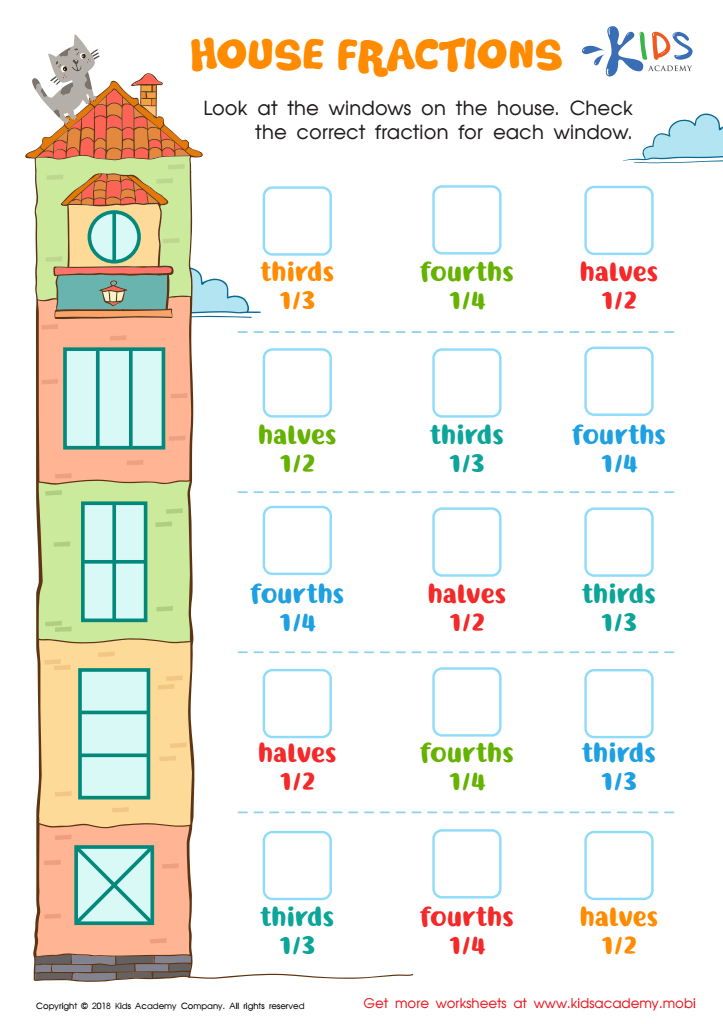
House Fractions Worksheet
 Assign to My Students











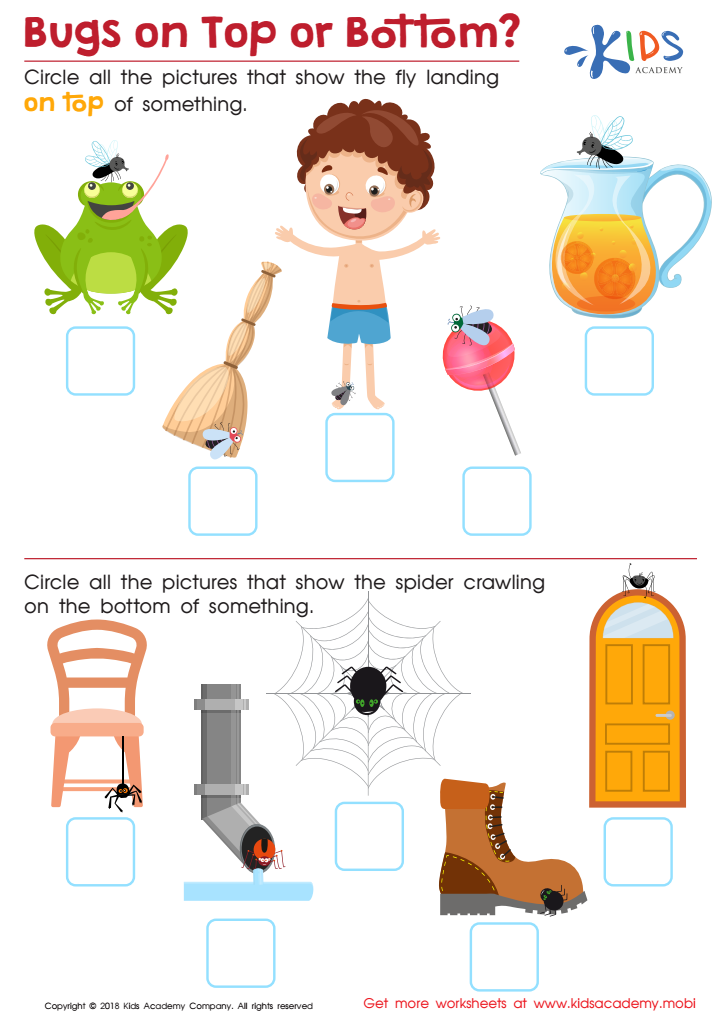
Bugs on Top or Bottom? Worksheet
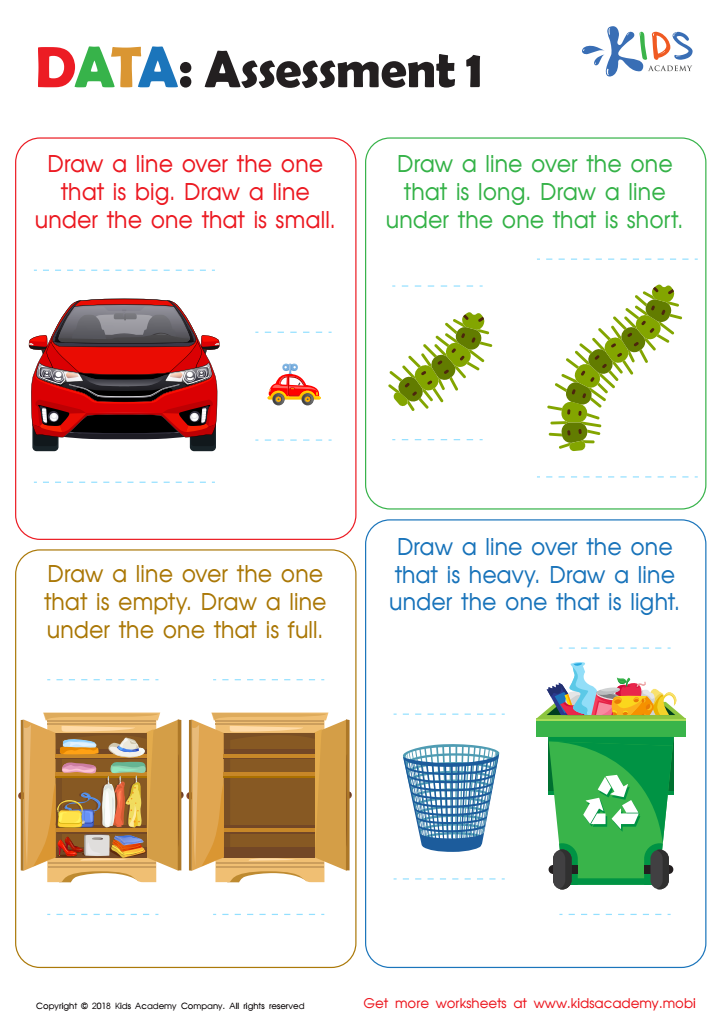
Data: Assessment 1 Worksheet








Parents and teachers should prioritize basic counting skills and geometry because they are foundational elements of mathematical understanding. Mastering counting skills enables children to develop number sense, which is critical for all forms of arithmetic and problem-solving. Counting helps kids grasp concepts of quantity, order, and even basic operations like addition and subtraction as they begin to understand relationships between numbers.
Geometry, on the other hand, introduces children to shapes, spatial awareness, and measurement. Understanding geometry fosters critical thinking and problem-solving skills as students learn to identify and describe their environment. These skills aid in real-life applications such as navigation, architecture, and even art. Geometry also intersects with everyday activities, like cooking or crafting, where measurement and spatial reasoning play critical roles.
Furthermore, both counting and geometry contribute to confidence in math. Early proficiency in these areas builds a strong foundation for later, more complex mathematical concepts. Parents and teachers can enhance learning through engaging activities, which can make math more approachable and enjoyable. Ultimately, strengthening basic counting and geometry skills lays the groundwork for students' future academic success and practical life skills, ensuring they are equipped to handle mathematical challenges throughout their education.








