Basic geometry knowledge Geometry Worksheets
3 filtered results
-
From - To
Discover our interactive Basic Geometry Knowledge Geometry Worksheets designed to enhance young students’ understanding of essential geometric concepts. Tailored for early learners, these worksheets cover fundamental topics such as shapes, angles, symmetry, and spatial awareness. Engaging activities empower children to identify and create 2D and 3D shapes, boosting their confidence in geometry. With colorful visuals and clear instructions, our materials foster a fun and supportive learning environment. Perfect for teachers and parents alike, these printable resources are ideal for at-home practice or classroom integration. Prepare your students for future math success with our comprehensive and easy-to-use geometry worksheets!
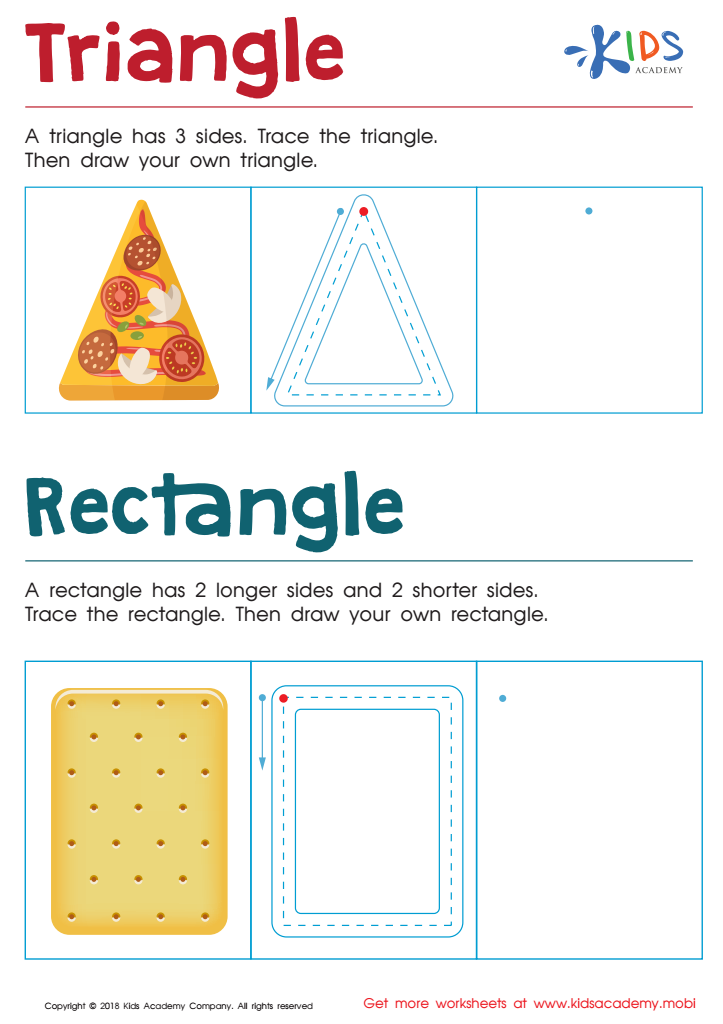
Triangle Rectangle Worksheet
 Assign to My Students











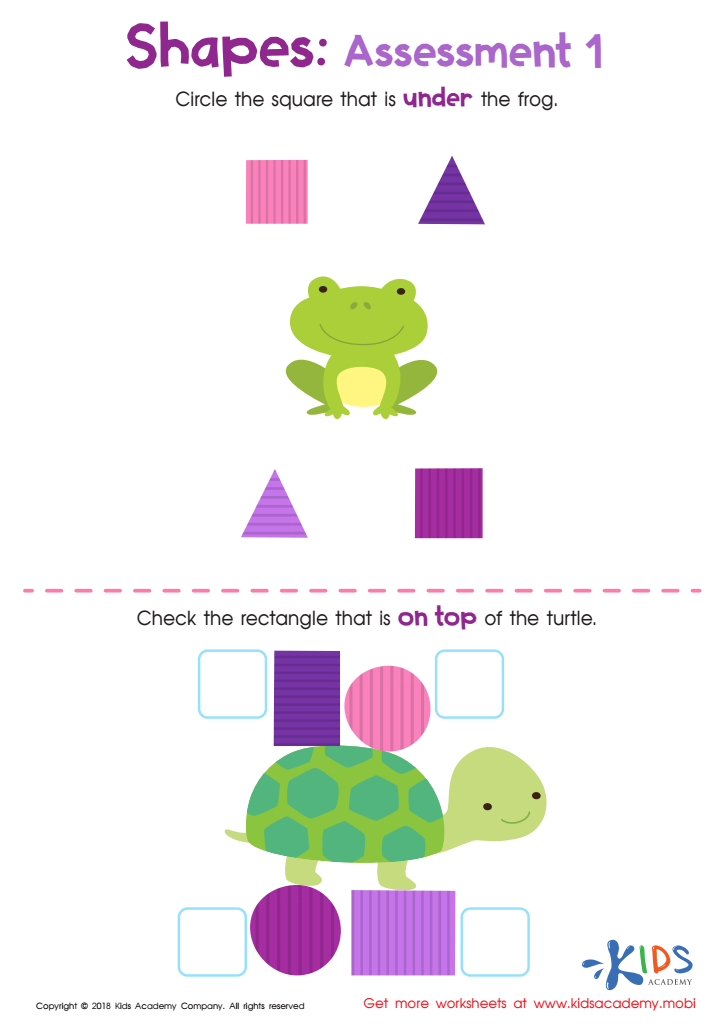
Geometry – Assessment 1 Worksheet
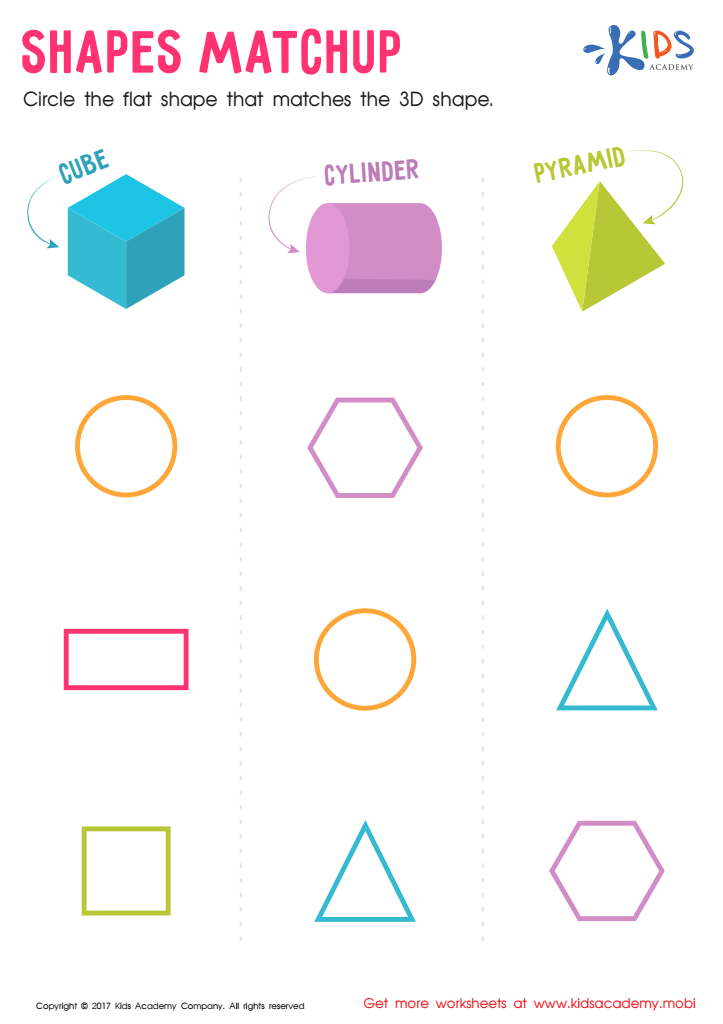
Shapes Matchup Worksheet








Basic geometry knowledge is essential for children’s overall cognitive development and everyday life. For parents and teachers, understanding geometry goes beyond academic curriculum; it enriches children's problem-solving skills, spatial reasoning, and critical thinking. Mastering basic geometric concepts helps children recognize shapes, understand measurements, and develop the ability to visualize spatial relationships, which is crucial not only in mathematics but also in science, art, and technology.
Encouraging children to explore geometry can foster an interest in STEM fields, contributing to a well-rounded education. Employers increasingly seek individuals with strong analytical and spatial skills, so early geometry education can lay the groundwork for future career opportunities.
Moreover, basic geometry knowledge is applicable in daily activities, such as home design, cooking, or even playing sports, where understanding angles, area, and volume is beneficial. Learning geometry also instills confidence and encourages cooperative learning through collaborative problem-solving, making it a vital component of a child's educational journey.
In summary, prioritizing basic geometry education prepares children for academic success, equips them with practical skills for real-life situations, and cultivates an appreciation for the role of mathematics in the world around them.








