Sorting skills Geometry Worksheets
5 filtered results
-
From - To
Discover engaging Sorting Skills Geometry Worksheets designed to enhance young learners' understanding of shapes and spatial relationships. Our worksheets introduce foundational concepts, enabling kids to categorize, compare, and sort various geometric figures in fun and interactive ways. With a variety of colorful activities, students will develop critical thinking and organizational skills while gaining confidence in geometry. Ideal for preschool and early elementary education, these printable resources fit seamlessly into any learning environment. Embrace the joy of learning as your students explore the world of geometry through sorting activities. Start fostering essential skills today with our comprehensive collection of worksheets!
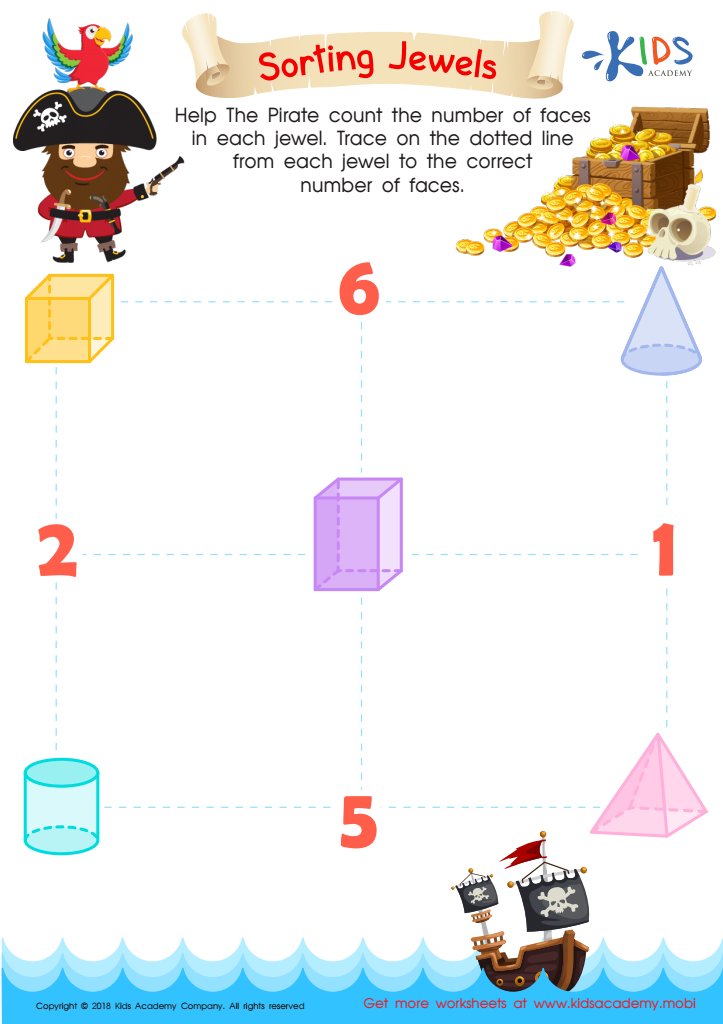
Sorting Jewels Worksheet
 Assign to My Students











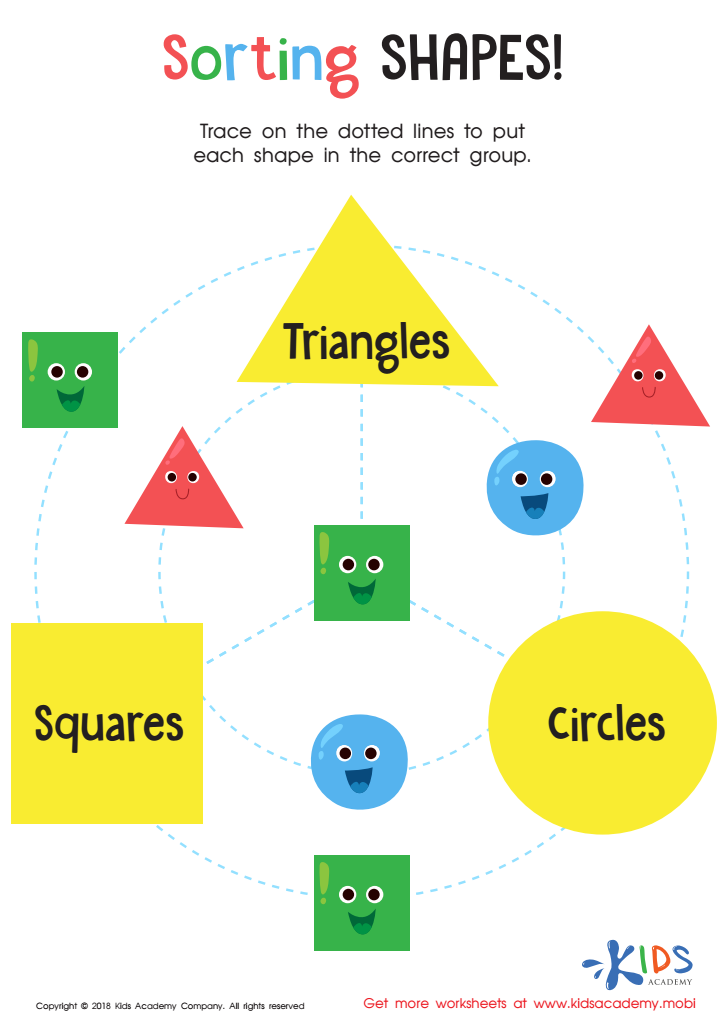
Sorting Shapes - Part 3 Worksheet
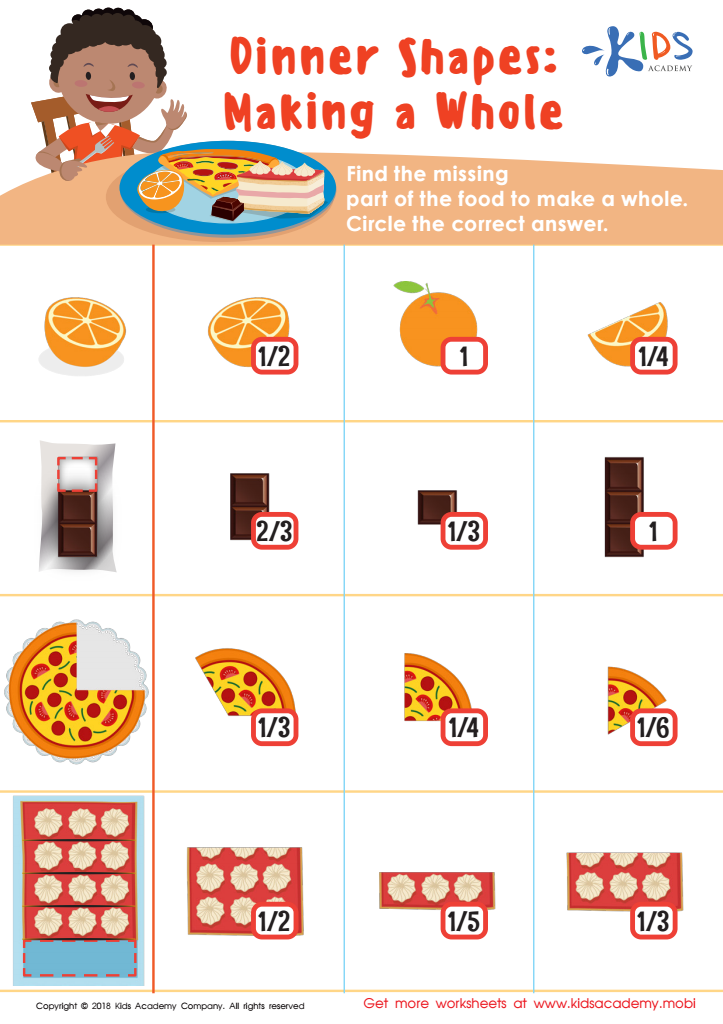
Dinner Shapes: Making a Whole Worksheet
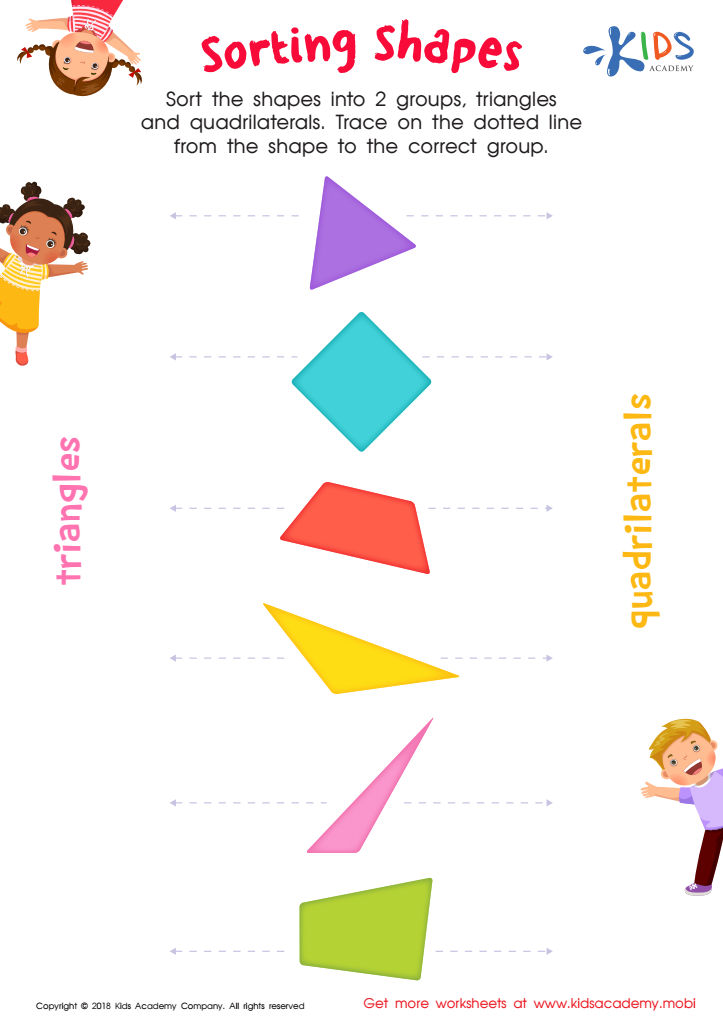
Sorting Shapes Worksheet
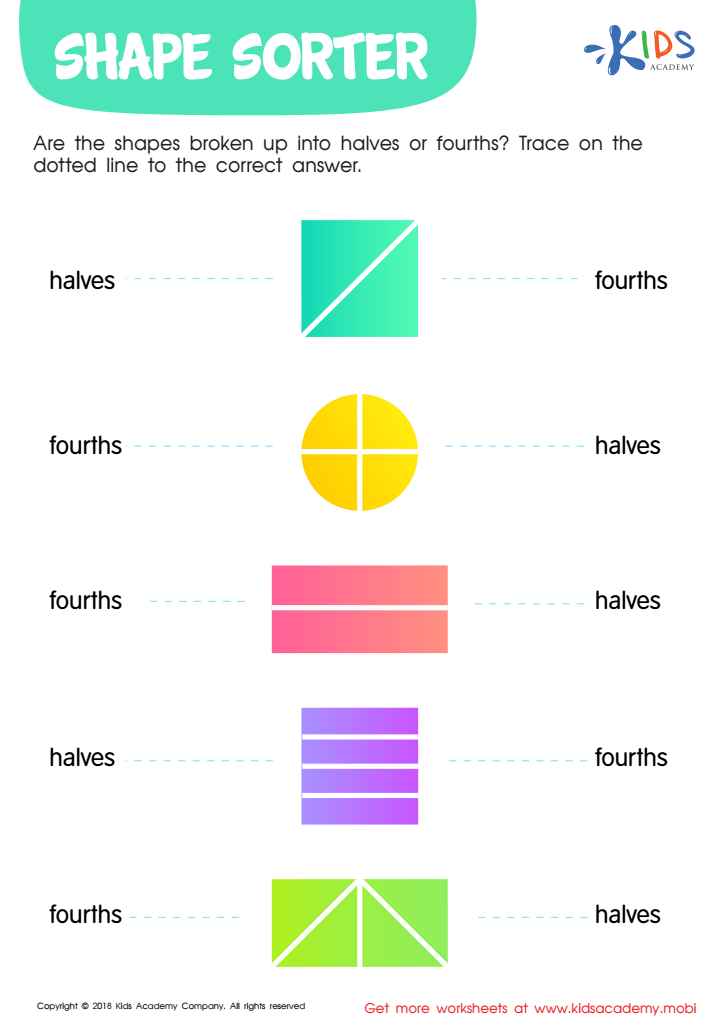
Shape Sorter Worksheet








Sorting skills are fundamentally related to geometry and play a crucial role in early childhood education. When children learn to sort shapes by attributes such as size, color, or type, they are not only engaging in classification, but they are also developing essential geometric concepts. Understanding how to identify and compare geometric shapes lays the foundation for more complex mathematical concepts later on.
For parents and teachers, fostering sorting skills is vital because these abilities encourage critical thinking, problem-solving, and analytical reasoning. As children sort shapes, they must observe differences and similarities, which enhances their cognitive abilities. Geometry is intricately connected to everyday experiences, from navigating spaces to recognizing patterns in nature and everyday environments.
Moreover, sorting prepares children for later computational skills, as they begin to understand properties of shapes and spatial relationships. These skills are essential for solving geometric problems and for progressing in mathematics. By focusing on geometric sorting skills, educators and parents can create rich learning environments that promote cognitive development and mathematical understanding, equipping children with tools for both academic success and practical application in their lives beyond the classroom.








