Understanding skip-counting Numbers Worksheets
3 filtered results
-
From - To
Skip-counting is an essential math skill that lays the foundation for multiplication and division. Our "Understanding Skip-Counting Numbers Worksheets" provide engaging resources to help young learners practice this concept. These worksheets feature fun exercises that encourage students to count by twos, fives, and tens, enhancing their number sense and improving their confidence in math. Each worksheet is designed to be visually appealing and age-appropriate, ensuring that kids stay motivated while developing their numerical skills. Dive into our collection to bolster your child's understanding of skip-counting, paving the way for future math success! Perfect for home or classroom use.
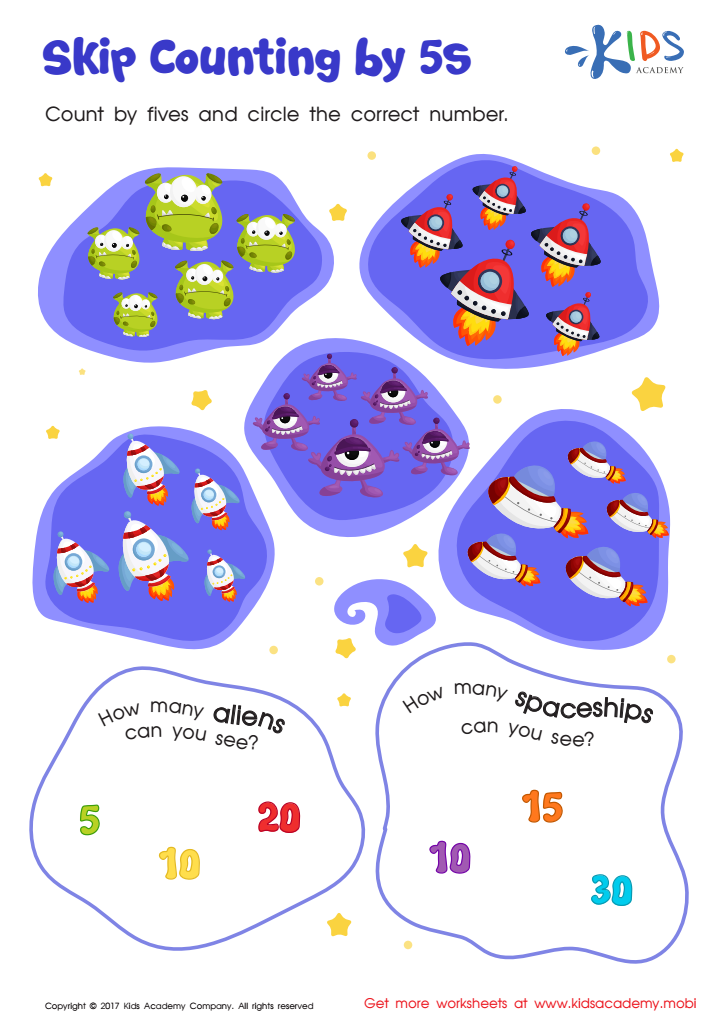
Skip Counting by 5s: Aliens and Spaceships Printable
 Assign to My Students
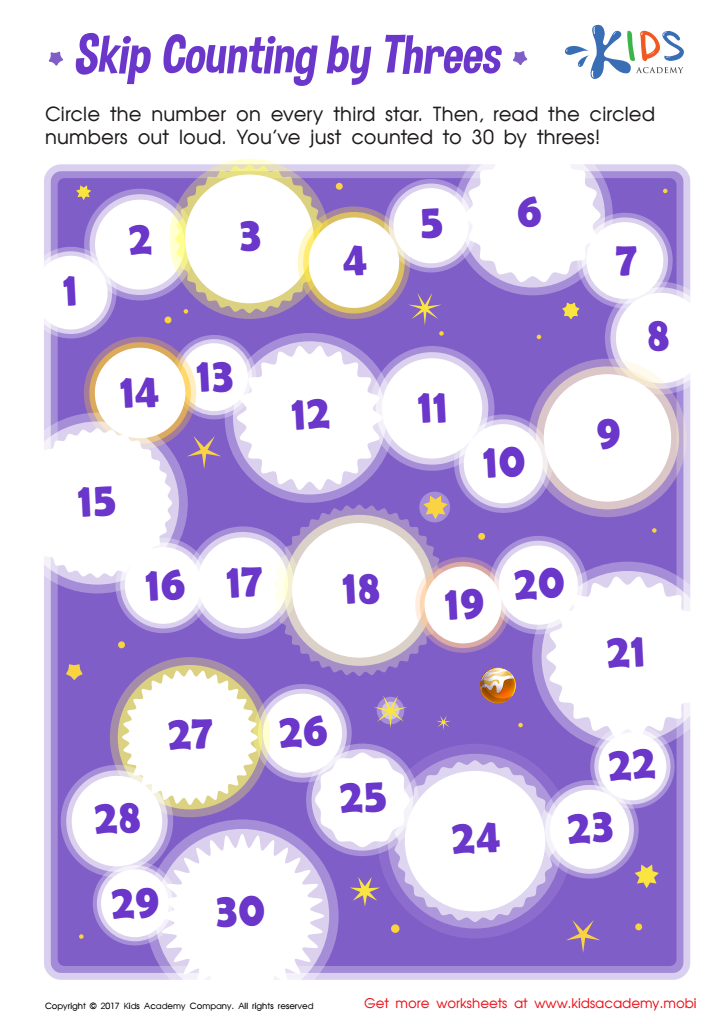
Skip Counting By Three Printable
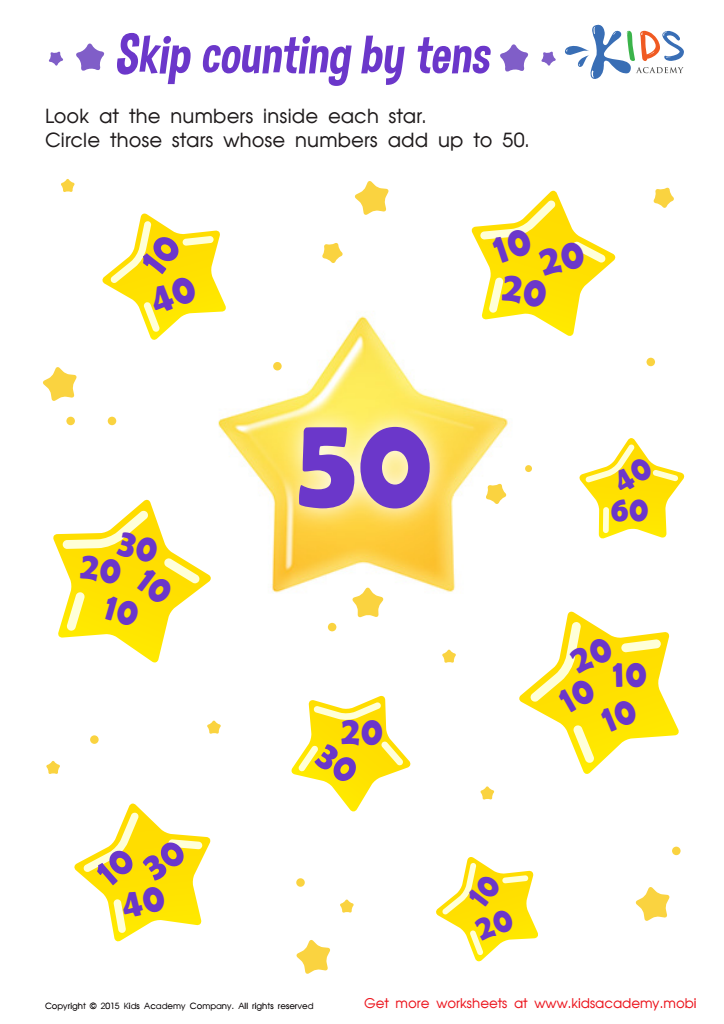
Learn Dozens: Skip Counting by Tens Printable








Skip-counting is an essential foundational skill in early mathematics that helps students build number sense and develop a stronger understanding of patterns, sequences, and basic arithmetic. Parents and teachers should care about understanding skip-counting because it forms the basis for more complex mathematical concepts.
Firstly, skip-counting, such as counting by twos, fives, or tens, aids in the understanding of multiplication and division. It teaches young learners how to recognize multiples and fosters the skill of adding in large quantities quickly. This skill enhances students' confidence as they progress in math, allowing them to tackle word problems and more advanced operations with greater ease.
Additionally, skip-counting encourages pattern recognition—a critical cognitive skill that extends beyond mathematics and influences logical thinking and problem-solving. When children grasp these concepts, they’re better prepared for future learning in algebra and even higher-level mathematics.
For parents, engaging their children in skip-counting exercises fosters a fun and interactive learning environment, bridging the gap between home and classroom. By prioritizing skip-counting, both teachers and parents cultivate effective mathematical thinkers equipped with the tools necessary for academic success. Through awareness and support, they contribute to a solid pedagogical foundation that promotes lifelong learning and enthusiasm for math.








