Understanding tally marks Numbers Worksheets
5 filtered results
-
From - To
Explore our "Understanding Tally Marks Numbers Worksheets" designed to enhance fundamental counting skills for young learners. These engaging worksheets introduce children to the concept of tally marks, making it easy for them to grasp numeric representation and counting strategies. Each worksheet offers fun activities that encourage children to practice recognizing and creating tally marks, reinforcing their understanding of quantities in a visual and interactive way. Perfect for classroom reinforcement or at-home learning, these resources help students develop a solid foundation in math while making learning enjoyable. Download your free worksheets now and watch your child's confidence in counting grow!
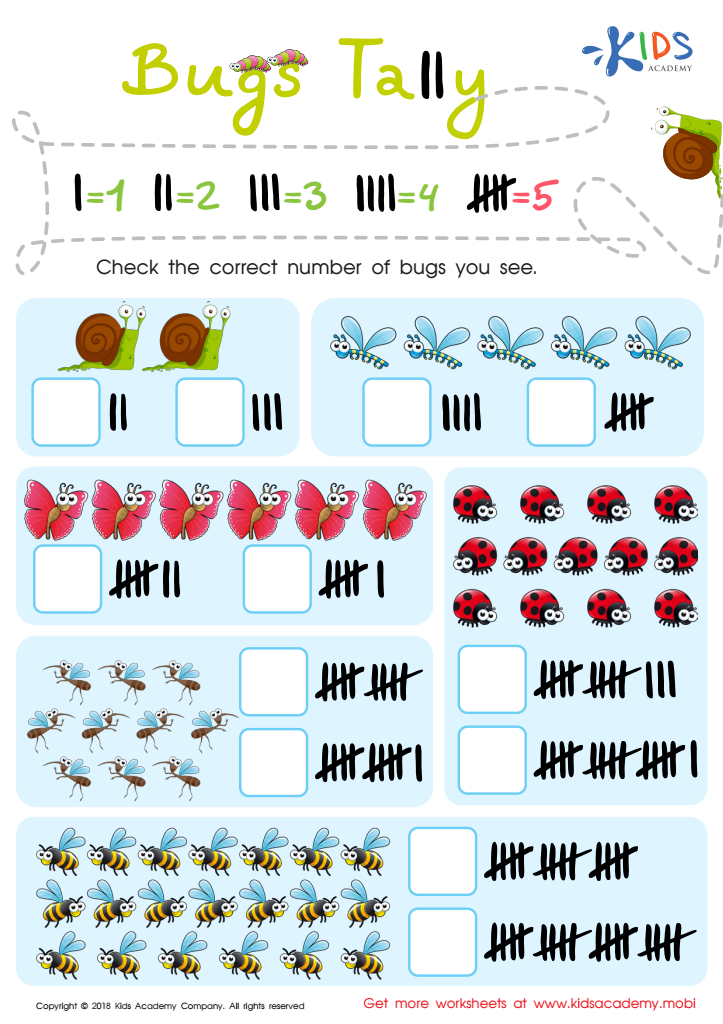
Bugs Tally Worksheet
 Assign to My Students
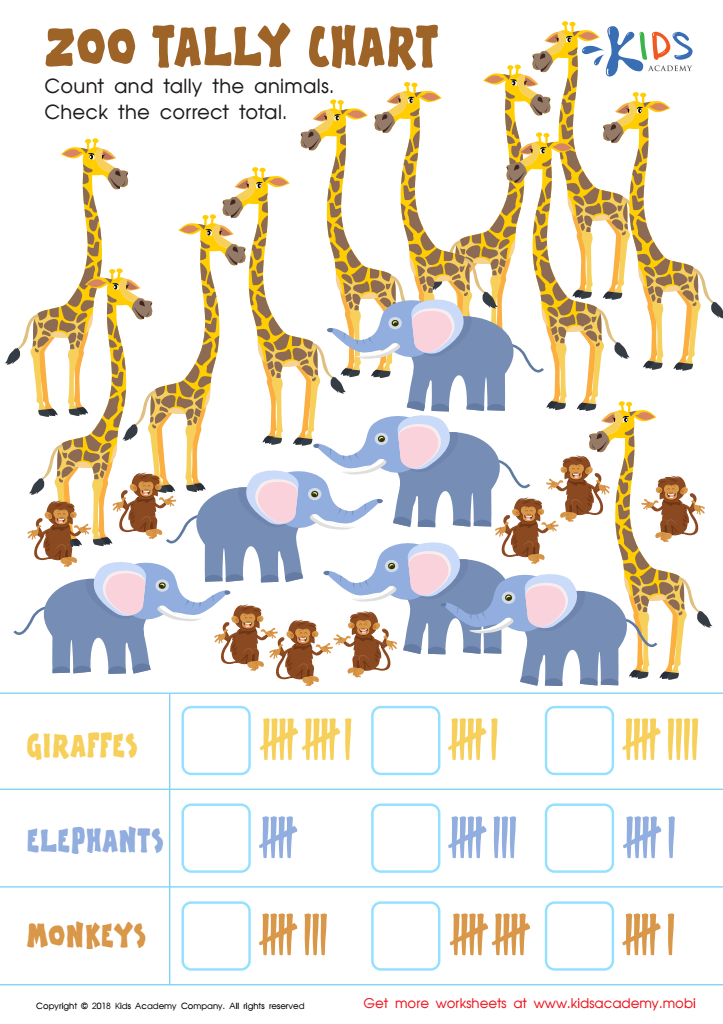
Zoo Tally Chart Worksheet
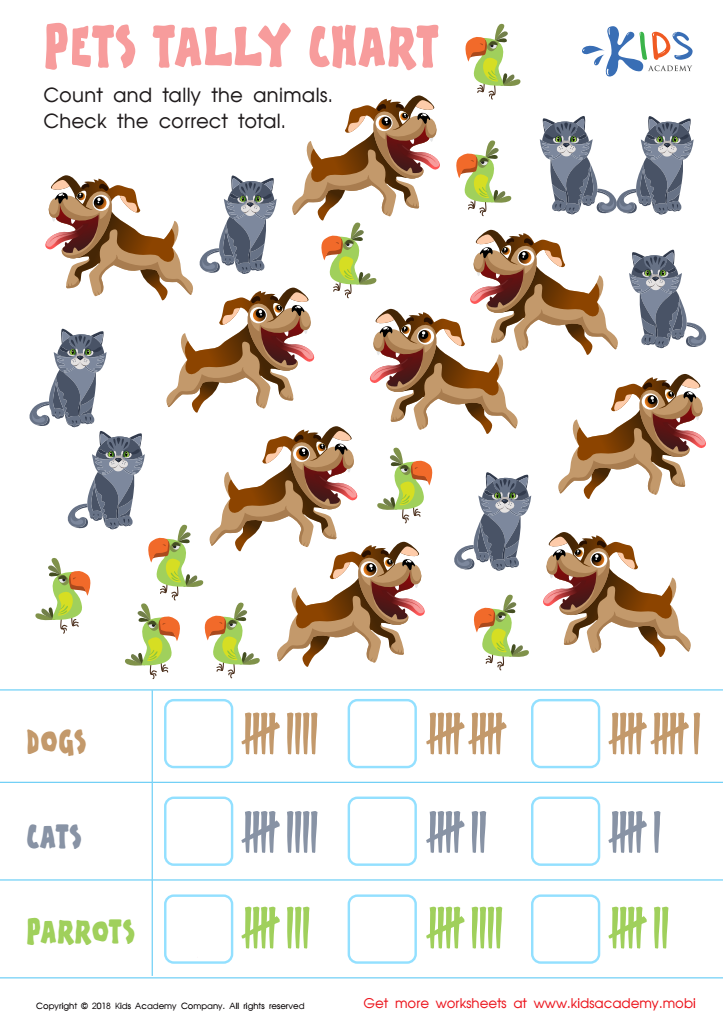
Pets Tally Chart Worksheet
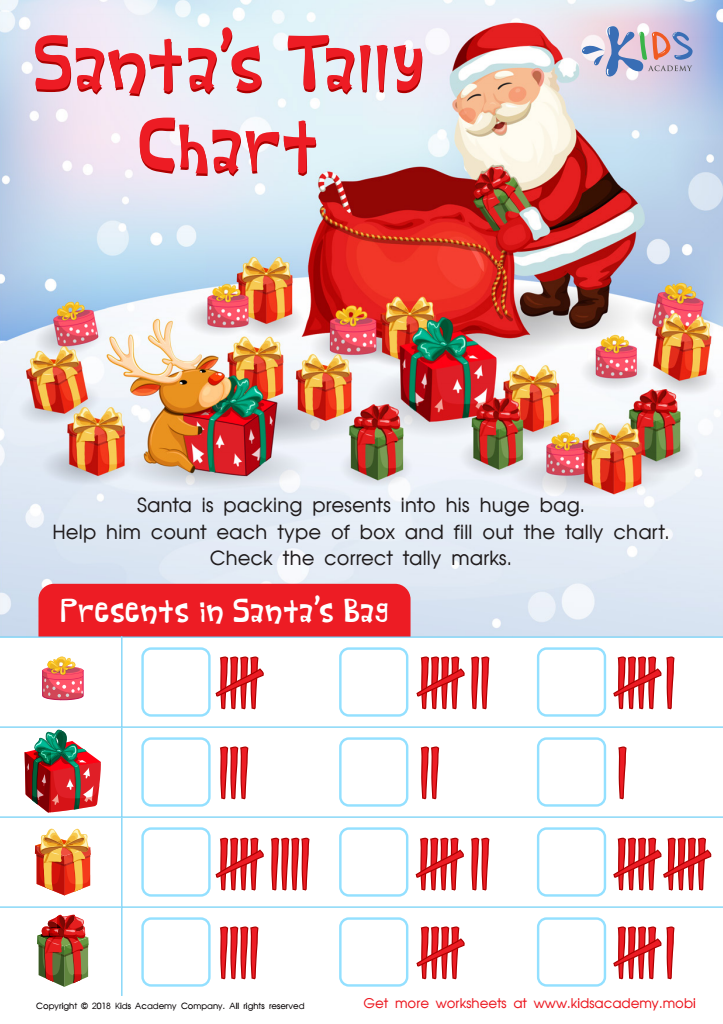
Santa Tally Chart Worksheet
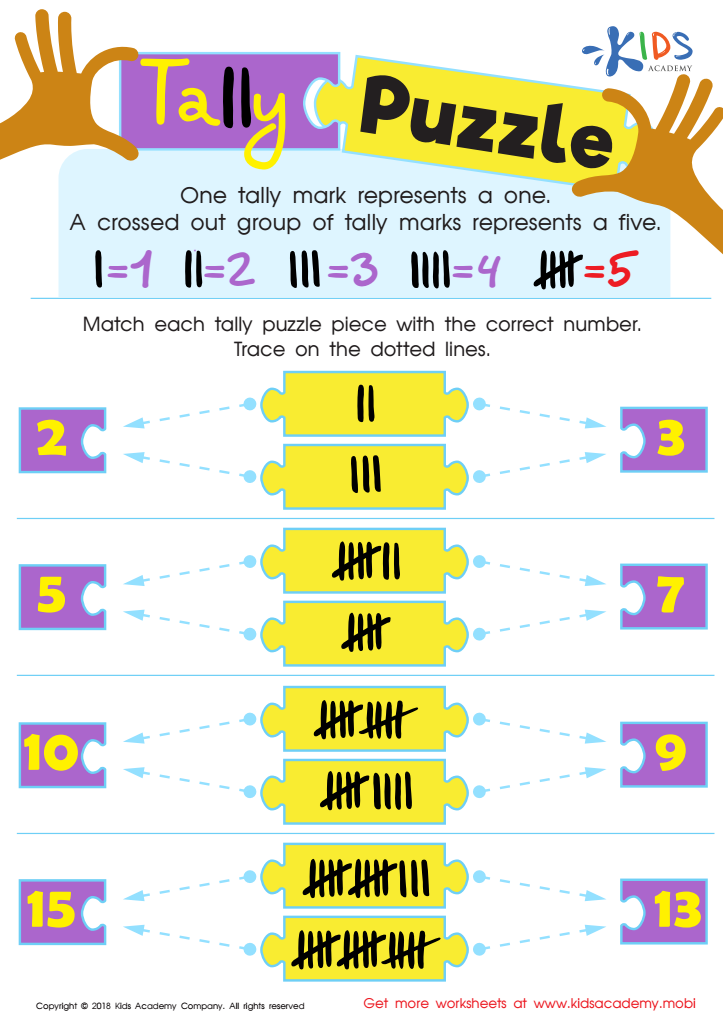
Tally Puzzle Worksheet








Understanding tally marks is important for parents and teachers due to their foundational role in developing numerical literacy in young learners. Tally marks provide a simple and visual way of counting, which helps children grasp the concept of quantity before transitioning to more abstract numerical representations. As early grade students are often introduced to counting, tally marks serve as a bridge between concrete and abstract thinking, enhancing their comprehension of both addition and subtraction.
Moreover, learning to read and create tally marks helps children develop their fine motor skills through drawing and counting, while also encouraging organizational skills, as tallying involves grouping numbers for easier comprehension. For teachers, integrating tally marks into lessons fosters effective communication about data, as students can easily illustrate and present information visually.
Additionally, using tally marks in real-life contexts, such as tracking scores, inventories, or surveys, strengthens children's critical thinking and problem-solving skills. For parents supporting their child’s education at home, understanding tally marks can facilitate engaging mathematical discussions and games, reinforcing lessons learned in school. Overall, knowing how to work with tally marks equips children with essential tools for mathematical fluency and logical reasoning.








