Basic arithmetic skills Math Worksheets - Page 2
27 filtered results
-
From - To
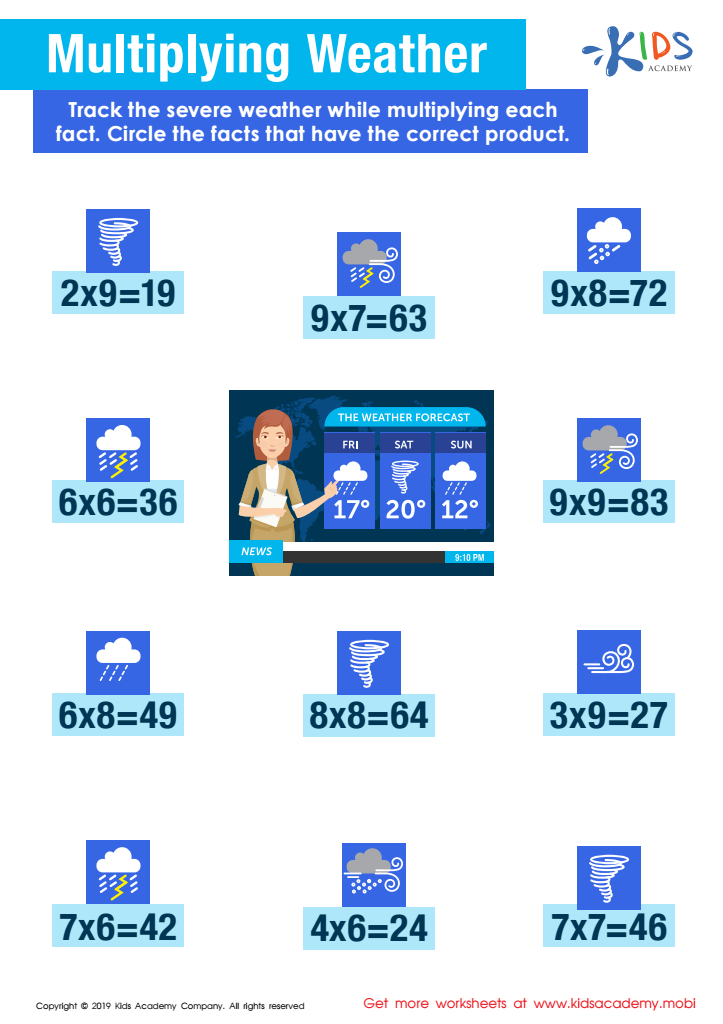
Multiplying Weather Worksheet
 Assign to My Students
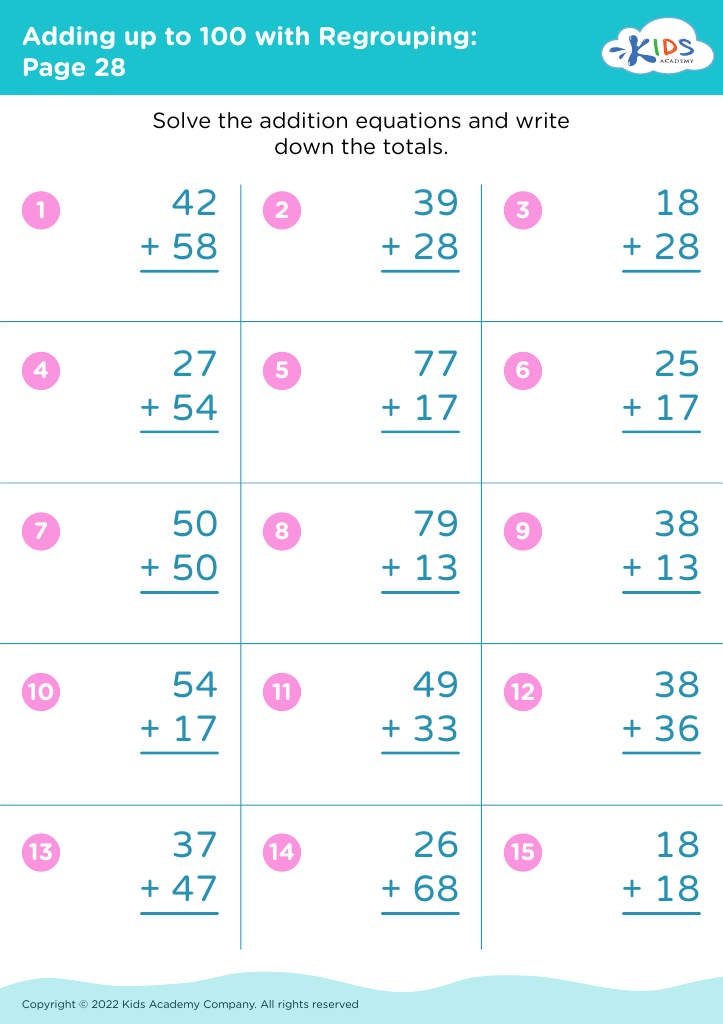
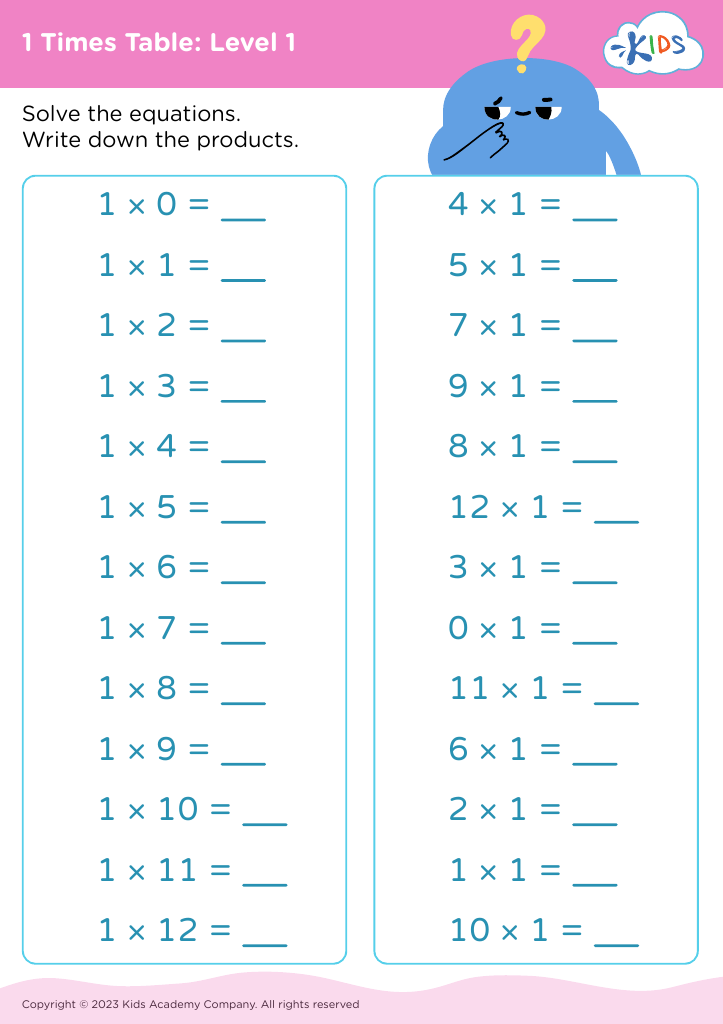







Basic arithmetic skills are fundamental to a child's cognitive development and future academic success. Parents and teachers should prioritize these skills because they form the foundation for more advanced mathematical concepts that students will encounter throughout their education. Arithmetic – including addition, subtraction, multiplication, and division – is not only crucial for academic purposes but also for daily life tasks such as budgeting, time management, and problem-solving.
When children grasp basic arithmetic early on, they develop critical thinking and logical reasoning abilities. These skills enhance their capacity to process information and make decisions confidently. Moreover, comfort with basic arithmetic boosts a child’s confidence and reduces anxiety around mathematics as a whole.
Incorporating basic arithmetic practice at home and in the classroom makes learning more seamless and fun. Engaging children with counting games, puzzles, and real-world math problems ensures they perceive math as a valuable and approachable tool rather than a daunting subject.
Ensuring that children develop strong arithmetic skills is an investment in their academic journey and their overall development as competent, self-assured individuals capable of navigating the complexities of life's numerical demands. Parents and teachers play an integral role in nurturing these essential skills, setting the stage for lifelong numeracy.








