Compare fractions Math Worksheets
6 filtered results
-
From - To
Unlock your child's potential in mastering fractions with our "Compare Fractions Math Worksheets." Specifically designed for young learners, these printable worksheets make learning fun and effective. Packed with engaging activities and vibrant visuals, they provide comprehensive practice in comparing fractions, helping kids develop essential math skills and confidence. Ideal for classroom use or at-home practice, our worksheets adhere to educational standards and are perfect for building a solid foundation in mathematics. Start your child's journey toward fraction proficiency today with these thoughtfully crafted resources from Kids Academy!
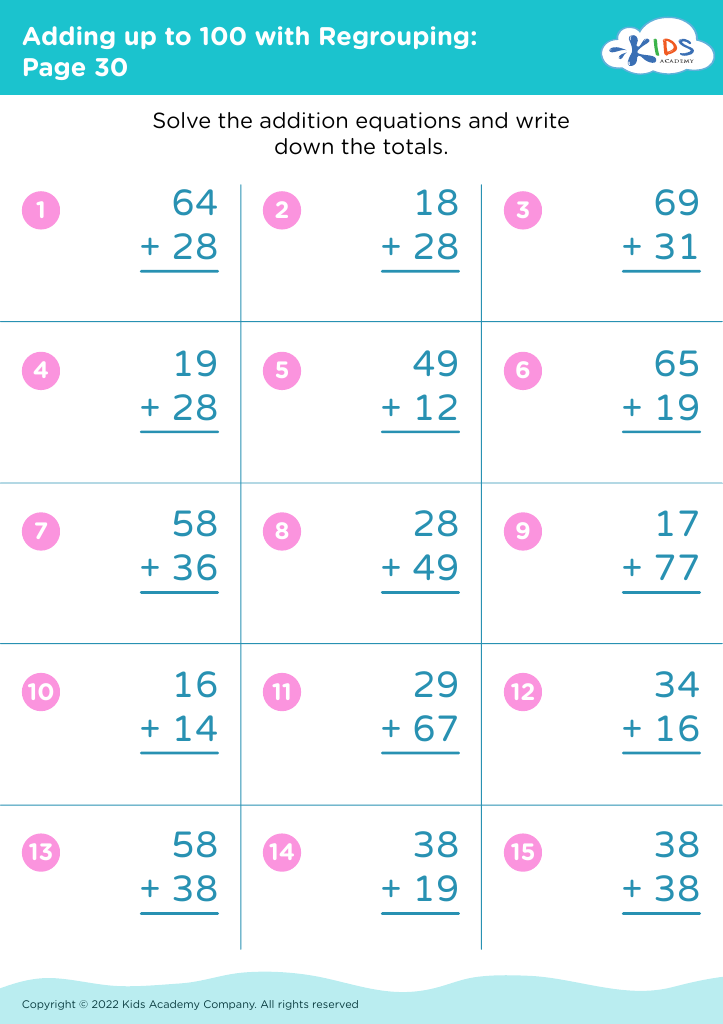
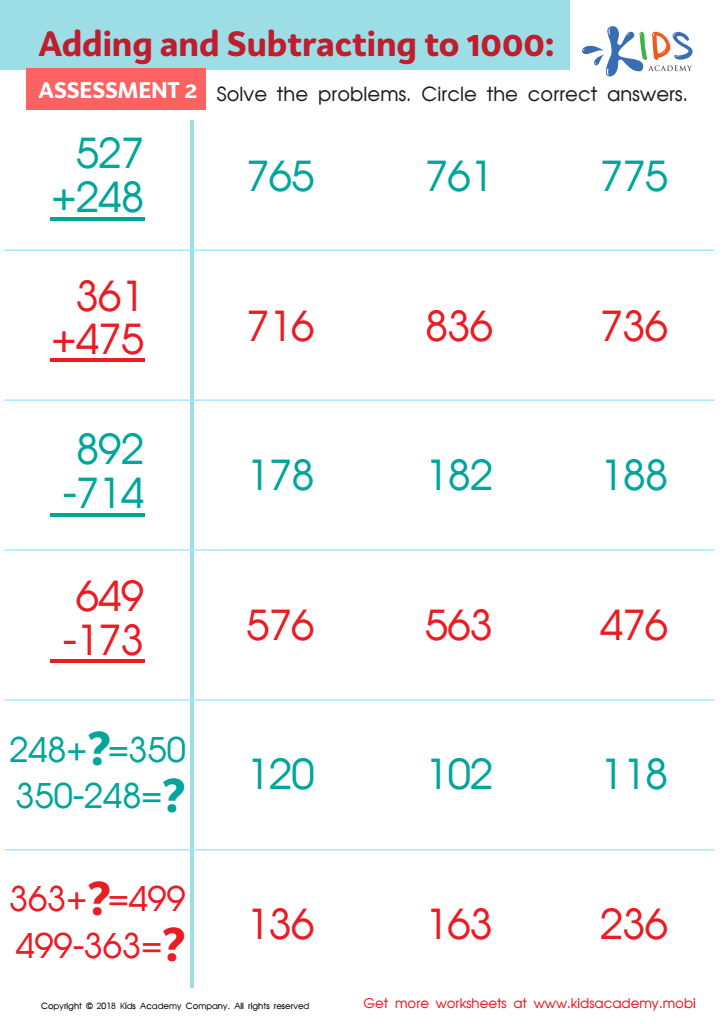
Adding and Subtracting to 1 Worksheet: Assessment 2
 Assign to My Students






Understanding how to compare fractions is a fundamental mathematical skill that is essential for young learners. Parents and teachers should prioritize this skill for several key reasons.
Firstly, comparing fractions is foundational for advanced mathematical concepts. As students progress through their education, they encounter more complex topics such as algebra, geometry, and even calculus. A solid grasp of fractions serves as a stepping-stone for these subjects, building mathematical literacy and confidence.
Secondly, real-life applications make this skill invaluable. Whether it’s cooking, shopping, or even dividing up a pizza, the ability to compare fractions allows individuals to make informed decisions and solve everyday problems.
Additionally, learning to compare fractions enhances critical thinking and problem-solving skills. It involves recognizing relationships, analyzing parts of a whole, and improving number sense. This fosters a deeper understanding of mathematical concepts beyond mere memorization.
Moreover, mastering fractions can boost a child’s self-esteem in math. Positive early experiences with mathematical concepts can lead to a lifelong interest in the subject, promoting STEM education at a young age.
In essence, parents and teachers should emphasize the importance of comparing fractions as it equips children with essential skills for academic success and everyday life, while fostering a positive and proactive attitude towards mathematics.








