Comparing heights Math Worksheets
3 filtered results
-
From - To
Explore our engaging "Comparing Heights Math Worksheets" designed to help young learners master the concept of measurement through fun activities. These worksheets guide students in comparing the heights of various objects and individuals, fostering critical thinking and analytical skills. With vibrant illustrations and easy-to-follow instructions, children will enjoy practicing heights using real-life examples. Perfect for early-grade teachers and parents alike, these worksheets provide an interactive way to reinforce measurement concepts in a clear and enjoyable manner. Download and enhance your child's learning experience today with our comprehensive collection of comparing heights worksheets!
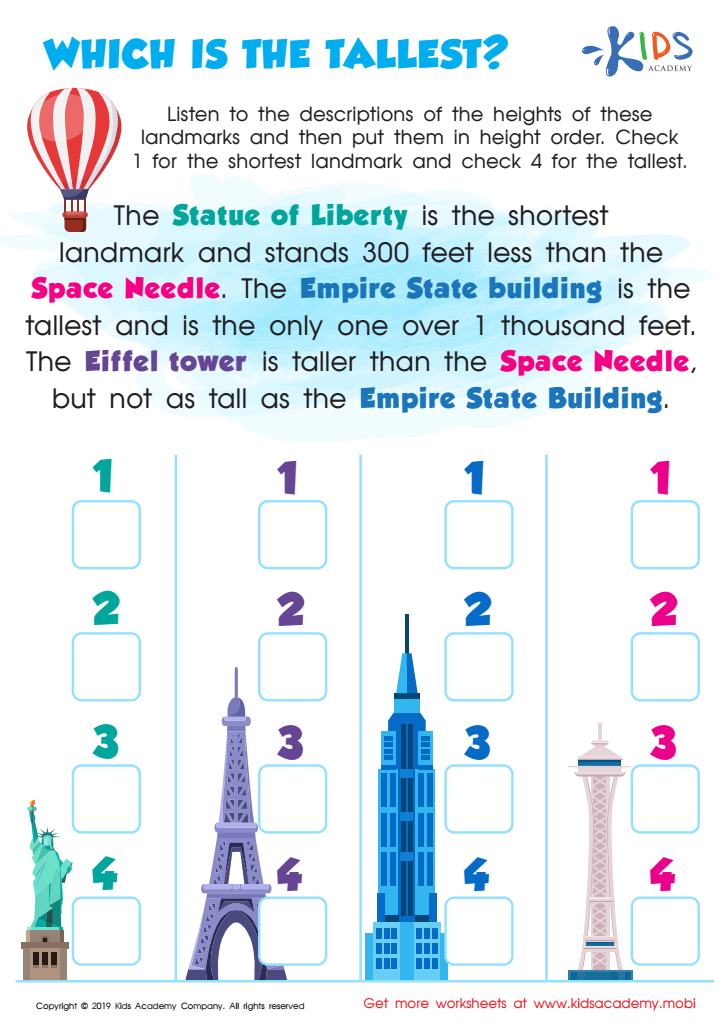
Which is the Tallest? Worksheet
 Assign to My Students
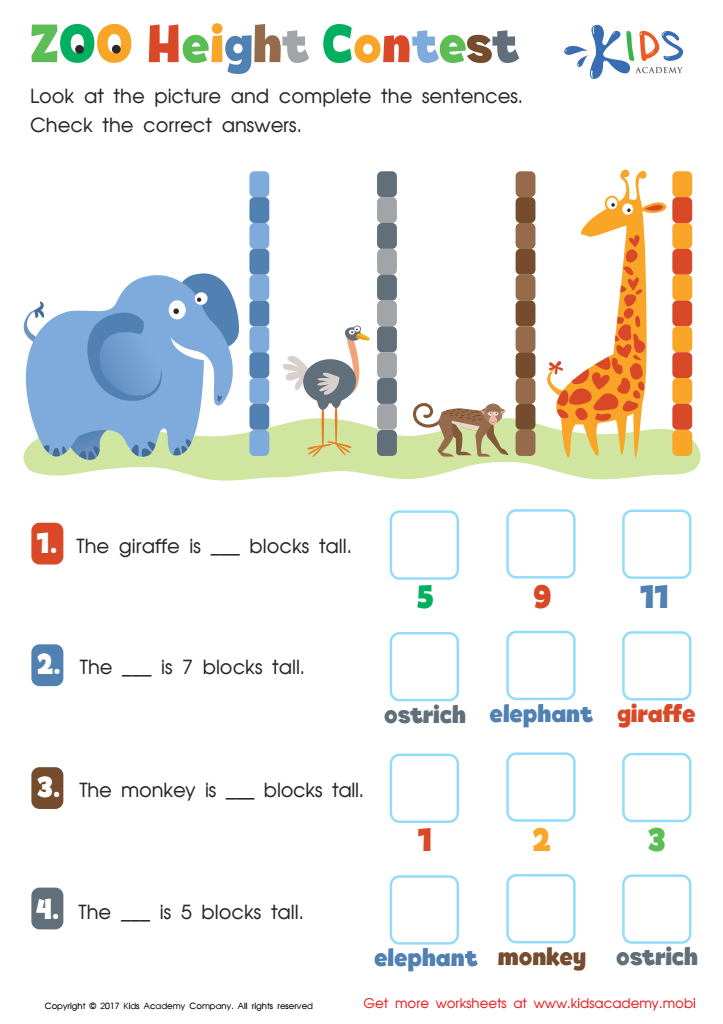
Zoo Height Contest Worksheet
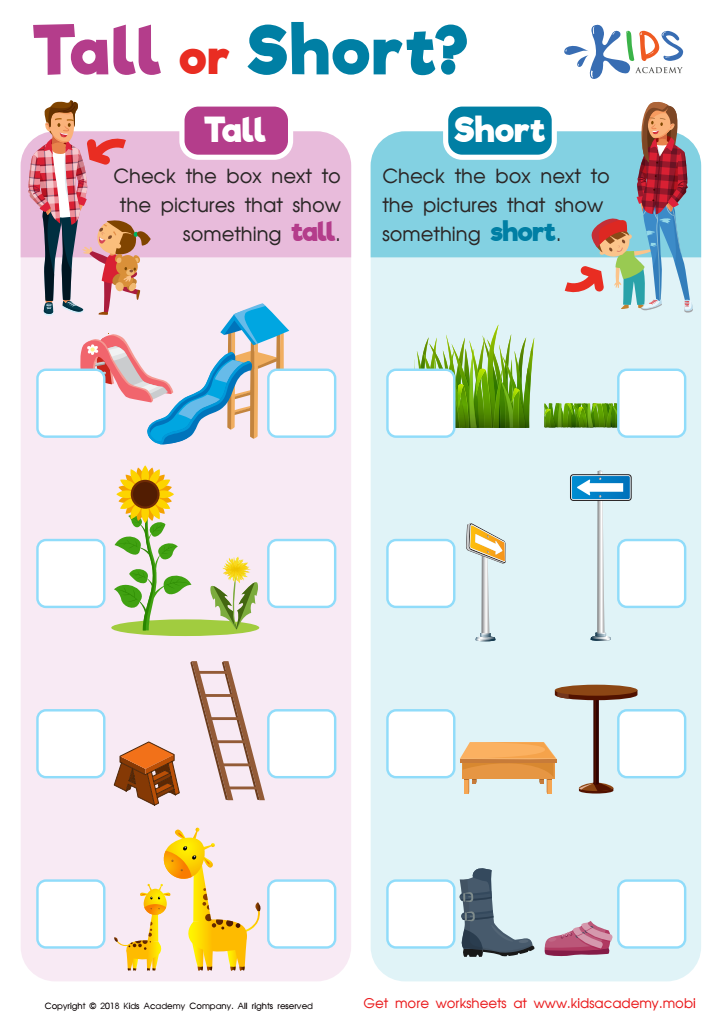
Tall or Short? Worksheet






Comparing heights in mathematics is an important foundational skill that extends beyond mere numbers. Parents and teachers should care about this concept because it fosters critical thinking and analytical skills in children. By engaging in height comparisons, children learn how to gather data, recognize patterns, and make inferences based on observable characteristics.
Furthermore, this activity helps to develop a strong understanding of measurement and units. As students compare and arrange heights, they are introduced to concepts of estimation, accuracy, and the importance of standard units, laying groundwork for future mathematical learning.
Socially, comparing heights can enhance collaboration and communication among peers. Children engage in discussions about their findings, developing language skills and cultivating teamwork. This task can also spark conversations about diversity, body positivity, and self-acceptance, which are essential components of emotional and social education.
Incorporating height comparisons into lessons can make mathematics more relatable and fun, thus encouraging a love for learning. Ultimately, when parents and teachers prioritize these activities, they equip children with essential cognitive and social skills that contribute to their holistic development and prepare them for more complex mathematical concepts in the future.








