Comparing object weights Math Worksheets
3 filtered results
-
From - To
Enhance your child's math skills with our engaging "Comparing Object Weights" worksheets! Designed for early learners, these printable resources make weight comparison fun and educational. Kids will develop their understanding of heavier, lighter, and equal weights through a variety of interactive activities. The worksheets feature colorful illustrations and practical examples, helping young learners visualize concepts in a relatable way. Perfect for at-home practice or classroom use, these materials encourage critical thinking and active learning. Unlock your child's potential in measurement and comparison with our thoughtfully crafted exercises that build foundational math skills in a playful environment. Start exploring today!
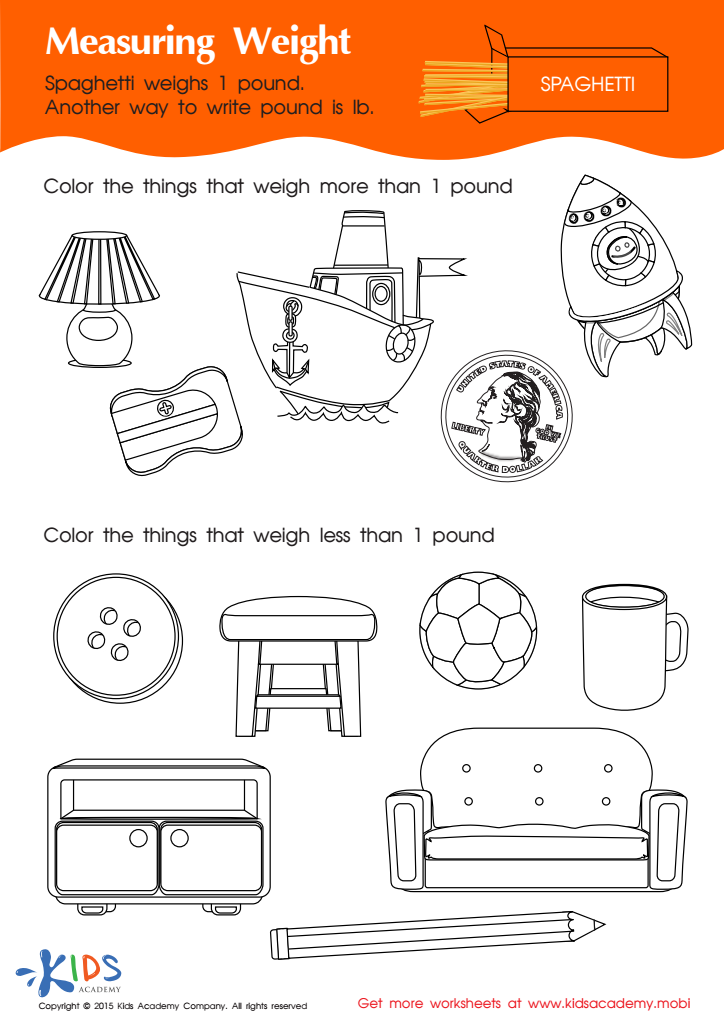
 Assign to My Students
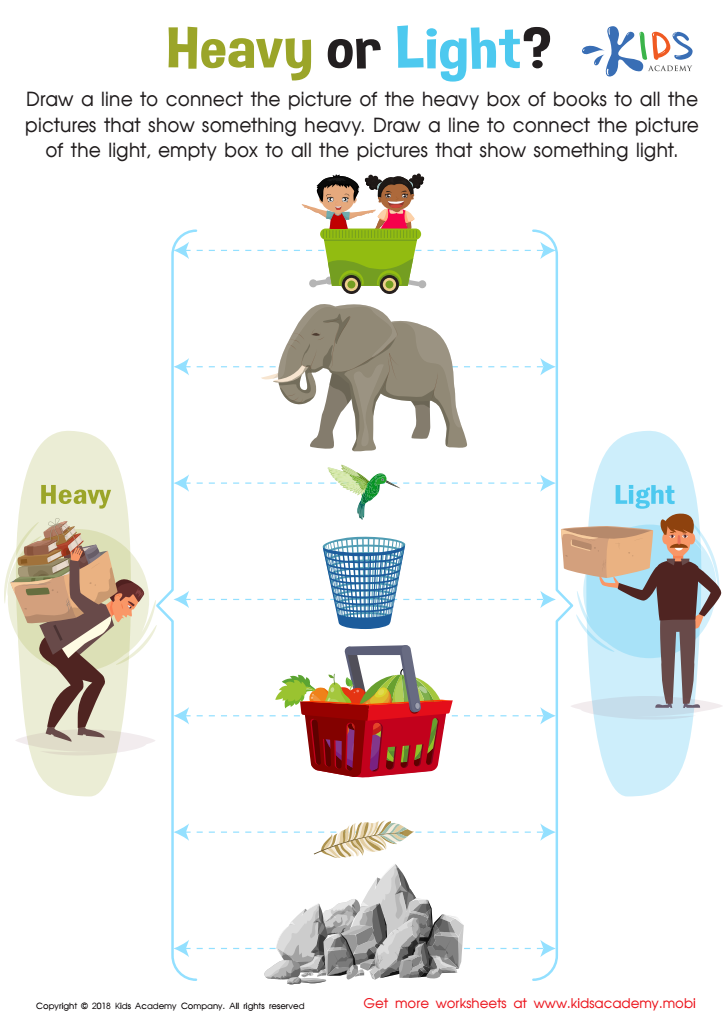
Heavy or Light? Worksheet
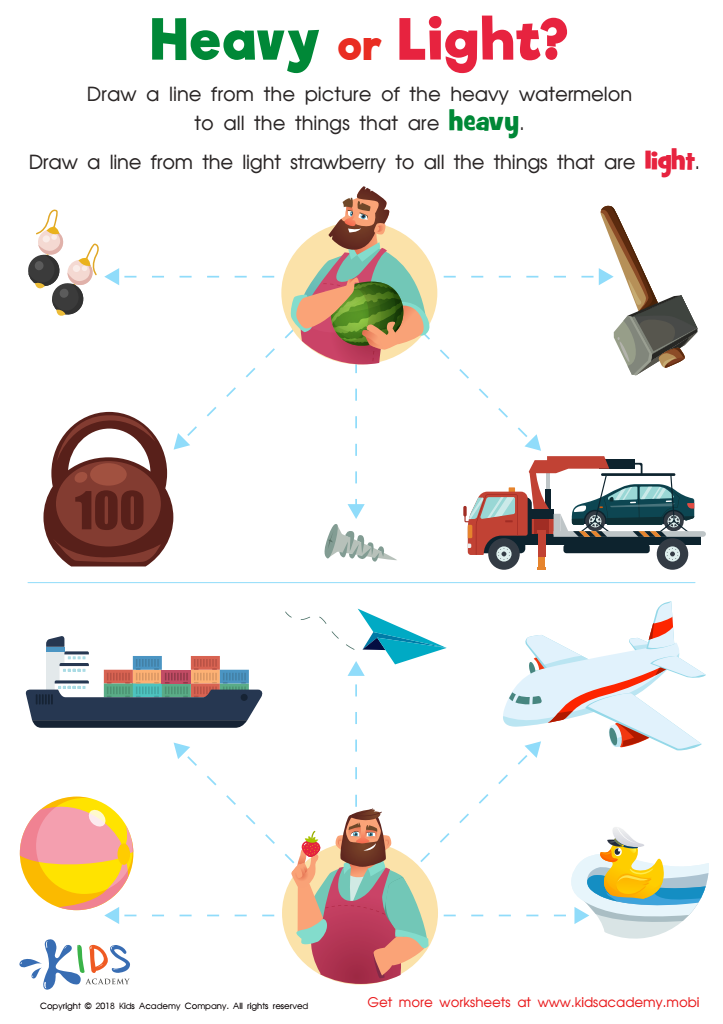
Heavy or Light? Worksheet







Understanding how to compare object weights is crucial for early learners. This foundational math concept fosters critical thinking and supports a child's cognitive development. When parents and teachers engage children in comparing weights, they introduce measurable attributes such as heavier and lighter, nurturing an understanding of balance and quantity.
By comparing weights through hands-on activities—like using a scale or simple balance systems—children develop essential problem-solving skills. They learn to make predictions, test hypotheses, and reflect on their observations. This active learning process enhances their reasoning abilities, leading to better mathematical comprehension in the long run.
Moreover, comparing weights builds vocabulary and language skills as children articulate their findings and describe their methods. When parents and teachers participate in this learning, they not only model how to ask questions and think critically but also emphasize the importance of collaboration and discussion.
Lastly, mastering these concepts lays the groundwork for future understanding of larger mathematics concepts and promotes curiosity about the physical world. Encouraging weight comparisons helps to make math engaging and relevant, illustrating its application in everyday life. In essence, it equips children with lifelong skills that extend beyond the classroom.








