Enhances number recognition Math Worksheets
5 filtered results
-
From - To
Unlock your child's potential with our Enhances Number Recognition Math Worksheets, designed to build essential math skills through engaging activities. Perfect for early learners, these worksheets focus on identifying, writing, and counting numbers in fun and interactive ways. Each exercise encourages hands-on learning, ensuring a solid foundation in math. With colorful illustrations and varied tasks, children remain interested and motivated. Our expertly crafted worksheets cater to different learning styles, making math enjoyable and accessible for all. Boost your child's confidence and numeracy skills today with our comprehensive collection of number recognition worksheets.
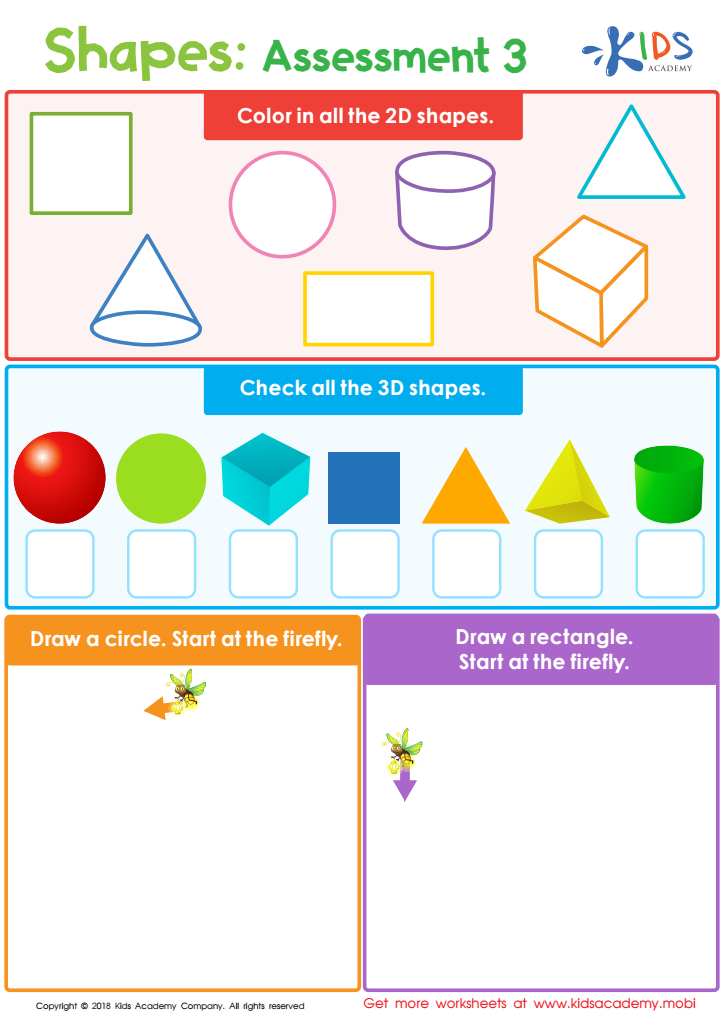
Shapes: Assessment 3 Worksheet
 Assign to My Students






Enhancing number recognition in early childhood is crucial for laying a solid mathematical foundation. Parents and teachers should prioritize this skill as it forms the basis for more advanced mathematical concepts. When children can recognize numbers, they begin to understand basic arithmetic operations like addition and subtraction. This early competence fosters a positive attitude towards math, making future learning more accessible and enjoyable.
Numbers are ubiquitous in daily life, appearing in everything from time and dates to money and measurements. Efficient number recognition aids children in real-world problem-solving and critical thinking. Early difficulties in math can lead to anxiety and avoidance of the subject, so proactive measures ensure children remain confident and curious.
Enhanced number recognition also promotes cognitive development. By learning to identify and differentiate numbers, kids practice memory, concentration, and fine motor skills. These cognitive benefits stretch beyond mathematics, often improving overall academic performance.
Parents and teachers who invest in these early math skills are setting up children for long-term success. Through fun, engaging activities, such as counting games and number-based stories, educators and parents can make math appealing and less intimidating. Ultimately, strong number recognition skills open doors to advanced learning and everyday competence.








