Identifying patterns Math Worksheets
3 filtered results
-
From - To
Unlock your child's potential with identifying patterns math worksheets from Kids Academy! Designed for grades 1-5, these worksheets enhance critical thinking and problem-solving abilities through engaging activities that involve completing and creating patterns using shapes, colors, and numbers. As children identify and predict patterns, they develop foundational skills essential for advanced mathematical concepts. Each worksheet is tailored to provide fun, interactive challenges that keep young minds engaged while reinforcing important math skills. Perfect for classroom or homeschooling use, our printable worksheets help children build confidence and excel in math. Start exploring our collection today and watch your child's math skills soar!
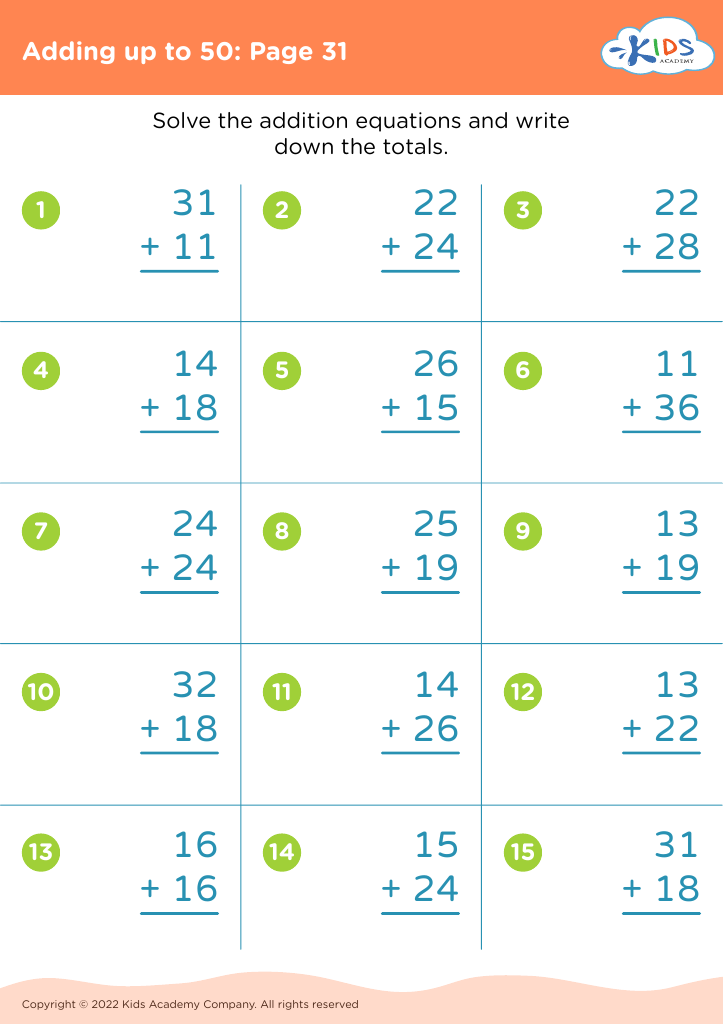
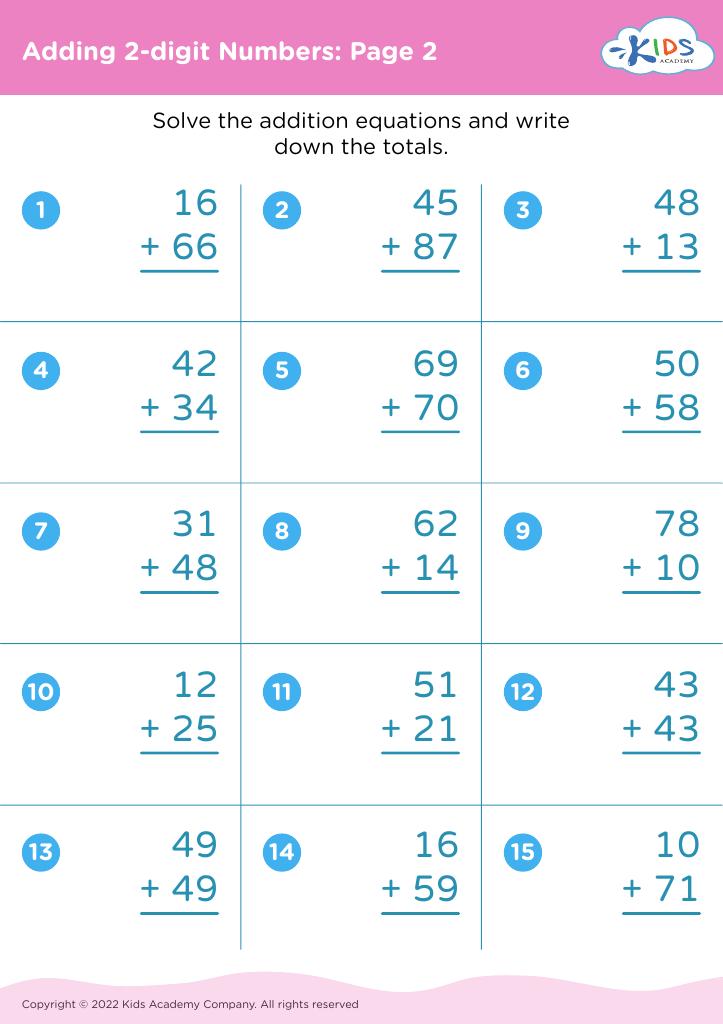
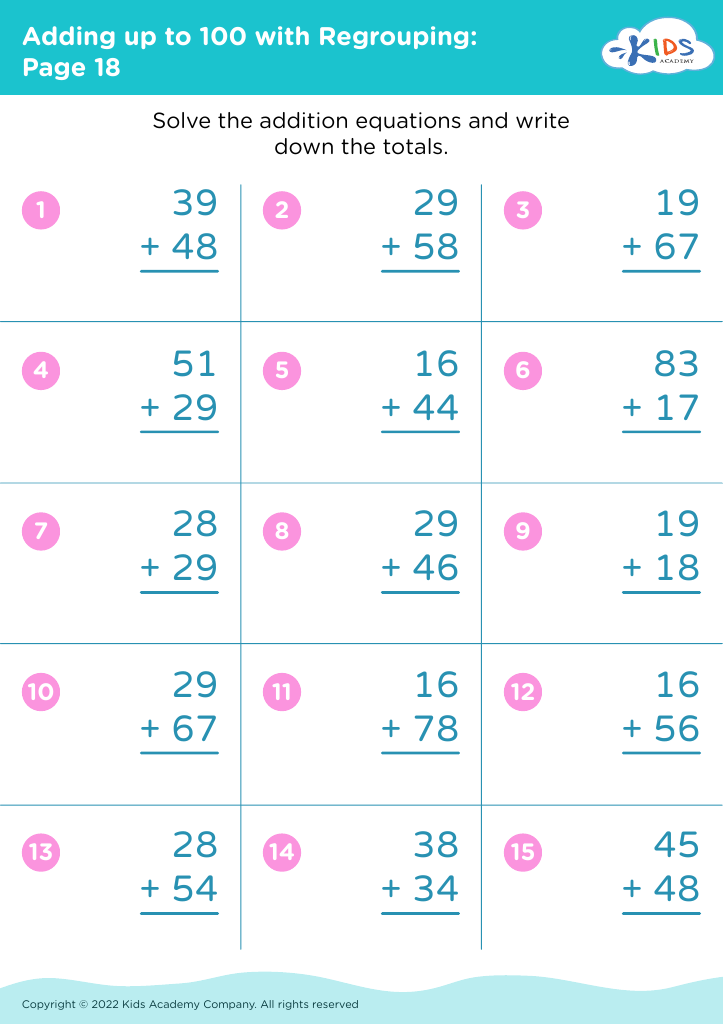







Identifying patterns in math is crucial for young learners because it sets the foundation for higher-level mathematical thinking and problem-solving skills. When children recognize patterns, they can make sense of numbers, shapes, and their relationships, providing a structured way of understanding complex concepts. This fundamental skill enhances their ability to make predictions, detect relationships, and understand the sequence, which are essential for advanced arithmetic operations, algebra, and geometry.
For parents and teachers, fostering pattern recognition helps in promoting logical thinking and reasoning. By identifying and predicting patterns, kids learn to approach problems systematically and enhance their cognitive abilities, including memory and attention to detail. Additionally, patterns are ubiquitous in the natural world and daily life. Recognizing patterns in their environment (like seasons, day and night cycles, or even in human behavior) helps children find regularity and order, which can be comforting and confidence-boosting.
Moreover, engaging with patterns is a hands-on, interactive, and often playful way to make learning math enjoyable. When children find joy in discovering patterns, it encourages a positive attitude towards math as a whole. This foundational appreciation for math can foster a long-term interest in STEM (Science, Technology, Engineering, and Mathematics) fields, paving the way for future academic and career opportunities. Thus, identifying patterns in math is an engaging, essential skill that parents and teachers should actively encourage and nurture.








