Shape comparison Math Worksheets
4 filtered results
-
From - To
Enhance your child's understanding of geometry with our engaging Shape Comparison Math Worksheets. Designed for early learners, these worksheets help kids distinguish and analyze various shapes, reinforcing foundational skills crucial for their mathematical development. Through fun and interactive activities, children practice identifying, comparing, and categorizing different geometric forms, honing their observational abilities and critical thinking. Suitable for classroom or at-home learning, our Shape Comparison Math Worksheets allow kids to develop spatial awareness while enjoying the learning process. Empower your child’s math journey today with high-quality, printable resources from Kids Academy.
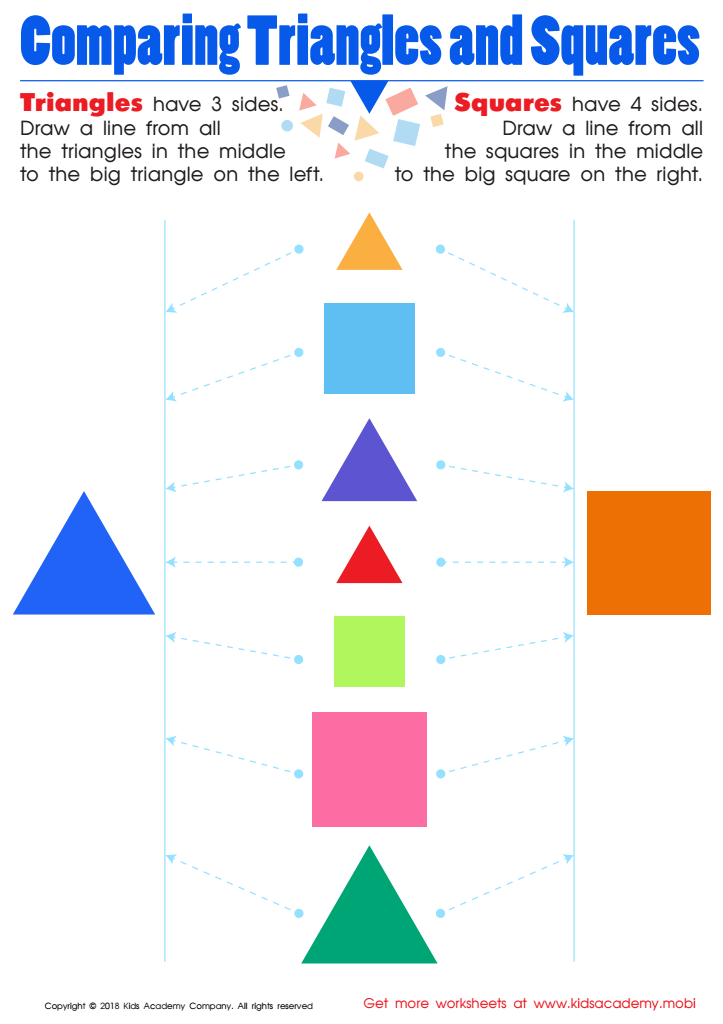
Comparing Triangles Squares Worksheet
 Assign to My Students
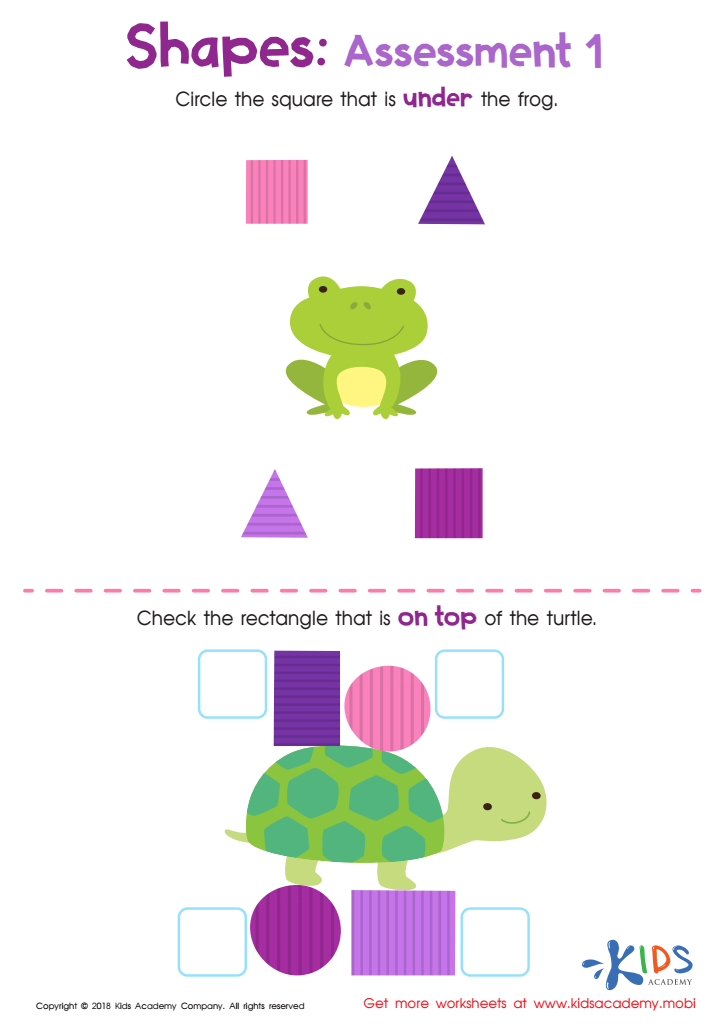
Geometry – Assessment 1 Worksheet
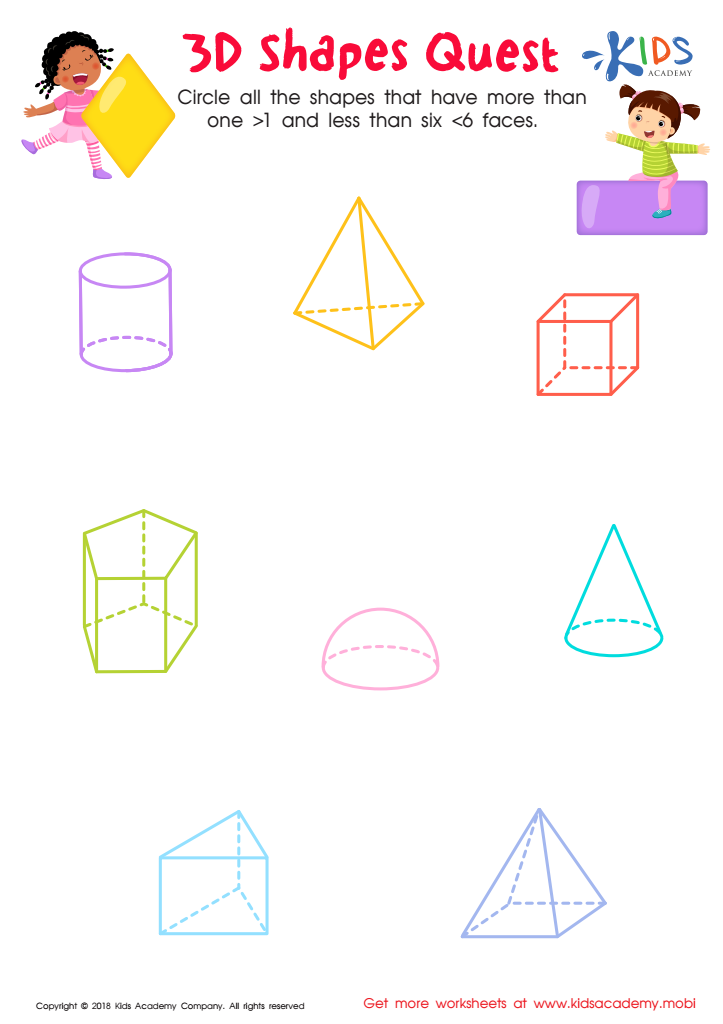
3D Shapes Quest Worksheet
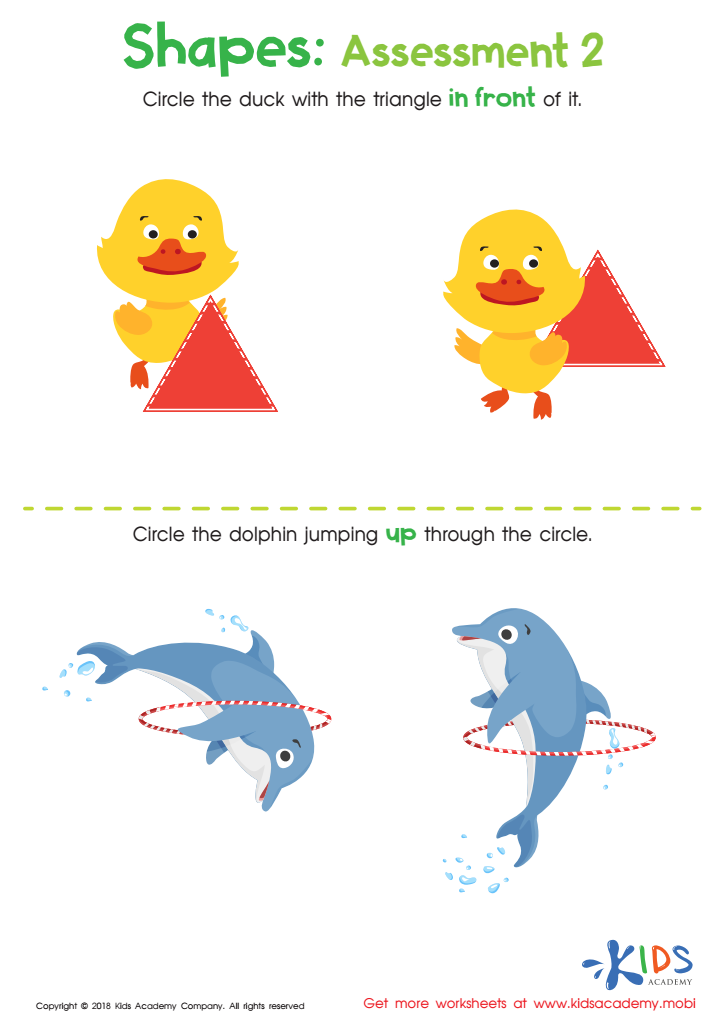
Geometry – Assessment 2 Worksheet








Shape comparison in math, often taught under geometry at an early age, is essential for developing foundational cognitive skills in children. Parents and teachers should care about this because it helps children understand and describe the world around them more accurately. Through comparing shapes, children develop their observation skills and attention to details such as size, sides, angles, and other properties of shapes.
These activities also promote problem-solving skills, as children learn how to infer the identity of shapes through comparing and contrasting. For instance, recognizing that two different-sized triangles still share common properties deepens their understanding of geometrical concepts.
Practicing shape comparison enhances spatial reasoning, critical in fields such as architecture, engineering, and art. Strong spatial skills also play a role in solving more complex mathematical problems later on. Furthermore, discussing shapes contributes to language development as students learn and use specific geometric terminology to express their thoughts.
On a broader developmental level, shape comparison hones analytical thinking, helps in classifying information, and strengthens memory retention. By fostering these skills early on, parents and teachers set the stage for children to excel in more advanced academic pursuits, showing them that math is not merely about numbers but about interpreting and engaging with the patterns and structuring of their environment.








