Understanding comparisons Math Worksheets
5 filtered results
-
From - To
"Understanding Comparisons" Math Worksheets by Kids Academy help children master key comparison skills through engaging exercises. Designed for young learners, these worksheets focus on comparing numbers, objects, and sizes, fostering critical thinking and problem-solving abilities. Kids participate in fun activities like matching, counting, and identifying greater or lesser quantities, which reinforce foundational math concepts. These printables offer a visually appealing and interactive approach to learning, making math both enjoyable and educational. Perfect for classroom use or homeschooling, Kids Academy empowers children to develop confidence and proficiency in math comparisons, setting a strong foundation for future mathematical success.
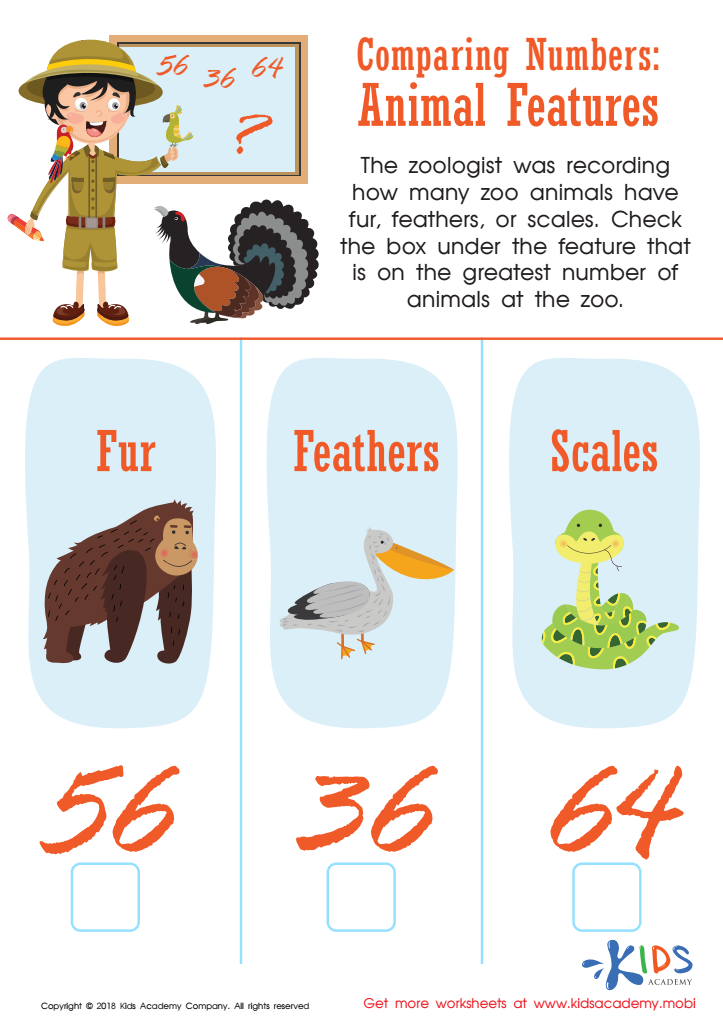
Animal Features Worksheet
 Assign to My Students
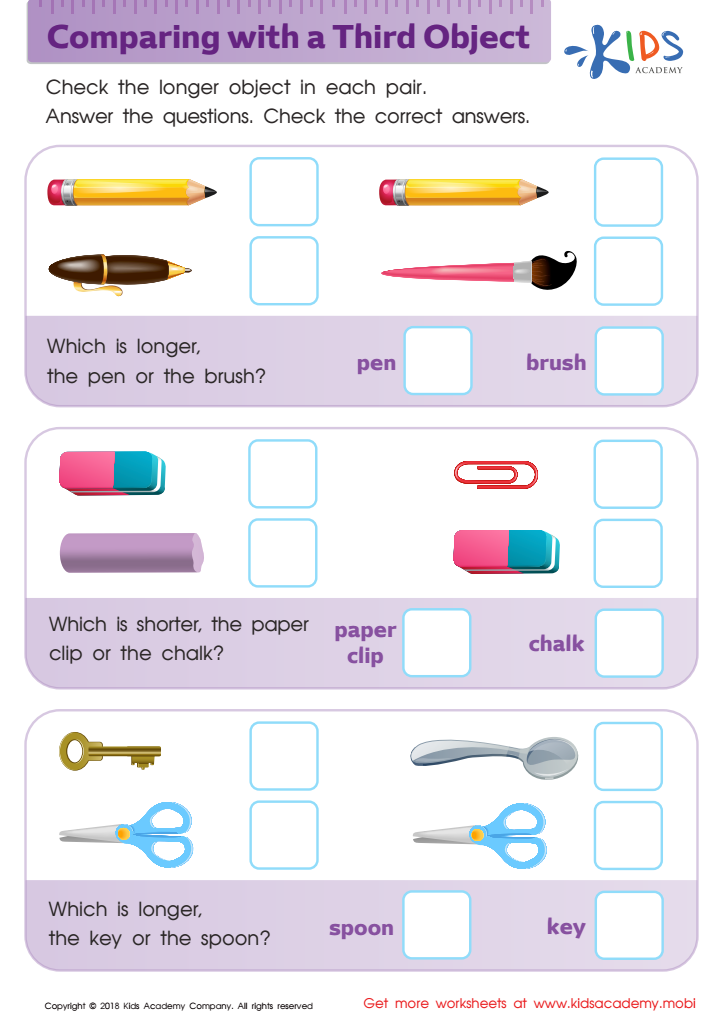
Comparing with a Third Object Worksheet
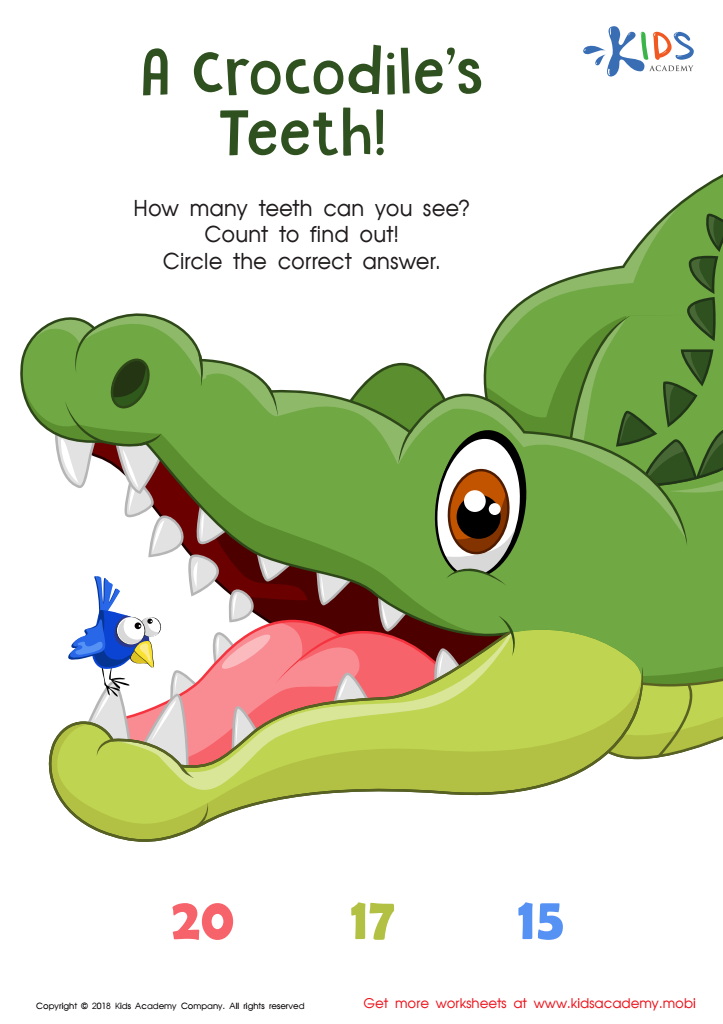
A Crocodile's Teeth Worksheet
Matching: Classifying Toys by Size Worksheet
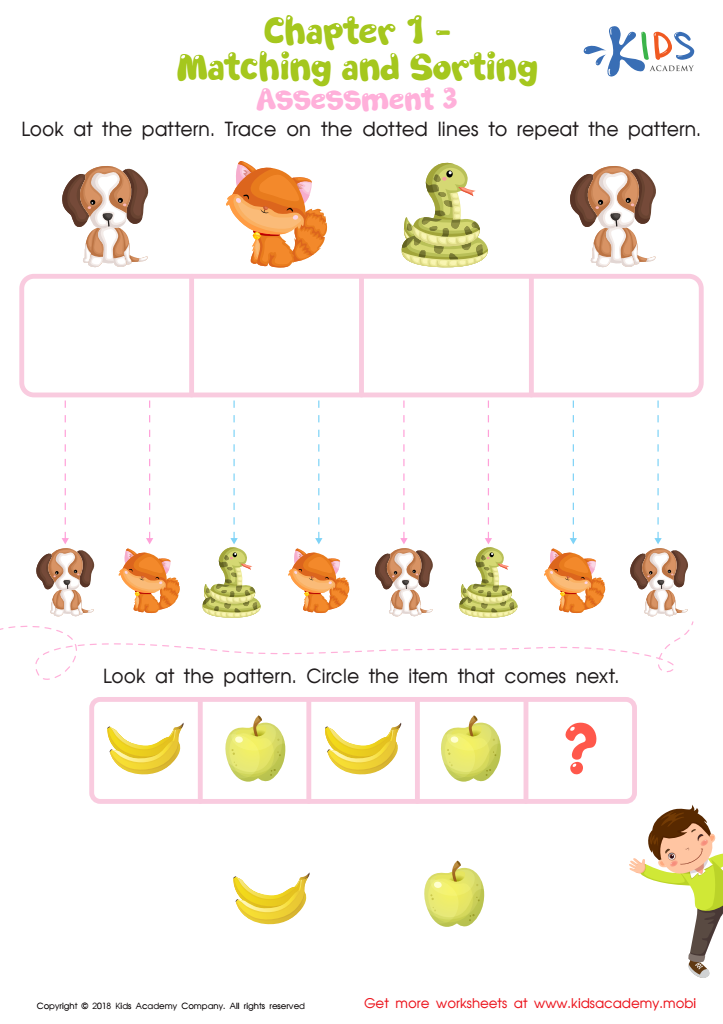
Matching and Sorting for Preschool: Assessment 3 Worksheet






Understanding comparisons in math is foundational for a child’s cognitive development and problem-solving skills. The ability to compare numbers, sizes, and quantities forms the basis for more complicated math concepts. When children grasp comparisons, they learn to quantify differences and similarities, which often translates into better logical reasoning.
Parents and teachers need to introduce comparison concepts early on because they bridge the gap between concrete and abstract thinking. Comparisons can be as simple as determining which of two numbers is larger, or as complex as understanding ratios and fractions. These skills underpin everyday decision-making and academic success even outside of math-specific contexts.
Moreover, learning comparisons can foster engagement and confidence. Kids who master fundamental comparison concepts often approach more advanced math topics with greater self-assurance. Interactive activities involving comparisons stimulate curiosity and promote hands-on learning, which encourages perseverance and positive attitudes towards challenges.
Finally, since everyday activities are rife with comparisons, ensuring children are comfortable with these concepts enhances their real-life problem-solving abilities. This skill spills over into tasks such as budgeting, cooking, and time management. Therefore, investing time to teach comparisons in math builds a sturdy scaffold for both academic achievements and life skills.








