Understanding directions Math Worksheets
7 filtered results
-
From - To
Unlock the power of spatial awareness with our "Understanding Directions Math Worksheets"! Designed for early learners, these engaging worksheets help children master essential directional skills through fun exercises and relatable scenarios. From learning left and right to navigating around objects, students will enhance their comprehension of directions while building foundational math skills. Ideal for classrooms or home learning environments, our worksheets cater to various learning styles, ensuring every child has the opportunity to thrive. Explore our printable resources today and make learning about directions an enjoyable adventure in mathematics! Perfect for teachers and parents looking to inspire young minds.
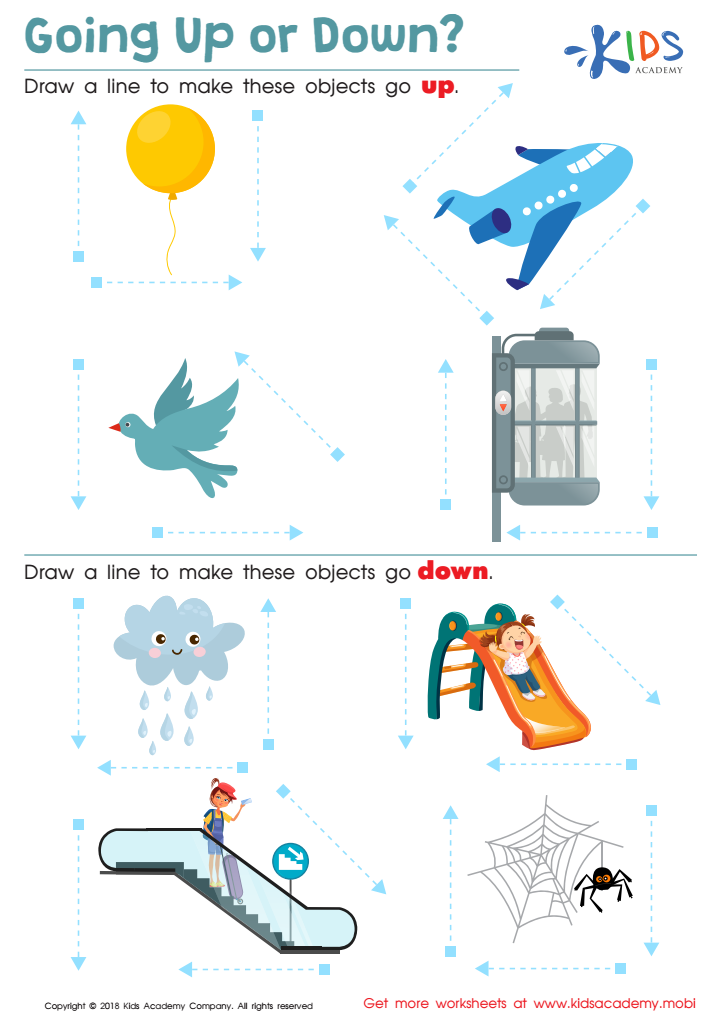
Going up or Down? Worksheet
 Assign to My Students
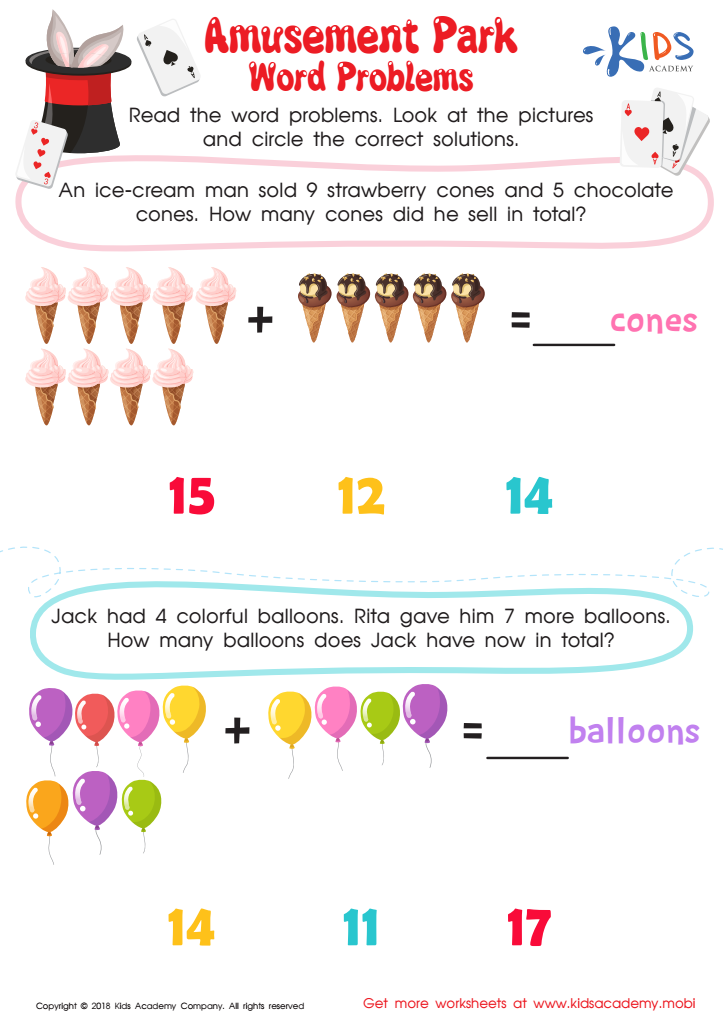
Amusement Park Word Problems Worksheet
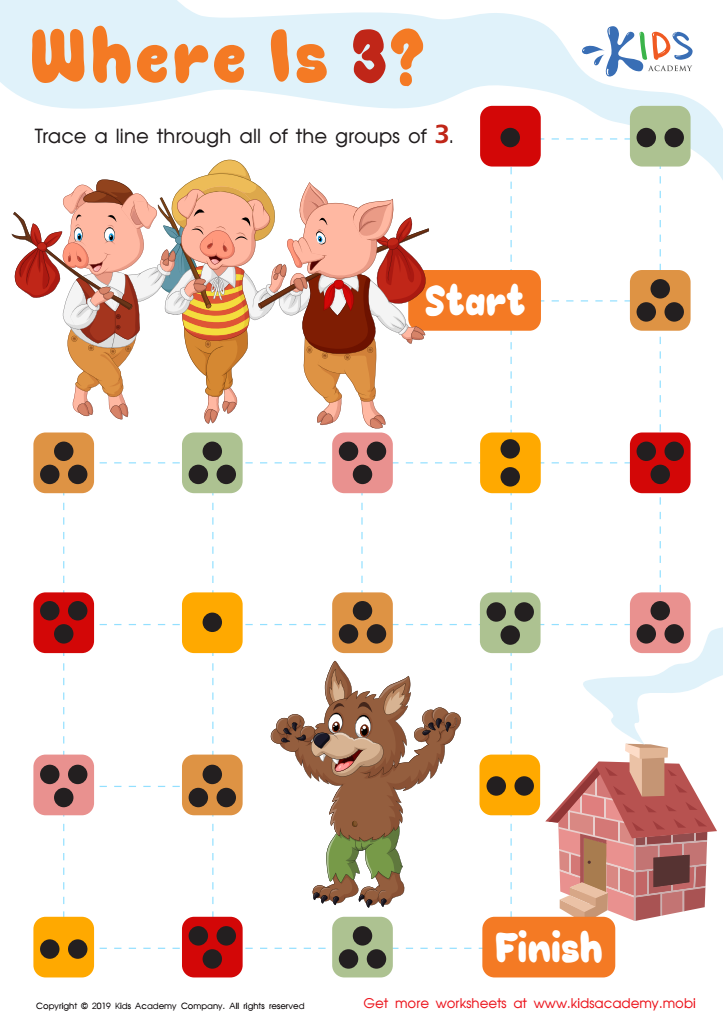
Where Is 3? Worksheet
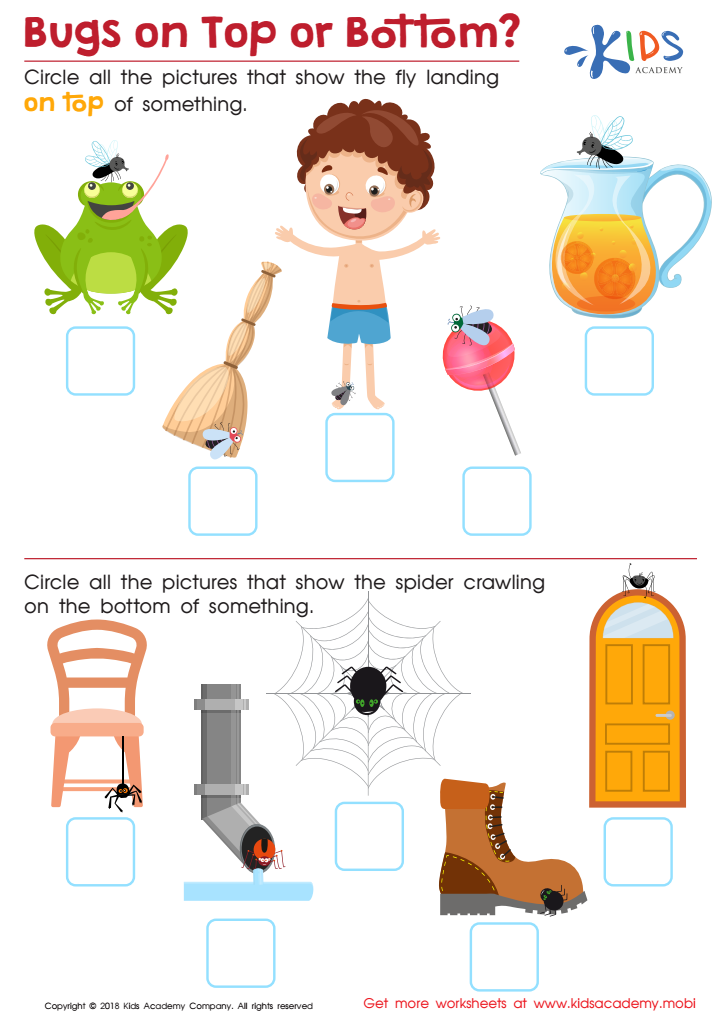
Bugs on Top or Bottom? Worksheet







Understanding directions in math is crucial for students' learning and development, making it a responsibility for both parents and teachers to emphasize its importance. Accurate comprehension of directions enables students to follow through on assignments, making sense of complex problems and effectively solving them. This foundational skill fosters confidence and autonomy in learning, which ultimately contributes to academic success.
Teachers play a vital role in whether students understand directions. They must tailor instruction to recognize variations in comprehension levels and provide clear, concise information. Similarly, parents can reinforce these skills at home by engaging in activities that require following directions, whether through games, cooking, or helping with homework. When children practice interpreting and executing directions in different contexts, they enhance their critical thinking and problem-solving abilities.
Furthermore, mastering directions in math also translates to better performance in other subject areas and real-life situations. It prepares students for lifelong learning and everyday decision-making. Consequently, by supporting students in understanding directions, both parents and teachers contribute to their overall growth, ensuring they become capable, confident learners well-prepared for future challenges.








